Self - Credit Builder & Cards
- 38.50K
- 4.7
- Installs
- 1.00M
- Price
- Free

Screenshots
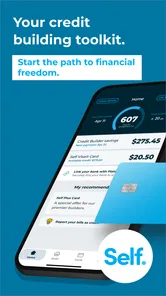

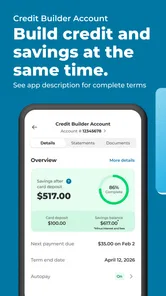

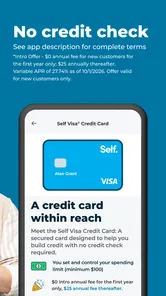
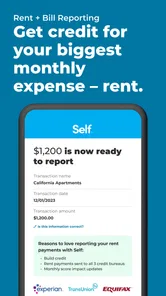
Analysis by Reviewed
I’d treat Self - Credit Builder as a gradual financial habit, not a quick fix for a credit score. Its appeal is the clear focus: it aims to help people establish credit while setting money aside, without requiring a credit check to get started. That makes it worth considering if you’re new to credit or want a structured way to build a payment history, but it still calls for patience and a monthly commitment.
What the app is designed to help with
Self Financial, Inc. makes this free finance app, which has an Everyone age rating. It has a 4.5 average from around 91,000 ratings, and more than a million installs. The current version is 6.23.0, and it runs on Android 5.0 or later. Those details suggest an established app, though popularity alone can’t tell you whether its approach fits your budget or goals.
The basic idea is different from simply opening a budgeting app or checking your credit score. You choose a plan and make monthly payments toward a certificate of deposit. Those payments are reported to the three major credit bureaus, while the money builds in the account. In practical terms, you’re taking on a recurring commitment in exchange for a way to work on payment history and savings together. I’d read the plan terms carefully before starting, especially if your income varies month to month.
Speed expectations and everyday use
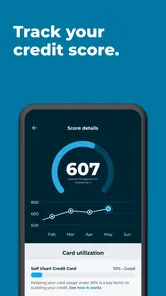
The app itself is meant to make the process understandable: you can follow your progress, see how much you’ve saved, and check changes in your credit score. That’s useful, but it helps to separate app speed from credit-building speed. A screen can load quickly while a credit profile still takes time to change; I wouldn’t sign up expecting an immediate score jump or treat a displayed movement as a guaranteed result.
A realistic use case is someone who gets paid regularly and wants a simple monthly routine: review the plan, make the payment, then check the account occasionally rather than refreshing it every day. That cadence keeps the app useful without turning credit monitoring into a source of stress. If you’re deciding between this and a standard savings account, remember that Self’s appeal is the credit-building structure, not just putting cash aside. If access to your money at any moment is the main priority, compare the commitment with a regular savings option before choosing.
Building Credit with Ease
So, what’s the deal with Self - Credit Builder? This app is like your personal financial coach, guiding you every step of the way to improve your credit score. When I first stumbled upon it, I was intrigued by its concept—essentially, it helps you build credit while saving money. Sounds like a win-win, right?
The way it works is pretty straightforward. You start by choosing a plan that fits your budget, and then you make monthly payments towards a certificate of deposit (CD). It’s like having a mini savings account, and the best part is, these payments are reported to all three major credit bureaus. This means you’re not only boosting your savings but also building a positive payment history, which is crucial for your credit score.
More From Our News Desk

 Bolt: Request a Ride
Bolt and the Shift from One-Tap Rides to More Legible Trips
Bolt shows how ride-hailing is shifting from a one-tap taxi request toward a more legible, choice-driven trip, while leaving the hardest questions of price and reliability unresolved.

 Farm Land - Farming life game
Farm Land Review: A Small Island Farm with a Satisfying Loop
A bright, breezy island farm turns a few quick chores into a satisfying cycle of planting, harvesting, expanding, and deciding what to build next.

 Android Auto
’s Community Takes Shape in the Passenger Seat
Its most valuable network is not a public feed but a shared set of routes, voice habits, app integrations, and advice that make driving less isolating—and sometimes more complicated.

 My Talking Angela
 Makes the Virtual Pet Feel Personal
A polished pet-raising game built on small rituals, playful customization, and a character who gives everyday screen time a surprisingly personal rhythm.

 Google Translate
 Review: A Pocket Tool for the Small Frictions of Travel
From menus and signs to quick conversations, Google Translate earns its place by cutting the little delays that make unfamiliar language feel like a barrier.

 Shazam: Find Music & Concerts
Shazam’s Best Trick Is Turning a Song Into a Night Out
A few seconds of recognition can settle an argument, rescue a half-remembered chorus, and point toward a live show. Shazam’s real trick is what happens after the match.
Latest News



Why Self Stands Out
What sets Self apart from other credit-building apps is its accessibility and user-friendly interface. Trust me, you don’t need to be a financial wizard to navigate through this app. The setup process is a breeze, and once you’re in, the dashboard is clean and simple. You can easily track your progress, see how much you’ve saved, and monitor the impact on your credit score.
Another thing I love about Self is that it doesn’t require a credit check to get started. That’s a huge relief for those who are just beginning their credit journey and might not have the best score yet. Plus, Self offers flexibility in payment plans, so you can find one that doesn’t break the bank.
More Than Just a Credit Booster
Beyond credit building, Self also provides educational resources to help you understand the ins and outs of credit. They offer a wealth of articles and tips on how to manage your credit responsibly, which I found extremely helpful. It’s not just about building credit; it’s about becoming financially savvy.
Furthermore, the app has a feature that lets you unlock a secured credit card once you’ve made enough payments. This is a fantastic way to continue building credit while having the flexibility of a credit card. It’s like having a secret weapon in your financial toolkit.
What to weigh before you commit
The secured card is a possible next step, not something I’d assume is available immediately. Since it depends on making enough payments, I’d first decide whether the monthly plan works on its own. A useful way to avoid overcommitting is to map the payment onto your actual pay cycle and keep room for bills that change, such as utilities or groceries. If a missed payment would be likely, a less structured alternative may be a better fit.
Compared with a conventional credit card, this approach is more guided and couples credit-building with saving, but it isn’t a substitute for having spending flexibility. A regular card may suit someone who already qualifies and can pay the statement responsibly; Self may appeal more to someone who wants a defined routine and does not want a credit check to begin. Neither route is automatically better: the right choice depends on whether predictability, access to credit, or immediate control over cash matters most to you.
One practical tip is to use the educational material alongside the account rather than treating the app as a score tracker alone. Learning how payment history fits into credit management can help you make better decisions beyond the monthly plan. I’d also check the dashboard periodically, not obsessively: it’s a place to review progress, while the habits you maintain outside the app remain important.
Making the routine work in real life
For example, imagine a person paid twice a month who wants to build a payment history but tends to spend whatever is left in checking. I’d have them compare the plan payment with rent, food, transport, and bills before enrolling, then treat that payment as a fixed obligation in their budget. The point is not to squeeze the plan into a tight month; it is to choose a commitment that still leaves a buffer for ordinary surprises.
That budget check matters because the account’s dual purpose can be easy to misunderstand. The money accumulating toward a certificate of deposit is not the same as cash sitting in an everyday savings account, ready for an unplanned expense. Before committing, I’d make sure there is a separate emergency cushion or another practical way to handle an unexpected bill. The credit-building goal is less useful if pursuing it leaves you short on money you need this week.
People often ask whether they need an existing credit history to begin. The no-credit-check starting point makes the app relevant to someone who is new to credit, but it does not mean every applicant or every plan is automatically suitable. I’d still review the plan details and make sure the monthly amount is manageable. If your main goal is simply learning where you stand, a credit-monitoring tool may be enough; if you want a structured payment routine, Self has a more specific role.
Another common question is how often to open the app. I’d use it to check that the account and payment progress make sense, then leave room for reporting and score changes to take their course. Checking repeatedly can make normal delays feel like a problem, especially when the underlying credit process is not instant. A calm monthly review is more useful than reacting to every small movement in a score display.
Choosing among credit-building approaches
Self sits between passive credit monitoring and borrowing on a conventional card. A score app can help you observe changes, but observation alone does not create the same recurring payment structure. A standard card can offer more flexibility for purchases, yet it puts the user in charge of managing spending and paying the statement. Self’s appeal is that the monthly plan gives the process a defined shape while building savings alongside credit history.
That structure is a strength only if it suits the person using it. If you already have a card, use it lightly, and pay it in full, another credit-building commitment may add little to your routine. If you have irregular income, expect a near-term cash need, or want a way to access saved money freely, a conventional savings account or a different credit-building route may be more appropriate. I would compare the total commitment and access to funds, not just the headline idea of building credit.
There is also a useful distinction between a score and a broader financial outcome. A score is one signal lenders may consider, not a guarantee of approval or better terms. I’d treat Self as one tool for practicing consistent payments, not as a promise that a particular score or loan offer will follow. That expectation keeps the app in perspective and helps avoid making other money decisions based on a hoped-for score change.
Reliability, device fit, and my verdict
For day-to-day use, the straightforward dashboard and focused purpose make the app feel approachable rather than demanding. I’d expect the main effort to come from keeping up with the payment routine, not from repeatedly managing the interface. The Android minimum is version 5.0, so it can run on a range of devices, though an older phone may feel less responsive than a newer one. I wouldn’t judge the financial plan by a momentary app delay; if something looks out of date, checking again later is more sensible than making a money decision based on a screen that may not have refreshed.
When an app is tied to a financial commitment, reliability means more than whether it opens quickly. I’d make a habit of checking the payment status after taking action and keeping an eye on any account notices, rather than assuming a brief screen view tells the whole story. If the app appears slow or information seems stale, avoid repeating a payment impulsively; first confirm what the account shows when it has had a chance to refresh. That cautious workflow is sensible for any finance app, particularly one built around recurring payments.
On an older or lower-powered phone, I’d keep expectations modest about smoothness, but the app’s focused job should be easier to follow than a sprawling financial dashboard. A dependable connection and a current, compatible device make routine checks more comfortable. The important performance question for me is not whether every screen feels instantaneous; it is whether I can review the plan and understand what action I need to take without confusion. The simple layout is a practical advantage here.
Who should skip it? Anyone who needs unrestricted access to every dollar, wants a fast credit-score change, or cannot confidently maintain a monthly payment should compare other options first. For someone seeking a steady, guided way to build credit while saving, the no-credit-check starting point and educational angle are meaningful advantages. My verdict is that Self is a practical, focused tool when its routine matches your real budget—not a shortcut, and not a replacement for careful money management.
So, if you’re ready to take control of your credit journey, give Self - Credit Builder a try. It might just be the financial boost you’ve been looking for.
Self - Credit Builder & Cards Frequently Asked Questions
Can I use Self - Credit Builder on my phone?
Self - Credit Builder is a finance app for Android, and it requires Android 5.0 or later. Check your device’s operating system before downloading so you know it meets the app’s minimum requirement. The app is free to download, but using its credit-building features may involve account terms and payment commitments that you should review before signing up.
Who makes Self - Credit Builder, and is it widely used?
Self - Credit Builder is developed by Self Financial, Inc. It has an average rating of 4.5 from around 91,000 ratings, with about 38,000 written reviews and over 1 million installs. Those figures suggest that many people have tried the app, but they do not guarantee that it will suit every financial situation. Read the terms and consider your own needs before getting started.
Is Self - Credit Builder free to download?
Yes, Self - Credit Builder is free to download. That does not necessarily mean every service inside the app is free: the credit-building loan may involve interest or fees, depending on the plan you choose. Review the account terms and the full payment commitment before enrolling, so you understand the potential costs rather than treating the download price as the total cost of using the service.
Do I need a credit check to get started with Self - Credit Builder?
No credit check is required to get started with Self - Credit Builder. That makes the app worth considering if you want to work on your credit profile without applying for a traditional credit-building product that begins with a credit inquiry. Before signing up, review the available account and loan terms so you understand the commitments involved and can decide whether the service fits your financial situation.
What is Self - Credit Builder and how does it work?
Self - Credit Builder is a financial application designed to help users improve their credit scores through a unique credit building loan. Users make small monthly payments, which are reported to the major credit bureaus, helping to establish a positive payment history. At the end of the loan term, users receive the total amount minus interest and fees, providing both a boost to their credit score and a small savings.
Pros
- Easy to use interface.
- Helps improve credit score.
- Automated savings feature.
- No credit check needed.
- Flexible payment options.
Cons
- Monthly fee applies.
- Limited to US residents.
- No immediate credit boost.
- Requires bank account link.
- Funds locked until term ends.