SanpPlay-Movies & Dramas
- 15.00
- 2.1
- Installs
- 100.00K
- Price
- Free

Screenshots

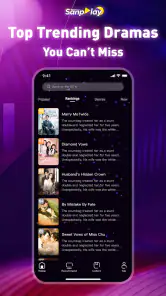
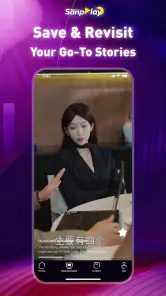
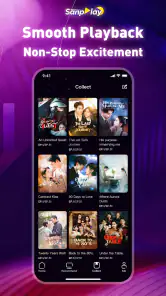
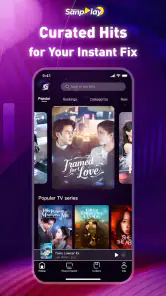
Analysis by Reviewed
I approached SanpPlay-Movies & Dramas as a quick entertainment app rather than a replacement for every streaming service on my phone. Its purpose is easy to understand: open it when I want short-form drama and browse for something that can fill a few spare minutes. The idea is appealing for commutes, waiting rooms, lunch breaks, and those evenings when I want a story but do not want to commit to a long film.
The experience is also closely tied to connectivity. The app’s appeal depends on being able to reach its drama catalog and move through its recommendations without too much interruption. That makes the quality of my network part of the viewing experience, not just a background technical detail. When the connection behaves, the format feels convenient. When it struggles, the short-episode design loses some of its advantage.
How the short-drama format feels in everyday use
SanpPlay-Movies & Dramas is an entertainment app from Longlife the King, and it is free to install. It is aimed at a general audience with an Everyone content rating, while the app itself runs on Android 7.0 or later. The current version is 1.1.2, and the listing shows more than one hundred thousand installs. Those details place it within reach of many Android users, including people with older phones who do not want to upgrade hardware just to try a drama app.
I found the short-drama approach most useful when I treated each session as a small viewing break. A conventional movie app is usually better when I have a clear hour or two available. Here, the attraction is the possibility of starting something quickly, watching a manageable portion, and stopping before the rest of the day takes over. That is a practical difference, not merely a change in episode length.
A realistic example is a train ride with several stops. I might open the app, look for a story that matches my mood, and watch while the journey is moving smoothly. If the trip includes underground sections or weak mobile coverage, the experience becomes less dependable. For that reason, I would not make it my only entertainment plan for a long journey unless I had already checked how well it behaved on my connection.
The app’s store summary presents it as a place for drama discovery, with recommendations and frequent additions. In practice, that promise creates two different expectations. First, I expect to find something quickly without knowing the exact title. Second, I expect the catalog to feel active enough that returning users have a reason to browse again. The first expectation is easier to appreciate immediately; the second depends on whether the available selection continues to match my tastes over time.
Why connectivity matters more than it first appears
Short episodes can make a weak connection feel especially frustrating. If I am watching a long film and encounter one interruption, I may tolerate it because I have already settled into the experience. With short drama, the whole point is frictionless access. A delay while a brief episode begins can take up a large part of the time I intended to spend watching.
More From Our News Desk

Clash of Clans Is Won Between the Battles

Android Auto Makes the Case for Quieter Car Software

MobiOffice: Transforming Mobile Productivity with Seamless Integration

EA SPORTS FC™ Mobile Soccer: Redefining Mobile Sports Gaming

How Microsoft OneDrive Became a Mobile Productivity Giant

How Google Translate Breaks Language Barriers Effortlessly
I therefore recommend opening SanpPlay-Movies & Dramas before a planned break rather than waiting until the exact moment I have only a few minutes left. That small change gives the app time to load its browsing experience and lets me decide whether the current connection is suitable. It is one of the more useful habits for this type of service, especially on mobile data.
Another practical point is that a recommendation-driven app can be more sensitive to connectivity than a simple local video player. Browsing, selecting a title, moving between episodes, and continuing through a story may all depend on timely communication with the service. I would not assume that a title visible on screen will remain available to play through a tunnel, airplane mode, or a dead zone. The safe approach is to use it where the network is known to be stable.
The best way to use SanpPlay is to plan around the connection, not pretend the connection is invisible. That sounds obvious, but it changes whether the app feels like a convenient companion or an unreliable distraction.
Using it on a phone without wasting the moment
The short-form design suits one-handed phone use better than a traditional movie session. I can browse while standing in a queue, choose a drama during a coffee break, or watch a small section before returning to another task. I would still avoid treating it as background noise when I need to concentrate, because dramatic storytelling works better when I give it at least a little attention.
Screen size also affects my judgement. On a phone, short scenes are easier to follow than a full-length production with dense visual detail. That does not mean every title will be equally comfortable on a small display. If the dialogue, expressions, and scene changes carry most of the story, the format can work well. If I am trying to notice fine visual information, a larger screen is the better choice.
One useful workflow is to separate discovery from viewing. When I have a reliable connection, I can browse several options instead of starting the first title that appears. Then, during a shorter break, I can return to the choice I already made. This reduces the amount of time spent scrolling when the actual viewing window is limited. It also helps avoid using mobile data for endless browsing when I only intended to watch one short drama.
I would also keep the phone’s battery condition in mind. Video playback is naturally more demanding than reading or listening, and a long sequence of short episodes can quietly turn into a much longer session. The app’s format encourages “just one more” because each individual commitment feels small. That is enjoyable when I have time, but it can be inconvenient when I need the phone for navigation, calls, or work afterward.
What happens when the network fails
The most important limitation for me is not the idea of short dramas; it is the uncertainty created by changing connectivity. A stable home connection and a crowded mobile network are very different environments. The app can feel straightforward in one and awkward in the other, even though I am using the same phone and version.
If playback stops, I would first avoid repeatedly tapping the screen. A better recovery routine is to pause for a moment, check whether other apps are also struggling, and then try again once the connection settles. If the problem affects only this app, closing and reopening it may be more sensible than spending several minutes fighting the same loading state. These are simple steps, but they prevent a small interruption from becoming a frustrating session.
I would also remember where I stopped before restarting anything. Short dramas make it easy to lose track of an episode or scene, particularly if I leave the app quickly. When returning, I would check the current title and episode rather than assuming the app has placed me exactly where I expected. That habit matters more when the connection fails during a transition between episodes.
For a commuter, the main trade-off is clear: SanpPlay can be enjoyable when the route has consistent coverage, but it is a risky choice as the sole plan for a journey with frequent dead spots. A downloaded film from a service that explicitly supports offline viewing is a better alternative for that situation. I would choose this app when discovery and short sessions matter more than guaranteed continuity.
The same distinction applies at home. If a household connection is busy with video calls, gaming, or several streams, a short-drama app may not receive the smooth conditions I expect. In that case, reducing competing activity or waiting for a quieter moment may help. I would not judge the entire catalog by one poor session on an overloaded network.
Keeping mobile data under control
Because the app is free to install, it is tempting to treat every browse and viewing session as costless. That is not necessarily true for someone using a limited mobile plan. Video can consume a meaningful share of a data allowance, and the habit of browsing many titles before choosing one may add to that use. I would start with a small, intentional session and check my phone’s own data controls rather than assuming the app will manage everything for me.
A sensible routine is to browse briefly, choose one drama, and stop exploring once I have made the decision. That keeps the app aligned with its strongest use case: a focused short break. If I am at home, I would use a trusted Wi-Fi connection; if I am outside, I would avoid repeatedly reopening the catalog just to see whether another recommendation looks better.
This is also where the free model deserves a closer look. SanpPlay-Movies & Dramas is free, but it includes in-app purchases ranging from $4.99 to $299.99 per item. That does not automatically make the app poor value, yet it means I would pay attention to any purchase prompt and avoid treating the free download as proof that every part of the experience costs nothing. Anyone sharing a phone with children should be especially careful around purchase controls, even though the app carries an Everyone age rating.
The purchase range makes my recommendation more conditional. If I only want to sample short dramas without spending, I would use the free portion carefully and make sure I understand what a prompt is offering before confirming anything. If I am looking for a predictable monthly entertainment budget, a conventional subscription service may be easier to understand. The alternative can be less flexible in catalog discovery, but it may make recurring costs simpler to plan.
Another data-conscious tip is to avoid using the app as a passive autoplay habit. Short episodes can encourage continuous viewing because the next choice feels immediate. I prefer deciding in advance how many episodes fit my break. That protects both my data allowance and my time, while still letting the format do what it does well.
Who will enjoy it, and who should choose something else
I think SanpPlay-Movies & Dramas is most suitable for people who enjoy dramatic stories in small portions and like discovering titles through an app rather than selecting a specific blockbuster. It makes sense for casual viewers, busy users, and anyone who wants entertainment that can fit between larger responsibilities. The Everyone rating also makes it approachable for a broad audience, although individual families should still decide whether particular story themes suit them.
It is less convincing for viewers who want a deep, carefully organized library, guaranteed playback during travel, or a familiar premium streaming interface. Someone who plans a movie night around uninterrupted viewing may prefer a service designed around full-length releases. Likewise, a viewer with very limited data should be cautious unless their connection and usage habits are already under control.
The average rating is 2.1 from around one hundred ratings, with around fifteen written reviews. I would treat that as a reason to keep expectations measured rather than as an automatic rejection. Ratings can reflect different experiences with content, performance, purchases, or availability, and a small app can feel very different depending on the user’s phone and network. Still, the score is a useful warning not to assume the store summary tells the whole story.
Compared with ordinary streaming alternatives, the strongest distinction here is the short-drama focus and the emphasis on finding something quickly. A general streaming platform may offer a broader range of films and series, stronger continuity tools, or a more established approach to viewing across devices. SanpPlay is more appealing when I want a lightweight discovery session and do not need the full structure of a major catalog.
My practical verdict on SanpPlay
I see SanpPlay-Movies & Dramas as a free entertainment option worth testing if short drama fits the way you use your phone. Its value is highest in controlled situations: a stable connection, a defined break, and a clear limit on browsing or spending. Under those conditions, it can turn small gaps in the day into enjoyable viewing without asking me to plan an entire evening around one title.
Connectivity is the deciding factor. I would not rely on it for a flight, a remote trip, or any journey where uninterrupted playback is essential. I would also be careful with mobile data and in-app purchase prompts, particularly because the purchase range reaches from a modest amount to $299.99 per item. Those are not reasons to avoid the app completely; they are reasons to use it deliberately.
My final recommendation is cautious but positive for the right viewer. Install it if you want a short-form drama destination, have dependable internet access, and are comfortable exploring a service with a low average rating. Skip it if your priority is offline certainty, a predictable subscription structure, or a polished alternative to established streaming platforms. For me, it works best as a flexible side app for brief viewing sessions, not as the only entertainment service on my phone.
SanpPlay-Movies & Dramas Frequently Asked Questions
Who developed SanpPlay-Movies & Dramas, and what devices can install it?
SanpPlay-Movies & Dramas is an entertainment app from Longlife the King. Its current version is 1.1.2, and it requires Android 7.0 or later. The app is rated for Everyone, so its age classification is suitable for a general audience. Check your device’s operating system before downloading to make sure it meets the minimum requirement.
What is SanpPlay-Movies & Dramas?
SanpPlay-Movies & Dramas is an entertainment app designed for watching movies, television dramas, and other video content on a mobile device. Its catalog, presentation, and available genres may vary by region and over time. Before downloading, users should check the current app-store description to confirm whether the titles they want are available and whether the service supports their preferred language or subtitles.
Is SanpPlay-Movies & Dramas free to use?
The app is free to download, but it offers in-app purchases priced from $4.99 to $299.99 per item. The store summary describes it as a place for short dramas, with AI finding favorites and new drops daily. Review any purchase prompt carefully before confirming a transaction, particularly if you are downloading the app for someone else or want to avoid unexpected spending.
Does SanpPlay-Movies & Dramas require an internet connection?
Yes, users should generally expect an internet connection to stream movies and dramas through SanpPlay. A stable Wi-Fi or mobile-data connection is important for smooth playback, particularly when selecting higher video quality. If the app provides offline downloads, availability may depend on the title, account type, storage space, and licensing restrictions. Downloading over Wi-Fi can help avoid unexpected mobile-data charges.
Is SanpPlay-Movies & Dramas safe to download?
The safest way to install SanpPlay-Movies & Dramas is through the official Google Play Store or Apple App Store, where the publisher information, permissions, ratings, and privacy details can be checked. Avoid modified APK files or unofficial download pages, as they may contain harmful software. After installation, review the permissions requested and avoid entering sensitive information unless the app clearly explains why it is needed.
Pros
- Large selection of movies and dramas in one convenient app.
- Simple interface makes browsing titles quick and straightforward.
- Supports on-demand viewing instead of fixed broadcast schedules.
- Useful search tools help locate specific shows or films faster.
- Regular content updates can keep the catalog feeling fresh.
Cons
- Content availability may vary depending on your country or region.
- Some titles may require registration or an account to access.
- Video quality can depend heavily on your internet connection.
- Advertising may interrupt playback or make browsing less comfortable.
- The app may lack subtitles or audio options for some content.
- Category
- Entertainment
- Version
- 1.1.2