Salvia - Tarot & Psychics
- 1.62K
- 4.7
- Installs
- 100.00K
- Price
- Free

Screenshots






Analysis by Reviewed
When I first opened Salvia - Tarot & Psychics, I approached it less like a game and more like a guided space for reflection. It sits in the lifestyle category, combining love advice and tarot-style readings with a broader focus on personal questions. That makes it most useful when you already have something specific on your mind, rather than when you are simply looking for a way to pass a few minutes.
The app is free to install, and Scifate has made the initial experience approachable for someone who has never tried this kind of service before. Its audience is clearly mature enough to handle relationship themes and spiritual guidance, which is reflected in its Teen content rating. I would not treat it as a replacement for professional counseling or practical advice from people who know your situation, but I can see why someone might use it as a private prompt for thinking through emotions, uncertainty, or a difficult conversation.
Finding a useful starting point instead of chasing a prediction
The biggest difference between a satisfying session and a disappointing one is the question you bring into it. A vague thought such as “What will happen to my love life?” leaves too much room for a reading to feel general. I had a better experience when I narrowed the subject to something I could actually reflect on, such as whether I was avoiding an honest conversation or what I needed to understand about a change in a relationship.
That is an important mindset adjustment for first-time users. Salvia presents itself around expert love advice, tarot readings, and personal potential, but the value depends on how actively you interpret the material. I found it more helpful as a structured pause than as a source of guaranteed answers. If you use every message as a fixed prediction, you may end up giving it more authority than it deserves.
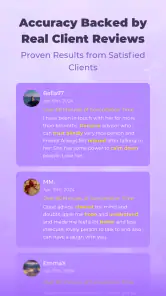
The app’s public reception suggests that many people find the format appealing. It holds a 4.7 average from around 10 thousand ratings, with roughly 1.6 thousand written reviews, and it has passed 100 thousand installs. Those figures make it easier to see that this is not an obscure experiment with no audience, although popularity alone should not decide whether the style suits you.
Before starting, I recommend choosing one theme and writing down what you already believe about it. That small step creates a useful comparison afterward. Instead of asking whether the reading was “right,” you can ask whether it helped you notice an assumption, a fear, or an option you had overlooked. This is one of the more practical ways to get value from a spiritual app without surrendering your own judgment.
What the first session feels like
The first session is best approached slowly. I would avoid opening the app while distracted, especially if you are upset after an argument or tempted to make an immediate decision. A reading can feel unusually convincing when emotions are high. Taking a few minutes to settle down first makes it easier to separate an interesting perspective from an instruction you should follow blindly.
More From Our News Desk

Clash of Clans Is Won Between the Battles

Android Auto Makes the Case for Quieter Car Software

MobiOffice: Transforming Mobile Productivity with Seamless Integration

EA SPORTS FC™ Mobile Soccer: Redefining Mobile Sports Gaming

How Microsoft OneDrive Became a Mobile Productivity Giant

How Google Translate Breaks Language Barriers Effortlessly
I also suggest deciding what kind of help you want before moving ahead. Are you looking for reassurance, a new angle on a relationship, or a prompt for self-examination? These are different goals. Reassurance may make a comforting reading feel successful, while self-examination requires you to notice uncomfortable parts as well. Being clear about that goal prevents you from judging the app by a standard it was never meant to meet.
For a realistic everyday example, imagine that someone you have been dating suddenly becomes less communicative. Instead of asking Salvia to tell you whether the relationship will survive, use the experience to explore what you can control: how directly you communicate, what behavior you consider acceptable, and whether anxiety is filling in gaps with assumptions. You still need a real conversation, but the reading can help you organize your thoughts before having it.
Getting through setup without overcommitting
My advice during setup is simple: move at your own pace and read each screen carefully. Lifestyle apps built around readings can make the first interaction feel personal very quickly, and that can encourage people to continue before they have decided what they actually want. There is no need to treat the first session as a commitment to a long routine.
Because the app is free to download but includes in-app purchases ranging from $0.99 to $329.99 per item, I would pay close attention whenever an option leads toward a paid experience. The range is wide enough that a new user should not tap through automatically, particularly when feeling anxious or emotionally vulnerable. My practical rule is to stop before any purchase, decide whether the session is genuinely helping, and check the displayed cost rather than assuming every part of the app is included.
This is not a criticism of the entire concept; paid readings are common in this category. The friction comes from the emotional context. A person who wants urgent certainty about a partner may be more likely to spend impulsively than someone browsing casually. Setting a personal limit before starting is a small but meaningful safeguard.
Salvia runs on Android devices using version 6.0 or later, so compatibility should be straightforward for many Android users. The current version is 1.04.9. If you are deciding whether to install it on an older phone, the operating-system requirement is the practical detail to check first. I would also keep expectations realistic about the difference between installing successfully and enjoying the experience; compatibility gets you through the door, but your comfort with tarot and psychic-style guidance determines whether you want to stay.
The first meaningful success: turn a reading into an action
A successful first use is not necessarily receiving a dramatic prediction. For me, it is finishing a session with one clear, sensible action that does not depend on the reading being literally true. That might mean drafting a message without sending it immediately, listing the boundaries you want to discuss, or identifying the question you should ask a trusted friend.
One useful workflow is to separate the experience into three notes. First, write the question you brought in. Second, record the parts that felt relevant and the parts that did not. Third, choose one action based on your own values rather than on a prediction. This prevents the app from becoming a loop in which you keep requesting new readings until one says what you hope to hear.
That last point matters more than it may seem. Repeating readings about the same person or decision can create confusion instead of clarity. If the first session leaves you uncertain, take a break and return only when you have new information or a different question. I found that this approach makes the app feel more like a reflective tool and less like a source of emotional checking.
For relationship questions, I would pair a reading with observable facts. Has the person communicated clearly? Do their actions match their promises? Do you feel respected? Those questions are more reliable than any symbolic interpretation. Salvia can help you examine your reaction to the facts, but it cannot replace the facts themselves.
Where newcomers can become confused
The first common misunderstanding is expecting every reading to function like a precise forecast. Tarot language is often symbolic, and love advice can be broad enough to fit several situations. I would read the material as an invitation to consider possibilities, not as proof that a specific event will happen. This interpretation keeps the experience engaging without turning uncertainty into certainty.
A second source of confusion is the word “expert.” The app’s positioning may make the guidance sound authoritative, but users should still distinguish between an entertaining or reflective reading and qualified help for serious problems. If you are dealing with abuse, coercion, threats, severe distress, or a mental-health crisis, a tarot-style app is not the right place to handle the situation. Contact an appropriate professional or a trusted person who can respond directly.
Another issue is emotional timing. A reading may feel especially powerful late at night, immediately after a breakup, or while waiting for a reply. In those moments, I would avoid making major decisions based on what appears in the app. Save the session, if the app’s available flow allows you to do so, and review your thoughts later with a calmer mind. The goal is not to dismiss the experience; it is to avoid confusing emotional intensity with evidence.
New users may also wonder whether the free entry point means they can explore everything without cost. I would not assume that. The app is free, but the presence of item-based purchases means some experiences may require payment. Treat every paid step as a separate decision. If you are only curious about the format, begin with the free portion and decide whether the tone and usefulness justify spending anything.
How it compares with familiar alternatives
Compared with a general horoscope app, Salvia feels more focused on personal questions and relationship concerns. A horoscope is often something you read quickly as part of a daily routine, while this app makes more sense when you want to sit with a particular issue. If you prefer short, repeatable updates, a horoscope service may be a better match. If you want a prompt that responds to a question you have already formed, Salvia has the stronger appeal.
Compared with a traditional tarot deck, the app is more convenient and less intimidating. You do not need to learn card meanings, prepare a table, or decide how to structure a spread. That accessibility is valuable for beginners. The trade-off is that a physical deck can encourage a slower, more personal ritual, while an app can make it tempting to request another reading immediately.
Compared with a journal, Salvia supplies an external framework instead of asking you to generate every prompt yourself. That can be helpful when your thoughts feel tangled. A journal remains better for tracking patterns over time, recording exact events, and seeing how your feelings change. My preferred combination is to use a reading as the opening question, then use a journal to test the idea against real experiences.
Compared with speaking to a friend, the app offers privacy and availability, but it lacks the context of someone who knows your history. A friend can challenge your assumptions and notice when you are repeating a harmful pattern. Salvia can help you articulate what you want to ask that friend. I would use the two for different purposes rather than treating them as interchangeable.
Small habits that make the experience more useful
Keep the question narrow enough that you can recognize a practical response. “How can I handle this conversation?” is more useful than “Tell me my entire future.” The narrower question also makes it easier to judge whether the session gave you a fresh perspective or merely repeated familiar ideas.
Do not use the app to repeatedly check whether another person will contact you. That habit shifts attention away from your own choices and toward waiting for an outcome you cannot control. A better use is to ask what you need from communication, what boundary you want to set, or what information would help you decide.
Write down disagreements as well as resonant points. If you only save the parts that feel accurate, you may create a distorted memory of the reading. Recording what did not fit makes the exercise more honest and helps you avoid treating general language as a perfect description of your life.
Finally, decide in advance what would make you stop. I would leave the session if it increased panic, encouraged dependence, or pushed me toward a costly decision I had not planned to make. A reflective tool should leave room for your judgment. If it starts replacing that judgment, the healthiest next step is distance, not another reading.
Who should try it and who should skip it
I think Salvia is a good fit for curious adults and older teens who enjoy tarot or psychic-style reflection, especially people who want help putting relationship questions into words. It may also suit someone who likes guided prompts but does not want to maintain a formal journaling practice. The free installation makes it relatively easy to sample the format before deciding whether it belongs in your routine.
I would be more cautious recommending it to someone who wants factual relationship analysis, guaranteed predictions, or clinical emotional support. It is also a poor match for anyone who tends to make repeated purchases while distressed or who finds symbolic readings difficult to separate from reality. In those cases, a journal, a trusted friend, or a qualified counselor is likely to be more useful.
The Teen rating is worth taking seriously for families deciding whether a younger user should explore it. Love-related material can raise personal and emotional questions, so I would prefer a young person to use it with a clear understanding that readings are interpretive and not instructions. The app can prompt discussion, but it should not become the only voice shaping a teenager’s view of relationships.
My recommendation after using the full approach
Salvia works best when I treat it as a calm starting point: ask one honest question, consider the response, and return to real-world evidence before acting. Its strongest quality is accessibility. Someone unfamiliar with tarot readings can begin without learning a complex system, while someone already interested in spiritual guidance can use it as a convenient way to explore personal themes.
Its main limitations are just as important. Symbolic advice can sound more specific than it really is, emotionally charged moments can make it feel overly persuasive, and the purchase range means users need to stay alert at paid steps. None of those issues automatically makes the app unsuitable, but they do require boundaries and a willingness to pause.
Scifate has created a lifestyle app that is easy to approach and broad enough to cover love advice, tarot, and personal reflection. I would recommend trying it with a question you can act on yourself, not one that asks the app to control another person or guarantee the future. If your first session helps you name a feeling, prepare a respectful conversation, or notice a pattern, it has already done something worthwhile.
My honest bottom line: Salvia is worth exploring if you want reflective tarot-style guidance and can keep your own judgment in charge. Start free, move carefully around purchases, and measure success by the clarity you gain rather than by whether a prediction comes true. Used that way, it can be a thoughtful companion for a difficult question, while still leaving the important decisions where they belong: with you.
Salvia - Tarot & Psychics Frequently Asked Questions
What devices and age group is Salvia - Tarot & Psychics intended for?
Salvia - Tarot & Psychics is a lifestyle app from Scifate, intended for users who meet its Teen content rating. It requires Android 6.0 or later, so check your device’s operating system before downloading. If you are considering the app for a younger user, keep in mind that tarot and psychic guidance may touch on personal or emotional subjects and may involve paid services.
What is Salvia - Tarot & Psychics, and how does it work?
Salvia - Tarot & Psychics is a spiritual guidance app that connects users with tarot readings, psychic consultations, and related divination content. Depending on the available features, you may be able to explore tarot cards, receive personalized interpretations, or communicate with a reader through chat or another supported format. The experience is intended for reflection and entertainment rather than guaranteed predictions.
Is Salvia - Tarot & Psychics free to download and use?
The app is free to download, but some readings, consultations, messages, or premium tools can require payment. In-app purchases range from $0.99 to $329.99 per item, so carefully review the displayed price, package, subscription, or purchase terms before starting a session. Availability and costs may vary by country, reader, and service type; confirm the final charge and any renewal conditions before purchasing.
Are the tarot readings and psychic predictions accurate?
Tarot and psychic readings are subjective forms of spiritual or personal guidance, and their accuracy cannot be scientifically guaranteed. Readings may help some people reflect on emotions, relationships, or decisions, but they should not replace professional medical, legal, financial, or mental-health advice. Treat the content as entertainment or inspiration and use your own judgment when making important choices.
Can I communicate directly with a psychic or tarot reader?
Salvia may offer ways to interact with individual readers, such as chat, messages, audio, video, or scheduled consultations, depending on the current app features. Reader availability, response times, pricing, and communication methods can differ. Check each profile and service description before contacting someone, and avoid sharing sensitive personal, financial, or identifying information during a reading.
Pros
- Offers tarot readings and psychic guidance in one app.
- Clean interface makes browsing readers and services straightforward.
- Useful for self-reflection
- journaling
- and exploring personal questions.
- Provides access to different reading styles and spiritual perspectives.
- Convenient way to request readings without visiting a physical reader.
Cons
- Readings may vary greatly depending on the selected psychic.
- Paid sessions can become expensive with frequent use.
- Some guidance may feel too general or subjective.
- Requires an internet connection for most features.
- Not a substitute for professional medical
- legal
- or financial advice.
- Category
- Lifestyle
- Version
- 1.04.9