Rushly: Meet & Date
- 1.61K
- 4.5
- Installs
- 100.00K
- Price
- Free

Screenshots

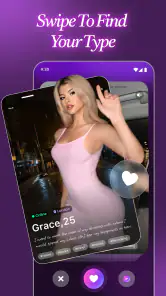


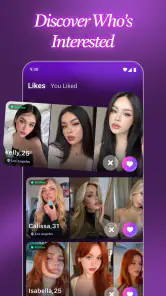


Analysis by Reviewed
Meeting someone new through a phone can feel either refreshingly simple or strangely tiring, depending on how much effort the app asks from you. Rushly: Meet & Date takes a direct social approach: it is built for people who want to meet a potential date or make a new friend rather than spend all their time managing a complicated profile. I found its strongest appeal in that clear purpose. It does not present itself as a general-purpose social network; the experience is centered on starting personal connections.
That focus makes Rushly worth considering if you are open to conversations with people outside your existing circle. It is a free social app from NICE DAY TECHNOLOGY LIMITED, with a mature 17+ rating and optional purchases priced from $3.99 to $99.99 per item. The app reached a 4.5 average from around 20K ratings and has passed 100K installs, which suggests that it has already attracted a meaningful early audience despite its relatively recent arrival on June 24, 2025.
Rushly’s main idea: turning discovery into a social decision
The capability I kept coming back to is Rushly’s combination of dating and friendship discovery. That sounds straightforward, but it changes how I would use the app compared with a platform that assumes every new contact is a romantic prospect. Here, the starting question is broader: am I interested in meeting this person, whether the connection develops into a date, a friendship, or simply a pleasant conversation?
That distinction matters because many people are not looking for one narrowly defined outcome. Someone who has moved to a new city may want company before they want romance. A person returning to dating may prefer low-pressure conversations. Another user may be interested in meeting people with similar interests but not feel ready to describe every interaction as a date. Rushly’s positioning gives those users a more comfortable reason to begin.
In my experience, the best way to approach the app is to treat the first interaction as a small decision, not as a promise. You are not agreeing to meet in person just because you show interest. You are deciding whether a conversation seems worth opening. That mindset keeps the process more manageable and helps avoid the common dating-app habit of judging profiles as if every swipe were a final verdict.
The real strength is lower pressure at the beginning. Rushly can be useful when you want social discovery without immediately forcing yourself into a strict dating identity. That does not make every interaction meaningful, of course, but it gives the app a practical role between a traditional dating service and a broad social network where meeting someone new is not the main purpose.
What the first few sessions feel like
I would begin by deciding what I actually want from the app before browsing: a romantic conversation, new friends, or simply a chance to see who is around. That small bit of preparation is more important here than it may sound. If you approach every profile with the same expectation, the dating and friendship sides can blur together and make your conversations feel unclear.
More From Our News Desk

Clash of Clans Is Won Between the Battles

Android Auto Makes the Case for Quieter Car Software

MobiOffice: Transforming Mobile Productivity with Seamless Integration

EA SPORTS FC™ Mobile Soccer: Redefining Mobile Sports Gaming

How Microsoft OneDrive Became a Mobile Productivity Giant

How Google Translate Breaks Language Barriers Effortlessly
The app’s short store description is simply “Rushly,” while its broader store summary points toward dating and making friends. That contrast reflects the experience I would expect from the product: a compact identity with a wider social purpose. It is not trying to explain every possible use case in advance, so the user has to bring some intention to the process.
For a better experience, I would keep my opening messages specific. Instead of sending a generic greeting, I would refer to something visible in the person’s profile or ask a question that can be answered naturally. This is especially useful when an app serves both friends and dates, because a thoughtful question helps reveal the other person’s expectations without making the conversation feel like an interview.
I would also avoid treating a quick response as proof of compatibility. Rushly is a starting point, not a substitute for judgment. The app can help two people find one another, but it cannot decide whether their communication style, boundaries, or intentions match. That remains the part where patience matters most.
A realistic everyday use case
Imagine that I have just moved for work and my evenings are becoming repetitive. I do not necessarily want to jump straight into a serious dating routine, but I would like to meet someone for coffee, talk about local interests, or find a person who is also trying to build a social circle. Rushly fits that situation better than a platform designed only around established friend groups or highly formal dating profiles.
I might open the app during a quiet evening, browse with the intention of finding one or two promising conversations, and then return later rather than trying to maintain a large number of chats. That limited approach is useful because social apps can quickly turn into a second inbox. Focusing on a small number of genuine exchanges makes it easier to notice whether someone is respectful, responsive, and clear about what they want.
If a conversation develops well, I would keep the first meeting simple and public, such as a busy café or a daytime community space. I would tell a trusted friend where I was going and avoid sharing sensitive personal information too early. These are not special features of Rushly; they are practical habits for any app that connects you with people you do not already know.
The same scenario works for friendship. I might state early that I am mainly hoping to meet people locally and see where the conversation goes. That clarity reduces the chance of wasting time with someone whose expectations are completely different. It also makes the app’s dual purpose more useful, because the conversation does not have to be treated as a failed date if romance is not the right direction.
How I would use the app without letting it take over
My preferred workflow would be short, deliberate sessions. I would check new possibilities, respond to the conversations that feel reciprocal, and leave the app when the interaction becomes repetitive or one-sided. This is a small but important trade-off: Rushly can help create opportunities, but it cannot create the motivation to keep every conversation alive.
I would also review my own profile from the perspective of someone who does not know me. A profile that says only “looking to meet people” gives very little to work with. Adding a few honest details about interests, preferred activities, or the kind of connection I want would make the app’s central capability work better. The goal is not to present a polished version of myself; it is to give the right people a reason to start a conversation.
One non-obvious benefit of the dating-and-friendship model is that it encourages me to judge compatibility by communication rather than by a single category label. If someone is kind, curious, and consistent, that may be enough to continue talking even when the eventual relationship is not obvious. In a romance-only environment, I might dismiss that possibility too quickly.
There is also a downside. Broader intentions can create ambiguity. If one person is seeking friendship and another is quietly expecting a date, the conversation may become uncomfortable unless both explain themselves. I would therefore ask about intentions naturally before arranging an in-person meeting. That is not distrust; it is a way to make the app’s flexibility work in both users’ favor.
Where Rushly compares well with familiar alternatives
Compared with a conventional dating app, Rushly’s appeal is its softer entry point. A dating-only service may be a better choice if I want a clearly romantic audience and do not want to interpret mixed signals about friendship. Rushly is more suitable when I am comfortable with a wider range of social outcomes and would rather let a connection develop gradually.
Compared with a general social network, Rushly has a more focused reason for contact. On a large social platform, I may encounter people through public posts, groups, or shared interests, but starting a private conversation can feel intrusive. An app dedicated to meeting and dating makes that intention more understandable from the start.
Compared with local community groups, Rushly is more personal and immediate, but it may offer less structure around shared activities. If my main goal is joining a running club, attending language exchanges, or finding teammates for a hobby, a specialized community platform could be more effective. Rushly makes sense when the connection itself is the priority, not when I need an organized event system.
This is why I would not describe it as the best social app for everyone. It occupies a particular middle ground. It is for people who want direct personal discovery, but who do not want every new contact forced into a purely romantic box.
The costs, boundaries, and points of friction
Rushly is free to download and use at its basic level, but in-app purchases range from $3.99 to $99.99 per item. That wide range is something I would keep in mind before spending anything. I would first use the free experience long enough to understand whether I am actually finding worthwhile conversations. Paying for visibility or convenience only makes sense if the underlying audience and interaction quality suit me.
I would also be cautious about assuming that a high average rating guarantees a perfect personal experience. The app has a 4.5 average from around 20K ratings and around 1.6K written reviews, which is encouraging, but social apps are especially dependent on location, timing, age group, and personal expectations. A positive experience for one user may not translate directly to another person’s area or preferred type of connection.
The mature 17+ rating is another practical signal. I would not treat Rushly as an app for younger teenagers, and I would expect users to approach conversations with adult awareness about boundaries and personal safety. Anyone uncomfortable with meeting strangers online, handling flirtation, or filtering unwanted attention may find the category itself stressful, regardless of how simple the interface feels.
Privacy and emotional energy are also trade-offs I would consider. Every social discovery app asks me to decide how much of myself to reveal and how quickly to trust someone. I would keep identifying details limited at first, avoid moving immediately to private channels, and stop responding if a conversation becomes pressuring or disrespectful. A good app can support safer choices, but it cannot make those choices for me.
Another limitation is the possibility of unclear outcomes. The friendship option is valuable, but it can also make expectations harder to read than on a dating-only platform. I would not call that a flaw in the concept; it is the price of flexibility. The app works best for users willing to communicate openly rather than expecting the platform to label every interaction for them.
Who gets the most from this social format?
I think Rushly is strongest for adults who want to expand their social circle while remaining open to dating. It is particularly appealing if I have recently relocated, work remotely, spend little time in traditional social settings, or simply prefer one-to-one conversations over public group activity. The app’s central capability gives those users a clear path from discovery to conversation.
It can also suit someone who feels tired of dating apps that make every interaction feel like a performance. By allowing friendship and dating to sit alongside each other, Rushly leaves more room for a natural connection. That does not remove awkward conversations, but it can make the initial step feel less loaded.
I would recommend skipping it if I want a highly structured matchmaking process, detailed compatibility analysis, or an app focused only on serious romantic relationships. I would also choose a different service if my priority is organized local events, professional networking, or hobby-based groups. Rushly is not designed to replace those experiences; its value comes from direct personal discovery.
Device compatibility is relatively accessible for Android users, since the current version, 1.2.7, requires Android 6.0 or later. That makes it practical on many older Android phones, although I would still keep the app updated when possible so that the experience remains stable and security improvements are not missed.
My recommendation after weighing the trade-offs
I see Rushly as a focused option for meeting people when I want the possibility of both friendship and romance to remain open. Its strongest idea is not that it magically finds the perfect person; it is that it gives a clearer reason to begin a conversation with someone new. Used with realistic expectations, that can be genuinely helpful.
I would install it if I wanted a fresh social starting point and was prepared to explain my intentions, protect my personal information, and judge conversations by their quality rather than their speed. I would use the free experience first, keep my activity purposeful, and treat paid items as optional rather than necessary.
My final view is positive but measured. Rushly is most convincing when I need personal connections rather than a huge collection of unrelated social features. It is less convincing for anyone who wants certainty, formal matchmaking, or a completely frictionless path from profile to relationship. If you are comfortable with that balance, this app offers a useful middle ground: one place to look for a date without closing the door on a real friendship.
Rushly: Meet & Date Frequently Asked Questions
Does Rushly: Meet & Date have an age rating, and what does it mean for my decision to download it?
Rushly: Meet & Date is rated Mature 17+, which is a useful consideration before installing a dating and social discovery app. It is intended for adults interested in meeting people, dating, or making friends, rather than children. Parents and younger users should take the rating seriously, and adults should consider whether the app’s social environment suits their own preferences.
How much space should I leave on my phone before installing Rushly: Meet & Date?
It is sensible to have some free storage available before downloading Rushly: Meet & Date, and to leave room for later app updates. The amount required can vary by device and by the version being installed. If your phone is nearly full, clearing unused files or apps first can help avoid installation problems. Also check that your device meets the app’s operating-system requirement.
Is Rushly: Meet & Date available for my Android device?
Rushly: Meet & Date is a social app for meeting people and exploring dating connections. Its current version is 1.2.7, and Android support starts at version 6.0. Before installing, check your device’s Android version and make sure you have enough available storage for the download and app updates. The app is free to download, though some optional features may cost extra.
Who is Rushly: Meet & Date intended for, and is it appropriate for younger users?
Rushly: Meet & Date is intended for adults interested in dating or making new friends, rather than children or younger teens. It has a Mature 17+ age rating, so users should consider that guidance before downloading. As with any social app, use good judgment when sharing personal information or communicating with people you have not met, and review the app’s permissions and privacy choices.
What is Rushly: Meet & Date, and how does it work?
Rushly: Meet & Date is a dating and social discovery app designed to help people meet potential matches, start conversations, and explore new connections. After creating a profile, users can typically add photos and personal details, browse or receive suggested profiles, and interact with people they find interesting. The exact matching and messaging options may depend on the app version, location, and account settings.
Pros
- Quick sign-up and an easy-to-navigate interface.
- Profile discovery makes browsing potential matches feel straightforward.
- Useful for meeting people beyond your existing social circle.
- Chat features support continued conversations after matching.
- Location-based matching can help find nearby dating prospects.
Cons
- The quality of matches may vary depending on your location.
- Some features may require a paid subscription or in-app purchases.
- A smaller user base can limit the number of active profiles.
- Users should stay alert for fake profiles and suspicious messages.
- Privacy settings should be reviewed carefully before sharing personal details.
- Category
- Social
- Version
- 1.2.7