Resale Value Price Check・Cluzy
- 58.00
- 4.6
- Installs
- 10.00K
- Price
- Free

Screenshots

Analysis by Reviewed
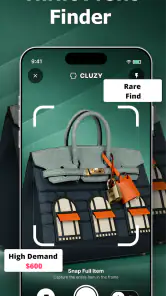
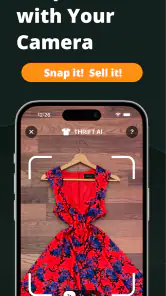
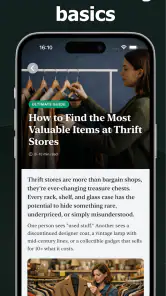
Resale Value Price Check・Cluzy caught my attention because it aims at a very practical moment: you are holding an unfamiliar item at an estate sale, thrift shop, garage sale, or house clear-out and want a quick sense of whether it may be worth buying. Instead of relying only on a seller’s description or a rushed web search, the app lets you scan an item and investigate its possible resale value. That makes it a lifestyle tool with a clear purpose rather than another app I would open simply to browse.
My first impression is that Cluzy is most useful when curiosity needs to become a decision. A strange lamp, old camera, collectible, kitchen appliance, or branded accessory can look promising without being profitable. The app gives that moment some structure. It does not magically turn every object into a guaranteed opportunity, but it can help me pause before spending money or carrying something home. The real benefit is better filtering, not instant profit.
From an exciting first scan to a useful routine
The first week with an app like this is naturally the most entertaining. Every unfamiliar object becomes a small research project. I can imagine using Cluzy while walking through an estate sale, scanning items that have recognizable shapes or labels, and comparing the result with the seller’s asking price. That process feels faster and more focused than opening several browser tabs for broad searches.
Cluzy is free to install, which lowers the barrier to trying it during an actual shopping trip. It is listed for Everyone, so its presentation is intended for a broad audience rather than a specialist trade community. Victor Edu is the developer behind it, and the current version is 1.0.7. The app has reached over ten thousand installs and holds a 4.6 average from around a thousand ratings, which suggests that many early users find the basic idea worthwhile.
Still, a scan should be treated as a starting point. Resale value depends on condition, completeness, authenticity, local demand, shipping costs, season, and the difference between an asking price and a completed sale. A clean item with its original accessories may be worth much more than the same model covered in wear. If I use the app as a quick clue rather than a final valuation, its role becomes much more realistic.
One useful habit is to scan before negotiating, not after. If an item looks interesting but the price feels high, a quick check can tell me whether further inspection is justified. I would then examine model numbers, labels, damage, missing parts, and included packaging before making an offer. This two-step workflow is more dependable than scanning only the objects I already want to buy, because it helps prevent enthusiasm from taking over.
What makes the first sessions genuinely useful
The strongest early use case is sorting. At a crowded sale, I do not need a perfect appraisal for every object. I need to identify which pieces deserve closer attention and which can be ignored. Cluzy can make that first pass less random. It is especially appealing for beginners who recognize that something may be interesting but do not yet know the vocabulary needed to research it manually.
More From Our News Desk

Clash of Clans Is Won Between the Battles

Android Auto Makes the Case for Quieter Car Software

MobiOffice: Transforming Mobile Productivity with Seamless Integration

EA SPORTS FC™ Mobile Soccer: Redefining Mobile Sports Gaming

How Microsoft OneDrive Became a Mobile Productivity Giant

How Google Translate Breaks Language Barriers Effortlessly
It can also help families clearing a home. When several people are deciding what to donate, keep, or sell, a scan can provide a common starting point for discussion. That does not replace a specialist for valuable or unusual objects, but it may stop obviously identifiable items from being discarded without a second look.
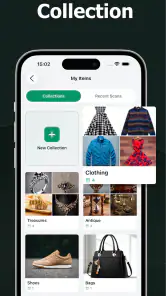
A less obvious advantage is that scanning encourages me to record the reason an item seemed promising. I can note the brand, visible condition, and purchase price immediately, then revisit the decision later. Even if Cluzy does not become a full inventory system for me, this simple pause reduces impulse buying. The app is at its best when it supports judgment rather than pretending to eliminate it.
There is also a trade-off in the visual approach. An item may be easy to recognize by appearance but difficult to distinguish from several similar versions. Small differences in model numbers, regional editions, materials, or included components can change the result. I would always rotate the item and inspect its labels before trusting a scan, particularly with electronics, collectibles, tools, and branded goods.
Does Cluzy keep earning a place after the novelty?
The month-to-month question is more important than the first-week excitement. A scanning app can be fun once, but its lasting value depends on whether I regularly encounter items worth checking. For an occasional shopper, Cluzy may remain a handy tool that gets opened only during estate-sale weekends. That is not a weakness by itself; a focused utility does not need daily use to be worthwhile.
For someone who resells regularly, the app could become part of a repeatable intake routine. I would scan an item, compare the suggested value with the purchase cost, inspect condition, and then calculate the less visible expenses. Packing materials, travel, platform fees, returns, storage, and time spent cleaning or photographing an item can turn a seemingly attractive margin into a poor one. Cluzy is more useful when it starts that calculation instead of ending it.
My preferred workflow would be deliberately conservative. First, scan the object in good light and identify the closest match. Next, verify the exact version from the item itself. Then, write down the lowest realistic resale expectation rather than the most optimistic number. Finally, decide whether the difference justifies the effort. This approach protects the app from being used as a permission slip for purchases that only look profitable.
Another practical use is building personal knowledge over time. If I repeatedly scan similar objects, I can begin to notice which categories are easy to identify and which are full of misleading variations. I may learn that condition matters more than appearance in one group, while completeness matters most in another. That learning is a lasting benefit, even when the app itself only provides the initial prompt.
However, regular sellers may eventually want more than a price check. They may need stock tracking, purchase-cost records, listing management, shipping calculations, and reminders. Cluzy should not be judged as though it were a complete resale business platform. Its focused purpose is useful precisely because it keeps the first decision simple, but that focus means I would pair it with notes or a spreadsheet if my activity grew beyond occasional selling.
The maintenance burden is small, but the user’s discipline matters
The app runs on Android devices using version 8.0 or later, so compatibility should cover many phones still in everyday use. Keeping it useful is less about constant administration and more about maintaining a careful scanning habit. The phone camera needs a clear view, the item should be presented without distracting clutter, and the identifying details should be checked manually afterward.
That last step is easy to skip. When I am in a busy shop, I may be tempted to accept the first plausible match and move on. The better practice is to scan the front, then look for a manufacturer mark, serial or model information, size, and included accessories. Even without turning the process into a formal inspection, those details reduce the chance of comparing the wrong item.
There is also a financial maintenance point. The app is free, but it includes in-app purchases ranging from $5.99 to $89.99 per item. That makes it important to understand my own usage before paying for anything. An occasional treasure hunter may find the free experience enough for casual checks, while a frequent reseller may consider additional paid access only if it clearly saves time or improves decisions. I would avoid committing to a high-priced option before testing whether the app fits my real shopping routine.
This is where Cluzy’s long-term value depends heavily on honesty. If I scan dozens of low-value objects simply because scanning is entertaining, I create more work without improving my results. If I reserve it for items with uncertain identity, meaningful purchase cost, or realistic resale potential, each use has a clearer purpose. The app does not demand much maintenance, but it rewards a disciplined workflow.
I would also keep a separate record for items I actually buy. A scan result is not the same as a purchase receipt, condition report, or final sale price. Writing down those details lets me compare expectations with outcomes later. That feedback loop is one of the most useful advanced habits I can build around Cluzy: after several sales, I can see whether the app’s suggestions tend to make me too optimistic, too cautious, or appropriately selective.
Where fatigue can set in
The novelty may fade when scans produce familiar answers or when the practical decision is obvious without them. If an item is clearly damaged, incomplete, or priced close to what it usually sells for, a check may not change anything. Likewise, if I already know a category well, manual inspection and experience may be faster than opening the app.
Uncertainty can also become tiring. Resale markets are not fixed shelves with one universal price. A value that looks attractive in one place may be unrealistic in another, especially when the item is difficult to ship or has a narrow audience. If I expect Cluzy to provide a guaranteed number, disappointment is likely. If I use it to narrow possibilities, the experience is more satisfying.
Photography and recognition can be difficult with reflective surfaces, damaged labels, tiny markings, or visually similar products. Estate-sale rooms are often crowded and poorly arranged, which makes careful scanning inconvenient. In those cases, I may get more dependable results by photographing the model information and researching it later when I have time. That is a situation where a general search engine, marketplace history, or specialist community may be the better tool.
The purchase model may create another source of hesitation. Because the paid items extend from a modest amount to a much larger one, I would want a clear personal reason before spending. A professional reseller who checks inventory constantly may calculate the time saved differently from someone who visits a sale once every few months. The same payment can feel reasonable to one user and excessive to another.
Cluzy is also not the right choice for every kind of valuation. Rare art, jewelry requiring authentication, antiques with uncertain provenance, safety-critical equipment, and expensive electronics deserve more rigorous examination than a quick scan. In those cases, a qualified appraiser, manufacturer documentation, specialist marketplace, or direct inspection is more appropriate. The app can still be a preliminary clue, but I would not use it as the sole basis for a high-stakes purchase.
How it compares with ordinary alternatives
The usual alternative is a web search. That approach can be more flexible because I can search an exact model number, compare multiple marketplaces, read condition notes, and look for completed-sale evidence. It is also slower and more dependent on knowing what to type. Cluzy’s advantage is the first move: it helps when I have an object in front of me but lack the right words.
Marketplace browsing has a different strength. It shows how sellers describe similar items and may reveal whether a category is crowded. Yet visible listings can reflect hopeful asking prices rather than actual transactions. I would use Cluzy for identification and initial direction, then use marketplace research to challenge the result. Neither method should be treated as a guaranteed profit calculator.
Manual research remains better for specialists. Someone who already knows vintage audio equipment, collectible cards, designer clothing, or repairable appliances may recognize important details faster than an automated scan. For that person, Cluzy may still be useful when an unfamiliar object appears, but it is unlikely to replace expertise. Its strongest audience is the curious beginner, the occasional reseller, and the practical shopper who wants a quick second opinion.
What distinguishes the app for me is not that it removes research, but that it changes when research begins. Instead of waiting until I get home, I can decide at the shelf whether an item deserves attention. That timing matters when another shopper may buy it first or when I have only a few minutes to inspect a room. The trade-off is that speed can encourage overconfidence, so the app works best alongside a short verification checklist.
Who should install it, and who should pass?
I would recommend Cluzy to anyone who regularly visits estate sales, thrift stores, flea markets, or clearance events and often wonders whether an unfamiliar item has resale potential. It is also a sensible companion for people sorting household belongings before selling or donating them. The free entry point makes experimentation easy, while the broad age rating keeps it approachable for families and casual users.
I would be more cautious about recommending it to a full-time reseller who expects inventory accounting, listing automation, detailed market history, or professional-grade authentication. That person may need a broader toolkit and could find a focused scanner insufficient on its own. I would also skip it if I rarely encounter secondhand goods or if I already have deep expertise in the categories I shop.
For me, the deciding question is not whether Cluzy can identify every object. It is whether it improves the quality of my buying decisions enough to justify becoming part of my routine. In a realistic outing, scanning a few uncertain items before negotiating could prevent one poor purchase, and that practical protection is more valuable than the entertainment of scanning everything in sight.
After the first-week appeal fades, the app earns its space through selective use. I would keep it installed for estate-sale trips and household sorting, but I would not force it into daily life. Its recurring value comes from a repeatable habit: scan, verify, estimate conservatively, account for costs, and decide. Used that way, it becomes a useful first filter rather than a source of inflated expectations.
My final view is positive but measured. Cluzy is a focused lifestyle app from Victor Edu that makes resale research more approachable at the exact moment an item catches my eye. Its 4.6 average and growing install base fit the impression of a promising, accessible tool, but its usefulness still depends on how carefully I interpret the result. I would recommend trying it for low-risk discoveries, while keeping manual research and specialist advice available for anything valuable or difficult to identify.
Cluzy earns lasting space when it helps me buy less impulsively, not when it encourages me to chase every possible bargain. For casual treasure hunters and new resellers, that is a worthwhile role. For experienced sellers, it is best viewed as one quick stage in a larger process. That balance is why I would keep using it, but with realistic expectations and a habit of checking the details that a scan cannot settle.
Resale Value Price Check・Cluzy Frequently Asked Questions
What devices can run Resale Value Price Check・Cluzy?
Cluzy is a Lifestyle app for mobile devices, and its current version is 1.0.7. Before downloading, check that your device meets the minimum operating-system requirement: version 8.0. Keeping your device’s software up to date can also help with compatibility. The app is rated for Everyone, making its content suitable for a broad audience.
What is Resale Value Price Check・Cluzy used for?
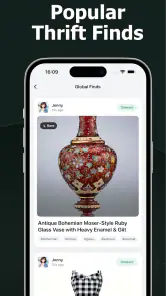
Resale Value Price Check・Cluzy is designed to help users estimate the current second-hand value of items before buying or selling them. It can be useful for checking whether a listing appears reasonably priced, comparing similar products, and making more informed resale decisions. The app is particularly helpful for people who regularly sell clothing, electronics, collectibles, furniture, or other pre-owned goods online. Its stated focus also includes scanning items to look up resale values and checking potential finds at estate sales.
How accurate are the prices shown by Cluzy?
The prices provided by Cluzy should be treated as estimates rather than guaranteed resale values. A product’s actual worth can change depending on its condition, brand, model, age, demand, included accessories, authenticity, and location. Market prices also change frequently, so users should compare the app’s results with current listings and recently completed sales before setting a final asking price.
What information do I need to enter for a price check?
To receive a useful estimate, you will generally need to provide identifying details about the item, such as its brand, product name, model, size, color, condition, and possibly photos or other relevant information. The more complete and accurate your description is, the more meaningful the result will be. Missing details may lead to a broad, incomplete, or less reliable valuation.
Can I use Cluzy for every type of product?
Cluzy may support a wide range of resale categories, but coverage can vary depending on the app’s available database, supported marketplaces, and the type of item being checked. Common products may receive more useful comparisons than rare, highly specialized, customized, damaged, or unusual items. Before relying on a result, confirm that the app recognizes the exact brand and model rather than a similar product.
Pros
- Quickly estimates resale prices for used items.
- Useful for checking whether a purchase is worth flipping.
- Simple interface makes price checks easy for beginners.
- Can support faster decisions when browsing second-hand listings.
- Helps compare expected value before listing an item.
Cons
- Estimates may vary by country
- platform
- and local demand.
- Results can be less reliable for rare or unusual products.
- Actual sale prices may be lower than the suggested value.
- Some features or checks may require an internet connection.
- Users may need to verify condition and market trends manually.
- Category
- Lifestyle
- Version
- 1.0.7