QuickDoc: PDF Reader Tools
- 306.00
- 4.5
- Installs
- 1.00M
- Price
- Free
Screenshots
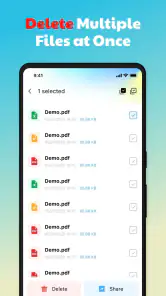
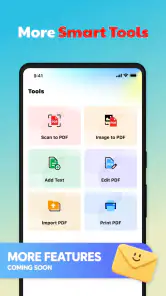
Analysis by Reviewed
I usually judge a document tool by what happens after the first few days. A clean opening screen and a quick first success are nice, but they do not automatically earn a permanent place on my phone. QuickDoc: PDF Reader Tools made a good first impression because it presents itself as a focused utility rather than a crowded office suite. It belongs to the tools category, is free to use, and is listed for everyone, which makes it easy to approach when I simply need to deal with a PDF without committing to a larger productivity system.
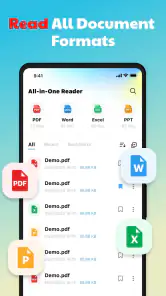
My experience with QuickDoc: PDF Reader Tools is best summed up this way: it is most appealing when I need a straightforward document task handled with minimal ceremony. The store summary calls it powerful and easy to use, while the short description reduces the idea to “QuickDoc.” Those phrases are brief, but they point toward the app’s main appeal: speed and approachability. The more important question is whether that convenience survives repeated use, especially when documents become part of a weekly routine rather than a one-off emergency.
From a promising first week to a realistic routine
Why the first sessions feel useful
During the first week, I would reach for this kind of app in familiar situations: opening a document received in a message, checking a form before sending it onward, or keeping a reference file available while away from a computer. A dedicated PDF reader feels more direct than opening a full office application for a single document. That difference matters on a phone, where extra menus and unrelated tools can make a simple task feel unnecessarily large.
The strongest early benefit is the reduction of friction. I do not want to build a project around a document reader when all I need is to inspect a file. QuickDoc’s identity as a compact tools app makes sense for that moment. The free price also lowers the cost of trying it, so I can see whether its workflow fits my habits without first making a purchase decision.
There is a practical psychological advantage here. When a document app feels uncomplicated, I am more likely to open the file immediately instead of postponing it until I reach a laptop. That is a small change, but it can prevent unread forms, forgotten instructions, and attachments that disappear into a busy inbox. The app’s value is therefore not only in reading a PDF; it is in shortening the distance between receiving a document and actually dealing with it.
A useful test for everyday documents
My recommended first-week test is not to open one impressive sample file and stop there. I would use QuickDoc with several ordinary documents: a short notice, a longer reference file, a form with dense text, and a document that I need to revisit later. This reveals whether the app remains comfortable when the novelty wears off. It also helps separate genuine convenience from the temporary satisfaction of installing something new.
A realistic scenario would be preparing for an appointment. I might receive a PDF with instructions, open it while commuting, check the relevant section, and return to it later at home. In that situation, the reader earns its place if I can resume the task without turning the phone into a distraction. The key is not whether the app replaces every document tool I own; it is whether it handles this small recurring job more cleanly than my usual alternative.
For occasional readers, that may already be enough. Someone who opens only a few PDFs each month does not necessarily need a large suite with editing, collaboration, cloud workflows, and document conversion. A focused reader can be the better choice precisely because it does not ask me to learn a broad system for a narrow need.
Where the comparison with larger alternatives changes
Compared with a full office suite, QuickDoc is easier to position as a quick-access reader rather than an all-purpose workspace. Office applications are often better when I need to create, edit, comment on, convert, or share documents as part of a longer process. Their advantage is depth. Their weakness is that depth can make a simple reading task feel heavier.
Compared with a browser-based viewer, a dedicated app can feel more intentional. A browser is convenient when a document is already attached to a webpage, but it is less satisfying when I want a reliable place for document-related habits. On the other hand, browser viewing may be preferable when I do not want another app in my routine. The choice depends on whether I value a dedicated tool more than keeping my phone’s app collection small.
Compared with a file manager’s built-in preview, QuickDoc has a clearer purpose. A file manager is useful when locating and organizing documents is the main challenge. A reader is more appealing when the document is already in front of me and I want to concentrate on its contents. I would not install QuickDoc merely to solve a storage problem; I would consider it when reading itself is the recurring task.
Small workflow habits that improve the experience
One useful habit is to decide before opening a document whether I am reading, checking, or acting on it. If I am only checking a detail, I avoid treating the app like a long-term archive. If I need the file for repeated reference, I make sure it remains easy to find outside the reader as well. This prevents a common mistake: expecting a PDF app to replace a complete document organization system.
Another practical tip is to use a consistent naming habit before sending or saving important files. A reader can make a document accessible, but it cannot compensate for a chaotic collection of similarly named attachments. I get more value when QuickDoc is paired with a simple folder structure and a few descriptive filenames. That combination turns the app from an emergency viewer into part of a dependable routine.
I also recommend checking a document at the same time of day when it is likely to matter. For example, I might review travel instructions the evening before leaving rather than waiting until I am standing at a station. This is not a feature claim; it is a usage strategy. The app is most useful when its speed supports a habit, not when it becomes another place where unfinished tasks accumulate.
What remains valuable after the novelty fades
Month-to-month usefulness depends on repetition
After the first month, a PDF reader has to justify its presence through repeated, modest wins. QuickDoc is more likely to remain useful for people who regularly receive documents on a phone, keep reference material nearby, or need a quick way to inspect files away from a desktop. In those cases, the recurring value comes from reducing interruptions. I can handle the document in the moment instead of adding it to a growing list of tasks for later.
That value is different from the excitement of discovering a new app. It is quiet and practical. I may not think about the reader on days when I have no documents to inspect, but I appreciate it when a file arrives at an inconvenient time. A tool does not need to be used every day to be worthwhile; it needs to be dependable enough that I remember it when its particular job appears.
The public response suggests that many people have found the app useful. It carries an average rating of 4.5 from around eleven thousand ratings, with roughly three hundred written reviews and more than a million installs. I treat those figures as encouraging rather than conclusive. They indicate broad interest and generally positive reception, but they do not tell me whether the app fits my own document habits. A high average cannot replace a personal test with the files I actually use.
Who is most likely to keep it installed
I see the strongest long-term fit for students checking reading material, workers reviewing forms or instructions, travelers carrying confirmations, and anyone who receives PDFs more often than they create them. These users benefit from a tool that stays close to a specific need. They are not necessarily looking for a complete document office; they want the reading step to be less annoying.
It can also suit people who prefer separating tasks by app. Some users feel more comfortable reading documents in a dedicated tool instead of mixing them with email, messaging, and cloud storage. That separation can make it easier to focus, especially when the original file arrived through a distracting conversation.
I would be less enthusiastic for someone whose work revolves around document production. If I need advanced editing, collaborative review, detailed annotation, signing workflows, or extensive file conversion, a broader office or PDF platform is likely a better long-term investment. QuickDoc’s appeal is strongest at the reading-and-checking end of the spectrum, not necessarily at the center of a professional document pipeline.
Maintenance without turning into another chore
The maintenance burden of a small utility should be low, but low burden does not mean no responsibility. I would periodically remove documents I no longer need from the phone, keep important originals in a separate trusted location, and avoid treating the reader as the only copy of anything important. This matters because convenience can encourage careless storage habits.
I would also review whether the app still saves time after several weeks. If I keep opening it only to search for files that are difficult to locate, the problem may be organization rather than reading. If another tool already opens every document smoothly and I rarely use QuickDoc, keeping both may add clutter instead of value. The right maintenance decision is sometimes uninstalling a redundant app rather than forcing it into a routine.
The current version is 1.2.4, and the app supports Android 8.0 or later. That makes it relevant to people using older compatible phones as well as newer devices. I still recommend checking the app’s behavior on the particular phone I plan to use, especially if document reading is important for work or study. Compatibility is a starting point; comfort, responsiveness, and fit with my file habits determine whether it stays installed.
Where fatigue can appear
The first source of fatigue is repetition without organization. If I receive many PDFs and open them from scattered messages, downloads, and folders, the reader cannot by itself create a clean system. I may enjoy the opening experience but become frustrated a month later because finding the right document takes longer than reading it. That is why I see file naming and storage habits as essential companions rather than optional extras.
The second source is expecting a reader to behave like a complete productivity platform. A simple tool can feel limited when I bring it a job it was never meant to own. If my workflow includes heavy editing or document collaboration, switching between QuickDoc and several other apps may create more friction than using one broader alternative from the beginning.
The third is app redundancy. Many phones already have at least one way to open PDFs. QuickDoc earns a place only if its focused workflow feels faster, clearer, or more comfortable than that existing option. I would compare them directly with the same few documents rather than relying on assumptions. If the built-in viewer handles my needs just as well, the extra installation may not offer enough recurring benefit.
There is also a subtler fatigue: the pressure to keep every tool available “just in case.” I try to avoid that mindset. A free app is easy to install, but a phone becomes harder to navigate when every occasional task has its own duplicate. QuickDoc should stay when it solves a repeated problem, not merely because it solved one urgent problem once.
Questions I would answer before installing
If I were deciding whether it is safe for a child or suitable for a mixed household device, the listed content rating of Everyone is reassuring. That describes the intended age suitability, while the more important personal question is still how the app fits the documents and routines on that phone. For family use, I would keep sensitive files organized carefully rather than assuming a reader should serve as a shared archive.
If I were asking whether it costs anything to try, the answer is straightforward: QuickDoc is free. That makes experimentation easier, but I would still judge it by time saved rather than by price alone. A free tool that adds duplicate steps is not truly convenient, while a simple tool that removes recurring friction can be worthwhile even when its role is narrow.
If I were asking whether it works on an older Android phone, the minimum operating system is Android 8.0. That gives the app a reasonably broad starting point for compatible devices. I would nevertheless test a few real documents, because the practical experience depends on the phone, the files, and the surrounding storage workflow as much as on the operating-system requirement.
If I were asking whether it should replace a full PDF suite, I would say no, not automatically. QuickDoc makes more sense as a focused reader and utility. A larger alternative is better when document creation, editing, conversion, or collaboration is central. The best choice is the one that matches the dominant task instead of forcing a lightweight reader to carry an office suite’s workload.
My long-term verdict
QuickDoc: PDF Reader Tools earns lasting space when I use my phone as a practical document checkpoint. Its free access, approachable purpose, and broad compatibility make it easy to test, while its strongest recurring value comes from handling small PDF moments without the weight of a larger productivity package. I would recommend it to someone who regularly needs to open and review documents but does not want a full office environment every time.
I would not recommend installing it automatically for everyone. If the phone’s existing viewer already feels quick and organized, QuickDoc may be unnecessary. If my work depends on advanced document operations, I would choose a more comprehensive alternative. Those are not failures; they are boundaries that help define the app’s proper role.
For me, the deciding test is simple: after the first week, does opening a PDF feel easier, and after the first month, do I still reach for it without thinking? If the answer is yes, it has genuine recurring value. If the answer is no, the novelty has done its job and the app can leave without much regret. As a focused tools app from Dev Globeg, QuickDoc is at its best when it quietly removes a small, repeated annoyance rather than trying to become the center of my entire document life.
Pros
- Opens PDFs quickly
- even when switching between several documents.
- Useful search tool helps locate words or phrases in long files.
- Supports common document actions like sharing and renaming files.
- Clean interface is easy to understand for first-time users.
- Works well for reading documents without needing an internet connection.
Cons
- Some advanced tools may require a premium subscription.
- Large PDFs with many images can take longer to load.
- Ad-supported screens may interrupt the reading experience.
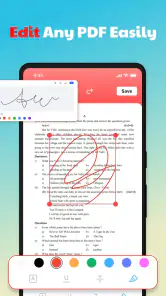
- Editing options are more limited than those in full desktop PDF suites.
- Privacy details should be checked before opening sensitive documents.
- Category
- Tools
- Version
- 1.2.4