Psychological Assessment Test
- 2.26K
- 4.1
- Installs
- 1.00M
- Price
- Free

Screenshots
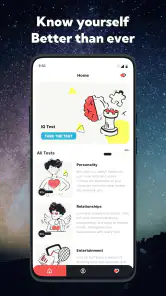
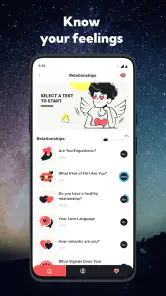
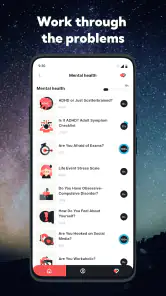
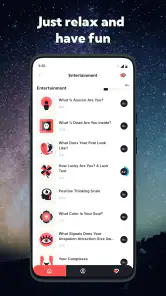
Analysis by Reviewed
I’d treat Psychological Assessment Test as a prompt for reflection, not a way to diagnose yourself. That distinction matters when an app invites you to think about psychological difficulties: a quiz can help you notice themes in your answers, but it cannot replace a conversation with a qualified mental-health professional. If you’re curious and comfortable with informal self-assessment, it may be a useful starting point; if you’re worried about your wellbeing or need a dependable clinical answer, seek professional support instead.
Choose it for curiosity, not certainty
Before opening a psychological test, I’d ask what I want from it. Am I looking for a little structure to think about a feeling, or am I hoping a result will tell me exactly what is wrong? The first is a reasonable use; the second sets the app up to disappoint. DevSect’s free education app has a 4.1 average from around 22,000 ratings, and more than a million installs. Those figures suggest it has found an audience, but popularity does not make a quiz a clinical assessment.
A practical way to use the results is to write down what feels relevant, what does not, and what examples from everyday life support either reaction. For instance, after a difficult week, I might take a test out of curiosity, then revisit the result when I’m calmer rather than treating a stressful-day answer as a fixed description of my personality. That small pause can keep an interesting prompt from turning into an unwarranted label.
A quick check-in on an ordinary day
Imagine I have been feeling unusually tense after a run of busy days, but I’m not sure whether I want advice or simply a way to organize my thoughts. I could set aside a quiet few minutes, answer carefully, then note which parts of the result actually connect to recent events. That is a more grounded use than taking a test while hurrying to catch a bus and carrying its conclusion into the rest of the day. The result can be a starting question—“What has been making me feel this way?”—rather than a final answer.
I’d also avoid taking several tests back-to-back just to find one result that feels comfortable. Repeated quizzes can make it tempting to treat whichever description sounds most convincing as the truth, even when the answers were given in different moods. If I want to notice a pattern, I’d keep brief notes about the situation and my state of mind, then look for recurring real-life examples instead of comparing scores as if they were measurements.
Who gets the most from it
This app makes the most sense for someone who enjoys guided questions and can hold the results lightly. It may suit a student curious about how self-assessment works, or someone who finds a blank journal page difficult and prefers a prompt to get thinking. It can also be useful when you want to start a private reflection before deciding whether a concern is worth discussing with someone you trust. In each case, the benefit is the structure and the chance to pause—not a guaranteed explanation of your mental health.
I would skip it if I were already feeling frightened by the possibility of having a disorder, if I tend to fixate on scores, or if I needed a clear answer to make a treatment decision. A self-guided test cannot assess the full context of a person’s life in the way a qualified professional can. If a result feels upsetting or doesn’t fit, that is not proof that you answered incorrectly; it is a good reason to step back and seek a more appropriate kind of support.
More From Our News Desk

Clash of Clans Is Won Between the Battles

Android Auto Makes the Case for Quieter Car Software

MobiOffice: Transforming Mobile Productivity with Seamless Integration

EA SPORTS FC™ Mobile Soccer: Redefining Mobile Sports Gaming

How Microsoft OneDrive Became a Mobile Productivity Giant

How Google Translate Breaks Language Barriers Effortlessly
A Journey Into Your Mind
The Psychological Assessment Test is more than just a collection of quizzes. It offers a comprehensive suite of tests that delve into different aspects of your personality, cognitive abilities, and emotional health. From personality tests that reveal your core traits to cognitive assessments that challenge your mental agility, this app covers it all. It’s like peeling back the layers of an onion, one fascinating layer at a time.
User-Friendly Interface
Navigating through the app is a breeze, thanks to its intuitive design. The layout is clean, and the instructions for each test are clear and straightforward. You don’t need to be tech-savvy to get started. Just a curious mind and a few spare minutes. Plus, the results are presented in an easy-to-understand format, so you can quickly grasp what each test reveals about you.
That low-friction format makes it suited to a quiet break rather than a rushed test between tasks. If you try one while distracted, tired, or upset, your answers may reflect that moment more than a stable pattern. I’d choose a time when I can read each question carefully, answer honestly, and stop if a topic feels uncomfortable. A useful habit is to notice whether a result gives you a specific question to reflect on, instead of accepting its wording as a verdict.
Getting a more useful result
One small but important trade-off with any quiz format is that the answers you select can flatten context. If a question asks about a tendency, I’d think about how often it happens and in what situations, rather than answering based on one unusually good or bad day. I would not try to “game” a test toward a reassuring result, either; that only makes the outcome less useful as a reflection prompt. Answering as honestly as I can, while remembering that a brief test captures only a slice of life, is a sensible middle ground.
If I wanted to use the app as part of a broader personal check-in, I’d keep the process simple: take one assessment when I have enough time, jot down the result’s most relevant point, and add a concrete example from my week. Later, I could ask whether that example still seems representative. This turns a quick quiz into a more thoughtful exercise without pretending that the app provides ongoing monitoring or professional care.
Personalized Insights
One of the standout features of this app is the personalized insights it provides. After each assessment, you receive a detailed report that not only scores your performance but also offers tips and strategies for improvement. It’s like having a personal coach who knows your strengths and weaknesses and guides you towards self-improvement. And let’s be honest, who couldn’t use a little guidance now and then?
Compared with a journal, the app offers a more structured set of prompts and a result to react to; compared with a therapist or a formal psychological evaluation, it does not provide the same individualized professional judgment. I find that distinction useful when deciding what to do next. If an insight sparks a worthwhile question, I can take that question into journaling or a conversation with someone I trust. If the result makes me anxious, conflicts with my lived experience, or seems to describe a serious problem, I would not keep taking tests in search of a more reassuring answer.
Where other options fit better
The usual alternatives serve different purposes. A journal gives you room to describe the details a fixed set of questions may leave out, while a conversation with a counselor or clinician can take your history and circumstances into account. A general wellbeing resource may be more suitable if you want practical guidance rather than a quiz. I’d choose this app when I want an organized set of questions and a quick reflection point; I’d choose one of those alternatives when the context, follow-up, or professional judgment matters more than a score or summary.
There is also a useful distinction between curiosity and tracking. A single result might help me think about what I’m experiencing now, but I would not use repeated assessments as a substitute for a careful record of how I feel over time. If tracking is the main goal, notes in my own words are more flexible: I can include sleep, workload, relationships, or whatever else seems relevant without forcing those details into a quiz response.
Privacy Matters
In today’s digital age, privacy is a big concern, and the developers of this app get that. They’ve ensured that all your data is securely stored and not shared with third parties. This peace of mind allows you to focus on the assessments without worrying about your information being compromised.
Because answers about mood and behavior can feel personal, I’d still be thoughtful about what I choose to enter and who can see my device. I would avoid using results as a label in a work, school, or relationship discussion; they are best treated as private reflection rather than proof about myself or another person. If you share a device, consider that anyone with access to it may see what you have opened, so a private moment is a sensible time to explore.
I’d also think carefully before showing a result to someone else, especially if I’m hoping it will settle an argument or explain another person’s behavior. A quiz taken by one person cannot establish what someone else thinks or feels. If I do share an insight, I’d frame it as something I’m considering about myself, not as evidence that another person should accept a label or change their behavior.
Cost, fit, and alternatives
The app is free to try, with optional in-app purchases ranging from $3.99 to $99.99 per item. I’d look carefully at the purchase prompt and decide whether a particular paid option is worth it before committing; don’t assume that paying turns an informal quiz into a medical tool. It is rated for Everyone, runs on Android 7.0 or later, and its current version is 1.93. Released on July 2, 2021, it has also gathered around 2,300 written reviews. Those details make it easy to judge basic compatibility and whether the free entry point suits your budget.
For a first visit, I’d stay with the free experience until I understand what I’m getting from it. Before buying anything, I’d check the wording of the purchase screen, what the item offers, and whether it addresses the reason I opened the app in the first place. If I’m looking for clinical reassurance, no paid option within a quiz app would change my recommendation to seek professional advice. If I only want guided reflection, I can decide whether the free version already does enough for me.
Switching away is straightforward in concept: I can stop using the app and move to a journal, a different kind of self-reflection resource, or professional support depending on what I need. The real cost is not learning a complicated system; it is deciding whether the format helps me think clearly or leaves me overfocused on a result. I’d give it one calm, careful try before deciding, rather than making a purchase or building a routine around it immediately.
If you mainly want to track feelings over time, a simple journal may be a better fit because it lets you record context in your own words rather than condensing it into a test result. If you need an answer about a possible condition, speak with a licensed professional. I’d choose this app when I want guided self-reflection and can keep the limits in view; I’d skip it if I know I’m likely to worry over scores or mistake a broad result for a diagnosis.
So, if you’re a fan of self-discovery or just curious about your mental makeup, the Psychological Assessment Test app is definitely worth a try. It’s insightful, engaging, and might just provide that "aha" moment you’ve been searching for. Remember, understanding yourself is the first step to personal growth, and this app is a fantastic place to start!
Psychological Assessment Test Frequently Asked Questions
Can Psychological Assessment Test diagnose a mental health condition?
No app-based test should be treated as a clinical diagnosis. Psychological Assessment Test is intended as a self-assessment resource, and its results can offer general context about your responses rather than establish whether you have a disorder. If you are concerned about your mental health or need a personalized assessment, discuss your situation with a qualified mental health professional.
What should I consider before answering the app’s psychological tests?
Think about whether you feel comfortable reflecting on personal emotions, thoughts, and behaviors before beginning. Answer as honestly as you can, and remember that a test result is only a snapshot, not a complete account of your circumstances. If a question or result feels upsetting, you can pause and consider talking with someone you trust or a mental health professional.
Is Psychological Assessment Test free to download, and are there optional purchases?
Psychological Assessment Test is a free education app, so you can download it without an upfront price. It also offers in-app purchases ranging from $3.99 to $99.99 per item. Check the purchase options in the app before paying, and make sure any purchase is appropriate for your needs. You can choose whether to use these paid options.
What is the main purpose of the Psychological Assessment Test app?
The Psychological Assessment Test app is designed to help individuals evaluate their mental health status through various psychological tests and quizzes. It aims to provide insights into emotional, cognitive, and behavioral patterns, aiding users in understanding their psychological well-being. This app serves as a self-help tool, complementing professional mental health services, rather than replacing them.
Is the Psychological Assessment Test app suitable for all age groups?
While the Psychological Assessment Test app offers a range of assessments that cater to different age groups, it is primarily designed for adults and teenagers. Younger children should only use the app under adult supervision. The tests are crafted to be age-appropriate, but parental guidance is recommended to ensure the content is suitable for younger users.
Pros
- User-friendly interface design
- Comprehensive test results
- Wide range of assessments
- Real-time progress tracking
- Customizable test settings
Cons
- Limited free version features
- Requires internet connection
- Occasional app crashes
- Long loading times
- No offline mode
- Category
- Education
- Version
- 1.93