Playout: Earn Money
- 2.05K
- 4.6
- Installs
- 1.00M
- Price
- Free

Screenshots
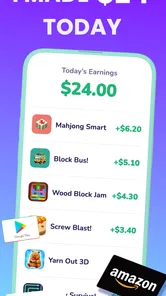



Analysis by Reviewed
I find Playout: Earn Money most interesting as a small change to an everyday routine: it aims to reward activities you would already be doing, rather than asking you to take on a separate side job. That distinction sets expectations. It is a lifestyle app with a playful, money-focused pitch, not a dependable replacement for work or a guaranteed way to earn a particular amount. I would approach it as something to explore in spare moments, then judge by whether its actual reward process fits my habits.
Before you make room for it
One practical question I would settle early is whether the app fits the way you already use your phone. If your screen time is mostly brief checks between other tasks, an experience that needs frequent attention may feel more disruptive than rewarding. If you tend to spend a little time browsing or playing in the evening, there may be a more natural opening to try it without changing your day.
I would also decide what a successful trial means before starting. For me, that would be understanding the steps, finding the experience pleasant enough to revisit, and seeing whether the reward process feels proportionate to the attention it takes. Setting that modest bar is more useful than expecting a particular amount of money or comparing the first session with a full side-income plan.
Making ordinary activity the point
I like the idea of making ordinary activity the starting point, because it changes the question from “How much work can I squeeze in?” to “Does this reward fit something I was already going to do?” In this section, I’ll focus on how that framing can help keep the experience low-pressure—and why it still pays to decide in advance how much attention you want to give it.
A reward idea, not an income plan
The central appeal is convenience. Instead of setting aside a block of time specifically to earn, the app frames rewards around things that are already part of a normal day. In principle, that makes it easier to try than a gig platform that depends on schedules, tasks, or a steady commitment. It also changes what “worthwhile” means: the question is less whether the app can generate meaningful income and more whether the effort it adds feels reasonable for a modest extra benefit.
That is the lens I would use before installing it. If you enjoy trying reward apps and can tolerate a bit of setup and checking in, Playout may be an entertaining experiment. If you need predictable earnings for a bill, I would choose a more direct source of income. A reward app should be treated as incidental, not as money you can count on before it has actually been earned and made available to you.
Loyalty Gaming develops the app, which sits in the lifestyle category. Its audience rating averages 4.5 from around 18,000 ratings, and it has passed 100,000 installs. Those figures suggest that plenty of people have been willing to try it, but they cannot tell me whether the experience will suit a particular person. The important test is how its real-world reward steps compare with the time and attention you are comfortable giving.
More From Our News Desk

Weather by Xiaomi Review: Clear at a Glance, Less Clear Up Close

X Under Pressure: Can It Recover When Posting Goes Wrong?

Clash of Clans Is Won Between the Battles

Android Auto Makes the Case for Quieter Car Software

MobiOffice: Transforming Mobile Productivity with Seamless Integration

EA SPORTS FC™ Mobile Soccer: Redefining Mobile Sports Gaming
What the playful framing changes
The promise of making routine activity feel more rewarding can help with motivation. A game-like wrapper may make an otherwise dull check-in more appealing, especially if you already like tracking progress or seeing a small goal advance. But playful presentation does not automatically make an offer valuable. I would keep the practical question in front: how much extra effort does this activity require, and is the reward worth that effort to me?
That distinction is useful because “for what you do anyway” can sound effortless. In practice, any app-based reward may still involve learning its rules, opening the app, paying attention to what qualifies, or following a process to claim what you have earned. Those steps can be perfectly acceptable when they are quick and clear. They become a poor trade if they interrupt the activity they were meant to complement.
Checking fit before investing time
I would begin by reading the in-app explanations carefully rather than assuming every ordinary action counts. Look for what the app considers eligible, how progress is shown, and what has to happen before a reward is usable. That first pass prevents a common disappointment: building expectations around the broad idea of earning for a routine, then discovering that the actual route requires more attention than expected.
A useful habit is to test one small, ordinary session rather than reorganize a day around the app. Notice whether it is clear what to do, whether the activity fits naturally into your routine, and whether you can tell when you have made progress. If any of those points feel confusing, pause and review the rules before spending more time. For reward apps, clarity is part of the value.
A realistic everyday use
Picture a quiet evening when you have a few minutes free and are already looking for something light to do on your phone. That is a more sensible moment to explore Playout than a busy commute or a rushed break when you cannot spare attention. You can see whether its reward-centered approach feels enjoyable without letting it take over the rest of the evening. If it fits, it can remain an occasional add-on; if it feels like another chore, you can stop without having built your routine around it.
I would also avoid treating every spare minute as an earning opportunity. Constantly checking an app can make a small reward feel more important than it is, while distracting from the activity itself. A better workflow is to decide in advance when you are willing to use it, check the relevant progress at that point, and then move on. That simple boundary helps keep the app in the “bonus” category rather than turning it into an obligation.
What I would compare it with
Compared with survey and task apps, Playout’s stated angle is more closely tied to what a person already does than to completing a queue of separate assignments. That could be a better fit if you dislike filling out surveys or hunting through task lists. On the other hand, people who prefer a clearly defined task with a visible start and finish may find a conventional survey or gig app easier to evaluate. The best choice depends on whether you value routine-based participation or explicit, separate work.
It also differs from budgeting and habit-tracking apps, which help organize money or routines but are not primarily presented as ways to earn rewards. Those alternatives may be more useful if your real aim is to manage spending, build consistency, or understand where money goes. Playout makes more sense when you specifically want to explore a reward experience and are comfortable with its entertainment-oriented framing.
Trade-offs worth considering
The biggest trade-off is uncertainty about value in your own routine. A broad reward concept does not tell you how worthwhile a particular session will feel to you. I would not judge it by the excitement of the initial idea; I would judge it by whether the steps are understandable and whether the payoff seems fair after you have seen how the app works. If it takes repeated attention to keep track, that time belongs in the calculation too.
Another friction point is the difference between earning something in an app and having money ready to spend. Before relying on any reward, check the rules around qualification, progress, and claiming it. I would not make purchases, change a regular habit, or promise myself a particular payout based on an assumption. Treating the reward as uncertain until the app clearly shows otherwise is a practical safeguard, not a reason to dismiss the idea altogether.
Keep the trial low-pressure
A small test is more informative than a long commitment. I would try the app during a period when I can give the instructions proper attention, then stop and ask whether I understood what counted and what I would need to do next. If the answers are clear, I could decide whether to return later. If I still feel unsure, there is little benefit in continuing just because I have already spent time getting started.
It is also sensible to separate curiosity from spending. The app is free to install, but that alone does not make every activity or reward worthwhile. I would avoid changing purchases or routine choices to chase an in-app benefit unless I had read the terms and independently wanted to make that choice. A bonus should sit on top of an activity you already value, not become the reason for an unnecessary expense.
Who is likely to get the most from it?
I can see Playout appealing most to adults who are curious about reward apps, enjoy a playful interface, and want something they can sample without treating it as a job. It is especially plausible for someone who already spends spare time on their phone and is willing to see whether the app’s routine-oriented approach adds a pleasant extra layer. The strongest reason to try it is curiosity paired with modest expectations.
I would steer away from it if you need a reliable income stream, dislike checking app rules, or find reward mechanics distracting. It is also not the right pick for someone who wants a straightforward financial tool or a guaranteed exchange of a fixed amount of work for a fixed amount of money. In those situations, a conventional job, a task platform with clearly defined assignments, or a budgeting app is a more appropriate match.
The app is free, currently at version 1.7, and requires Android 7.0 or later. Its rating and adoption make it a well-tried option among people exploring this kind of experience, but popularity alone is not a promise that it will suit your schedule or expectations. I would install it only if I had a little spare time to test the process and was happy to regard any result as a bonus.
Age and household fit
There is also an age consideration: the app is rated Mature 17+. That makes it a poor choice for younger users, regardless of how casual its presentation may feel. Adults who share a device with family members should keep the rating in mind as well. For anyone deciding on behalf of a household, the intended audience matters just as much as the earning concept.
For a shared phone or tablet, I would treat that rating as a practical boundary rather than assume the playful presentation makes the app suitable for everyone who uses the device. If you are choosing an app for a younger family member, a non-reward activity or a suitable habit tool is a better direction. For adults, the more relevant question is whether the reward approach adds enjoyment without creating pressure to keep checking.
My recommendation
My view is that Playout: Earn Money is best approached as a casual lifestyle experiment: see whether its reward idea can sit naturally beside your existing routine, and stop if the extra attention outweighs the fun. I like the underlying distinction between an incidental bonus and a second job, because it encourages a more realistic way to assess the app. For curious adults with flexible expectations, it may be worth exploring; for anyone counting on dependable earnings, I would look elsewhere.
Playout: Earn Money Frequently Asked Questions
What is Playout: Earn Money?
Playout: Earn Money is a rewards app that offers users the chance to earn points or other rewards by completing activities, such as playing games or trying app offers. The available tasks and reward options can vary by country and may change over time. Before getting started, check the app’s current task list and terms so you know what activities qualify and how rewards are calculated.
How do you earn rewards in Playout: Earn Money?
Earning typically involves selecting an available offer and completing its instructions, which may include reaching a particular level in a game or using an app for a specified period. Read each offer carefully before starting: requirements, deadlines, and eligibility rules can differ. Keep in mind that an activity may not be credited immediately, and incomplete or previously started offers may not qualify for a reward.
How can you redeem rewards, and what payout options are available?
Redemption methods and minimum payout thresholds depend on the options currently shown in Playout: Earn Money and may differ by region. Review the rewards or cash-out section in the app before investing time in an offer, paying attention to withdrawal requirements, processing times, and any verification steps. Do not assume a particular payment service or reward is available until you confirm it in your account.
Is Playout: Earn Money legitimate, and can you make substantial income with it?
The app should be treated as a rewards platform rather than a dependable source of income. How much you can earn depends on the offers available to you, the time required, and whether each task meets its tracking conditions. Rewards are not guaranteed, and reported experiences can vary. Check recent store reviews and the app’s policies, and avoid spending money solely to pursue an uncertain reward.
What should you check before downloading or using Playout: Earn Money?
Check that the app is available in your country, review its age rating, permissions, privacy information, and current terms, and download it only from an official app store. Some offers may involve third-party apps, advertising, or data collection, so read their disclosures as well. If an offer requires a purchase or sensitive personal information, weigh the cost and privacy implications before proceeding.
Pros
- Simple interface makes it easy to browse and start playing games.
- Offers a variety of casual games in one app.
- Progress and rewards give players a reason to return.
- Can be a low-pressure way to pass spare time.
- Joining is free
- so you can explore before spending money.
Cons
- Earnings may be small and take time to accumulate.
- Reward availability can vary by location and over time.
- Some offers may require completing extra tasks or conditions.
- Ads and promotional prompts may interrupt the experience.
- Check payout thresholds and methods before investing time.