Pin Trading - Scan & Collect
- 27.00
- 4.5
- Installs
- 10.00K
- Price
- Free

Screenshots
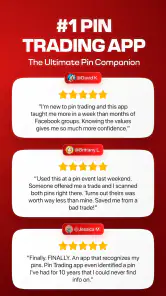
Analysis by Reviewed
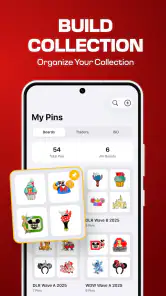
I went into Pin Trading - Scan & Collect expecting a simple companion for people who exchange collectible pins, and that is exactly where it makes the strongest first impression. It is a free lifestyle app from Evergreen Apps LLC, built around the idea of keeping pin trading more organized than a pocket full of loose notes, photos, and half-remembered conversations. The concept is easy to understand: use one place to keep track of the pins you have, the pins you want, and the trades you are trying to arrange.
That simplicity is important. This is not an app I would open for entertainment on its own, and it does not try to turn collecting into a full social network or a game. Its value comes from supporting a hobby I already enjoy. During my first few sessions, I found that the app was most useful when I treated it as a practical record rather than something I needed to check constantly. The question is not whether it is exciting every day. The better question is whether it prevents enough small mistakes to deserve a permanent place on my phone.
From the first scan to a useful collecting routine
The first-week appeal comes from reducing the mental work around a growing pin collection. When a collection is small, I can remember what I own and what I am still looking for. That changes quickly once pins come from different events, shops, trips, or trading partners. A dedicated companion gives those loose details a home, which makes the hobby feel less scattered.
The name places scanning at the center of the experience, but I would not judge the app only by how quickly the first record is created. The real benefit appears when each entry becomes part of a repeatable habit. I found it more helpful to record a pin while the details were still fresh than to postpone everything until later. Waiting creates the familiar collector problem: several similar items, uncertain origins, and no clear memory of which one was already logged.
A sensible starting routine is to add only the pins that matter most to current trading plans. I would not begin by trying to document every item in a large collection in one sitting. That turns a useful tool into an administrative project. Starting with a small group lets me learn how I want to describe items, how precise my records need to be, and which information I will actually consult before a trade.
This is also where the app separates itself from the usual alternatives. A camera roll is good for visual reference, but poor at answering practical questions such as what I am willing to trade or which items I am still seeking. A notes app is flexible, yet it usually becomes a long list that is awkward to search or update. A spreadsheet can be powerful, but it requires more setup and discipline than many casual collectors want. Pin Trading - Scan & Collect sits between those choices: more focused than general phone tools, but less demanding than building a custom collection database.
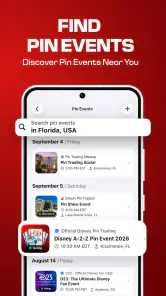
In an everyday situation, I can see the benefit clearly. Imagine meeting another collector at an event and spotting several interesting pins. Instead of relying on memory, I can check my collection before offering something I intended to keep. I can also avoid asking for an item I already own simply because two designs look alike. Those are small wins, but they are exactly the kind that make a companion app worthwhile.
More From Our News Desk

Clash of Clans Is Won Between the Battles

Android Auto Makes the Case for Quieter Car Software

MobiOffice: Transforming Mobile Productivity with Seamless Integration

EA SPORTS FC™ Mobile Soccer: Redefining Mobile Sports Gaming

How Microsoft OneDrive Became a Mobile Productivity Giant

How Google Translate Breaks Language Barriers Effortlessly
The app is suitable for Everyone, and that broad age rating matches the straightforward nature of the hobby. I would recommend it to a new collector who wants structure without learning a complicated cataloging system, as well as to an experienced trader whose collection has started to outgrow memory. It is less compelling for someone who owns only a few pins and rarely trades them. In that case, a phone album may remain faster.
One useful first-week tip is to decide on a consistent naming style before adding too many entries. Short, recognizable descriptions are easier to scan during a conversation than elaborate notes. I would also separate “I own this” from “I want this” mentally and in the way I use the app, because confusing those two categories defeats the purpose of having a dedicated trading record. The app can support better decisions, but only if my own records are clear.
Why the novelty can last beyond the first few sessions
The first scan is satisfying because it creates an immediate sense of progress. The more durable appeal comes from the moments between trades. A collection app earns its place when it helps me prepare before an event, review what changed afterward, and remember what still needs attention. That three-part rhythm is more valuable than repeatedly opening the app without a reason.
Before a trading day, I can use the collection as a quick inventory rather than carrying every pin or trying to recall them individually. Afterward, updating the record gives me a cleaner picture of what came home with me and what left. Over time, the app becomes a reference point for decisions, not just a digital shelf.
That workflow also reveals a trade-off. The app is most useful when I am willing to maintain it, but maintenance can feel like work immediately after an enjoyable event. If I return home tired and leave every new pin unrecorded, the backlog grows. A collector who dislikes cataloging may experience the app as another chore instead of a convenience.
Month-to-month value depends on maintenance, not novelty
After the initial excitement fades, the app’s recurring value depends on whether my collection changes often enough to justify updates. For active traders, the answer is likely stronger. Every exchange creates a reason to adjust records, and every planned meeting creates a reason to check them. For occasional collectors, the app may be opened only around particular events, which is perfectly reasonable but makes its value more seasonal.
I like the idea of using it as a pre-trade checkpoint. Before agreeing to an exchange, I can review whether I already have the pin, whether it is part of my keep pile, and whether I have another item that would make a fair offer. This helps avoid impulsive trades that seem attractive in the moment but feel disappointing later. The app cannot decide what a pin is worth to me, but it can make my own boundaries easier to remember.
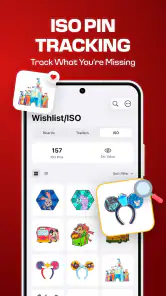
A second practical use is planning a focused search. Instead of browsing every pin indiscriminately, I can keep a short list of specific designs or themes I am seeking. That changes a crowded event into a more manageable hunt. It also helps me notice when my collecting goals have changed. A list that once made sense may become outdated, and reviewing it occasionally prevents old wants from controlling new trades.
My strongest long-term tip is to treat the collection as two layers: stable information and temporary trading information. The stable layer is what the pin is and why it belongs in the collection. The temporary layer is whether I currently want to trade it, seek a duplicate, or prioritize it at an upcoming event. Keeping those ideas separate makes the record more useful over time, because a pin’s identity does not change just because my trading plans do.
There is also a social benefit, although I would not mistake the app for a replacement for meeting collectors. A clear personal inventory makes conversations easier because I can focus on actual possibilities instead of reconstructing my collection from memory. That can make trading feel more relaxed, especially when several people are comparing items at once. The app supports the interaction; it does not create the interaction for me.
The current version is 1.1.9, and the app has reached over ten thousand installs with a 4.5 average from more than two hundred ratings. Those figures suggest that it has found a real audience, while the smaller scale also fits its focused purpose. I would not choose it because of popularity alone, but these numbers make it easier to view the app as an established niche tool rather than an experiment with no visible community.
Because it is free to install, the barrier to trying it is low. The important financial detail is that optional in-app purchases range from $14.99 to $39.99 per item. That makes it sensible to explore the free experience carefully before paying for anything. I would ask myself whether the app has become part of my actual trading routine, not whether I like the idea of owning a more complete version. A collector who uses it only twice a year should be especially cautious about spending.
The minimum operating system is Android 8.0 or later, so compatibility is not aimed only at the newest phones. That matters for collectors who keep an older device as a spare during events. Still, I would test the app on the phone I actually carry before relying on it at a busy gathering. A trading companion is most valuable when it is available at the moment a decision needs to be made.
The hidden cost is keeping the collection trustworthy
The maintenance burden is not necessarily technical; it is behavioral. Every catalog depends on accurate input. If I forget to mark a trade, leave duplicates unclear, or add vague descriptions, the app becomes less reliable with each passing week. That is not a flaw unique to this product, but it is especially important here because the whole purpose is to improve confidence during real-world exchanges.
I would build a short update habit rather than waiting for a major cleanup. After a trading session, I would record only the changes that affect future decisions: what I acquired, what I gave away, and which wanted pins are no longer priorities. This keeps the task small. Trying to perfect the entire collection after every event would make the hobby feel like bookkeeping.
A useful compromise is to use photos or physical storage labels as temporary support, then update the app when I have better light and time. That avoids holding up a trade while I type. The danger is allowing the temporary system to become permanent. I would set a personal rule that unrecorded pins must be processed before the next event, otherwise the app’s picture of the collection slowly drifts away from reality.
Another non-obvious trade-off is precision versus speed. Detailed records may help when two similar pins need to be distinguished, but excessive detail can make entry tiring. I would reserve longer notes for items with a real history, unusual variation, or special trading importance. For ordinary pieces, a compact description is more likely to stay current. The best catalog is not the one with the most words; it is the one I still trust months later.
Collectors should also decide how they handle duplicates before the collection becomes crowded. Duplicates can be trade stock, backups, or part of a personal set. If I treat every copy identically, I may accidentally offer the wrong one or lose track of why I kept an extra. A simple personal convention—such as identifying a keeper separately from tradeable copies—can make the app far more useful than a basic ownership list.
Where fatigue begins
The first source of fatigue is repeated entry. Scanning makes the beginning feel quick, but a large collection still demands decisions about descriptions, status, and organization. If I am cataloging hundreds of items at once, the novelty disappears and the process can feel repetitive. This is why I would recommend gradual onboarding rather than a weekend-long data entry marathon.
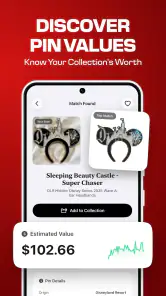
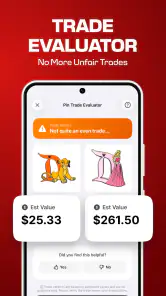
The second source is uncertainty. Pin trading is often informal, and the same item may matter differently depending on the person, event, or moment. An app can show what I recorded, but it cannot settle questions of sentimental value, condition, authenticity, or what another collector considers a fair exchange. Anyone expecting the app to provide the judgment behind a trade may be disappointed.
The third is the temptation to over-organize. It is easy to spend more time refining categories than actually trading. I would keep the system close to the decisions I make in real life: what I own, what I seek, what I will trade, and what I want to protect. If a field does not help with one of those choices, it may not deserve constant attention.
This is also where a general spreadsheet may be the better option for some people. A spreadsheet offers complete control over custom fields, formulas, and unusual collection structures. Someone managing several kinds of collectibles or tracking detailed purchase history may prefer that flexibility. Pin Trading - Scan & Collect is a better fit when the goal is a focused pin-trading companion rather than a universal inventory system.
A photo album may also win for a purely visual collector. If I mainly want to browse images and rarely exchange pins, opening familiar photos can be quicker than maintaining a structured record. The dedicated app becomes more convincing when I need to answer trading questions, not simply admire what I own.
Who should keep using it after the first month?
I think the app earns lasting space for collectors who attend events, trade with other people, or regularly maintain a wanted list. Those users have recurring moments when accurate information prevents confusion. The app can become part of a practical loop: prepare, trade, update, review. That loop gives it a reason to remain installed after the first-week novelty has gone.
I am less convinced for a passive collection that grows slowly and stays private. If months pass without a trade or a meaningful change, the app may not offer enough daily value to justify active maintenance. That is not a criticism of the concept; it is a reminder that a companion should match the rhythm of the hobby. Installing it is easy, but keeping it useful requires a collection that actually needs tracking.
The purchase structure deserves the same realistic judgment. Free access makes experimentation comfortable, but the optional items priced between $14.99 and $39.99 are significant enough that I would not buy impulsively. I would first complete a full trading cycle: record items, use the list before an exchange, update it afterward, and see whether the process genuinely saved time or prevented mistakes. If it did not, paying more will not solve the underlying habit problem.
For a friend who is just starting to trade pins, I would recommend trying it with a manageable set rather than importing an entire collection emotionally and immediately. For an established collector, I would suggest beginning with the active trade pile and current wants. Those two groups produce the clearest benefits and give a fair test of whether the app fits the person’s routine.
Evergreen Apps LLC has positioned this as a specialized lifestyle tool, and that specialization is both its strength and its boundary. It does not need to replace every note, photo, or conversation. It needs to make pin trading less forgetful. In my experience, that is a worthwhile goal, but only when I use the app as a living record instead of a one-time showcase.
My long-term verdict is positive with a condition: Pin Trading - Scan & Collect earns permanent space when it supports an active trading habit, not when it is treated as a decorative catalog. The free entry point, focused purpose, and clear use before and after exchanges make it easy to recommend to the right collector. Its limitations are equally clear: records need upkeep, personal judgment still matters, and occasional collectors may find a photo album sufficient.
After the novelty fades, what remains is a practical question: does opening the app help me make a better decision about a pin? When the answer is yes, the app has recurring value. When the answer is no, I would simplify my setup rather than force a routine. For active pin traders, that balance makes this a useful, approachable companion; for everyone else, it is best viewed as an optional organizational tool rather than an essential part of the hobby.
Pin Trading - Scan & Collect Frequently Asked Questions
Is Pin Trading - Scan & Collect free to download, and are there in-app purchases?
Pin Trading - Scan & Collect is free to download, so you can try its pin-collection tools without paying upfront. The app also offers in-app purchases, with items priced from $14.99 to $39.99. Consider what features you need before making a purchase, and check the purchase details shown on your device so you understand what each option includes.
What devices can run Pin Trading - Scan & Collect?
The app is available for Android and iOS users whose devices meet the relevant system requirements. On Android, it requires version 8.0 or later. Before downloading, check your device’s operating system and available storage, and make sure you are getting the app from the official app store for your platform. Keeping your device’s software current can also help with compatibility.
Who develops Pin Trading - Scan & Collect, and is it intended for all ages?
Pin Trading - Scan & Collect is developed by Evergreen Apps LLC and is rated for Everyone, making it suitable for a broad audience. Its focus is organizing and tracking a pin collection, which can appeal to casual collectors as well as people who trade regularly. Parents and younger users should still review any in-app purchase options together before buying.
What is Pin Trading - Scan & Collect, and how does it work?
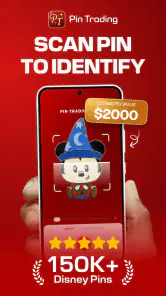
Pin Trading - Scan & Collect is designed to help collectors organize and manage their pin collections in one place. After adding or scanning a pin, you can record useful details such as its name, series, condition, duplicates, and trade status. The app is particularly helpful for users who want a clearer overview of their collection instead of relying on spreadsheets, notes, or memory.
Can I scan any pin with Pin Trading - Scan & Collect?
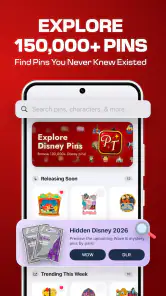
The scanning feature is intended to identify or add supported pins more quickly, but its accuracy can depend on the pin’s design, lighting, image quality, and whether the item is included in the app’s database. Less common, custom, damaged, or poorly photographed pins may require manual entry. It is a good idea to check the information after scanning and correct details when necessary.
Pros
- Quickly scans and identifies pins for faster collection tracking.
- Helps organize pins into a searchable digital collection.
- Useful for spotting duplicates before making a trade.
- Makes it easier to monitor collection progress over time.
- Convenient reference tool when trading at events or conventions.
Cons
- Scan accuracy may vary with damaged
- rare
- or poorly lit pins.
- Some features may require an internet connection or account.
- Manual corrections can be needed when pin details are misidentified.
- Large collections may take time to organize and verify.
- Information for uncommon pins may be limited or incomplete.
- Category
- Lifestyle
- Version
- 1.1.9