Perfume Lens
- 9.00
- 4.2
- Installs
- 10.00K
- Price
- Free
Screenshots
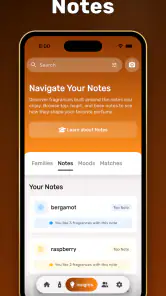
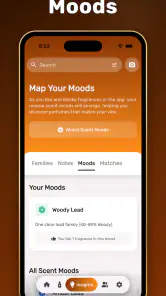
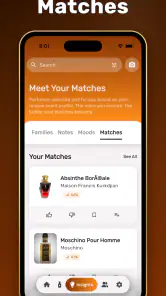
Analysis by Reviewed
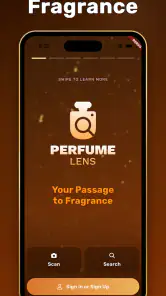
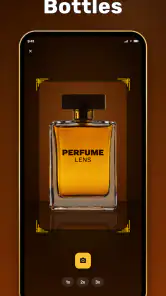
I approached Perfume Lens as a practical tool for people who want to remember, organize, and compare fragrances without relying on scattered notes or half-remembered bottle names. It is a free lifestyle app from Perfume Lens, built around photographing scents and using those discoveries to shape a personal Scent Match Profile. That idea sounds simple, but it changes the way I think about a fragrance collection: instead of treating every perfume as an isolated purchase, I can use the app as a visual record of what I have encountered and what seems to suit my taste.
My recommendation depends on what you want from a perfume app. If you enjoy browsing bottles, keeping track of scents, and gradually learning your own preferences, this is an appealing starting point. If you are looking for a complete fragrance encyclopedia, a shopping comparison service, or a detailed replacement for a specialist perfume journal, you may find its focused approach too narrow. The useful question is not whether it does everything, but whether its camera-first way of collecting scents matches the way you already explore perfume.
How I judged Perfume Lens as a decision tool
The first thing I considered was the amount of effort required. A fragrance organizer only helps if I am willing to use it when I discover something new. Perfume Lens makes the bottle the natural entry point, so the workflow feels more immediate than opening a blank note and typing a full description. I can start with the visual identity of a scent, then use the growing collection as a way to revisit my choices later.
That matters in real situations. Imagine visiting a department store, testing several fragrances, and leaving with two favorites in mind but no reliable memory of their names. A quick capture gives you a better chance of preserving that discovery. Later, your collection can become a reminder of what caught your attention, rather than forcing you to reconstruct the experience from a vague memory such as “the dark bottle near the entrance.”
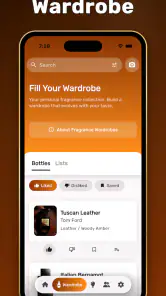
I also looked at whether the app suits different levels of fragrance knowledge. Someone who already understands notes, families, concentration, and seasonal wear may want a much deeper cataloging system. A newcomer, however, can benefit from a gentler starting point. The Scent Match Profile gives the experience a direction: you are not merely storing images, you are building a picture of your own scent preferences over time.
The most important decision criterion is consistency, not perfume expertise. You do not need to know the difference between every fragrance family before using the app. You do need to be willing to capture scents as you encounter them and return to the collection when you want to compare your impressions. That makes it more suitable for curious beginners and casual collectors than for people who want a laboratory-style record of every spray.
Privacy and comfort also affect the decision. Because the central interaction involves snapping and collecting scent-related images, I would use it in a way that feels natural to me: photograph the bottle or product presentation rather than making the process intrusive in a shop or around another person’s belongings. The app is most enjoyable when it supports discovery without turning fragrance shopping into an administrative task.
More From Our News Desk

Clash of Clans Is Won Between the Battles

Android Auto Makes the Case for Quieter Car Software

MobiOffice: Transforming Mobile Productivity with Seamless Integration

EA SPORTS FC™ Mobile Soccer: Redefining Mobile Sports Gaming

How Microsoft OneDrive Became a Mobile Productivity Giant

How Google Translate Breaks Language Barriers Effortlessly
Its basic access is another advantage. Perfume Lens is free, carries an Everyone age rating, and runs on Android starting with version 7.0. That gives it a broad entry point for people using older compatible devices. The current version is 1.0.6, which also tells me I should approach it as a relatively focused, developing product rather than an established all-purpose fragrance platform with years of accumulated tools.
What the camera-first workflow changes
Traditional perfume notes begin with words. I might write a brand, a bottle name, a few impressions, and perhaps the date I tried it. That approach offers control, but it also creates friction. If I am in a hurry, I will probably skip it. Perfume Lens starts from recognition and collection, which better matches how many people actually encounter fragrances: visually, in a store, on a shelf, or through a friend’s bottle.
The visual approach is especially useful when several scents belong to the same brand or when names are difficult to remember. A captured bottle can act as an anchor for later reflection. I can look back and ask whether I still like the scent, whether I would wear it in warm weather, or whether it resembles something else I already enjoy. That is a more realistic memory aid than expecting myself to preserve every detail immediately.
There is also a subtle benefit for shopping restraint. A collection makes repeated interest visible. If I keep capturing fragrances with similar packaging or a similar overall appeal, I may notice a pattern before buying another bottle that fills the same role. In my view, that is one of the app’s more useful possibilities: it can turn impulse into a small moment of comparison.
My practical tip is to treat each capture as the beginning of a review, not the complete review itself. When I have time, I would revisit the item and add my own mental context outside the initial shopping moment: where I smelled it, how it felt after some time, and whether I would actually wear it. The app’s strength is helping me remember what to examine; my own judgment still decides whether a fragrance belongs in regular rotation.
Where Perfume Lens is strongest
The clearest strength is approachability. I do not need to build a spreadsheet, design a naming system, or decide in advance which perfume details deserve a permanent record. The app gives the collecting process a concrete action, and that action is easy to understand. For a person who has always meant to organize fragrance discoveries but never maintained a notebook, this is a convincing reason to begin.
It also has a personal quality that a generic product catalog often lacks. A catalog tells me what a fragrance is. A Scent Match Profile is more about what my accumulated choices say about me. That distinction makes the experience feel less like searching a database and more like gradually mapping a preference. I would find that particularly interesting after several visits to stores, beauty counters, or friends’ collections.
The app can also help couples, families, or friends who share fragrance conversations. Someone may not want to purchase every scent they enjoy, but they may still want a record of what appealed to them. Keeping those discoveries together makes future gift ideas, shopping trips, and casual recommendations easier to manage, even if the final decision still happens elsewhere.
Another advantage is focus. Perfume Lens does not need to compete with every kind of lifestyle tracking app. Its identity is clear: capture scents, collect them, and explore the pattern that emerges. I prefer that clarity to an overloaded interface that mixes shopping, social feeds, reminders, ingredient analysis, and unrelated beauty tools. A narrower app can be more pleasant when its central task is the one I actually want to complete.
The early audience response is encouraging without making the app look universally proven. It has an average rating of 4.2 from around 33 ratings, with roughly 9 written reviews and over 10K installs. I read that as a sign of genuine interest, but not as a reason to assume every fragrance enthusiast will find the same value. The product is still best judged by its workflow and fit with your habits.
Three ways I would use it beyond simple collecting
Use it as a pre-purchase pattern check. Before buying a new bottle, I would look through my captured scents and compare the overall direction of my choices. If several recent discoveries feel interchangeable, the collection can encourage me to pause and ask whether I want variety instead of another familiar option.
Build a seasonal discovery trail. I would capture scents during different parts of the year and revisit them when my preferences change. A fragrance that feels attractive in a cool shop may not be the one I reach for on a hot day. Keeping the discovery visible helps separate immediate excitement from long-term wearability.
Use the profile to improve conversations with fragrance specialists. Rather than saying I like “something fresh,” I could show the kinds of bottles and scents that have caught my attention. That gives a beauty adviser or knowledgeable friend a more useful starting point, even if I cannot describe notes precisely.
These uses depend on active reflection, so I would not expect the app to make every recommendation perfectly personal from the first session. A profile becomes more meaningful as I add varied, honest examples. Capturing only aspirational purchases, or only bottles that look attractive, may produce a profile that reflects packaging interest more than actual wear preference. That is an important trade-off: the quality of the result depends partly on the quality of the collection I create.
Where a different kind of app may fit better
Perfume Lens is not automatically the best choice for someone who wants a detailed fragrance reference library. A specialist perfume database may be preferable if your priority is researching note pyramids, release histories, concentrations, or extensive community descriptions. I would choose that kind of service when the question is “What exactly is in this fragrance?” rather than “What does my personal scent collection reveal?”
A conventional notes app may also suit a different personality. If I want complete control over fields such as purchase date, bottle size, price paid, wear occasions, longevity impressions, or replacement status, a manual journal can be more flexible. The cost is effort. I would have to create the structure and maintain it myself, but that structure could be more useful to a serious collector who treats perfume like a carefully documented hobby.
Shopping-focused alternatives may be better when the main goal is finding the lowest price or comparing retailers. Perfume Lens is more naturally positioned at the discovery and self-organization stage. I would use it to remember and understand what interests me, then move to another service if I needed purchase research. Trying to make one tool handle both jobs could make the experience feel incomplete.
There is a similar distinction with social fragrance communities. If you want public reviews, conversations, recommendations from strangers, or a strong sharing culture, a community-led platform may offer more interaction. Perfume Lens feels more personal and inward-looking. That is a benefit if you want a private-feeling collection, but a limitation if your enjoyment comes from discussing every discovery with other enthusiasts.
People who dislike photographing products should also think twice. The camera-based action is central to the app’s appeal, and it may feel unnecessary if you already remember names easily. In that case, typing directly into a note or using a fragrance reference service could be faster. The app wins when visual capture reduces effort; it loses when visual capture becomes an extra step.
What switching to it would really involve
Moving from scattered memories to Perfume Lens is not a difficult technical commitment, but it does require a change in habit. I would not try to rebuild an entire fragrance history in one sitting. That would turn a pleasant discovery tool into a tedious cataloging project. Instead, I would begin with the bottles I currently wear, the scents I am considering, and the few recent discoveries I genuinely want to remember.
That gradual approach reduces another form of friction: deciding what counts. Not every fragrance needs to become a permanent entry. I would capture items that teach me something about my taste, that I may want to revisit, or that I might confuse with another product. A smaller, meaningful collection is more useful than a crowded archive filled with images I never examine.
There is also a mental switching cost. A manual journal encourages detailed writing from the beginning, while Perfume Lens encourages visual accumulation first. If you are used to recording every impression immediately, you may need to accept a lighter first pass. I see that as a reasonable exchange for speed, but it means the app should complement, not replace, your own observations when details matter.
My suggested routine would be simple. Capture a scent when it genuinely interests you, revisit the collection after a shopping trip, and use the profile as a prompt for comparison rather than an unquestionable verdict. If a recommendation feels surprising, investigate why. Perhaps the bottle appealed visually, perhaps the scent matched a familiar style, or perhaps the capture reflects curiosity rather than a desire to wear it. That kind of questioning makes the tool more valuable.
Because the app is free, the financial barrier to trying this routine is low. The more meaningful cost is attention. You are investing a few seconds during discovery and a little thought afterward. For casual users, that is manageable. For people who already maintain several beauty and shopping trackers, adding another collection may not be worthwhile unless the scent profile offers something their current system lacks.
Who should install it, and who should skip it
I would recommend Perfume Lens to a beginner who wants a friendly way to start exploring fragrance. It is also a good fit for someone with a growing shelf of bottles but no reliable system for remembering why each one was chosen. The app has enough focus to make collecting feel approachable, and the profile concept gives the activity a reason beyond simply storing pictures.
I would also suggest it to shoppers who often discover scents away from home. If you regularly visit beauty counters, browse department stores, or test friends’ perfumes, the capture workflow can help preserve those moments. The app is particularly useful when your memory is visual or when names disappear from your mind as soon as you leave the store.
I would skip it if your main need is technical fragrance analysis. Someone who wants a comprehensive ingredient reference, advanced collection accounting, or highly structured wear logs will probably be happier with a specialist database or a customizable journal. I would also skip it if you do not enjoy building a collection over time. The profile idea becomes less useful when there are too few meaningful discoveries to compare.
It is worth remembering that a personal scent profile is not the same as a guarantee that a fragrance will suit your skin, climate, or routine. A captured bottle can signal interest, but it cannot replace testing a scent in real conditions. I would still sample before buying, allow time for the fragrance to develop, and consider whether I would actually wear it rather than merely admire it.
My recommendation after using the concept in everyday life
Perfume Lens makes the most sense as a lightweight discovery companion. Its value comes from reducing the distance between seeing a fragrance and remembering it later. The Scent Match Profile adds a personal layer that ordinary photo storage does not provide, while the free price makes experimentation easy for people who are unsure whether they want a dedicated perfume tool.
I would not present it as a replacement for every alternative. It is not the obvious pick for deep research, precise inventory management, or price comparison. Instead, it occupies a useful middle ground between a camera roll and a specialist fragrance database. That position is its advantage: it asks less work than a detailed journal while offering more purpose than an unorganized folder of bottle photos.
The best way to test it is to use it during a real shopping trip rather than judging it from a single session at home. Capture a few scents that genuinely interest you, return to them after the excitement has faded, and see whether the collection helps you recognize patterns or make a more confident choice. If that process feels natural, the app is likely to earn a place in your routine.
My final view is positive but measured. Perfume Lens is a promising lifestyle app for visual collectors, fragrance beginners, and curious shoppers who want their discoveries to become more meaningful over time. Its focused workflow will not satisfy everyone, and people seeking detailed perfume research should choose a more specialized alternative. For anyone who wants a simple way to collect scents and learn what they are drawn to, however, this is an easy, low-risk app to try and a surprisingly useful prompt for making better fragrance decisions.
Perfume Lens Frequently Asked Questions
Can I use Perfume Lens on my phone?
Perfume Lens is available for Android devices running Android 7.0 or later. Before downloading, check your phone’s operating system version and make sure you have enough space for the installation. The app is listed for iOS as well, so iPhone users should check compatibility in the App Store before installing. Once installed, you can explore its fragrance-discovery features on a supported device.
What is Perfume Lens and what does it do?
Perfume Lens is an app designed to help users explore and identify perfumes through their mobile device. Its summary describes snapping, collecting, and exploring scents to build a Scent Match Profile. It is best viewed as a convenient discovery aid rather than a guaranteed replacement for testing a fragrance in person.
Can Perfume Lens identify any perfume from a photo?
Perfume Lens may recognize selected perfume bottles, packaging, or labels using the phone’s camera, but recognition is not guaranteed for every product. Results can depend on image quality, lighting, the angle of the bottle, label visibility, and whether the fragrance is included in the app’s database. Users should check the displayed information carefully, especially when similar packaging or limited-edition versions are involved.
Does Perfume Lens provide accurate fragrance notes and recommendations?
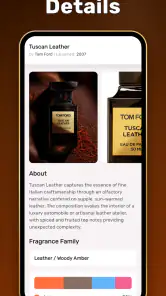
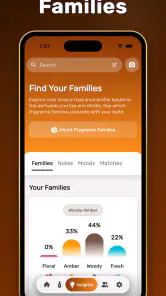
The app can be useful for discovering fragrance families, listed notes, and possible alternatives, but its information should not be treated as completely definitive. Perfume descriptions may come from databases or community-supported sources and can vary between editions or regions. Recommendations are also subjective, since skin chemistry, personal taste, and performance expectations affect how a perfume smells.
Is Perfume Lens free to download and use?
Perfume Lens is free to download. Its free price makes it easy to try as a fragrance-discovery tool, though features and how you use them can shape the experience. Before installing, consider whether you are comfortable using an app to explore and collect scent information, and review any purchase details shown in the official app store if they appear during use.
Pros
- Quickly identifies perfume bottles using camera recognition.
- Helpful for discovering fragrance notes and scent profiles.
- Clean
- simple interface that is easy to navigate.
- Useful for comparing fragrances before making a purchase.
- Can inspire users to explore unfamiliar perfume brands.
Cons
- Recognition may struggle with damaged
- unusual
- or poorly lit bottles.
- Fragrance information may vary in accuracy between products.
- Some features or details may require an internet connection.
- The catalog may not include every regional or niche fragrance.
- Camera-based searches can raise privacy concerns for some users.
- Category
- Lifestyle
- Version
- 1.0.6