Nova Weather - News
- 56.00
- 4.4
- Installs
- 10.00K
- Price
- Free
Screenshots
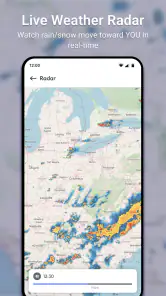
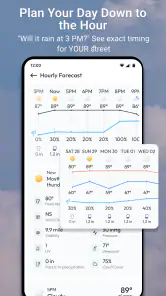
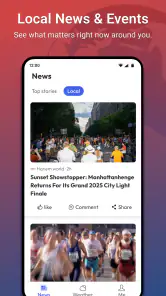
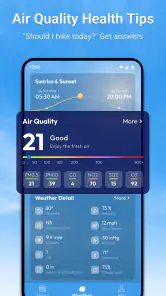
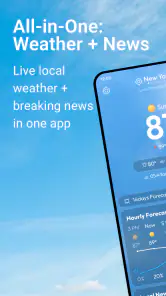
Analysis by Reviewed
Nova Weather - News caught my attention because it brings two routine checks into one place: the weather I need before leaving home and the local headlines I want to scan afterward. I used it as a practical morning companion rather than treating it like a full news reader or a specialist forecasting tool. That distinction matters, because its appeal is strongest when you want a quick, combined view of what may affect your day.
Developed by Build4world, this free Android app sits in the News & Magazines category while also serving a clear everyday weather purpose. It is rated for Everyone, works on Android 8.0 and later, and the current version is 1.1.4. The app has reached over ten thousand installs, with a 4.4 average from around two hundred ratings and dozens of written reviews. Those figures suggest a modest but real user base, not an established news institution with a huge editorial operation.
What Nova Weather feels like during the first week
The first-week appeal is easy to understand. Weather and breaking news are both things I tend to check in short bursts, often while getting ready for work, planning an errand, or deciding whether an outdoor plan still makes sense. Keeping those needs together removes a small amount of friction. I do not have to open a weather app, switch to a news app, and mentally connect the two.
The useful habit is not simply reading a forecast and then reading headlines. It is comparing the two kinds of information before making a decision. If rain is expected and local coverage is focused on traffic or an event, I get a more practical picture of the day than either screen would provide alone. Nova Weather works best in that narrow but valuable space between a dedicated forecast tool and a broad headline feed.
During an ordinary morning, I would check the app before leaving, glance at the weather, then scan the news section for anything that could change my route or schedule. That workflow feels natural because it follows the order in which I make decisions: first conditions outside, then events that may affect them. The app earns its place quickly when I repeat that routine rather than opening it only out of curiosity.
The combined concept also makes the app approachable for people who do not want to customize a complicated information dashboard. Someone who mainly wants local weather and important headlines can understand the purpose immediately. There is less temptation to spend time arranging feeds, comparing providers, or tuning a large collection of topics.
Still, the first impression should not be confused with depth. A combined app can be convenient without replacing every specialized alternative. I would not install it expecting the detailed radar layers, extensive forecast history, or advanced alert controls that a dedicated weather service may offer. Likewise, readers who follow national politics, business, technology, or international reporting closely may find a general breaking-news view too limited for their daily reading.
More From Our News Desk

Clash of Clans Is Won Between the Battles

Android Auto Makes the Case for Quieter Car Software

MobiOffice: Transforming Mobile Productivity with Seamless Integration

EA SPORTS FC™ Mobile Soccer: Redefining Mobile Sports Gaming

How Microsoft OneDrive Became a Mobile Productivity Giant

How Google Translate Breaks Language Barriers Effortlessly
A realistic morning routine
Imagine leaving for work with a short window before catching a bus. I would open Nova Weather, check whether the conditions make walking sensible, and then read the local headlines while waiting. If there is a nearby disruption or a developing story, that information has immediate value. The app does not need to keep me reading for half an hour; it succeeds by helping me make a better decision in a couple of minutes.
That same workflow works for parents preparing children for school, people planning a commute, and anyone deciding whether to carry an umbrella or change an appointment. The important insight is that the app is more useful as a decision checkpoint than as a destination for long reading sessions. Its strength comes from repeated, brief visits.
I also found that the order of checking matters. Weather first prevents the news feed from becoming a distraction before I know what the day requires. Then the headlines provide context. This sounds simple, but it turns a general-purpose app into a small planning ritual. Users who approach it this way are more likely to keep it installed after the novelty fades.
Why it may still matter after the novelty fades
Month-to-month value depends on whether the local information remains relevant and easy to scan. Weather is naturally recurring, so that part of the experience has a built-in reason to bring me back. News is less predictable: some days the local feed may contain something immediately useful, while on quieter days it may feel less essential than a larger publication or a social feed.
That unevenness is the central trade-off. Nova Weather can become a dependable daily checkpoint, but it is not automatically a complete information system. I would keep it for the weather-and-local-context combination, then use another source when I wanted deeper reporting, a wider geographic view, or several perspectives on a major story.
The app is particularly suitable for users whose information needs are local and practical. If your main questions are “What will the conditions be like?” and “Is anything nearby likely to affect my plans?”, the pairing makes sense. If your main question is “What happened across the world, and what is the full background?”, a larger news platform will probably provide more lasting value.
One non-obvious advantage is reduced app switching. That sounds minor, but repeated switching creates a tendency to check whichever service is most attention-grabbing rather than whichever is most useful. A single place for weather and local headlines can encourage a shorter, more intentional check. In my experience, that is healthier than opening several apps and losing time to unrelated stories.
There is also a useful boundary between awareness and overload. A local weather-and-news app can keep the information window small enough to remain manageable. I would recommend it to someone who wants to stay informed without building a large personalized feed. The trade-off is that this simplicity may feel restrictive to a reader who enjoys filtering by topic, publication, region, or political viewpoint.
Who gets the most recurring value
Nova Weather makes the most sense for commuters, students, families, and people who organize their day around local conditions. It is also a reasonable choice for someone moving from a basic weather-only routine toward broader local awareness without adopting a full news ecosystem.
I would be more cautious recommending it to frequent travelers. A traveler usually needs dependable information across several locations, and a dedicated weather service may be more flexible for that purpose. I would also hesitate for users who require detailed severe-weather monitoring or who treat news as a serious research habit. In those cases, specialization matters more than convenience.
The free price lowers the risk of trying it, especially for a user who wants to test whether the combined routine fits. I would not judge it by how many hours it keeps me inside the app. Its value is measured by whether a short visit answers two practical questions without unnecessary effort.
Maintenance, attention, and the small costs of keeping it
The maintenance burden appears relatively light because the concept is straightforward. I would not expect to spend much time managing it once it becomes part of a routine. The main responsibility is behavioral: checking it at a useful moment instead of treating every headline as urgent.
That distinction is important for long-term use. News apps can create fatigue when breaking updates become a constant stream, while weather apps can become repetitive when checking turns into a reflex. I found the best approach was to use Nova Weather at natural decision points, such as before leaving home or planning an outdoor activity, rather than reopening it throughout the day.
Another practical tip is to judge the app over several ordinary days, not only during dramatic weather or major local events. Those high-interest moments can make almost any information app feel indispensable. The real test is whether the combined view remains useful on a normal weekday when nothing unusual is happening. For me, the weather check provides that baseline, while the news portion adds value when something relevant appears.
Because the app is free, the main cost is attention rather than money. That makes restraint especially important. If the headlines encourage repeated refreshing, the convenience can turn into distraction. I would treat it as a check-in tool, not as a background stream that stays open all day.
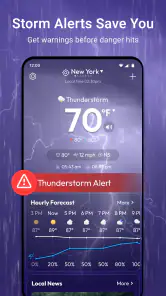
Users should also remember that weather information is guidance for planning, not a substitute for official emergency instructions. For ordinary decisions, a quick forecast may be enough. During dangerous conditions, I would look for authoritative local alerts as well. That is not a criticism unique to this app; it is a sensible boundary for any general weather-and-news service.
Where fatigue can appear
The first source of fatigue is repetition. Weather changes gradually, and local headlines may not refresh with something meaningful every time I look. If I expect a new, substantial update on every visit, the app can quickly feel empty. Its design makes more sense when I accept that many checks will be brief and uneventful.
The second is breadth. A local focus is useful until I want a broader picture. A major story may begin locally but require national or international context, and a compact combined app may not satisfy that need on its own. I would rather use Nova Weather as the first layer of awareness than force it to become my only news source.
The third is the tension between convenience and control. The more an app simplifies the experience, the fewer decisions I may be able to make about exactly what appears. That can be refreshing for casual readers, but frustrating for people who want carefully selected topics or a highly personalized reading list.
There is also a habit risk: combining two useful categories can make the app feel necessary even when one half of the experience is not meeting my needs. If I only open it for weather, I should ask whether its news component is genuinely helping. If I only read headlines, I should compare the experience with a dedicated news reader. The app earns lasting space when both sides contribute often enough to justify the combined shortcut.
My practical recommendation is to keep the app in an easy-to-reach place and use it at one or two predictable points in the day. That reduces random checking and gives the local news a clear role. If the feed becomes noisy or unhelpful, I would not keep opening it out of habit; I would return to the weather function and decide whether the overall combination still saves time.
How it compares with familiar alternatives
Compared with a standard weather app, Nova Weather offers a more contextual start to the day. A dedicated weather app will usually be the better choice for detailed forecasting workflows, multiple locations, or specialized weather information. Nova Weather is better suited to someone who wants enough weather awareness to plan, then wants local headlines without changing apps.
Compared with a large news application, it is more focused and less demanding. A major news service is likely to offer wider coverage and deeper reading, while Nova Weather keeps the experience closer to immediate local awareness. I see the two as complementary rather than direct replacements: one helps me decide what to do today, and the other helps me understand a larger story.
Compared with checking a search engine or social network for updates, the app has the advantage of a defined routine. Search can be excellent when I already know what I am looking for, and social platforms can surface rapid reactions, but both can require more filtering. Nova Weather is preferable when I want a quick starting point without constructing the search myself.
The trade-off is that a focused starting point may not satisfy users who want maximum choice. If you enjoy comparing forecasts, following many publishers, or building a complex personalized feed, the usual specialized alternatives will probably feel richer. If you value a calm, repeatable check, the smaller scope may be exactly why this app remains useful.
One of my strongest takeaways is that the app should be evaluated as a workflow, not as a collection of isolated features. Its real question is whether combining local weather and breaking news makes your day easier. If you already have a trusted weather service and a carefully organized news reader, adding another app may create duplication. If your current routine is scattered across several quick checks, this one has a clearer reason to stay.
My long-term verdict on Nova Weather
After the first-week novelty, Nova Weather still has a credible place for the right user because weather creates a dependable reason to return. The local-news element then adds context when it is relevant. That recurring pairing is more convincing than the idea of simply putting two popular categories together.
I would recommend it to someone who wants a free, low-commitment way to check local conditions and stay aware of nearby developments. It is especially appealing if you prefer short visits, practical information, and a routine that does not demand much setup. The Everyone rating and support for Android 8.0 and later also make it approachable for a broad range of Android users.
I would not recommend relying on it alone for specialist weather decisions, serious news research, extensive national coverage, or users who need a highly configurable information system. A dedicated weather app or a larger news platform will be the better long-term home in those situations. Nova Weather should be the convenient first stop, not automatically the final authority.
My honest conclusion is that the app earns lasting space when it replaces a small amount of daily friction. Open it before leaving, use the weather to shape your plan, scan the local headlines for anything relevant, and close it. That simple habit gives the product a clear purpose. If it instead becomes another feed to refresh without a decision attached, its value fades quickly.
For me, the strongest reason to keep it installed is not the novelty of combining weather and news. It is the possibility of a compact morning checkpoint that remains useful on ordinary days. That is a modest promise, but a realistic one. Nova Weather is at its best when it helps you plan, not when it tries to keep you watching.
Nova Weather - News Frequently Asked Questions
Which devices and operating systems can run Nova Weather - News?
Nova Weather - News is an app for people who want weather information and news together on a mobile device. It supports Android devices running Android 8.0 or later, so checking your device’s operating-system version before downloading can help avoid compatibility issues. The app is free, and its content rating is Everyone, making it suitable for a broad audience.
Who develops Nova Weather - News, and how established is it?
Nova Weather - News is developed by Build4world and brings live local weather and breaking news together in one app. It has been available since July 25, 2025, and has received a 4.4 average rating from around 210 ratings, with 56 written reviews. Those figures offer a helpful snapshot of user feedback, though individual experiences may differ.
What is Nova Weather - News, and what does it offer?
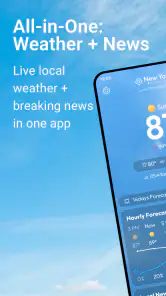
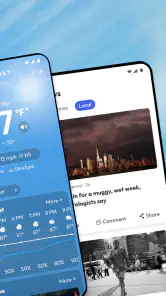
Nova Weather - News is designed to combine everyday weather information with related news content in one convenient app. Users can typically check current conditions, temperature, forecasts, and weather-related updates while browsing headlines or local information. The app’s focus is to help users plan their day and stay informed, with live local weather and breaking news brought together in one place.
How accurate are the forecasts in Nova Weather - News?
Forecast accuracy depends on the weather data providers, your selected location, and how far ahead you are checking. Like other weather applications, Nova Weather - News should generally be most reliable for current conditions and short-term forecasts, while predictions several days away may change. It is best used as a helpful guide rather than a replacement for official emergency weather alerts.
Does Nova Weather - News require my location?
The application may request location access to automatically display weather conditions and news relevant to your area. You can usually choose whether to allow precise location, approximate location, or no location access, depending on your device settings. If privacy is a concern, manually entering a city may be preferable. Always check the permissions requested before completing installation.
Pros
- Clean interface makes daily forecasts easy to scan quickly.
- Offers weather news alongside standard forecast information.
- Useful location support for checking conditions in different areas.
- Forecast details help with planning commutes and outdoor activities.
- Lightweight design should run smoothly on most modern devices.
Cons
- Some advanced forecast details may require navigating several screens.
- Weather news may be less useful for users seeking forecasts only.
- Accuracy can vary depending on location and available data sources.
- Frequent updates may increase battery or mobile data usage.
- The app may offer fewer customization options than dedicated weather apps.
- Category
- News & Magazines
- Version
- 1.1.4