Neutrino Design - Human Design
- 49.00
- 4.1
- Installs
- 10.00K
- Price
- Free

Screenshots
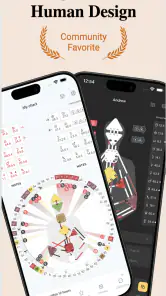
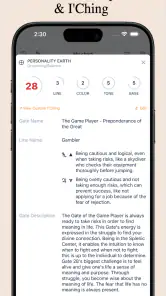
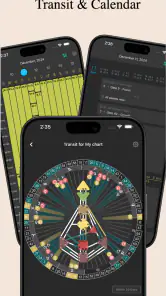
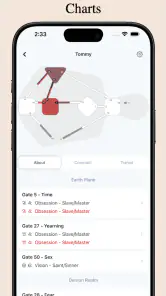
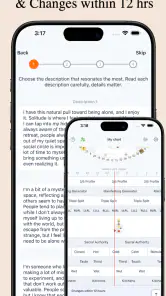
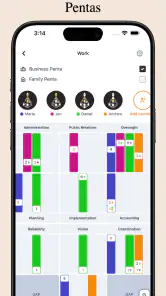
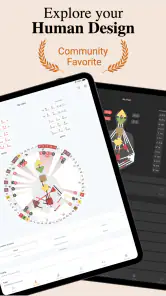

Analysis by Reviewed
I approached Neutrino Design as a reflective lifestyle app rather than a quick horoscope tool, and that distinction matters. Its focus is Human Design in detail, with the store summary pointing to Neutrino Design as the central idea. In my experience, the app is most useful when I treat it as a structured way to think about my habits, decisions, and reactions—not as a scientific test or an authority that should make choices for me.
The app comes from BitStream LTD and is free to install, which makes it easy to explore without committing money at the beginning. It is aimed at everyone, runs on Android from version 8.0 onward, and has built a modest but visible audience of over ten thousand installs. Its average rating sits at 4.1 from around two hundred ratings, while the app has received roughly fifty written reviews. Those figures suggest a generally positive reception, although not the kind of broad consensus that should replace your own trial.
How Neutrino Design Works as a Personal Reflection Tool
The strongest part of the experience is the way Human Design can turn vague self-observations into topics you can revisit. Many lifestyle apps give you a daily message and leave you with a pleasant sentence that is forgotten by lunchtime. Neutrino Design is more interesting when I use its detailed approach to examine recurring patterns: why I hesitate before a decision, why certain social situations drain me, or why advice that works for someone else feels wrong for me.
That makes it particularly suitable for people who already enjoy journaling, personality frameworks, meditation, or other forms of self-reflection. It gives those interests a vocabulary and a structure. Instead of asking only whether I feel productive or stressed, I can use the Human Design perspective as a prompt for a more specific conversation with myself.
I would not describe the app as a replacement for therapy, medical guidance, financial advice, or careful decision-making. Human Design is best approached here as an interpretive framework. The useful question is not “Can this app prove who I am?” but “Does this interpretation help me notice something I can examine in real life?” That attitude keeps the experience grounded and prevents a reading from becoming an excuse for avoiding responsibility.
One practical strength is that the app can fit into a slower routine. I can imagine opening it on a quiet morning, reading one part of my profile, and writing down a single observation rather than consuming the entire experience in one sitting. That approach is better than trying to memorize every term immediately. The detailed material can feel dense, so treating it as a reference to return to makes the app less overwhelming.
Why the detailed approach has real value
A detailed Human Design app has an advantage over a simple daily quote service: it can support comparison between a general idea and an actual situation. For example, if I am deciding whether to accept an invitation, I can first read the relevant guidance, then ask what I already know about my energy, boundaries, and motivation. The app does not need to supply a magical yes or no for the process to be useful. Its value is in slowing down an automatic reaction.
More From Our News Desk

Clash of Clans Is Won Between the Battles

Android Auto Makes the Case for Quieter Car Software

MobiOffice: Transforming Mobile Productivity with Seamless Integration

EA SPORTS FC™ Mobile Soccer: Redefining Mobile Sports Gaming

How Microsoft OneDrive Became a Mobile Productivity Giant

How Google Translate Breaks Language Barriers Effortlessly
That is also where I see a less obvious use case. Someone who is trying to understand a change in routine can use the app as a weekly review prompt. Rather than checking it whenever anxiety appears, I would note a few decisions during the week and then look for connections afterward. This reverses the usual pattern of searching for an explanation first and fitting life to it later.
Another useful habit is to separate the app’s language from my own evidence. I might read an interpretation, write down what seems accurate, and then record one example that supports it and one that does not. This simple two-column method prevents confirmation bias. It also reveals whether the framework is genuinely helping or merely producing descriptions that sound familiar.
For couples or friends, the app can become a conversation starter, but I would use it carefully. Sharing a reading can make it easier to discuss different needs or decision styles, yet labeling another person too quickly can create friction. The healthier workflow is to talk about one’s own experience first: “This part made me think about how I respond under pressure,” rather than “This proves why you always act that way.”
The everyday scenario where it makes sense
Imagine someone with a crowded workweek who keeps agreeing to plans and then feels exhausted. They open Neutrino Design on a Sunday evening, read through the material that feels relevant, and use it to frame a short review of the previous week. They notice which commitments felt energizing, which ones were accepted out of guilt, and where they ignored the need for rest. The app has not diagnosed the problem, but it has helped turn a general complaint into a concrete pattern they can test.
The next week, that person could try one small change: waiting before accepting new plans, protecting a quiet evening, or asking for clearer expectations at work. The important part is the experiment, not whether every sentence in the reading feels perfectly accurate. If the change improves the situation, it has practical value. If it does not, the user should adjust the routine rather than forcing the framework to fit.
This is the kind of use I recommend. The app works best as a mirror and a prompt, not as a command center.
Where the experience becomes demanding
The same detail that attracts curious users can also create the biggest barrier. Human Design terminology is not immediately intuitive, and a newcomer may struggle to understand which ideas deserve attention first. If you prefer a quick, plainly written answer, the experience may feel like homework. I would begin with one theme at a time and avoid trying to interpret an entire profile in a single session.
There is also a difference between feeling personally understood and receiving genuinely useful guidance. Interpretive systems often use broad statements that many people can recognize themselves in. I found it important to test the app’s suggestions against specific memories and current behavior instead of accepting a flattering description automatically. That extra effort is not a flaw unique to this app, but it is essential to using this type of tool responsibly.
The free entry point is welcome, though users should pay attention before purchasing anything inside the app. Neutrino Design includes in-app purchases ranging from $5.99 to $39.99 per item. That does not make the app a poor choice, but it means “free” should be understood as an opportunity to explore rather than a promise that every part of the experience will remain free. I would spend time with the available material first and only consider a purchase if I already knew exactly what additional value I wanted.
That pricing range also changes who should install it. A casual user looking for a few entertaining personality messages may not get enough benefit from paid material. Someone who regularly studies Human Design and wants a more substantial reference may find a purchase easier to justify, provided the content meets their expectations. In either case, the sensible approach is to avoid buying out of curiosity alone.
Who will get the most from it
I would recommend Neutrino Design to people who enjoy reflective tools and are willing to read patiently. It is a good fit for someone beginning to explore Human Design, as well as for a person who already uses journaling and wants another lens for reviewing decisions. The app can be especially helpful during periods of transition, such as changing routines, reconsidering boundaries, or trying to understand why a familiar approach no longer feels sustainable.
It may also suit users who dislike rigid productivity systems. Instead of pushing a fixed schedule or a universal routine, this kind of app invites a more personal interpretation. That can feel refreshing if standard advice has repeatedly failed to match your energy or circumstances. The trade-off is that you must do more of the thinking yourself; the app is not a step-by-step planner.
I would suggest that parents and younger users approach the content as conversation material rather than a way to assign permanent identities. The everyone age rating makes the app broadly accessible, but accessibility should not be confused with universal suitability. A young person may benefit from reflective questions, while still needing adults and real-world experience to put those ideas into perspective.
On the other hand, I would tell a few types of users to skip it. If you want evidence-based mental-health support, choose a qualified professional or a purpose-built wellbeing service. If you want a calendar, habit tracker, guided meditation library, or direct coaching program, this is not the same category of product. And if personality labels tend to make you feel boxed in, the detailed framework may create more pressure than clarity.
How it compares with simpler lifestyle alternatives
Compared with a basic horoscope app, Neutrino Design feels more suited to sustained reflection than quick entertainment. A horoscope app is often easier to open for a short daily message, while this app asks for more attention and interpretation. Compared with a journal, it offers a ready-made framework, but a journal gives you more freedom and less risk of forcing your experience into predefined language.
Compared with a habit tracker, Neutrino Design does not replace visible progress records or reminders. A tracker can show whether I exercised, slept consistently, or completed a routine. This app is better at asking why a routine feels natural or difficult, but it cannot provide the same concrete measurement. I would use the two together only if I could keep the framework from becoming an excuse for ignoring actual behavior.
It also differs from personality quizzes that deliver a quick type at the end. The appeal here is the possibility of returning to a more detailed interpretation over time. The drawback is that the learning curve is higher. People who want instant clarity will probably prefer a simpler alternative, while readers who enjoy revisiting ideas may appreciate the extra depth.
Small habits that improve the results
My first tip is to keep a short decision log. Before opening the app, write down what you are deciding and what you already feel. Read the relevant material afterward, then compare the interpretation with your original reaction. This order matters because it reduces the chance of unconsciously changing your memory to match the reading.
My second tip is to limit each session to one question. “How should I live?” is too broad to produce a useful test. “Why did I agree to that commitment?” or “What made yesterday’s conversation tiring?” gives the app’s detail somewhere practical to land. Smaller questions also make it easier to notice whether the guidance leads to a real change.
My third tip is to revisit conclusions after a few weeks. A reading that feels powerful during a stressful day may seem less convincing when circumstances change. I would not delete an idea immediately, but I would mark it as a hypothesis and check whether it continues to describe my experience. This protects the app from becoming a source of fixed labels.
Finally, I would avoid using it while making urgent or high-stakes choices. When health, safety, money, or another person’s rights are involved, practical evidence and qualified advice should take priority. Neutrino Design can help me clarify feelings before a decision, but it should not carry the decision itself.
My verdict after living with the concept
Neutrino Design succeeds because it takes Human Design seriously enough to offer more than a disposable daily message. Its free starting point, broad age rating, and support for Android 8.0 and later make it approachable, while the detailed subject matter gives reflective users something to return to. The current version is 10.53, and the app’s reception—an average of 4.1 from around two hundred ratings—matches my overall impression: worthwhile for the right audience, but not universally convincing.
My main reservation is not that the app asks for reflection; that is its purpose. The issue is that detailed interpretive content can feel authoritative even when it should be treated as a prompt. Users who expect clear proof, instant answers, or a complete personal-development program may leave disappointed. The in-app purchase range also deserves attention before anyone moves beyond the free experience.
My recommendation is simple: try it if you want a thoughtful Human Design reference, but keep your judgment in the driver’s seat. Use one idea at a time, compare it with real events, and let useful observations survive while weak ones fall away. For a curious reader who enjoys self-reflection, Neutrino Design can become a distinctive addition to a lifestyle routine. For someone seeking clinical support, hard evidence, or a practical productivity system, another kind of app will be the better choice.
After weighing those strengths and limits, I see Neutrino Design as a niche app with genuine potential rather than a universal recommendation. It earns its place on my phone when I want to slow down and examine a pattern, not when I need an answer delivered instantly. That is a modest promise, but in a crowded lifestyle category, a tool that encourages more careful self-observation can be genuinely useful.
Neutrino Design - Human Design Frequently Asked Questions
What is Neutrino Design – Human Design used for?
Neutrino Design – Human Design is an app for exploring the Human Design system, a personal-development framework that combines concepts from astrology, the I Ching, chakras, and other traditions. After entering your birth information, the app can generate a personal chart and help you review elements such as energy type, strategy, authority, profile, centers, channels, and gates. It is best approached as a reflective tool rather than a scientifically validated personality or medical assessment.
Who develops Neutrino Design, and what kind of app is it?
Neutrino Design is a Lifestyle app developed by BitStream LTD. Its focus is Human Design in detail, so it is intended for people curious about personal charts and the concepts behind this system. The app is rated for Everyone, making it suitable for a broad audience, though some of its terminology may take time to understand if you are new to Human Design.
What information is required to create a Human Design chart?
The app generally requires your date of birth, exact or approximate birth time, and place of birth. These details are important because even a small difference in birth time may affect parts of the chart, while an incorrect location can influence time-zone calculations. If you do not know your precise birth time, you may still explore the app, but the resulting chart and interpretations should be treated as less reliable.
Does Neutrino Design provide explanations for beginners?
Yes, the app is designed to make Human Design concepts easier to explore by presenting chart components and related interpretations in an organized format. Beginners can typically start with broad topics such as their type, strategy, and authority before moving into more detailed gates, channels, centers, and profiles. However, the terminology can still feel unfamiliar at first, so reading the explanations gradually is more useful than trying to understand the entire chart in one session.
Will Neutrino Design run on my phone?
Neutrino Design is available for Android and iOS, and the listed minimum Android requirement is version 8.0. Before downloading, check your device’s operating system and available storage, and use the appropriate app store for your platform. Keeping your phone’s software reasonably current can also help with compatibility and app updates.
Pros
- Clear charts make complex Human Design concepts easier to understand.
- Personalized readings help users explore their type
- profile
- and authority.
- Useful for journaling
- self-reflection
- and identifying recurring behavior patterns.
- Clean interface makes navigating bodygraph details relatively straightforward.
- Can be a helpful companion for users already familiar with Human Design terminology.
Cons
- Interpretations may feel too general or subjective for some users.
- Several insights or advanced features may require a paid subscription.
- The app should not replace professional mental health or medical guidance.
- Newcomers may find the terminology and chart symbols difficult at first.
- Accuracy depends on entering precise birth time and location information.
- Category
- Lifestyle
- Version
- 10.53