Msgbada - Korea Massage Finder
- 0.00
- 0.0
- Installs
- 50.00K
- Price
- Free

Screenshots
Analysis by Reviewed
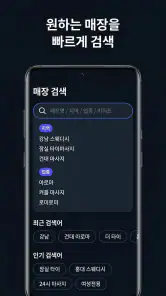
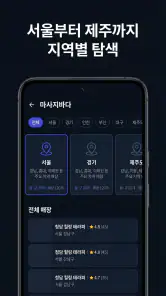
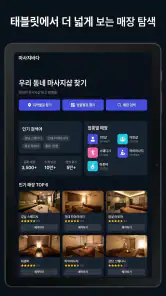
Finding a massage in Korea can be surprisingly difficult when you are working through unfamiliar place names, different service styles, and a language barrier. Msgbada takes a focused approach: it helps people look for massage shops and related services in Korea, including Swedish, Thai, home Thai, outcall, and one-person options. I found its value less in decoration and more in the practical question it tries to answer: where can I find a suitable massage option near the place and time I need it?
This is a free Beauty app from kormassage, with an Everyone age rating and support for Android devices running version 5.0 or later. It has passed the fifty-thousand-install mark, which gives it a modest but meaningful presence among people looking for this kind of local service. The current release is 2.0.28, and the app first appeared on December 21, 2018. Those details matter because this is not a general wellness guide or a meditation tool; it is a location-oriented finder built around Korean massage businesses.
How the finder feels when a network connection is part of the plan
The first thing I would keep in mind is that the useful part of Msgbada depends on access to current online information. Searching for shops, checking available choices, and moving between possible locations are all activities that make sense when the phone can reach the service. I would not treat it like a downloaded directory that I can prepare once and then rely on anywhere. The practical experience is closer to using a local search tool: open it when you are ready to investigate an option, browse what appears, and make your next decision while the information is available.
That network dependence is not necessarily a weakness. For a massage finder, fresh location information is more useful than a static list copied months ago. A traveler arriving in Seoul, a resident in Busan, or someone staying near an unfamiliar neighborhood may need to search from the place they are actually visiting. The connection allows the app’s central purpose to remain tied to that moment rather than to a saved list that may no longer suit the user.
Still, I would avoid starting a search at the exact moment I need to leave for an appointment. A better habit is to open Msgbada while I have a stable connection, identify a few plausible shops, and note the important details before moving through underground stations, elevators, or busy streets. This small change makes the app feel much more dependable because I am not asking it to solve both discovery and last-minute navigation under pressure.
Choosing a service instead of searching blindly
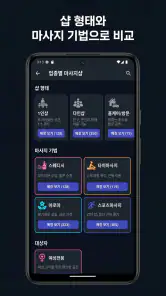
The range of massage types is one of the app’s most useful distinctions. Swedish and Thai massage are not interchangeable experiences, and home Thai or outcall services involve a different kind of planning from visiting a shop. A one-person business can also appeal to someone who prefers a smaller, more personal setting rather than a larger venue. I appreciate that these categories give the search a starting point instead of forcing every user to browse one undifferentiated collection.
My advice is to decide what kind of appointment you actually want before opening the results. If you are tired after walking all day, a nearby shop may be more realistic than arranging a service at your accommodation. If privacy or convenience matters more than travel, home Thai or outcall may be the more relevant direction. The app can help surface those choices, but it cannot make the personal trade-off for you. Distance, timing, comfort, and the setting all deserve consideration.
More From Our News Desk

Clash of Clans Is Won Between the Battles

Android Auto Makes the Case for Quieter Car Software

MobiOffice: Transforming Mobile Productivity with Seamless Integration

EA SPORTS FC™ Mobile Soccer: Redefining Mobile Sports Gaming

How Microsoft OneDrive Became a Mobile Productivity Giant

How Google Translate Breaks Language Barriers Effortlessly
There is also a useful language-related point here. A category label can reduce the amount of Korean terminology you need to type or interpret while searching, but it should not be treated as a complete explanation of what every business provides. I would still read each listing carefully, confirm the exact service, and clarify anything important before committing. The category is a filter, not a substitute for communication.
Using it in ordinary mobile situations
Msgbada makes the most sense on a phone because the need it addresses is often immediate. Imagine finishing dinner in an unfamiliar district and realizing that the massage venue you had considered is too far away. Instead of opening a broad web search and sorting through unrelated results, I would use the app to look for a nearby option, compare the relevant massage styles, and then decide whether traveling to a shop is worth the effort.
A second realistic situation is a hotel stay. After checking in, I might want an appointment without spending a long time learning which Korean search terms produce useful results. The app’s focus on massage shops across Korea gives me a narrower place to begin. If I am considering home Thai or outcall service, I would first check whether the provider’s coverage and arrangements suit the hotel location, then confirm the details directly rather than assuming that every result serves every neighborhood.
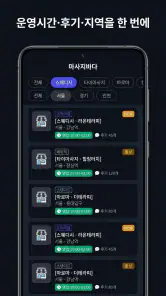
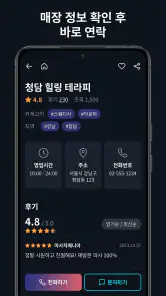
The small screen also changes how I would use the app. I prefer short sessions: search, narrow the choices, inspect the most promising result, and stop. Trying to compare too many businesses at once on a phone can turn a simple decision into a tiring one. A useful workflow is to keep only two or three candidates, then compare them using the same questions: What style is offered? Is the location practical? Does the service format fit my comfort level? Can I contact the business clearly?
That workflow is especially helpful for visitors who are moving between areas. A result that looks attractive in the afternoon may become inconvenient after the next train ride or appointment. I would search again after reaching the new district instead of assuming that the first area remains the best choice. The app’s value is strongest when it follows the user’s current location and plans rather than being used as a one-time directory.
What to do when the search does not go smoothly
Any location finder can become frustrating when a connection is slow or when the user is in a crowded area with inconsistent reception. In that situation, I would avoid repeatedly tapping the same search control. First, I would check whether the request has finished loading, then retry once after moving to a more open spot. If the result still does not appear, I would switch from a broad search to a simpler category or a nearby area, because a narrower request is often easier to manage on a phone.
I would also build a recovery step into the appointment process. Once I find a promising shop, I would save the practical information in a note or screenshot for personal reference, then confirm the appointment while the connection is working. This is not the same as claiming that Msgbada provides offline access; it is simply a sensible way to avoid losing a useful result when the network changes. It also means I am less dependent on reopening the search while standing outside a building or inside a station.
Another important recovery habit is to keep alternatives. If the first result is too far away, unavailable, or unclear about the service, I do not want to begin the entire search from zero. I would identify a nearby second choice before leaving the current screen. This is particularly valuable for home Thai and outcall requests, where the provider may need to confirm an area or arrangement rather than accepting an ordinary walk-in assumption.
The app is not the right tool for someone who expects a fully managed booking experience with every step handled inside one interface. I would choose a more comprehensive booking platform if I needed a clearly structured reservation process, extensive appointment management, or a familiar review-and-payment workflow. Msgbada is more appealing when discovery is the main problem and I am comfortable taking responsibility for confirming the final details.
Being careful with mobile data and personal information
Because the app is designed around finding nearby services, I would use it thoughtfully on mobile data. A practical approach is to perform the broader browsing while connected to trusted Wi-Fi, then use cellular data for a short final search when I am already in the area. This avoids unnecessary loading while still preserving the app’s usefulness when I am out walking or traveling.
I would also avoid sending more personal information than the provider needs. For an ordinary inquiry, the relevant details may be the preferred massage style, approximate location, and desired time. If a home Thai or outcall service requires an address, I would verify that I am communicating with the intended business before sharing precise accommodation details. This is good judgment for any local service app, but it matters even more when the appointment takes place where I am staying.
Data-conscious use is not only about bandwidth. It is also about reducing confusion. I would write down the shop name, neighborhood, and agreed time rather than relying on memory after browsing several listings. If the app presents many possible choices, a short personal note helps separate the option I actually contacted from the options I merely considered. That simple habit prevents an awkward mix-up when several businesses offer similar massage styles.
For travelers, I would combine the app with a map or translation tool when necessary, but I would not let those alternatives replace Msgbada too early. A general map can show businesses, yet it may not organize the massage-specific distinctions that make this app useful. Conversely, a translation tool can help with communication but does not solve the initial discovery problem. I see Msgbada as the focused first step, followed by other tools only when I need navigation or clearer conversation.
Who will get the most from it
I think Msgbada is best for people who already know they want a massage and need help narrowing down local possibilities in Korea. It suits travelers, newcomers, and residents exploring a different neighborhood. It is also useful for someone who wants to compare a conventional shop visit with home Thai, outcall, or one-person options without beginning with a broad internet search.
The app is less suitable for a person who wants educational content about massage techniques, a structured wellness program, or guided relaxation at home. It is not the kind of Beauty app I would open to learn stretching routines or track a long-term self-care habit. Its purpose is more immediate and practical: identify a relevant business and decide what to do next.
I would also recommend caution for users who dislike making direct confirmations. The app can help with discovery, but I would still verify the service format, location, timing, and any important personal requirements with the business. Someone who expects every listing to have complete, standardized information may find the experience less comfortable than a tightly managed reservation service.
For first-time users, the best approach is to start with a familiar category such as Swedish or Thai, search near the actual area of stay, and keep the first session simple. Once the basic workflow feels comfortable, it becomes easier to explore the more situational choices, including home Thai and outcall services. I would not begin with the most complicated arrangement when I am also unfamiliar with the neighborhood.
My connectivity-focused verdict
After looking at how Msgbada fits into real mobile use, I see a focused tool with a clear practical role. Its strength is not trying to become a complete wellness ecosystem. Instead, it brings massage-shop discovery into one place and separates useful service types, which can save time when a general search produces too much noise.
The main trade-off is that the experience works best when I plan around the connection. I would search before entering areas where reception may be unreliable, keep a short backup list, and confirm important details while the information is in front of me. Those habits do not eliminate every inconvenience, but they make the app easier to use without expecting unsupported offline behavior.
In my view, the free price makes it worth trying for travelers and local users who need a Korea-focused massage finder rather than a broad booking marketplace. I would recommend it to a friend who wanted to compare Swedish, Thai, home Thai, outcall, and one-person possibilities from a phone. I would steer that friend toward another service if they needed fully integrated reservations, extensive business verification, or a polished appointment-management system. For focused discovery, though, Msgbada is a useful starting point, provided you treat the network connection, final confirmation, and personal-data choices as part of the process.
My bottom line: use Msgbada as a focused local-search companion, not as a substitute for confirming the appointment yourself. That expectation matches what the app does well and avoids the frustration that comes from asking a simple finder to handle every part of the experience.
Msgbada - Korea Massage Finder Frequently Asked Questions
Is Msgbada free to download, and which devices can run it?
Msgbada is a free app for finding massage shops across Korea. It is listed for Android devices running version 5.0 or later, so checking your device’s operating system before downloading can help avoid compatibility problems. The app is developed by kormassage and is categorized under Beauty. Its Everyone age rating makes it broadly suitable for users, though the services shown may be intended for adults.
What kinds of massage services can I search for in Msgbada?
Msgbada is intended for browsing massage shops across Korea, with listings covering Swedish, Thai, home Thai, outcall, and one-person services. This range can help users compare different types of providers in one place and narrow a search to the kind of service they have in mind. Read each business’s listing carefully, since the available services and arrangements can differ from one shop to another.
What is Msgbada - Korea Massage Finder used for?
Msgbada - Korea Massage Finder is designed to help users discover massage shops and related wellness services in South Korea. After exploring its listings, the app appears most useful for browsing available businesses, checking basic service information, and comparing locations before making contact. It can be particularly convenient for travelers or residents who want a more organized way to search for massage providers by area.
Does Msgbada provide accurate information about massage shops?
The app can be a helpful starting point, but users should not assume that every listing is completely up to date. Business hours, prices, available treatments, addresses, and phone numbers may change over time. Before visiting, it is advisable to confirm the details directly with the selected shop. Treat the information as a directory reference rather than a guaranteed reservation or service confirmation.
Can I book an appointment directly through Msgbada?
Msgbada mainly functions as a massage-finding and information platform, so booking features may depend on the individual listing and the way each business handles appointments. Some providers may offer contact details or external booking options, while others may require a phone call or direct message. Always check the listing carefully and confirm the appointment, price, and cancellation conditions with the shop.
Pros
- Helps compare nearby massage providers in one place.
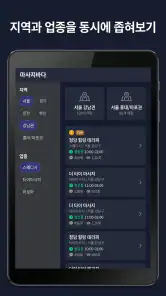
- Useful filters can narrow results by location and service type.
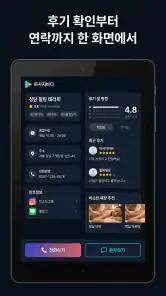
- Provider listings may include contact details and business information.
- Convenient for discovering lesser-known local massage shops.
- Korea-focused listings make it practical for visitors and residents.
Cons
- Listing quality may vary between different massage providers.
- Some businesses may have limited photos
- reviews
- or updated information.
- Availability and booking options can differ from one provider to another.
- The app may be less useful outside major Korean cities.
- Language support may be limited for users who do not read Korean.
- Category
- Beauty
- Version
- 2.0.28