Military Benefits App
- 59.00
- 4.6
- Installs
- 10.00K
- Price
- Free

Screenshots
Analysis by Reviewed
I approached Military Benefits App as a practical lifestyle tool rather than something I would open for entertainment. Its purpose is straightforward: help military members and their families find discounts and keep track of benefits in one place. That sounds simple, but the real question is whether it remains useful after the first burst of curiosity. In my experience, an app like this earns a permanent place on a phone only when it saves time during ordinary errands, travel planning, and benefit-related decisions.
The first impression is positive because the idea is easy to understand. Instead of relying on scattered searches, remembered offers, or separate notes, I can use one dedicated destination when I want to check whether my military status may unlock a better deal. The app is free to download, rated for Everyone, and belongs to the Lifestyle category, so it is aimed at broad everyday use rather than a specialist audience. The developer is listed as Military Benefits App, which makes the app’s focus immediately clear.
From an appealing first week to a useful routine
Why the first few sessions feel worthwhile
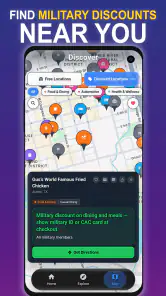
During the first week, the strongest benefit is convenience. I do not have to begin with a general web search and guess which results are current, relevant, or intended for military users. Opening a purpose-built app changes the starting point: I am already looking in the right context. That matters when I am comparing travel plans, shopping for a larger purchase, or simply wondering whether a nearby business offers a military discount.
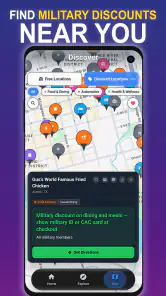
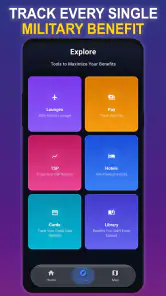
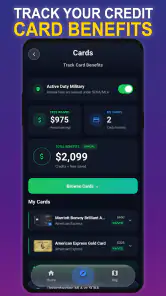
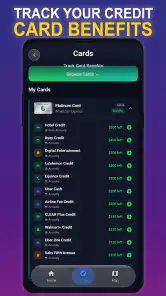
The app’s store summary, “Find Discounts & Track Benefits,” points to two different jobs. Finding discounts is the discovery side, while tracking benefits suggests an organizational role. I would use the first function when I am about to spend money and the second when I want a more dependable way to remember benefits I may otherwise overlook. Those uses are related, but they are not identical, and the app is more convincing when I treat it as a small personal reference system rather than a magic coupon drawer.
A realistic example is a weekend trip. Before booking anything, I could open the app to look for military-related savings, then compare the result with the final price and the conditions shown by the provider. Later, while planning meals or activities, I could repeat that check instead of searching from scratch. The practical gain is not necessarily one dramatic discount; it is reducing the number of places I need to consult before making a decision.
That workflow also reveals an important habit: the app works best when opened before the purchase, not at the checkout counter. If I wait until the last moment, I may not have enough time to understand eligibility, present the required proof, or compare the offer with a normal sale. I would make the app part of planning, alongside a budget or itinerary, rather than treating it as an emergency discount finder.
Who gets the most from it
This app makes the most sense for active-duty personnel, veterans, reservists, and military families who regularly want to check available savings. It may also suit someone who has recently become eligible for military benefits and needs a single place to build awareness. The value is especially clear for people who dislike maintaining spreadsheets, saving screenshots, or keeping a long list of bookmarked pages.
More From Our News Desk

Clash of Clans Is Won Between the Battles

Android Auto Makes the Case for Quieter Car Software

MobiOffice: Transforming Mobile Productivity with Seamless Integration

EA SPORTS FC™ Mobile Soccer: Redefining Mobile Sports Gaming

How Microsoft OneDrive Became a Mobile Productivity Giant

How Google Translate Breaks Language Barriers Effortlessly
It is less compelling for someone who rarely uses discounts, already has a highly organized benefit-tracking system, or prefers to verify every offer directly through official providers. A general search engine may be faster for a single question, and an official organization’s website may be the better authority for formal eligibility or service information. I would not use this app as the only source for a benefit that affects an important financial or administrative decision.
That distinction is central to using it responsibly. A discovery tool can point me toward an opportunity, but the final terms still deserve attention. Eligibility, expiration, location restrictions, required identification, and exclusions can change the practical value of an offer. I would always treat the app as the beginning of verification, especially when the saving is large enough to influence a booking or purchase.
What makes the app different from ordinary alternatives
The usual alternative is a mixture of web searches, retailer pages, social media posts, and word of mouth. That approach can uncover useful information, but it is fragmented and easy to forget. A general coupon app may have broader coverage, yet it is not built around military eligibility. A notes app can store links, but it cannot replace the act of discovering relevant options. Military Benefits App sits between those choices: more focused than a general discount service and more convenient than a personal collection of saved pages.
The trade-off is that focus can also narrow the experience. If I want broad price comparison, cashback, supermarket coupons, or ordinary promotional codes, another service may be stronger. This app’s advantage is not that it replaces every shopping tool. Its advantage is that it gives military-related savings and benefits a dedicated place in my routine.
Useful habits that are easy to miss
One non-obvious way to use the app is to check it before setting a travel budget. Many people calculate transportation and lodging first, then look for discounts afterward. I would reverse that order when possible: scan for relevant benefits, note which savings appear realistic, and only then finalize the budget. That prevents me from treating a possible discount as guaranteed income while still allowing it to influence the plan.
A second useful habit is to separate “worth checking” from “worth using.” I might find an offer that looks attractive but requires a detour, a particular date, or a more complicated verification step. The app can help me identify the possibility, but I still need to compare the total cost and effort. A discount that adds an hour of travel or forces an unwanted purchase is not automatically a good deal.
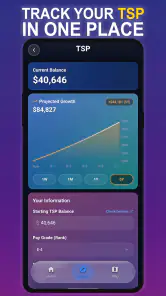
A third is to use the tracking side as a review prompt. Rather than opening the app only when I remember a specific brand, I would make a quick check before recurring spending moments such as travel planning, seasonal shopping, or a move. That turns a passive list into a repeatable decision step. The app’s lasting value depends less on constant browsing than on remembering to consult it at the right time.
What month-to-month value looks like
After the novelty fades, I would judge the app by whether it changes my behavior. If I open it several times a month before purchases and it helps me avoid missing a relevant benefit, it has earned space on my phone. If I only browse it once, feel that I have seen everything, and never return, then the initial appeal was mostly curiosity.
The current release is version 1.0.11, which places the product in an early stage of its life compared with long-established lifestyle platforms. That is not automatically negative. A focused app can be useful without years of history, but I would pay attention to how consistently the experience is maintained over time. A benefits app needs recurring freshness because outdated offers are more damaging here than in a casual content app.
The public reception is encouraging: it has an average rating of 4.6 from around 1.2 thousand ratings, with 59 written reviews and over 10 thousand installs. Those figures suggest that the concept is resonating with an existing audience, but they do not remove the need for personal judgment. Ratings tell me that many users find the app worthwhile; they do not guarantee that every discount fits my location, service status, spending habits, or expectations.
For month-to-month use, I would create a simple rhythm. I would check before planned travel, revisit the app when preparing a significant purchase, and occasionally review tracked benefits so that old information does not quietly shape a new decision. I would not spend time opening it every day unless I had a specific reason. That is an important strength: the app does not need to become a daily obsession to be useful.
The maintenance burden is modest, but real
The main maintenance task falls on the user’s judgment. I need to confirm the final terms, remember what I have already checked, and avoid assuming that a listed opportunity is automatically available everywhere. If I save or track several benefits, I would periodically remove anything I no longer use and keep my attention on the categories that actually affect my household.
That maintenance is lighter than managing a homemade spreadsheet, but it is not zero. The app can organize discovery; it cannot make a changing offer permanent. I would also keep official documentation available for formal benefits, because a lifestyle app should not replace authoritative guidance when eligibility or entitlement is at stake.
There is another practical consideration: the app includes in-app purchases ranging from $12.99 to $59.99 per item. The download itself is free, which makes trying it relatively easy, but I would inspect the purchase screen carefully before committing to anything. A person who only wants occasional discount discovery may find the free entry point sufficient, while someone seeking deeper or ongoing value should decide whether a paid item genuinely improves their workflow.
That pricing structure changes how I evaluate the app. I would not buy immediately simply because the topic is relevant to me. First I would use the free experience during several real purchasing situations, note whether it saves time, and then consider whether any optional purchase solves a problem I actually have. This trial-first approach is particularly sensible for users who do not know how frequently they will use a benefits tracker.
Where fatigue can set in
The biggest source of fatigue is repeated verification. If I open the app, find an appealing offer, and then have to do substantial additional searching before I can use it, the process may feel less efficient than expected. That does not make the app pointless, because verification is responsible, but it means the benefit is often time saved during discovery rather than a completely finished transaction.
A second source of fatigue is the temptation to browse without a purchase in mind. Discount lists can create the feeling that I am saving money simply by finding offers, even when I would not have bought anything. I would use the app to support planned spending, not to encourage unnecessary spending. This is one reason the app is better suited to a checklist habit than endless scrolling.
A third issue is relevance. A benefit may be valuable to one household and irrelevant to another. Someone who travels often may return frequently, while someone who shops locally and rarely makes large purchases may find fewer reasons to open the app. The app’s usefulness is therefore tied to lifestyle, not just eligibility.
There is also a trust question that applies to any benefit directory. I would want the information to remain clear enough for me to understand the conditions before acting. If an entry is vague, I would not risk a nonrefundable booking or a major purchase based on it. In those situations, an official provider or direct customer-service channel is the better option, even if it takes longer.
Privacy and decision-making in everyday use
Because this is a lifestyle app connected to military benefits, I would be deliberate about what I enter and what I use it for. I would avoid treating it as a secure archive for sensitive documents unless the app clearly explains that purpose. For routine discount discovery, I can often begin with general information and verify eligibility through the provider when required.
That cautious approach also keeps the app in its strongest lane. I want it to help me notice possibilities and organize my choices, not become the sole keeper of identity information or official records. When a benefit involves personal data, I would read the relevant prompts carefully and use the minimum information needed for the task.
How I would decide whether to pay
The free price makes the first decision easy: install it, test it during a real shopping or travel-planning task, and see whether the workflow is clearer than my existing method. The harder decision concerns the optional in-app purchases. I would ask three practical questions: do I return often enough to justify spending, does the paid item reduce a repeated annoyance, and can I explain exactly what problem it solves?
If the answer to those questions is no, I would stay with the free experience or use another source. If the app becomes part of regular household planning and a paid option provides meaningful organization, the cost may be reasonable for that particular user. I would still compare the expected value with free official resources, general search, and a simple notes system before paying.
Long-term verdict: useful when treated as a tool, not a promise
My lasting impression is favorable, with a clear condition. Military Benefits App earns a place on my phone when I use it as a focused checkpoint before spending, not as a guarantee that every listed benefit will be current, nearby, or worth the effort. Its first-week appeal comes from putting military-focused discovery in one familiar location. Its month-to-month value comes from repeating that check at the moments when it can influence a real decision.
The app is free, open to an Everyone-rated audience, and supported by a solid 4.6 average, so it is easy to justify a trial. I would recommend it to military users and families who regularly search for discounts or want a more deliberate way to remember benefits. I would also recommend keeping expectations practical: verify the final terms, avoid buying things merely because a discount appears, and test the free experience before considering in-app purchases.
I would skip it if I rarely use military discounts, already have a trusted and efficient system, or need formal benefit guidance rather than discovery and organization. In those cases, an official source or a general comparison tool may serve me better. For everyone else, the app’s strongest quality is not novelty. It is the possibility of turning an easily forgotten question—“Is there a military benefit for this?”—into a quick, repeatable part of everyday planning.
My recommendation is to keep it installed only if it becomes part of a real routine. Open it before travel, larger purchases, and other predictable spending moments; verify what matters; and let the results inform, rather than control, the decision. Used that way, Military Benefits App feels like a practical companion with recurring value instead of another app that disappears after the first week.
Military Benefits App Frequently Asked Questions
What does the app’s “Find Discounts & Track Benefits” description mean?
The Military Benefits App is a lifestyle app with the short description “Military Benefits” and a focus on finding discounts and tracking benefits. These tools can help users keep relevant information organized and explore offers or benefit resources. Treat any benefit details as guidance: eligibility and terms can differ, so check with the organization providing a benefit before relying on it.
Which devices can run the Military Benefits App?
The app requires Android 8.0 or later, so check your device’s operating system before downloading. It is listed as an app for mobile use, and compatibility can depend on the device and operating system. If your device meets the requirement, you can assess whether the features suit your needs and review the app’s permissions during installation.
What is the Military Benefits App used for?
The Military Benefits App is designed to help service members, veterans, and eligible family members find information about military-related benefits in one place. Depending on the version and region, it may provide guidance about healthcare, education, housing, financial assistance, discounts, employment resources, and support programs. It is best used as an information and organization tool rather than a replacement for official government services.
Who can use the Military Benefits App?
The app may be useful for active-duty personnel, reservists, National Guard members, veterans, retirees, spouses, dependents, and caregivers. Eligibility for individual benefits is not automatically determined simply by downloading or using the app. Requirements can vary according to service history, discharge status, location, disability rating, income, family circumstances, and other factors, so users should always confirm their eligibility with the relevant official agency.
Does the Military Benefits App apply for benefits on my behalf?
In most cases, the app provides explanations, links, checklists, and contact information rather than directly approving or processing benefits. Some versions may help users begin an application or navigate to an official portal, but final submissions, identity verification, document uploads, and decisions are normally handled by the responsible government department or organization. Carefully review every link and confirm that you are using an official website before sharing sensitive information.
Pros
- Centralizes military discounts
- benefits
- and eligibility information in one app.
- Saves time by helping users discover offers near their current location.
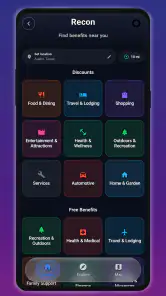
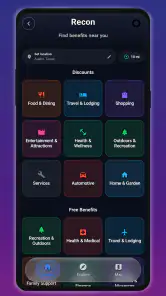
- Useful search and category filters make specific benefits easier to find.
- Can help families identify discounts available to spouses and dependents.
- Regularly updated listings may reveal new savings opportunities and programs.
Cons
- Benefit availability can vary by location
- branch
- rank
- or service status.
- Some offers require military ID verification at checkout or in person.
- Listings may depend on participating businesses and become outdated.
- The app may request location access to provide nearby benefits and offers.
- Not every listed discount is available online or through the app directly.
- Category
- Lifestyle
- Version
- 1.0.11