Lumus: Psychic & Tarot Reading
- 794.00
- 4.4
- Installs
- 500.00K
- Price
- Free

Screenshots
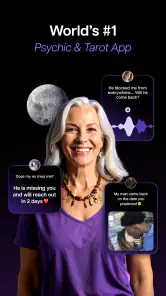
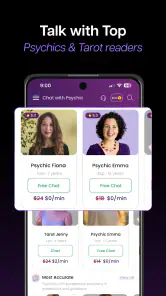
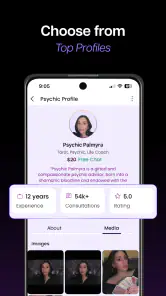
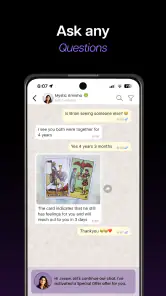

Analysis by Reviewed
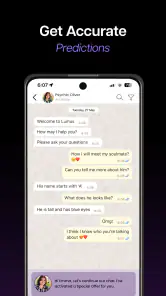
I would treat Lumus as a place to try a psychic or tarot conversation, not as a tool for making important decisions. The appeal is immediate guidance through chat, with a first chat offered free. That makes it easier to see whether this style of reading suits you before deciding whether to continue, while leaving the practical value of any further use dependent on what the experience offers you personally.
What you can try without paying
Lumus: Psychic & Tarot Reading is a free lifestyle app from Psychics, intended for people who want to chat with a psychic or tarot reader. The free starting point is useful: you can explore the basic idea without paying upfront. I would still distinguish that from unlimited free access. The first chat is free, but that promise alone does not establish what continued conversations cost, so I’d check the terms shown in the app before going further.
That distinction matters because live, personal guidance is different from reading a general horoscope or browsing free tarot meanings. A conversation may feel more relevant because you can bring your own question to it, but it can also make you more inclined to keep chatting. My practical advice is to decide in advance what you want from the free session and stop to review any costs before continuing. If you are only looking for a no-cost, ongoing source of advice, this may not be the right fit.
The app is rated for Everyone, and it has an average rating of 4.4 from around four thousand ratings, alongside 794 written reviews. Those figures suggest that many people have chosen to rate it, but they cannot tell you whether its readers, style, or value will match your expectations. I’d use the free chat as a low-commitment way to judge the tone and usefulness for yourself, rather than treating popularity as proof that a reading is accurate.
What the chat format is good for
The strongest case for Lumus is a specific question that feels easier to talk through than to sit with alone. You might be uncertain about how to approach a difficult conversation, or feel torn between two ordinary options. In that sort of moment, a reader’s response can give you a different angle and help you put your own thoughts into words. I see that as reflection, not evidence that anyone can predict what will happen.
A useful way to prepare is to write down one question and the decision behind it before opening a chat. For example, if you are unsure whether to contact someone after a disagreement, ask what you are hoping to achieve and what you might want to consider before acting. Avoid sending a stream of increasingly narrow questions in search of the answer you want. A clear prompt makes it easier to decide whether the conversation has helped, and limits the risk of mistaking reassurance for dependable advice.
There is also a practical trade-off in asking about something concrete. A broad question can invite a broad answer that is hard to apply; a highly detailed question may encourage you to treat a reading as a verdict. I would keep the question focused on your feelings, choices, or next step, rather than asking the app to settle a high-stakes matter. For health, legal, financial, or safety concerns, a qualified professional or trusted person is a better source of support.
More From Our News Desk

Clash of Clans Is Won Between the Battles

Android Auto Makes the Case for Quieter Car Software

MobiOffice: Transforming Mobile Productivity with Seamless Integration

EA SPORTS FC™ Mobile Soccer: Redefining Mobile Sports Gaming

How Microsoft OneDrive Became a Mobile Productivity Giant

How Google Translate Breaks Language Barriers Effortlessly
How it compares with other ways to seek guidance
Compared with a free tarot guide or a general horoscope, a chat with a reader is more personal in format: you can bring a situation rather than simply read a general interpretation. That can make the exchange feel more engaging, especially if talking through a question helps you reflect. The trade-off is that an interactive conversation can be harder to evaluate objectively, and continued access may involve a cost. A free article or self-guided journal is less personal, but you can revisit it without the same pressure to keep a conversation going.
Compared with speaking to a friend, Lumus offers a different kind of response rather than the shared context and ongoing relationship a friend can provide. If you need practical help from someone who knows your circumstances, a trusted person may be more useful. If you want a structured conversation around emotional distress, a mental-health professional is the more appropriate choice. I would use a psychic reading as an optional prompt for reflection, never as a substitute for either.
Where the value and friction meet
The free first chat lowers the barrier to trying the service, but value depends on whether the conversation leaves you with something useful beyond momentary reassurance. Afterward, I’d ask myself: Did I gain a perspective I had not considered? Can I describe a sensible next step in my own words? Would I still find the session worthwhile if I treated its predictions as uncertain? If the answer is no, paying to continue is unlikely to improve the experience for me.
Another small but important tip is to keep notes in your own words after a reading, rather than relying on memory or returning repeatedly to ask the same question. Write down what you felt, what was actually actionable, and what remains unknown. This helps separate useful self-reflection from claims about the future. It also gives you a natural stopping point: if the main benefit is already captured, there may be no reason to extend the chat.
Some readers may enjoy the conversational format and find it comforting; others may find it too open-ended, or feel that a reading does not give enough concrete guidance. Personal fit is central here. I would not keep paying simply because an answer feels emotionally powerful, and I would step away if the exchange makes me more anxious, dependent, or pressured to seek repeated reassurance.
Who is most likely to find it worthwhile
Lumus is best suited to an adult who is curious about tarot or psychic readings, has a low-stakes question, and can approach the answer with healthy skepticism. It may also suit someone who likes talking through a dilemma and wants a prompt for journaling or self-reflection. The first free chat gives these users a chance to judge the reader’s communication style before deciding whether the experience is worth more of their time.
I’d skip it if you need verifiable facts, a professional assessment, or a reliable prediction before making a major decision. It is also a poor match if you want a completely free service beyond the initial chat, since the free offer is limited to that first conversation. And if you find it difficult to disengage from paid conversations once you feel uncertain, a free self-guided resource or a conversation with someone you trust may be a safer alternative.
The app has reached over 500,000 installs, and its current version is 1.1.386. It was released on August 13, 2024, and supports Android 7.0 and later. Those details help identify the current app and its platform requirements, but they do not change the key question for a new user: whether the chat itself feels useful enough to justify any continued spending.
My verdict: try it with a clear limit
I’d recommend trying Lumus if you are curious about a personal tarot or psychic chat and are comfortable treating it as reflection rather than authority. Its free first conversation offers a straightforward way to test the experience, and the lifestyle focus makes sense for questions about feelings or everyday choices. Before continuing, check any in-app costs and decide what would count as a worthwhile outcome for you.
For me, the sensible approach is to arrive with one low-stakes question, leave with a note about any practical insight, and avoid using a reading to settle decisions that need evidence or professional support. If the conversation helps you think more clearly, the free session may already have delivered value. If it mainly encourages you to ask again, I would stop there and choose a different source of guidance.
A realistic way to approach a first session
Imagine you have a quiet moment after work and keep replaying a conversation with a friend. You are not facing an emergency, but you are unsure whether to reach out or give the situation space. That is a more sensible context for a reading than opening the app in the middle of an argument and asking it to decide what you should do. Before starting, I’d write down what I want to understand, such as what I am worried about or what outcome I hope for. The distinction keeps the session centred on reflection rather than outsourcing the choice.
After the chat, I would turn any useful point into an action that remains mine to choose. That might mean drafting a message without sending it immediately, or deciding to revisit the issue tomorrow when emotions have cooled. If the conversation only gives a prediction, I would not treat that as a reason to act. This simple pause is a useful safeguard in a service built around personal questions: it lets you benefit from a fresh perspective without making the reader’s answer the authority over your relationships.
Questions worth settling before you continue
A natural concern is whether the initial free access means future chats are free too. I would not assume that. The offer applies to the first chat, so anyone considering more should review the price and payment details displayed in the app before agreeing to continue. That is especially important if you are accustomed to free horoscopes or tarot pages, where reading another interpretation does not usually involve a live exchange.
You may also wonder whether a reading can tell you what will definitely happen. I would approach it as a personal interpretation, not a verified forecast. If you want an answer that can be checked against evidence, or you need guidance where a wrong choice could cause serious harm, this is the wrong tool for that job. The most helpful result is more likely to be a prompt that clarifies your own priorities than a fact about the future.
Another practical question is whether the app is suitable for someone who is merely curious rather than deeply familiar with tarot. The low-commitment first chat makes trying the format possible without requiring prior knowledge, but comfort with uncertainty still matters. If you dislike symbolic or interpretive advice and want direct, testable answers, a straightforward information source will probably suit you better. The format is most enjoyable when you can listen without feeling obliged to believe every claim.
Small habits that make the experience safer and more useful
I would set a spending boundary before entering a personal conversation, not while deciding whether the conversation feels compelling. That timing matters: when a topic is emotionally charged, it can be harder to weigh a new cost calmly. Check the terms first, decide what you are willing to spend if anything, and do not let a strong feeling of curiosity make the decision for you. The free opening can help you assess the style, but it does not require you to buy more access.
I would also avoid sharing details that are not needed to explain the question. A concise account is often enough to describe a dilemma, and it keeps the focus on what you actually want to think through. Before sending anything personal, use your own judgement about what feels appropriate to disclose in an app conversation. This is not a reason to avoid the service altogether; it is a sensible habit for any personal chat, particularly one about relationships, worries, or private choices.
Finally, give yourself a clear stopping rule. One conversation can be enough to see whether the format works for you. If you notice yourself returning to ask the same question because the first answer did not remove uncertainty, that may be a cue to pause rather than seek another reading. Uncertainty is sometimes the honest answer, and no number of repeated interpretations can guarantee that a future event will unfold in a particular way.
How I would judge the value after trying it
I would not measure value by how dramatic or comforting a reading feels in the moment. Instead, I’d look for a modest result: a question I can now phrase more clearly, an assumption I have noticed, or a practical step I can take without handing over the decision. If none of those comes from the conversation, then the experience may still have been interesting, but I would be cautious about paying for more simply to recreate the feeling.
For someone who enjoys spiritual conversation, that distinction need not make the experience cold or joyless. You can appreciate the atmosphere and still keep your own judgement. The best fit is a curious user who can treat a reading as one perspective among many, rather than the final word. If you need counselling, expert advice, or evidence-based information, those alternatives offer a clearer purpose and a more appropriate kind of support.
That is why I see Lumus as a try-before-you-commit option rather than an all-purpose guidance service. The free first chat gives you a chance to decide whether a personal reader’s style suits you; the decision to continue should depend on the actual value you found and the cost shown at that point. Go in with a low-stakes question, keep the outcome in perspective, and leave if the exchange creates pressure instead of clarity.
Lumus: Psychic & Tarot Reading Frequently Asked Questions
What is Lumus: Psychic & Tarot Reading?
Lumus is a spiritual guidance app centered on psychic readings and tarot. Depending on the features available in your version, it may let you explore tarot interpretations, receive personalized insights, or connect with a reader. Treat readings as reflective or entertainment content rather than verified predictions: the app cannot guarantee that a reading will accurately describe your circumstances or foretell future events.
How do tarot readings and psychic consultations work in Lumus?
The exact experience can vary by feature and app version. Tarot tools typically use selected or drawn cards and provide interpretations, while psychic consultations may involve messaging or another form of interaction with a reader if that option is offered. Check the in-app descriptions before starting so you understand whether a reading is automated or provided by a person, and what information or time it requires.
Is Lumus free, or are there fees and subscriptions?
You may be able to download Lumus for free, but that does not necessarily mean every reading or feature is included at no cost. Some spiritual apps offer paid consultations, credits, subscriptions, or in-app purchases, and prices and trial terms can change. Review the current listing and payment details inside the app before purchasing, and check how to cancel any recurring subscription through your app store.
Is Lumus suitable for making important life or health decisions?
Lumus readings should not replace professional advice or your own careful judgment. Tarot and psychic interpretations are not a reliable basis for decisions about medical treatment, mental health, legal matters, finances, or personal safety. Use the app for entertainment, self-reflection, or inspiration, and consult an appropriately qualified professional when a decision could affect your well-being, rights, or financial security.
What should I know about privacy before using Lumus?
A reading may invite you to share personal details, questions, or messages, so review Lumus’s privacy policy and the app-store data disclosures before creating an account or purchasing a consultation. Check what data may be collected, how it is used, and whether it can be deleted. Avoid sharing sensitive information, such as passwords, payment details in chat, or details you would not want retained.
Pros
- Offers tarot
- psychic
- and astrology readings in one app.
- Lets users explore readings at their own pace.
- Provides a convenient alternative to arranging an in-person session.
- May help users reflect on personal questions and feelings.
- A broad range of reading styles can suit different interests.
Cons
- Readings are for entertainment and reflection
- not professional advice.
- Some features or consultations may require payment.
- Reading quality can vary between readers and sessions.
- Personal questions may involve sharing sensitive information.
- Interpretations can feel vague or may not match your expectations.
- Category
- Lifestyle
- Version
- 1.1.386