LooksLab - AI glowup coach
- 101.00
- 4.7
- Installs
- 100.00K
- Price
- Free

Screenshots

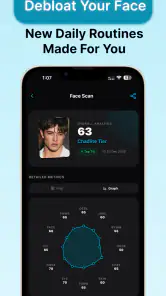

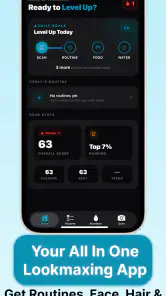
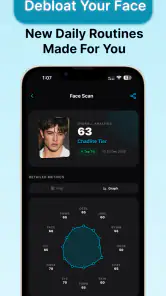

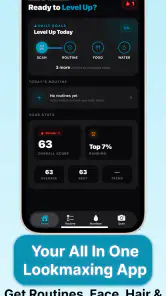
Analysis by Reviewed
When I try an AI beauty app, I want to know whether it can help me make a useful decision—not just give me a flattering image. LooksLab - AI glowup coach is aimed at people curious about how their appearance might change with a beauty-focused AI tool. I’d approach it as a place to explore ideas and reflect on a look, rather than as a substitute for a makeup artist, dermatologist, or personal stylist.
That distinction matters because “glowup” can mean very different things: a small change to a daily routine, a new way to style yourself, or a dramatic digital makeover. The right choice depends on what you expect an app to do. If you want a low-commitment way to explore beauty advice, LooksLab is worth considering; if you need dependable product matching or professional guidance, a more specialized option may serve you better.
Choose it for exploration, not a verdict
Start with the question you want answered
Before using any AI beauty app, I find it helpful to decide what I’m actually hoping to learn. Am I looking for inspiration before getting ready, trying to describe a style I like, or hoping software will tell me what I should change? Those are different needs, and an AI coach is most useful when the goal is the first or second—not when I’m treating its output as an objective judgment of my face.
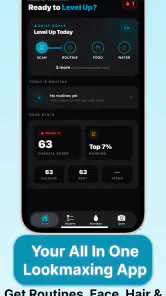
LooksLab’s focus is beauty and face-related glowup guidance, which gives it a clearer purpose than a general photo editor. That focus can be appealing if you want to think about your appearance in one place instead of bouncing between broad editing tools and social-media filters. Still, a beauty-focused app should be used as a source of prompts, not an authority. Personal taste, comfort, skin sensitivity, budget, and everyday habits all matter in ways an automated suggestion may not capture.
A practical test is whether you can turn an idea into a small, reversible experiment. If a suggestion makes you curious about a different makeup approach or a more polished routine, you can try it without committing to a permanent change. If the experience leaves you feeling that you need to “fix” yourself, step back. A useful coach should support your choices, not make your natural features feel like a problem.
What makes this app a plausible fit
The app is free to install, and its in-app purchases are listed at $8.99 to $39.99 per item. That gives curious users a way to consider the experience before deciding whether paid options are worth exploring. I would still treat any purchase as a separate decision: first work out what you hope to get from the app, then check the purchase terms presented at the point of sale and decide whether the value is clear to you.
LooksLab is made by Adam T, LLC. It is rated for Everyone, has a 4.7 average from around 19,000 ratings, and has passed 100,000 installs. Those figures suggest substantial interest, but they do not settle whether its guidance will suit your preferences. Beauty advice is personal, and a strong overall rating cannot tell me whether I’ll agree with a particular recommendation or enjoy the way an AI frames it.
You May Like

Clash of Clans Is Won Between the Battles

Android Auto Makes the Case for Quieter Car Software

MobiOffice: Transforming Mobile Productivity with Seamless Integration

EA SPORTS FC™ Mobile Soccer: Redefining Mobile Sports Gaming

How Microsoft OneDrive Became a Mobile Productivity Giant

How Google Translate Breaks Language Barriers Effortlessly
The app’s current version is 1.0.29, and it requires Android 8.0 or later. That makes device compatibility worth checking before you plan to rely on it. It was released on January 12, 2026, so I’d also keep expectations grounded: the version number and release timing are useful context, but neither guarantees that every part of the experience will feel polished on every device.
Use it as a low-stakes planning companion
One useful way to approach an AI beauty coach is to bring it a specific, ordinary question. For example, imagine I have a family dinner after work and only a few minutes to get ready. Rather than asking an app to reinvent my appearance, I’d use any relevant guidance as inspiration for a simple look I can actually manage. I would keep the suggestions that fit my routine and ignore anything that requires products, skill, or time I don’t have.
That sort of use keeps the app in its strongest lane: helping you explore possibilities. It also avoids a common trap with face-focused tools, where repeated comparison can turn a playful experiment into a search for flaws. I’d suggest trying one idea at a time, taking a break if the process feels uncomfortable, and judging the result by whether it suits your day—not by whether it resembles an idealized image.
A less obvious but practical tip is to separate inspiration from shopping. If an AI suggestion makes you think of a product or treatment, write down the idea first rather than buying immediately. Then check whether it fits your skin, preferences, and budget using sources you trust. This prevents a persuasive-looking result from being mistaken for personalized medical or product advice.
Where a specialist alternative may be better
LooksLab is not automatically the best choice for every beauty task. If your main goal is to compare makeup shades against your skin tone, a dedicated shade-matching tool may be a closer fit. If you want to edit a photo for a particular visual effect, a conventional photo editor may offer more direct control. And if you need advice about a skin condition, irritation, or treatment, a qualified healthcare professional is the appropriate source.
There is also a meaningful difference between an AI-generated suggestion and guidance grounded in an in-person consultation. A stylist or makeup artist can ask follow-up questions, notice details outside a photo, and adapt their advice to the way you actually live. That can be worth the extra effort when you’re preparing for an important event or considering a substantial change. For casual experimentation, though, a digital coach can be a convenient starting point.
I would skip this app if I mainly want a conventional camera, a detailed product database, or a tool whose value depends on precise professional recommendations. I’d also avoid making it part of my routine if face analysis tends to increase my self-criticism. The best beauty tool is not necessarily the one with the most ambitious promise; it’s the one that helps without making you feel pressured to keep using it.
Keep expectations and spending under your control
Because paid items are available, I’d decide in advance what would make an upgrade worthwhile. Is there a specific feature or outcome you want, and can you see clearly what you’ll receive before paying? If the answer is unclear, there is no need to rush. The listed price range is broad enough that I’d inspect the exact item and terms shown in the app rather than assuming every purchase costs the same.
Another useful habit is to treat the first session as an evaluation, not a commitment. Notice whether the guidance feels understandable and relevant, whether you can apply it to your routine, and whether you leave with an idea you genuinely like. If the experience is mostly generic or pushes you toward changes you never wanted, that is a good reason to stop rather than spend more in search of a better result.
There is also a switching cost in the everyday sense: time and attention. Moving between a beauty coach, a photo editor, product pages, and social-media inspiration can create more noise than clarity. I’d keep LooksLab only if it helps me narrow choices. If I already know what I want and need a practical tutorial or a professional opinion, switching to a more direct source is likely to be more efficient.
My recommendation: try it with a clear boundary
For someone who enjoys beauty experimentation and wants an AI-centered place to explore face and appearance ideas, LooksLab - AI glowup coach is a reasonable app to try. It is free to install, its audience is broad, and the rating and install figures indicate that many people have shown interest. I would treat those as signs of reach, not proof that every suggestion will be accurate or personally useful.
My recommendation is to use it as a mood board with a coaching angle: bring one real question, keep what feels practical, and make your own judgment about the rest. That approach can make a short session useful without turning the app into a standard you have to meet. The most helpful result may be a small idea you can adapt—not a dramatic transformation.
Choose a specialist alternative when precision, professional judgment, or a particular editing task matters more than broad beauty inspiration. Choose LooksLab when you want a convenient way to explore possibilities and are comfortable treating AI guidance as optional input. With that boundary in place, it can be a worthwhile addition to a beauty routine; without it, no app should get to define what looking good means for you.
Make a session useful without overthinking it
For a more grounded trial, I’d give myself a simple stopping point before opening the app: answer one question, note one idea, then decide whether it belongs in real life. This keeps an exploratory session from becoming an endless search for a better version of the same look. It also makes it easier to tell whether the coach is adding something beyond what you already get from saved photos or beauty videos.
It helps to think about context when judging a suggestion. A look that seems appealing for a photo may be impractical for a workday, and an idea that suits a special occasion may not be something you want to maintain. I’d ask whether the suggestion works with the products and habits I already have before treating it as a plan. That small check turns vague inspiration into a decision I can actually use.
Know what kind of guidance you need
One question people often have is whether an AI coach can replace a consultation. I wouldn’t use it that way. A digital suggestion can help me put a preference into words or explore a direction, but it cannot take the place of a professional who can discuss personal circumstances, ask clarifying questions, and adjust advice in conversation. For a low-stakes style idea, the app may be enough to get started; for a concern involving health or a significant change, I’d go to the relevant professional.
Another consideration is comfort with sharing or using face-related material. Before building a routine around any face-focused app, I’d read the in-app explanations and make a choice I’m comfortable with. If you would rather not use a personal image in an AI beauty experience, that alone is a sound reason to choose a non-image-based source of inspiration, such as a tutorial or a consultation.
LooksLab is most appealing when you want a nudge, not a final answer. I’d try it if curiosity is the goal, keep the experiment small, and stop if the process feels more judgmental than helpful. If that sounds like the kind of support you want, it is a sensible option to explore; if you need certainty, precision, or clinical advice, a more direct alternative is the better choice.
LooksLab - AI glowup coach Frequently Asked Questions
What is LooksLab – AI Glowup Coach?
LooksLab – AI Glowup Coach is an app designed to help users explore personal style and beauty ideas with AI-powered guidance. Depending on the features available in your version, it may offer suggestions related to areas such as skincare, makeup, hair, or overall appearance. Treat its recommendations as general inspiration rather than a professional assessment: an app cannot fully understand your health, preferences, or circumstances from a photo or questionnaire.
How does LooksLab create its recommendations?
LooksLab may use information you provide, such as answers to prompts or photos, to generate tailored-looking suggestions. The exact process and available tools can vary by app version, region, and subscription. For the clearest picture, review the app’s onboarding screens and privacy information before sharing personal details. AI results can be subjective or inaccurate, so use them as ideas to consider—not as guaranteed outcomes or instructions that must be followed.
Does LooksLab cost money, and is a subscription required?
The app may provide some features for free while reserving additional tools or ongoing access for a paid plan. Check the current listing in the App Store or Google Play, along with the in-app purchase screen, for pricing, trial length, renewal terms, and cancellation instructions. If a free trial is offered, note when billing begins and cancel through the relevant store before the renewal date if you do not want to continue.
Is LooksLab safe to use, and what happens to uploaded photos?
Before uploading a selfie or other personal information, read LooksLab’s privacy policy and the data disclosures shown in your app store listing. These explain what information may be collected, how it is used, whether it is shared, and how long it may be retained. Avoid submitting images or details you would not want processed by an online service, and check available account or data-deletion options if you later stop using the app.
Can LooksLab replace advice from a dermatologist or other professional?
No. LooksLab can be a convenient source of beauty and style inspiration, but AI-generated suggestions are not a diagnosis or a substitute for professional care. If you have a skin condition, irritation, allergies, or concerns about a treatment or product, consult a qualified dermatologist or healthcare professional before making changes. For cosmetic choices, consider your own comfort and preferences rather than feeling pressured to meet an app’s assessment of your appearance.
Pros
- Personalized suggestions can make beauty and style goals feel more manageable.
- A focused glow-up coach is convenient for exploring self-improvement ideas in one place.
- AI guidance may help users discover routines they had not considered.
- The app can be used privately
- without needing to ask others for appearance advice.
- Useful for brainstorming changes before committing to a new look or routine.
Cons
- AI recommendations may not account for every user's skin
- health
- or accessibility needs.
- Some coaching features or advice may require a paid subscription.
- Results depend on the accuracy and detail of the information you provide.
- Appearance-focused guidance may feel discouraging for users sensitive about their looks.
- Recommendations should not replace professional advice for skin or health concerns.

- Category
- Beauty
- Version
- 1.0.29