Heritage: Ancestry & Ethnicity
- 101.00
- 4.5
- Installs
- 10.00K
- Price
- Free

Screenshots

Analysis by Reviewed
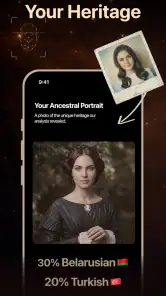
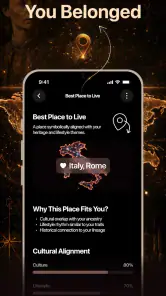
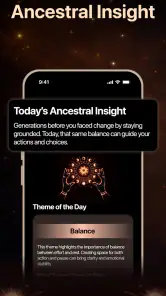
Heritage: Ancestry & Ethnicity is the kind of lifestyle app that immediately invites curiosity. I took it as a light, visual way to explore identity through a selfie, with an AI ethnicity test, a past-life reading, and a soulmate sketch all built around that starting image. The appeal is obvious: instead of filling out a long family-history form or searching through records, you can begin with something familiar and personal.
My first impression was that this is best understood as an entertainment and reflection app, not as a serious genealogy service. That distinction matters. If you want documented family connections, historical records, or a verifiable ancestry report, this is not a replacement for genealogy platforms and archives. If you want a quick conversation starter, a playful interpretation of your appearance, or a visual prompt for thinking about heritage, it has a more suitable role.
Developed by Denali Digital, it sits in the lifestyle category and is free to install, with optional purchases ranging from $6.99 to $39.99 per item. It is rated for Everyone, runs on Android 7.0 and later, and the current version is 1.0.11. The app has reached over 10 thousand installs and holds a 4.5 average from around 4.7 thousand ratings, which suggests that the quick, curiosity-led format works for many people. I would still approach the results with a healthy amount of skepticism.
What the first week feels like
The strongest part of the experience is the low barrier to entry. A selfie is much easier to provide than a family tree, immigration document, or detailed questionnaire. That makes Heritage: Ancestry & Ethnicity approachable for someone who is simply wondering what an AI system might say about their appearance. It also gives the app a natural social use: friends can compare the style of their results, discuss whether the interpretations feel familiar, and use the soulmate sketch or past-life element as a playful prompt.
I recommend treating the first session as a guided experiment rather than a discovery of objective truth. Facial appearance cannot reliably establish a person’s complete ethnic background, and an AI-generated answer should not be used to settle questions about family origin. The app is more enjoyable when the result is read as an imaginative interpretation. That mindset prevents a fun test from becoming a misleading claim about identity.
The selfie itself deserves more thought than I expected. For a cleaner comparison, I would use one well-lit, front-facing photo with a neutral expression and minimal visual distractions. I would avoid sunglasses, heavy filters, extreme angles, or a group picture. Then, if I wanted to explore the experience again, I would use a different but equally clear image and compare the tone of the output rather than assuming that one result is definitive. This is a useful way to notice how much the input image influences the experience.
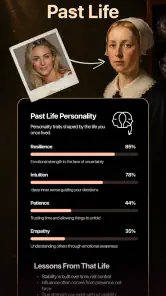
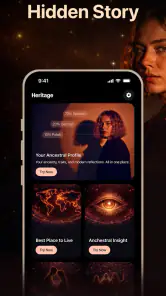
The past-life feature changes the mood from ancestry exploration to imaginative storytelling. That can be entertaining, especially for people who enjoy personality quizzes, symbolic readings, or casual self-reflection. It is not the same kind of task as investigating family history, so I would not combine the two mentally. The app works better when each result is allowed to be what it is: a different form of AI-assisted entertainment built around the same selfie.
More From Our News Desk

Clash of Clans Is Won Between the Battles

Android Auto Makes the Case for Quieter Car Software

MobiOffice: Transforming Mobile Productivity with Seamless Integration

EA SPORTS FC™ Mobile Soccer: Redefining Mobile Sports Gaming

How Microsoft OneDrive Became a Mobile Productivity Giant

How Google Translate Breaks Language Barriers Effortlessly
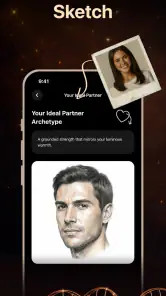
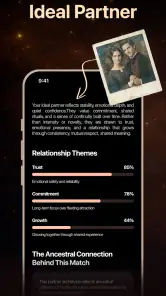
The soulmate sketch has a similarly specific audience. Someone looking for a serious dating tool should not expect it to identify a compatible partner or produce a dependable portrait of a future relationship. Someone who enjoys sharing a whimsical sketch with friends may find it more worthwhile. In my view, this feature is strongest as a conversation piece and weakest when treated as a prediction.
One practical tip is to decide what you want from the session before starting. If you are interested in heritage, focus on the ethnicity-oriented result and record the wording that feels worth discussing with relatives. If you are in the mood for entertainment, explore the past-life and soulmate elements without expecting evidence. Separating those goals makes the app feel less confusing and reduces the temptation to interpret playful outputs too seriously.
Where it fits beside ordinary alternatives
The usual alternative for ancestry questions is a genealogy service based on family documents, interviews, public records, or DNA testing. Those options can take more time, may involve more cost, and require patience, but they address evidence and family connections in a way a selfie-based app cannot. Heritage: Ancestry & Ethnicity wins on immediacy and accessibility, not on historical accuracy.
For personality-style entertainment, the alternatives are quizzes, horoscope apps, image filters, and social-media effects. Compared with those, this app has a more personal theme because it connects its outputs to heritage, past lives, and romantic imagination. The trade-off is that its subject matter can feel more sensitive. A playful filter is usually easy to dismiss as a filter; an ethnicity result can touch on family identity and belonging. I would therefore use more care when sharing it with other people.
During the first week, the novelty is the main source of value. There is a satisfying moment in uploading a photo, seeing an interpretation appear, and asking whether it matches what you already know about yourself. That is enough to justify trying the free version for many curious users. It does not automatically justify repeated purchases, however, especially if the first result already answers the question that brought you in.
Whether it earns a place after the novelty
The month-to-month value is more limited, and that is the central issue for me. Heritage: Ancestry & Ethnicity is not an app I would expect to open every day. It does not naturally create a routine such as tracking habits, organizing a household, or managing a long-running project. Its recurring value depends on whether you enjoy revisiting interpretations, trying new photos, or using the outputs as prompts for conversations about family and identity.
There is one worthwhile long-term workflow: use the app as a starting point for real family research. After seeing an ancestry-themed result, write down questions it raises rather than accepting the result as an answer. Ask relatives where grandparents were born, look for old photographs, note changes in family names, and build a simple timeline from confirmed memories. In that workflow, the app provides motivation and conversation prompts while the actual evidence comes from people and records.
That distinction is more useful than repeatedly chasing a supposedly more accurate selfie result. If the app sparks a family conversation that would not otherwise happen, it has lasting personal value even though it is not a research database. If the result does not lead anywhere beyond a quick screenshot, its usefulness may end after the first few sessions.
I would also be careful about using it to label children or relatives. An AI interpretation from a photograph should not become a fixed description of another person’s background. Family identity can be complicated, mixed, undocumented, or deliberately private. The app is better used by an adult who understands the playful nature of the output and can decide what should remain personal.
The free entry point helps with this evaluation. You can see whether the style of the experience suits you before deciding whether any optional purchase feels worthwhile. Because individual items can cost between $6.99 and $39.99, I would pause before buying anything and ask whether the result offers a genuinely different experience or merely extends the same novelty. For a casual test, the free portion may be enough.
The maintenance burden is small, but the attention cost matters
There is little traditional maintenance here. You are not expected to build a database, update a profile every morning, or keep a streak alive. That is a strength for people who dislike apps that demand constant participation. I can install it, explore it when curious, and leave without feeling that I have abandoned a project.
The more important burden is interpretive rather than technical. Every new image-based result can encourage you to compare yourself with an AI-generated description, even when the underlying conclusion is not something a selfie can establish. If you notice yourself becoming anxious about appearance, heritage, or whether a result is “correct,” the sensible maintenance plan is to step away. No lifestyle app is worth turning personal identity into a repeated test.
There is also a sharing burden. Results involving ethnicity or a soulmate can be misunderstood when posted without context. A friend may see an ethnicity-themed result as a factual claim, or someone may take a romantic sketch more seriously than intended. I would share only with people who understand that the app is offering an AI interpretation, not professional advice or documented family evidence.
For a better personal workflow, I would keep a private note of the date, the type of result, and the photo used, without turning it into a scorecard. This helps reveal whether the app is actually giving you new ideas or simply producing material that feels exciting for a few minutes. It is an especially useful check before paying for another interpretation.
What causes fatigue over time
The first source of fatigue is repetition. Once you understand the basic pattern—upload a selfie, receive an interpretation, decide whether it feels interesting—the next session may not feel substantially different. Changing the photo can change the output, but that can also make the results feel less dependable. If two clear photos lead to noticeably different impressions, I would see that as a reminder not to treat the process as measurement.
The second source is the overlap between the features. The ethnicity test, past-life reading, and soulmate sketch have different themes, but they all begin with the same personal image. After the initial exploration, the experience may start to feel like variations on one idea rather than a broad lifestyle toolkit. That is not a flaw for a focused novelty app, but it does limit how long it can remain fresh.
Purchases can create another point of friction. The range from $6.99 to $39.99 per item is wide enough that I would not make a decision quickly, especially if the app is being used casually. A useful rule is to wait until you have identified a specific reason to buy. “I am curious” is a fine reason to try a free feature; it is a weaker reason to make a larger purchase when the result may not change anything in your life.
The subject matter itself can also become tiring. Heritage is meaningful, and reducing it to a visual interpretation may feel uncomfortable for users with complicated family histories or strong concerns about cultural identity. The app cannot replace a nuanced conversation about migration, adoption, mixed ancestry, or gaps in documentation. Someone looking for that depth will likely be better served by speaking with family members or using research tools designed around records.
Finally, the app may not be a good fit for anyone seeking certainty. If you need a scientifically grounded ancestry estimate, a documented family tree, or a reliable romantic compatibility service, I would choose a specialized alternative. Heritage: Ancestry & Ethnicity is most defensible when its limits are part of the experience rather than something you try to ignore.
My long-term verdict
I enjoyed the app most when I treated it as a short, visual conversation starter. The selfie format removes much of the effort that normally stands between curiosity and experimentation, and the combination of ancestry-themed, past-life, and soulmate content gives the first week a clear sense of discovery. Its Everyone age rating also makes the presentation broadly approachable, although I would still encourage younger users to discuss sensitive results with a trusted adult.
For lasting value, I would keep it only if it leads to something beyond the screen. That might be a conversation with a grandparent, a closer look at old family photographs, or a more thoughtful discussion about how identity is understood in your family. Without that follow-through, the app is likely to become an occasional novelty rather than a regular part of your lifestyle.
My honest recommendation is to try it for curiosity, not certainty. The free starting point makes that easy, while the optional purchases deserve restraint. I would not use its ethnicity output as proof, its past-life reading as fact, or its soulmate sketch as a promise. I would use the results as prompts, compare them cautiously, and stop if the experience begins to make personal questions feel like a judgment.
In the end, Heritage: Ancestry & Ethnicity earns a small place on my phone rather than a permanent daily slot. It is a focused lifestyle app with a strong first-week hook, very little routine maintenance, and limited month-to-month depth. For a playful AI experience built around one selfie, it does what it sets out to do. For serious ancestry research or dependable relationship guidance, I would spend my time and money elsewhere.
Heritage: Ancestry & Ethnicity Frequently Asked Questions
Can I try Heritage: Ancestry & Ethnicity without paying?
Heritage: Ancestry & Ethnicity is free to download, so you can install the app without an upfront purchase. Some features may involve in-app purchases, however, and the app offers purchases ranging from $6.99 to $39.99 per item. Check the price and terms for any feature you plan to use before confirming a purchase, particularly if you are exploring a paid tool for the first time.
What does Heritage: Ancestry & Ethnicity offer beyond ancestry insights?
The app’s store summary describes an AI ethnicity test, a past-life feature, and a soulmate sketch generated from one selfie. These features give it a broader, entertainment-focused side alongside its ancestry theme. Treat generated results as something to explore for fun rather than as verified historical or personal conclusions, and review any in-app purchase details before accessing paid features.
What is Heritage: Ancestry & Ethnicity used for?
Heritage: Ancestry & Ethnicity is designed to help users explore their family background and learn more about possible ancestral origins. Depending on the available features, you may be able to build or review a family tree, organize information about relatives, and receive ethnicity-related insights. It is best viewed as a starting point for personal research rather than a definitive record of your complete ancestry.
Does Heritage: Ancestry & Ethnicity require a DNA test?
Not necessarily. The app may provide ancestry and ethnicity information through questionnaires, family details, historical records, or other user-submitted data, while some features may depend on a separate DNA testing service or imported results. Before downloading or subscribing, check the current feature list carefully, because DNA analysis is not automatically included simply by installing the application.
How accurate are the ethnicity and ancestry results?
Ethnicity estimates should be treated as approximate rather than scientifically final conclusions. Results can vary according to the reference databases, information supplied by the user, regional definitions, and the quality of available historical records. Family-tree discoveries should also be verified with birth certificates, census documents, immigration records, and conversations with relatives before being accepted as fact.
Pros
- Clear ancestry reports with easy-to-read ethnicity breakdowns.
- Helpful family-tree tools for organizing relatives and historical records.
- DNA matching can help identify potential relatives and shared ancestors.
- Search features make exploring surnames and locations straightforward.
- Regular record updates can reveal new information over time.
Cons
- Some advanced records and features require a paid subscription.
- Ethnicity estimates may change as the reference database is updated.
- Results depend heavily on the accuracy of available historical records.
- DNA testing may raise privacy concerns for some users.
- Large family trees can become difficult to manage on a phone screen.
- Category
- Lifestyle
- Version
- 1.0.11