Hairteach
- 4.00
- 3.0
- Installs
- 10.00K
- Price
- Free

Screenshots
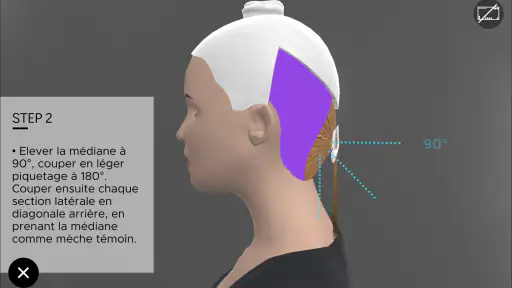
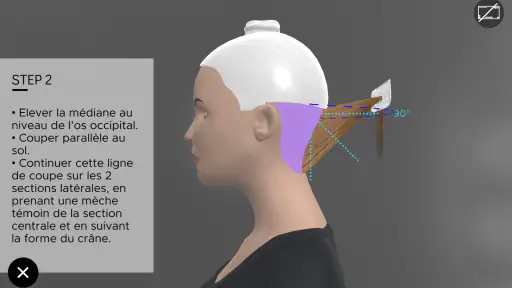
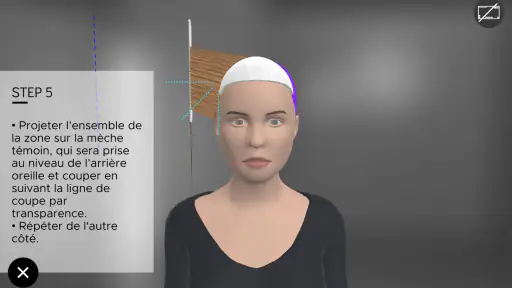
Analysis by Reviewed
I approached Hairteach as a practical beauty-learning app rather than a simple collection of hairstyle pictures. Its central idea is easy to understand: help people learn from experienced hair professionals. That makes it potentially useful when you want more than inspiration and need a clearer path from “I like this look” to “I can actually attempt it.” My experience was that its value depends heavily on how independently you expect the app to teach you, because learning hair work is different from watching a finished result.
Hairteach is a free beauty app from AGT DIGITAL, aimed at an Everyone audience. It has been available since July 24, 2015, and the current version is 3.2.5. Its average rating is 3.0 from roughly sixty-six ratings, with only a small handful of written reviews, so I would treat the public score as a useful warning to keep expectations realistic rather than as a final verdict. The app has passed ten thousand installs, which suggests that it has found a modest audience without making it feel like a crowded mainstream platform.
From choosing a hairstyle to learning how to recreate it
The starting condition matters more than it first appears
The best way to begin with Hairteach is to arrive with a specific need. “I want to improve my hair” is too broad. A better starting point is something like preparing for a family event, understanding a salon technique, practicing a particular finish, or finding a more structured way to learn than scrolling through random beauty videos. That focus gives the app a fair chance because you are looking for instruction, not merely entertainment.
I also found it helpful to separate the desired outcome from the tools you already own. A hairstyle can look simple while relying on a particular brush, comb, dryer, product, or level of hand control. Before following a lesson, I would note what I have available and what I am missing. This small preparation step prevents a common disappointment: reaching the interesting part of a technique and discovering that the result depends on equipment that was never part of your routine.
Hairteach makes the most sense for someone who wants to learn from professionals but still expects to practice alone. It can suit a beginner who needs direction, a beauty student looking for another learning reference, or a home user who wants to become more confident before booking a salon appointment. It is less suitable for someone who wants an automatic makeover, virtual try-on tools, or a personalized diagnosis based on a photo. This is a learning-oriented choice, not a replacement for a stylist examining your hair in person.
Finding a useful lesson instead of browsing without a plan
When I use an educational beauty app, I do not judge it only by how attractive its content appears at first glance. I look for whether I can move from a broad interest to a lesson that answers a concrete question. With Hairteach, the useful habit is to decide what you need to understand before opening a lesson: sectioning, shaping, finishing, control, or the order of actions. That turns passive browsing into a small study session.
A practical workflow is to choose one technique, watch or study it once without trying to copy every movement, and then go through it again while pausing mentally at the transitions. The transitions are often more important than the final pose. Notice where the hair is divided, when tension changes, how the hands move from one section to another, and what happens immediately before the finishing step. Beginners commonly imitate the visible gesture but miss the preparation that makes the gesture work.
I would not treat a single viewing as proof that I understood a technique. Hair behaves differently depending on length, texture, density, moisture, and previous styling. A lesson can provide a useful framework, but your first attempt may need adjustment. My recommendation is to repeat the same lesson several times across separate practice sessions instead of collecting many techniques and mastering none of them.
A step-by-step practice flow that reduces wasted effort
My preferred Hairteach workflow begins with a clean objective. I select one result, gather the tools I already have, and prepare a small practice area before starting. If the technique involves heat or pulling, I work slowly and avoid rushing simply because the finished style looks quick in the lesson. The app can guide attention, but it cannot physically correct your grip or tell you that you are applying too much tension.
On the first pass, I focus on sequence. I ask myself what must happen first, which parts need to stay separated, and which steps can be repeated without changing the result. On the second pass, I focus on hand placement and direction. On the third, I try the technique with my own hair or with a willing practice subject, stopping whenever the shape begins to drift. This three-pass method is more useful than repeatedly watching while doing nothing, because it creates a clear handoff from seeing to doing.
One non-obvious advantage of this approach is that it exposes whether the problem is knowledge or execution. If I cannot explain the order of the steps, I need to revisit the lesson. If I can explain it but the result still fails, the issue may be section size, tension, timing, or tool control. That distinction saves time and stops me from blaming the app for every imperfect attempt.
I would keep notes outside the app about what changed the result. For example, I might record that smaller sections gave me better control, or that the finishing stage worked only after I allowed the shape to settle. This is especially useful because learning hair is cumulative. The app may introduce the technique, but your personal notes become the bridge between a professional demonstration and your own repeatable routine.
Where handoffs create friction
The most important handoff is between the app and your physical workspace. A lesson may be clear while your mirror angle, lighting, tools, or body position makes the same action awkward. I recommend positioning the phone where you can glance at it without twisting your neck or touching the screen with wet or product-covered hands. If you have to interrupt the process constantly just to check the next action, the learning experience becomes more fragmented.
The second handoff is between professional terminology and everyday understanding. Beauty education often assumes that the learner recognizes words for sections, direction, texture, or finishing. If a term is unfamiliar, pause and translate it into a physical instruction: where should the hair go, what should stay still, and what should move? This simple translation is more valuable than memorizing vocabulary without knowing how it affects the result.
The third handoff is between the lesson’s model and your own hair. I would not copy proportions blindly. A technique demonstrated on one length or texture may need smaller sections, a different direction, or more time on another head of hair. That does not make the lesson useless; it means the app is a reference point rather than a guarantee. The more your hair differs from the demonstration, the more important it becomes to test gently and adjust gradually.
There is also a social handoff for users who are learning professionally. Hairteach may help you understand a method before discussing it with a teacher, colleague, or salon mentor. Instead of asking a vague question such as “Why did this fail?”, you can bring a specific observation: the sectioning looked correct, but the shape collapsed during finishing. That makes outside feedback more precise and turns the app into preparation for a better conversation rather than a substitute for supervision.
What the result can realistically be
The realistic result is improved understanding and a more organized practice process, not instant salon-level performance. If I use Hairteach before a special occasion, I would practice early enough to discover whether the technique suits my hair and skill level. I would not make the first attempt immediately before leaving home. That is where the app can help: it gives me a reason to rehearse instead of improvising under pressure.
For a beginner, success might mean completing the sequence without losing track of the sections. For a more experienced user, it might mean refining a movement or seeing a familiar process from a different teaching angle. These are modest outcomes, but they are more dependable than expecting one lesson to solve every styling problem.
A realistic everyday scenario would be preparing for a weekend gathering. I might choose a manageable style several days in advance, study the lesson once, and practice only the most difficult stage that evening. The next day, I would repeat the full sequence and note where the shape changes. On the event day, I would use the version that worked during practice rather than attempting an ambitious variation. In that situation, Hairteach is useful because it supports planning, not because it removes the need for practice.
The app can also be valuable before visiting a professional. If you are unsure how to describe the finish you want, studying a technique can help you identify the kind of shape, texture, or direction you prefer. You can then explain your goal more clearly at the salon. I would still leave the final judgment to the stylist, especially where hair condition, chemical treatment, or heat sensitivity is involved.
How it compares with ordinary beauty alternatives
The usual alternative is a general video platform, and those services often win on volume, search tools, creator variety, and current trends. They are better when you want to compare many interpretations quickly or find a very specific style. Their weakness is that the learning path can be noisy: one clip may show a result, the next may use different terminology, and the third may skip the preparation entirely.
Hairteach appeals to me when I want a narrower, more instructional environment. Its identity is clearer than a general feed because the focus is hair education. That focus can make it easier to approach a technique with intent, although it also means it may feel less flexible if you are mainly looking for entertainment or rapid inspiration. A salon lesson or in-person class remains stronger for immediate correction, particularly when your hair behaves differently from the example.
Compared with beauty apps built around filters, virtual previews, or product shopping, Hairteach offers a different kind of value. Those alternatives help you imagine a look or choose something to buy; Hairteach is more relevant when your question is how to perform a technique. I would choose the other type of app if my priority were visual experimentation. I would choose Hairteach if my priority were understanding the process behind a style.
Where the learning flow breaks down
The clearest limitation is that an instructional app cannot see the back of your head, feel the tension in your hands, or identify the exact moment your sections become uneven. That makes self-correction difficult. If you are completely new to styling, you may need a patient friend, teacher, or stylist to check your technique. The app can show a path, but it cannot provide the physical feedback that makes difficult skills easier to learn.
Another point of friction is the gap between a polished demonstration and real-life conditions. Your hair may be freshly washed, unusually dry, very thick, fine, short, long, curly, or affected by previous treatments. A technique that appears straightforward may require adaptation. I would approach every lesson as a starting method and test it conservatively, particularly when heat, strong pulling, or unfamiliar products are involved.
The public response also suggests that Hairteach may not be the smoothest choice for everyone. Its average is three out of five, based on around sixty-six ratings, and the written feedback is limited. I would therefore install it with a practical mindset: explore the learning experience, try one relevant workflow, and decide whether its teaching style fits you. Do not choose it solely because you expect the polish or breadth of a major video platform.
Because it is free, the cost barrier is low, which makes that trial easier. The Everyone age classification also makes it broadly approachable, though younger users should still treat heat tools, sharp implements, and chemical products responsibly and involve an adult where appropriate. Free access is useful, but it does not remove the need to judge whether a technique is safe for your own situation.
Who should install it and who should skip it
I would recommend Hairteach to someone who wants a focused introduction to hair techniques, prefers learning through professional demonstrations, and is willing to practice away from the screen. It is particularly appealing if you often save hairstyle ideas but rarely understand how to recreate them. The app gives that interest a more deliberate direction.
I would skip it if you want personalized advice based on your hair, live coaching, automated style previews, or a large social community built around constant new content. I would also look elsewhere if your main goal is product comparison or finding the newest trend immediately. A general platform may serve those needs better.
My final view is cautiously positive. Hairteach is not a magic shortcut, and its modest public rating means I would not present it as a flawless beauty companion. Still, as a free learning tool from AGT DIGITAL, it has a sensible purpose: helping you move from seeing a hairstyle to thinking through the actions needed to create it. The strongest way to use Hairteach is as a practice guide, not as a promise of instant results. If you prepare your tools, study one technique at a time, adapt the lesson to your own hair, and accept that hands-on feedback may still be necessary, the app can earn a useful place in your beauty routine.
Pros
- Clear tutorials make complex hairstyling techniques easier to follow.
- Useful for practicing braids
- cuts
- coloring
- and everyday hairstyles.
- Video-based lessons allow users to learn at their own pace.
- Suitable for beginners and aspiring professional hairstylists.
- Can provide inspiration for trying new looks at home.
Cons
- Some advanced lessons may require previous hairstyling experience.
- Video quality and teaching detail may vary between different courses.
- Certain techniques are difficult to practice without proper tools or models.
- A stable internet connection may be needed for streaming lessons.
- Full access to all learning content may require a paid subscription.

- Category
- Beauty
- Version
- 3.2.5