Good Dog: Find Your Puppy
- 578.00
- 4.7
- Installs
- 100.00K
- Price
- Free

Screenshots

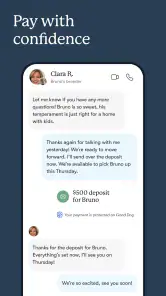
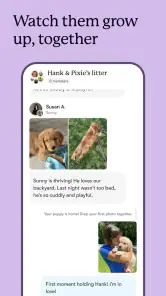

Analysis by Reviewed
Choosing a puppy is one of those decisions that looks simple until the search becomes real. Photos are easy to browse, but deciding whether a breeder is trustworthy, whether a puppy suits your household, and whether a conversation is worth pursuing takes much more care. Good Dog: Find Your Puppy is designed for that early part of the process. It is a free lifestyle app from Good Dog, Inc. that brings breeder discovery into a more focused mobile experience.
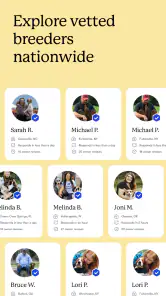
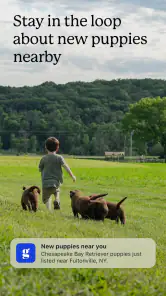
I found its main value in organization rather than novelty. It gives people a place to begin a puppy search with more intention than jumping between general web searches, social media posts, and classified listings. Its store summary, “Work with trusted breeders,” captures the central idea, but the practical question is whether that approach fits the way you want to choose a dog. In my view, it is most useful as a starting point and screening companion, not as a substitute for your own questions, research, and judgment.
What I would consider before using it
The first decision is not simply whether to download the app. It is whether you want a breeder-focused search at all. Someone looking for a puppy from a particular breed, hoping to compare several possibilities, or wanting a more structured route into breeder conversations may find the app a natural fit. Someone who prefers adopting from a shelter or rescue organization will probably need a different starting point.
That distinction matters because the app is not trying to be an all-purpose pet marketplace. Its identity is centered on working with breeders. I would therefore use it when I already know that a breeder is one of the routes I am willing to consider, while keeping rescue groups, local shelters, and breed-specific organizations in view as separate alternatives.
I also paid attention to how much responsibility remains with the user. A platform can help make a search more manageable, but it cannot decide whether a particular puppy is right for your lifestyle. You still need to ask about health testing, socialization, contracts, return arrangements, living conditions, and the breeder’s approach to matching puppies with families. The app is helpful when it improves the quality of that process; it becomes less useful if someone treats a polished profile as automatic proof of a perfect match.
For a person who has never bought or adopted a dog before, the biggest benefit is reducing the feeling of starting from nowhere. Instead of collecting random names in browser tabs, I would use the app to create an initial shortlist, note which breeders appear relevant, and prepare questions before making contact. That small change can prevent an emotional first impression from controlling the whole decision.
How I would use it during a normal puppy search
Imagine a couple living in an apartment who want a dog that can handle their routine. They have work schedules to coordinate, limited outdoor space, and different ideas about size and temperament. Rather than searching only by the cutest photograph, I would suggest that they first agree on practical criteria: daily exercise, grooming tolerance, expected adult size, time alone, and how much training they can realistically provide.
More From Our News Desk

Clash of Clans Is Won Between the Battles

Android Auto Makes the Case for Quieter Car Software

MobiOffice: Transforming Mobile Productivity with Seamless Integration

EA SPORTS FC™ Mobile Soccer: Redefining Mobile Sports Gaming

How Microsoft OneDrive Became a Mobile Productivity Giant

How Google Translate Breaks Language Barriers Effortlessly
They could then use Good Dog to explore suitable breeder options, keeping a simple note for each promising lead. I would record the breed or type being considered, the questions that still need answers, and any concerns raised during communication. This is a more reliable workflow than opening the app whenever a new photo appears and making a decision based on excitement.
A useful, less obvious habit is to separate “interesting” from “ready to contact.” An appealing listing may start the conversation, but it should not automatically become a serious candidate. I would only move a breeder into the second group after checking whether the available information matches my household and after preparing specific questions. That keeps the app from turning the search into endless scrolling.
I would also discuss the app with everyone who will share responsibility for the dog. One person can browse breeds while another thinks about schedules, finances, travel, or allergies. The app may begin the search, but the final decision should reflect the whole household. This is especially important when children are involved, because a child’s preference for appearance should not outweigh adult responsibilities.
Where the focused approach works well
The clearest strength is focus. General search engines return a mixture of breeder websites, advertisements, social posts, forums, and articles. That variety can be useful, but it also makes the quality of each lead inconsistent. A dedicated app gives the puppy search a clearer home and makes it easier to stay within the breeder-oriented path.
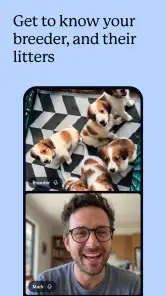
I also like the idea of approaching the process as a conversation rather than a quick purchase. The wording around working with breeders suggests a relationship-based search, and that is the right mindset. A responsible breeder should want to understand the buyer’s home and expectations too. When I use an app like this, I am not merely looking for availability; I am looking for a basis for a more informed exchange.
Another advantage is convenience. Puppy research often happens in small moments: during a commute, after dinner, or while comparing options with a partner. A mobile app is easier to revisit than a scattered collection of browser pages. That makes it practical for keeping the search active without needing a long desktop session every time.
The audience response is encouraging without being a reason to stop thinking critically. Good Dog has a 4.7 average from around 6.7 thousand ratings, with more than 500 reviews, and it has passed 100 thousand installs. Those figures suggest that many people find the experience useful, but popularity cannot answer the personal questions that matter most: whether the available breeder options suit your location, your preferred breed, your timing, or your budget.
I would describe the app as a filter for attention. It can help me decide which leads deserve closer examination, which is valuable because puppy searches can become overwhelming. The real win is not finding a puppy in the fewest taps. It is spending more of my limited time on conversations that are relevant and asking better questions before becoming attached.
Practical checks I would never skip
Even when a breeder appears through a focused service, I would verify details independently. I would ask what health examinations are appropriate for the breed, request clear explanations of veterinary care, and ask how the puppies are raised and socialized. I would want to understand what happens if the placement does not work out and whether the breeder remains available after the puppy goes home.
I would also be cautious about pressure. A countdown, urgent payment request, or insistence that I decide before I can ask ordinary questions would make me slow down. A good app can make discovery easier, but it cannot remove the need to recognize warning signs. I would never send money simply because a profile looks professional or because a puppy is especially appealing.
One useful technique is to ask the same core questions of every serious candidate. That creates a fairer comparison and exposes differences in communication style. I would note whether answers are specific, whether concerns are welcomed, and whether the breeder asks me meaningful questions in return. Those observations can be more revealing than a short description.
I would treat location and timing as practical filters too. A breeder who looks suitable may still be a poor match if travel is unrealistic, the expected timing conflicts with my schedule, or the puppy’s needs do not fit my home. Before contacting anyone, I would write down the limits I cannot compromise on. This prevents the search from quietly expanding beyond what I can manage.
Where other options may fit better
The most obvious alternative is a shelter or rescue organization. If my priority were giving a home to a dog already in care, I would begin there rather than with a breeder-focused service. Rescue searches can also suit people who are open to adult dogs, mixed breeds, or a wider range of personalities. Good Dog may still be useful for learning about puppy ownership, but it would not be my primary route in that situation.
Breed-specific clubs and established local organizations may be better for someone who wants deep background on one breed rather than a broad discovery experience. They can be valuable when I need detailed guidance about temperament, inherited conditions, working needs, or breed history. I would use that kind of source alongside the app if I were committed to a particular breed.
Direct breeder websites can also make more sense for an experienced buyer who already knows exactly whom they want to contact. In that case, an additional discovery layer may feel unnecessary. The trade-off is that direct research can be less convenient for comparing new possibilities, and the quality of websites varies widely. I would choose the route that matches how much guidance I need, not simply the route with the fewest steps.
General marketplaces and social media may offer more variety, but I would approach them with extra caution. Their broad reach can make it easy to encounter incomplete information or aggressive sales tactics. Good Dog’s narrower purpose is an advantage for people who want a more deliberate starting point, while the broader services may appeal to users who value maximum choice and are comfortable doing more verification themselves.
There is also a simple offline alternative: recommendations from a veterinarian, trainer, or knowledgeable local dog owner. Personal referrals can add useful context, especially when someone can explain how a breeder communicates over time. They are not automatically reliable, but they can complement what I discover in the app and help me form better questions.
What switching to this app really involves
Because the app is free, the financial barrier to trying it is low. The more meaningful cost is attention. Moving from casual web searches to a dedicated puppy-search workflow means creating a shortlist, comparing leads, recording questions, and resisting the urge to decide too quickly. That effort is worthwhile only if I am prepared to use the app as part of a careful process.
I would not delete my other research tools immediately. Instead, I would keep a small, consistent system: use the app for discovery, use breed and veterinary resources for background, and use direct conversations to evaluate fit. This avoids making one service responsible for every stage of a decision that naturally needs multiple perspectives.
There is a learning curve in knowing what to look for. First-time owners may initially focus on photographs, breed labels, or availability. After a few conversations, the important questions become clearer. I would expect the app to save time gradually rather than magically solve the search from the first session.
The app is available to a broad audience: its content rating is Everyone, and it runs on devices using Android 8.0 or later. That makes it accessible for many people with older compatible phones, although the quality of the experience will still depend on the device and the information available for the search I am making.
Good Dog was released on February 3, 2023, and the current version is 3.6.9. I mention the version because keeping an app updated is sensible when using it for an ongoing search; improvements and fixes are most useful when everyone involved is working with the current release. I would still save important breeder contact details and notes somewhere I control rather than relying on one app as the only record.
Small habits that make the experience more useful
My first tip is to write a household brief before browsing. It should include the time available for exercise and training, the amount of grooming I can handle, whether the dog will spend time alone, and what kind of temperament would fit the home. This turns the app from an entertainment feed into a decision tool.
My second tip is to use a two-stage shortlist. In the first stage, I would collect possibilities without contacting everyone. In the second, I would select only the breeders whose approach appears compatible with my needs and prepare the same core questions for each. This reduces repetitive conversations and makes comparisons less emotional.
My third tip is to treat communication quality as evidence. I would note whether responses are patient, detailed, and willing to discuss difficult subjects. A breeder who avoids reasonable questions is not made more suitable by a convenient profile. The app helps me find a lead; the conversation helps me judge the relationship.
My fourth tip is to pause before committing after an especially appealing interaction. I would sleep on the decision, review my household brief, and ask someone uninvolved to read the information. This is not about being suspicious of every breeder. It is about giving practical judgment a chance to catch up with excitement.
Finally, I would keep rescue and adoption options open until I understand why a breeder is the right route for me. That does not make the app less useful. It simply keeps the decision centered on the dog and the home rather than on the convenience of one search channel.
My recommendation for different kinds of owners
I recommend Good Dog to people who want a structured way to explore breeder options and who are willing to do careful follow-up. It is particularly suitable for first-time puppy seekers who feel lost among scattered online sources, and for households that want to compare possibilities before beginning serious conversations. The free price makes it easy to test without committing money at the outset.
I would be more cautious about recommending it as the only tool for choosing a dog. If someone expects the app to verify every important detail, guarantee a perfect match, or replace a visit and thorough questioning, they are likely to be disappointed. The app works best when it supports an informed process rather than becoming the process itself.
I would also point rescue-first households toward shelters and rescue organizations before making this their main search. Likewise, an experienced owner with a trusted breeder relationship may gain more from direct communication and breed-specific expertise. The right choice depends on whether the app’s focused breeder route fills a gap in your current search.
For me, the final judgment is positive but measured. Good Dog, Inc. has created a convenient lifestyle app around a decision that deserves more care than ordinary shopping. Its strongest contribution is helping me begin with a clearer shortlist and a better mindset. Use it to organize discovery, not to outsource responsibility. If you approach it with written criteria, consistent questions, and patience, it can be a genuinely useful companion while you look for the right puppy and the right relationship with a breeder.
Good Dog: Find Your Puppy Frequently Asked Questions
What devices can I use Good Dog: Find Your Puppy on?
Good Dog: Find Your Puppy is a lifestyle app for Android and iOS users who want to explore puppy listings and connect with providers. The Android version requires Android 8.0 or later, so it is worth checking your device’s operating system before installing. Once installed, you can browse listings and learn more about available dogs through the app.
Who develops Good Dog: Find Your Puppy, and what is the app like?
The app is developed by Good Dog, Inc. and focuses on helping people work with trusted breeders. Its purpose is to bring puppy discovery and provider connections into one place, while the actual experience depends on the listings available to you. It has a 4.7 average from around 6.7 thousand ratings, which can offer a useful snapshot of user feedback.
What is Good Dog: Find Your Puppy?
Good Dog: Find Your Puppy is an app designed to help people discover and connect with dogs that may be available for adoption or purchase, depending on the listings and location. It typically lets users browse puppy profiles, view photos and details, learn about the dog’s background, and contact the relevant shelter, breeder, or organization. Availability and features may vary by region.
Can I adopt a puppy directly through Good Dog: Find Your Puppy?
The app generally works as a discovery and connection platform rather than guaranteeing an adoption directly inside the application. After finding a puppy or dog you like, you may need to contact the listed organization, complete an application, provide references, and go through an approval process. Each provider sets its own requirements, fees, policies, and timeline.
How can I search for a puppy in the app?
Users can normally browse available dogs by applying filters such as breed, location, age, size, coat type, and sometimes temperament or availability. Search results depend on the information supplied by participating providers, so profiles may not always be complete or updated immediately. It is worth checking the listing date and confirming details before making plans.
Pros
- Breed filters make it easier to narrow down suitable puppies.
- Profiles can help compare temperament
- size
- and care requirements.
- Useful for discovering adoptable dogs from different locations.
- Clean layout makes browsing puppy listings simple and convenient.
- Can help prospective owners research breeds before making a decision.
Cons
- Listing availability may vary greatly depending on your location.
- Some profiles may have limited information or outdated details.
- The app may not replace direct communication with shelters or breeders.
- Adoption and transport arrangements can require additional fees.
- Not every listed puppy may still be available when you contact the provider.
- Category
- Lifestyle
- Version
- 3.6.9