Glynt - Earn Rewards
- 213.00
- 4.3
- Installs
- 100.00K
- Price
- Free

Screenshots

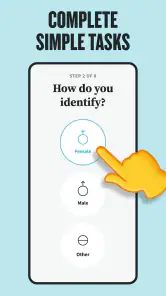


Analysis by Reviewed
I approached Glynt - Earn Rewards as a small lifestyle app built around one clear idea: use spare moments to play games or complete surveys, then turn that activity into rewards. That sounds simple, but the real question is whether the process fits naturally into an ordinary day or becomes another task competing for attention. After spending time with it, I see Glynt as most useful for people who already enjoy casual mobile games and do not mind answering occasional questions, rather than for anyone expecting a dependable income stream.
The app comes from Glynt and is free to use. It sits in the lifestyle category, although its game-and-survey mix gives it a more active feel than a typical habit, shopping, or personal-interest app. Its mature 17+ content rating is important before installing, especially if you share a device with younger family members. The current version is 2.7.4, and it works with Android 8.0 or later. On the store, it has passed the 100K-plus install mark, with an average rating of 4.3 from around 500 ratings and over 200 written reviews.
Why the play-and-survey model matters
The strongest capability here is not either activity on its own. It is the combination of games and surveys in one rewards routine. Most people already know the usual alternatives: a dedicated survey app asks for opinions, while a rewards game platform focuses on trying mobile titles. Glynt brings both categories together, which can make the experience less repetitive when one type of task is not appealing.
That flexibility changes how I would use it. If I have only a few minutes, I can look for a short activity instead of committing to a longer session. If I am tired of answering questions, switching to a game gives the app a different rhythm. The trade-off is that variety does not automatically mean every option will be equally interesting or equally worthwhile. The value comes from choosing carefully, not from opening the app and accepting everything immediately.
I also like that the concept is easy to understand without learning a complicated system first. The basic loop is familiar: select an available activity, complete it, and build toward rewards. That makes Glynt approachable for someone who has never tried this type of app. At the same time, the simplicity can create unrealistic expectations if a new user treats every minute as paid work. I would think of the rewards as a small return for spare-time entertainment, not as a replacement for employment.
One subtle advantage of combining formats is that it can reduce the feeling of being trapped by a single kind of task. Survey-only services can become tiring when questions feel repetitive, while game-focused services may not suit someone who wants a quieter activity. Glynt gives me a reason to check the app at different points in the day. That does not guarantee a reward from every visit, but it makes the platform more adaptable than a single-purpose alternative.
What the experience feels like in practice
My advice is to treat the home screen as a menu rather than a promise. I would first scan the available activities, notice what seems realistic for the time I have, and only then choose one. This small pause matters because a task that looks attractive at first may require more attention than I can give it. Starting with a clear time limit also helps prevent casual browsing from turning into an unplanned session.
More From Our News Desk

Clash of Clans Is Won Between the Battles

Android Auto Makes the Case for Quieter Car Software

MobiOffice: Transforming Mobile Productivity with Seamless Integration

EA SPORTS FC™ Mobile Soccer: Redefining Mobile Sports Gaming

How Microsoft OneDrive Became a Mobile Productivity Giant

How Google Translate Breaks Language Barriers Effortlessly
For surveys, I would answer consistently and read each question instead of rushing through. Survey systems often use screening questions, so not every attempt will necessarily feel equally smooth. The practical lesson is to avoid treating an early exit or an unsuitable questionnaire as a failure. It is better to move on than to give careless answers simply to finish faster. Thoughtful responses are also less frustrating than trying to guess what the app wants to hear.
For games, I would choose titles that I might genuinely enjoy even without the reward. That is the safest way to protect the value of my time. If the game itself is not appealing, the reward goal can make the session feel like a chore very quickly. Glynt works better when the activity has some entertainment value before the incentive is added.
A useful workflow is to separate “quick checks” from “longer sessions.” During a short break, I would look for a survey or brief activity that can be completed without setting up a whole gaming session. At home, I might give a game more attention if I already wanted something casual to play. This approach keeps the app from taking over the day and makes it easier to judge whether the return feels fair for the time spent.
I would also keep expectations clear around rewards. The central promise is earning rewards, but the sensible question is not simply whether a reward exists. It is whether the effort, attention, and time required make the activity worthwhile to me. That personal calculation will vary considerably. Someone who enjoys casual games may view the same session more positively than someone who is only interested in maximizing a return.
A realistic everyday use case
Imagine waiting for an appointment with fifteen unoccupied minutes. I would open Glynt, check whether a suitable survey is available, and try that first because it matches the limited window. If the survey is not a good fit, I would avoid forcing it and choose a short game only if I already had enough time to begin comfortably. When the appointment arrives, I would stop rather than continue chasing a small additional reward.
Another practical situation is an evening when I want something light but do not want to browse through a large game store. Glynt can act as a starting point: I can choose an available game and see whether it holds my attention. The reward adds a little motivation, but I would still judge the game by how enjoyable it is. This is where the app feels most natural to me—when it supports an activity I was already willing to do.
For someone who travels or has irregular breaks, the mixed format may be more useful than a fixed routine. A survey may suit a quiet moment on public transport, while a game may be better at home. I would not build a strict daily schedule around it, because availability and personal patience can change. A flexible habit is more realistic than assuming the app will provide the same kind of task every time I open it.
The trade-off between choice and effort
The main limitation is that rewards do not remove the effort involved. Surveys require attention and honest answers. Games require time and engagement. Even when the app is easy to navigate, the user still has to decide whether a particular task deserves that investment. This is why I would not recommend Glynt to anyone looking for completely passive earning.
There is also a psychological trap in reward apps: once progress begins, it can be tempting to continue simply because stopping feels like leaving something unfinished. I found it better to set a personal boundary before starting. For example, I might use the app during a planned break, then close it when the break ends. The reward should fit into my routine, not dictate it.
Compared with a dedicated survey service, Glynt may feel less focused. A survey specialist can be preferable for someone who wants only questionnaires and does not want games competing for attention. Compared with a dedicated game-rewards platform, Glynt may appeal more to people who want an alternative when gaming becomes repetitive. The best choice depends on whether variety or specialization matters more to you.
Another trade-off is motivation. Rewards can encourage me to try a game I would otherwise overlook, but they can also make an uninteresting game feel longer. I would use the incentive as a bonus rather than the main reason to continue. If I find myself watching the progress more than enjoying the activity, that is a sign to stop and reassess.
The mature age rating is another practical consideration. Adults should be comfortable with the app’s intended audience before installing it, and parents should not assume that a rewards app is automatically suitable for children. I would keep that rating in mind when deciding who can access it on a shared phone or tablet.
Small habits that improve the experience
First, I would check the available choices before committing. This prevents me from starting an activity simply because it is visible, then regretting the time required. A quick comparison between a survey and a game can make the session feel more deliberate.
Second, I would use the app when I already have a natural pause in my schedule. Glynt is a better fit for waiting, relaxing, or filling a short gap than for interrupting work, study, or sleep. This keeps the reward activity in its proper place and makes the time feel less costly.
Third, I would judge success by the quality of the experience, not only by the reward total. If I enjoy a game and receive something for the time, that is a pleasant bonus. If I dislike the activity, a small incentive may not compensate for the frustration. This mindset is especially helpful for avoiding unnecessary sessions.
Finally, I would keep my answers careful and consistent. Rushing through surveys can make them feel more tedious and may reduce the sense that I am participating meaningfully. Taking a moment to understand the question is a simple habit, but it improves the overall quality of the interaction.
Who should use it—and who should skip it
Glynt is a good match for adults who already spend some free time on casual mobile games and are comfortable completing surveys. It is also useful for people who dislike the narrow focus of single-purpose rewards apps. The ability to switch between two activity types gives the experience more variety, especially when I want a low-pressure way to fill an otherwise empty few minutes.
I would be more cautious about recommending it to anyone seeking predictable earnings, immediate financial results, or a fully passive system. It is also not the right choice for someone who dislikes surveys, has little patience for mobile games, or tends to keep playing only because a reward is close. In those cases, a conventional game, a focused survey service, or simply doing nothing during a break may be a better use of time.
For privacy-conscious users, I would read the app’s current permissions and reward terms directly before settling into regular use. That is a sensible step with any app that combines personal responses, game activity, and rewards. I would also make sure the device runs Android 8.0 or newer, since older systems are outside the stated minimum requirement.
My overall view is positive but measured. Glynt is most convincing as a flexible spare-time companion, not a serious earning tool. Its real strength is the choice between playing and answering surveys, which lets me adapt the app to my mood and available time. The experience is worthwhile when I choose activities I would tolerate or enjoy anyway. It becomes much less attractive when I chase every option purely for the reward.
Because it is free, trying it does not require a purchase, and the current 4.3 average suggests that many users find the concept appealing. Still, I would install it with realistic expectations: use it occasionally, protect my time, and compare each activity against the enjoyment or value it provides. For adults who want a little variety in a rewards app, that balance makes Glynt worth a look. For anyone expecting guaranteed income, I would recommend choosing a different kind of service.
After using it, I would describe Glynt - Earn Rewards to a friend in one sentence: it is a convenient place to turn casual gaming and spare survey time into rewards, provided you remain selective. That qualification is the key to getting the most from it. The app can make idle moments feel more productive, but the user still controls whether those moments remain enjoyable or become another obligation.
Glynt - Earn Rewards Frequently Asked Questions
What devices and age group is Glynt - Earn Rewards intended for?
Glynt - Earn Rewards is a Lifestyle app from Glynt, available for Android devices running version 8.0 or later. Its content rating is Mature 17+, so it is intended for adults rather than younger users. Before downloading, check that your device meets the operating-system requirement and that the app’s age rating is appropriate for you.
What is Glynt - Earn Rewards, and how does it work?
Glynt - Earn Rewards is a rewards-based app that may let users collect points or other incentives by completing available activities, such as surveys, offers, tasks, or promotional actions. Its summary highlights playing games and completing surveys to earn rewards. After installing it, users should review the current earning options, eligibility rules, and reward requirements because the activities shown can vary by location, device, account status, and availability. The app’s actual earning potential depends on the tasks offered and how consistently they are completed.
Is Glynt - Earn Rewards free to download and use?
Glynt - Earn Rewards is free to download. Users should still check its store listing and in-app terms before registering. Some reward platforms may include optional purchases, sponsored offers, advertising, data usage, or third-party promotions. A free download does not guarantee unlimited access to every activity or reward. Always confirm whether any task requires payment and avoid spending money solely to earn points unless the conditions are completely clear.
How can I redeem rewards in Glynt - Earn Rewards?
Reward redemption usually depends on reaching a minimum balance and selecting one of the payment or gift-card options currently supported by the app. Before spending time on tasks, open the rewards section and check the available choices, thresholds, processing times, expiration rules, and regional restrictions. Some rewards may be delivered digitally, while others can require account verification. Keep screenshots or confirmation details if a redemption remains pending or does not arrive.
Is Glynt - Earn Rewards safe and legitimate to use?
Users should treat Glynt - Earn Rewards like any app that handles personal information and reward activity. Download it only from an official Google Play or Apple App Store listing, review the developer name, permissions, privacy policy, and recent user feedback, and avoid unofficial APK files. Do not provide unnecessary sensitive information, payment details, or identity documents unless the purpose is clearly explained. Reward availability and user experiences can also differ by country.
Pros
- Simple way to discover reward opportunities in one place.
- Offers can suit users who enjoy trying new products and services.
- Reward tracking helps you monitor completed activities and earnings.
- Useful for earning small extras during spare time.
- Mobile-friendly design makes browsing offers convenient.
Cons
- Rewards may vary by location
- age
- and user eligibility.
- Some activities can require considerable time for modest returns.
- Certain offers may involve sharing personal or demographic information.
- Reward availability can change without notice.
- Cash-out rules and minimum thresholds may limit quick withdrawals.
- Category
- Lifestyle
- Version
- 2.7.4