Fridge Hero: Track Leftovers
- 26.00
- 3.6
- Installs
- 10.00K
- Price
- Free

Screenshots
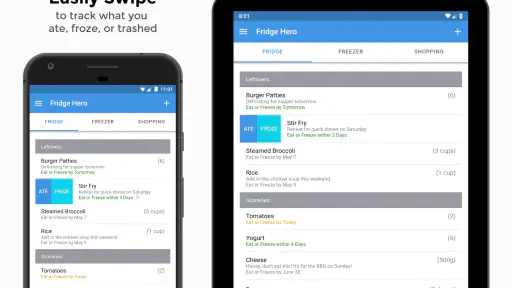
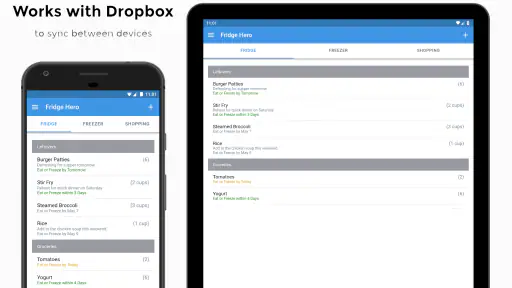
Analysis by Reviewed
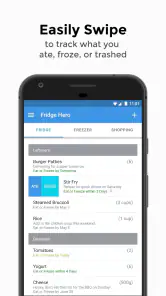
I have always found food waste hardest to prevent when leftovers disappear behind newer groceries. Fridge Hero: Track Leftovers approaches that everyday problem as a focused pantry inventory app: it helps me keep an eye on food, expiry dates, and the items waiting in the freezer or fridge. That narrow purpose is its biggest appeal. It is not trying to become a recipe social network or a full meal-planning platform. Instead, it gives me a simple place to remember what I already own.
After using it as a practical household tool, I see it as a good fit for people who buy more food than they can immediately remember, share a kitchen with others, or regularly discover forgotten containers at the back of the refrigerator. The experience is not completely friction-free, and anyone expecting automatic grocery recognition or a sophisticated household system may prefer another type of app. Still, the free entry point makes it easy to test without committing money first.
What I would consider before choosing a food inventory app
The first decision is whether I need a reminder tool or a complete food-management system. Those are different jobs. A reminder-focused app is useful when the main problem is forgetting what is stored. A broader alternative may be better if I want recipes generated from ingredients, nutritional tracking, shopping-list collaboration, or detailed meal scheduling. Fridge Hero stays closest to the first job, which makes it easier to understand but also limits its reach.
The second question is whether I will actually maintain the inventory. Any pantry tracker depends on regular updates. If I add groceries once and never remove used items, the list becomes less trustworthy than memory. I found the best way to approach this kind of app is to treat it as part of putting food away, not as a separate administrative task. Adding an item immediately after shopping and removing it while cooking keeps the information useful.
There is also a difference between tracking unopened products and tracking leftovers. A sealed package often has a printed date that is easy to read, while a container of cooked food may need a personal reminder based on when it was prepared. That makes a fridge inventory more valuable than a basic pantry list, but it also requires better habits. I would use the app as a prompt to inspect food, not as an automatic guarantee that something is safe to eat.
For a shared household, the key issue is consistency. If one person records everything but everyone else takes food without updating it, the inventory will drift. Before choosing any tracker, I would agree on a simple routine: add new items, remove finished ones, and adjust entries when food is moved. Fridge Hero can support that routine, but it cannot replace it.
A realistic weeknight use case
Imagine coming home after work with a plan to order dinner because the refrigerator looks empty. A quick look through the inventory may reveal cooked rice, vegetables, and a container of sauce that needs attention soon. That changes the decision from ordering food to assembling a meal from what is already available. The value is not just saving a purchase; it is reducing the mental effort of remembering every shelf and drawer.
More From Our News Desk

Clash of Clans Is Won Between the Battles

Android Auto Makes the Case for Quieter Car Software

MobiOffice: Transforming Mobile Productivity with Seamless Integration

EA SPORTS FC™ Mobile Soccer: Redefining Mobile Sports Gaming

How Microsoft OneDrive Became a Mobile Productivity Giant

How Google Translate Breaks Language Barriers Effortlessly
The same workflow helps before a grocery trip. Instead of opening cabinets and the freezer repeatedly, I can review the recorded items and notice that I already have several ingredients for the meals I tend to make. This is especially useful when different food storage areas are easy to overlook. The app becomes most helpful when I check it before shopping, not only when a reminder appears.
Where Fridge Hero is strongest
The clearest strength is focus. Fridge Hero is a Food & Drink app built around pantry inventory, expiry awareness, and restocking the refrigerator and freezer. That combination addresses a very ordinary problem without asking me to redesign my entire eating routine. I can think about food I own first and meal ideas second, which feels more practical than starting with recipes.
I also like the distinction between food being present and food being worth checking soon. A long inventory list can otherwise become a digital copy of the kitchen, with no sense of priority. Expiry-oriented tracking gives me a reason to revisit certain items. In practice, I would use that attention to move older food forward, freeze something before it is forgotten, or plan a meal around an ingredient that should not wait.
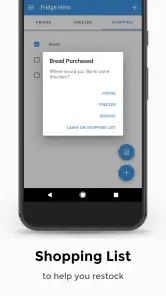
Another useful insight is that the app works well as a “last look” tool before shopping. Many people use shopping lists to remember what they need, but a pantry inventory serves the opposite purpose: it reminds me what I should not buy yet. That can prevent duplicate sauces, extra frozen meals, and another package of an ingredient already hidden behind something else.
The free price also matters. I can try the basic experience without paying at the start, while optional in-app purchases are listed at $9.49 per item. I would not pay for an upgrade simply because the app is available; I would first see whether the daily workflow saves enough time to justify it. The important point is that testing the concept is low-risk for a casual user.
Jurasco Inc. has kept the product accessible to a broad audience. It is rated for Everyone, and the minimum operating-system requirement is Android 7.0, so it is not limited to only recent phones. The current release is version 1.9.4. Those details make it a reasonable candidate for an older household device that stays in the kitchen, provided that device meets the requirement.
Small habits that make the tracker more useful
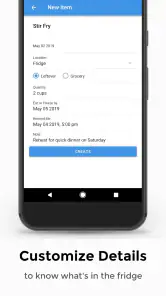
My first practical tip is to record storage context in a consistent way. If I simply enter “soup,” I may still waste time searching for it. A clearer entry such as “soup in freezer” or “soup in fridge” makes the inventory useful at the moment I need it. The same principle applies to leftovers: naming the food plainly is more valuable than trying to create a perfect catalog.
My second tip is to update the list during natural transitions. The best moments are unpacking groceries, moving food into the freezer, and clearing plates after a meal. Waiting until the end of the week creates a memory exercise, and memory is exactly what this kind of app is supposed to support. A short update at the right moment is more sustainable than a large cleanup session.
My third tip is to use the inventory to change shopping order, not only shopping quantity. If something is nearing its date, I can plan to use it early in the week and buy flexible ingredients around it. This turns expiry tracking into a planning signal. It is a subtle benefit because the app does not need to tell me what recipe to cook; it simply helps me notice which ingredient deserves priority.
I would also separate “buy again” from “still have.” A product can be nearly finished without being absent, and treating those states as identical leads to overbuying. Keeping the inventory honest means removing an item only when it is gone and deciding separately whether it belongs on the next shopping list. That distinction is particularly useful for staples that are consumed gradually.
Where a different category may suit you better
Fridge Hero may not be the right choice for someone whose main goal is meal inspiration. Recipe-first apps are usually better when I begin with a dish in mind and want instructions, substitutions, or a weekly menu. An inventory tracker can tell me that ingredients exist, but that does not automatically solve the creative question of what to cook.
A shared shopping-list app may be a better fit for couples or families who mainly need real-time coordination at the supermarket. If the household problem is “who is buying milk?” rather than “what food is hidden in the freezer?”, a simpler list can involve less maintenance. I would choose Fridge Hero when expiry awareness and stored food are central, not merely because it includes the word inventory.
Barcode-heavy pantry tools may also appeal more to people with large collections of packaged goods. Those systems can be faster for repeated products if their scanning workflow matches the user’s habits. Fridge Hero makes more sense to me when I am willing to enter items in a straightforward way and care about the contents of the fridge and freezer as much as shelf-stable groceries.
There is an important trade-off here: a narrowly focused tracker can be less overwhelming, but it may require more personal judgment. I still need to decide how to describe an item, when to remove it, and how seriously to treat a date. Someone looking for automation at every step should compare it with tools designed around scanning, connected household accounts, or recipe generation.
The public response suggests a mixed but usable experience, with a 3.6 average from around 90 ratings and 26 written reviews. I would read that as a reason to approach it realistically rather than as a decisive verdict. It has passed the basic test for a modest user base, but it is not the kind of app I would assume will perfectly match every kitchen routine.
The real cost of changing from a paper list
Switching from a note on the refrigerator to an app sounds easy, but the cost is mostly behavioral. I have to enter the existing contents before the system can help, and a crowded kitchen can make that first session feel tedious. My advice is not to catalog every spice and unopened package at once. Start with leftovers, freezer items, and food that needs attention soon. That creates immediate value without turning setup into a weekend project.
There is also a risk of duplicate records when the same food is stored in different places. A simple naming rule helps: include the food and its location, then use the same wording whenever possible. This is not glamorous, but consistency makes searching and reviewing much faster. It also makes handoff easier if another person in the household takes over the updates.
Users should remember that an expiry reminder is not a food-safety decision. Dates can mean different things depending on the product and local labeling, while leftovers depend on preparation and storage conditions. I would inspect food normally and use the app as a memory aid. The safest workflow is to let the tracker prompt a check, not to let a screen override common sense.
The optional purchase price deserves a practical test. Since items are listed at $9.49, I would only consider paying after using the free experience long enough to see a repeated benefit. If I still forget to update the inventory, an upgrade will not solve the underlying problem. If the app becomes part of my shopping and leftover routine, paying for a relevant addition may be more reasonable than abandoning the system after a few days.
Who should install it
I would recommend Fridge Hero to a person who regularly loses track of leftovers, buys duplicates, or wants a lightweight way to inspect fridge and freezer contents before shopping. It is especially suitable for someone who prefers a focused utility over a large ecosystem of recipes, nutrition tools, and social features. The free starting point makes experimentation sensible.
I would be more cautious about recommending it to a household that needs multiple people to coordinate a live shopping list, or to a cook who wants the app to build complete menus automatically. In those cases, a collaboration-focused or recipe-focused alternative may fit better. I would also skip it if I know I will not update entries when food is used, because stale inventory creates false confidence.
For me, the strongest reason to choose Fridge Hero: Track Leftovers is that it targets the moment when food waste begins: forgetting what is already there. Its usefulness grows when I connect it to two routines, putting groceries away and checking the inventory before shopping. Used that way, it becomes more than a list; it becomes a small decision filter for the kitchen.
The app has attracted over 10 thousand installs, which gives it a modest but meaningful presence among food utilities. I would not choose it because of reach alone. I would choose it because the problem is familiar, the setup can remain manageable, and the focus is clear. The rating of 3.6 also encourages realistic expectations: this is a practical helper, not a flawless household automation system.
My final recommendation is to try the free version with a deliberately small inventory. Add the leftovers and freezer items most likely to be forgotten, check the list before the next grocery trip, and see whether the habit changes what you buy or cook. If that experiment feels useful, continue building the list. If it feels like another chore, a simpler shopping note or a different category of food app will probably serve you better.
In short, I see it as a sensible choice for awareness rather than automation. The best results come from using it as a quick kitchen checkpoint, not as a complete food-management system. That distinction makes the recommendation clear: it is worth trying for organized shoppers and leftover-conscious households, while users seeking recipes, collaboration, or advanced automation should look elsewhere.
Fridge Hero: Track Leftovers Frequently Asked Questions
Is Fridge Hero: Track Leftovers free to download?
Fridge Hero is free to download, so you can try its food-tracking features without paying upfront. The app also offers in-app purchases priced at $9.49 per item, which may apply to optional features or content. Check the purchase details shown in the app before confirming anything, especially if you prefer to keep your use limited to the free options.
What kinds of food can I keep track of with Fridge Hero?
Fridge Hero is intended for managing food in your fridge and freezer, including leftovers and other stored items. Its pantry inventory and expiry-date focus can help you keep a more useful record of what you have and when it may need attention. It is most effective when you enter items consistently and use clear names and dates that make sense to you.
What is Fridge Hero: Track Leftovers used for?
Fridge Hero: Track Leftovers is designed to help you organize the food stored in your refrigerator and keep track of leftovers before they are forgotten. You can record items, monitor how long they have been kept, and use the information to decide what should be eaten first. It is especially useful for households trying to reduce food waste and plan meals more efficiently.
How does Fridge Hero help prevent food waste?
The app makes leftover management more visible by giving you a place to record prepared meals and other food items that might otherwise be overlooked. By checking the list regularly, you can identify food approaching its recommended use period and prioritize it when planning meals. However, the app is only an organizational tool; users should still inspect food carefully and follow proper storage and safety practices.
Can I use Fridge Hero for groceries as well as leftovers?
Although its main focus is tracking leftovers, Fridge Hero can also be useful for keeping notes about other refrigerated foods, depending on the features available in the version you install. It works best when you enter clear descriptions and relevant dates, such as when an item was cooked or opened. This can make your refrigerator easier to manage, but it may not replace a full grocery-list or pantry-management app.
Pros
- Quickly logs leftovers without requiring detailed meal planning.
- Helps reduce food waste by making forgotten items easier to spot.
- Useful for households with shared responsibility for fridge contents.
- Simple inventory view can support more organized grocery shopping.
- Reminder-based tracking may encourage timely use of perishable food.
Cons
- Manual entry can become tedious when adding many items at once.
- Accuracy depends on remembering to update quantities and consumed food.
- Users may need to customize storage habits for less common ingredients.
- Notifications could feel repetitive if reminders are not adjusted carefully.
- The app’s usefulness is limited when household members do not update it.
- Category
- Food & Drink
- Version
- 1.9.4