Faladdin: Tarot & Horoscopes
- 6.06K
- 4.4
- Installs
- 10.00M
- Price
- Free

Screenshots

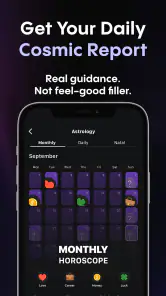
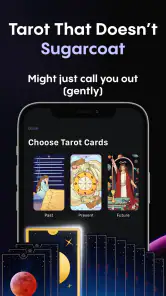
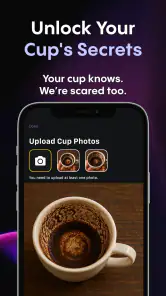
Analysis by Reviewed
I approached Faladdin: Tarot & Horoscopes as a lifestyle app for moments when I wanted a little reflection rather than a firm answer. Its mix of tarot readings, daily astrology, and birth-chart content makes it easy to open casually, but the real question is how comfortable it is for people with different reading habits, attention levels, motor abilities, and everyday circumstances. After spending time with it, I found an appealing, visually focused experience that is best treated as entertainment and personal reflection, not as a substitute for practical advice.
Faladdin is free to download and is developed by Truemium Ou. It has built a sizeable audience, with more than ten million installs and an average rating of 4.4 from roughly 235 thousand ratings. Those figures suggest that the basic idea connects with many people, although popularity alone does not tell me whether the interface suits every user. The app is rated for Everyone, runs on Android 7.0 or later, and the version I reviewed is 5.1.37.
How Faladdin feels to read and navigate
A visually led experience with a gentle learning curve
The first thing I noticed is that Faladdin presents itself more like a calm, illustrated reading space than a utility packed with controls. That helps when I want to browse without learning a complicated system. Tarot, horoscope, and birth-chart areas give the app a clear identity, and I can move between forms of content according to how much time or curiosity I have.
For many users, this simplicity will be welcome. Someone opening the app during a short break can understand the general purpose quickly instead of working through a dense dashboard. The reading flow also suits people who prefer to absorb information in small portions. I can pause between sections, return to an idea, and decide whether I want a quick daily look or a more involved birth-chart exploration.
That same visual approach can create friction. Decorative presentation may compete with the words, especially for readers who need strong separation between background elements and text. I found that the experience depends heavily on being comfortable reading on a phone screen and following content presented in a particular order. Users who prefer plain, highly structured text may find a conventional astrology website easier to scan.
My practical advice is to treat each reading as a short session instead of trying to consume everything at once. I would read one section, note the point that feels relevant, and leave the rest for later. This is more comfortable for people who tire quickly while reading and also reduces the temptation to interpret every sentence as equally important.
Text size, contrast, and attention
Readability is not only about whether letters are technically visible. It also depends on contrast, spacing, line length, animation, and how much visual decoration surrounds the text. Faladdin’s atmospheric style is part of its appeal, but it may not be ideal for someone with low vision, light sensitivity, or difficulty filtering competing visual information.
More From Our News Desk

Clash of Clans Is Won Between the Battles

Android Auto Makes the Case for Quieter Car Software

MobiOffice: Transforming Mobile Productivity with Seamless Integration

EA SPORTS FC™ Mobile Soccer: Redefining Mobile Sports Gaming

How Microsoft OneDrive Became a Mobile Productivity Giant

How Google Translate Breaks Language Barriers Effortlessly
I would not choose this app as my first option for a reader who needs a strictly text-first interface. A dedicated screen reader-friendly astrology resource or a browser experience with adjustable text may offer more control. Faladdin can still be useful if the reader can enlarge system text comfortably and the current screen remains clear, but that will vary by device and personal needs.
For users with dyslexia or other reading difficulties, the short, reflective format may be easier than a long article, yet the stylized design can work against that advantage. I recommend reading in a quiet setting, increasing the phone’s general text size if needed, and avoiding rapid switching between readings. The app is more manageable when I give my attention to one screen rather than treating it like an endless feed.
Understanding what the app is actually saying
Another accessibility issue is interpretive rather than physical. Tarot and horoscope language often uses broad, suggestive wording. That can be enjoyable for someone who likes symbolism, but it may be confusing for a person who expects direct instructions, concrete explanations, or evidence-based guidance.
I found the best way to use Faladdin is to translate a reading into a personal question. Instead of asking whether a prediction will definitely happen, I might ask what concern the text brought to mind. This makes the app more useful for journaling or self-reflection and reduces pressure on users who find ambiguous language stressful.
That distinction matters in everyday life. If I am deciding whether to change medication, make a financial commitment, or handle a serious relationship problem, I would look for qualified human advice rather than rely on a card reading or horoscope. Faladdin works better as a prompt for thinking than as an authority.
Motor and sensory considerations
From a motor perspective, a lifestyle app with a focused reading flow is generally less demanding than an action game or a tool requiring precise repeated gestures. I do not need fast reactions to enjoy the content. That makes it a reasonable option for someone who prefers slower interactions or cannot comfortably perform rapid taps.
However, slower does not mean effortless for everyone. Phone controls can still be difficult for users with tremors, limited dexterity, or pain in the hands. Small interface elements, scrolling, and returning to a previous screen may become tiring during a long session. My workaround would be to keep sessions brief and use the device’s built-in interaction aids where available, rather than trying to navigate through several readings in one sitting.
The app’s visual mood may also affect sensory comfort. Some people enjoy atmospheric colors and illustrations; others need minimal movement and low visual stimulation. I would test it in a calm environment before making it part of a daily routine. If the presentation feels busy, using one reading at a time and lowering the phone’s overall brightness can make the experience less demanding, although the result depends on the screen and operating system.
Audio access is another point I would consider before recommending it to someone who cannot comfortably read on a phone. The core experience is presented as readings, so a user who depends on spoken output should check how well their device’s accessibility tools handle the current screens. I would not assume that a visually designed reading translates perfectly into speech, especially when headings, decorative text, or changing panels are involved.
Using it with different attention patterns
Faladdin can fit people who like short rituals. I can open it in the morning, look at a daily astrology section, and close the app without committing to a lengthy session. That structure may suit users with limited concentration or unpredictable schedules. It also works for someone who enjoys returning to a familiar routine without needing to remember a complicated workflow.
At the same time, the open-ended nature of spiritual content can encourage repeated checking. A user who feels anxious may keep looking for a more reassuring interpretation instead of stepping away. I think a simple boundary helps: choose one reading, write down one useful reflection, and avoid reopening the app just to seek a different answer to the same worry.
This is one of the less obvious trade-offs. The app’s accessibility is partly shaped by emotional context. A person relaxing with symbolic content may find it welcoming, while someone already distressed by uncertainty may find predictions or generalized warnings harder to process. In that situation, a neutral journaling app, a conversation with a trusted person, or professional support would be a better choice.
A realistic daily use case
Imagine that I have a crowded morning and only a few quiet minutes before work. I open Faladdin, read the daily astrology content, and choose one sentence as a prompt: what conversation have I been postponing, or where am I spending energy unnecessarily? I do not treat the text as a schedule or forecast. Instead, I use it to identify something I can reflect on during the day.
Later, if I have more time, I might explore a birth-chart reading with a notebook nearby. Writing down unfamiliar terms and questions makes the experience more accessible than trying to remember everything on screen. It also gives me a way to compare what I read with my own experience without repeatedly navigating through the app.
For a shared household, I would keep the app personal rather than presenting a reading as a fact about someone else. That is especially important when users have different beliefs or comfort levels. Faladdin is more inclusive when it invites reflection without pressuring another person to accept its interpretation.
Where it compares well with familiar alternatives
Compared with a printed tarot guide, Faladdin is more convenient and easier to carry. I do not need a deck, a book, or a table, and I can explore different styles of content from one phone. Compared with a general horoscope website, it feels more curated and personal, with a stronger sense of a contained reading experience.
The trade-off is control. A printed book lets me adjust how I search, mark pages, and read at my own pace. A website may offer larger text, browser zoom, and more familiar navigation. Faladdin’s advantage is atmosphere and immediacy; its weakness is that the presentation may give me fewer ways to reshape the experience around my individual accessibility needs.
It also differs from a dedicated birth-chart tool. Someone who wants technical chart calculations, detailed explanations of planetary placements, or a study-oriented reference may prefer a specialist service. Faladdin is better for a casual user who wants approachable spiritual content rather than a deep technical lesson.
Costs, expectations, and personal boundaries
The app itself is free, which makes it easy to try without an upfront commitment. It includes in-app purchases ranging from $0.99 to $149.99 per item, so I would pay attention to what is optional before purchasing anything. The wide range means that a casual user should not assume every desirable reading or extra is covered simply because the download costs nothing.
I would recommend deciding on a personal spending limit before exploring paid content. This is particularly useful for users who are emotionally invested in receiving reassurance. A paid reading should remain entertainment, not something I feel compelled to buy because I am worried about a decision or hoping to change an outcome.
The Everyone age rating makes the app broadly approachable, but an age label does not remove the need for guidance. Younger users may take predictive language literally, while older users may have their own cultural or religious boundaries around tarot and astrology. I would explain the reflective nature of the content to a child or teenager rather than presenting it as confirmed knowledge.
Remaining barriers for inclusive use
Faladdin’s biggest limitation for accessibility-minded users is that its visual, interpretive style is central to the product. That is not a minor detail that can be separated from the experience. If a person needs highly adjustable text, minimal decoration, predictable labels, or fully transparent navigation, the app may require more effort than a simpler alternative.
There is also a language-and-meaning barrier whenever a reading uses unfamiliar spiritual vocabulary. A user may be able to see every word and still struggle to understand the intended context. I found that looking up one term at a time, rather than searching for a complete explanation elsewhere, keeps the reading from becoming overwhelming. Still, anyone seeking educational depth may outgrow the app’s conversational approach.
Privacy and emotional boundaries deserve practical attention too. I would avoid entering sensitive personal details unless they are clearly necessary for a feature I genuinely want to use, and I would not share readings that reveal more about my feelings than I intend. The app is most comfortable when I remain in control of what I disclose and how seriously I take the result.
People who need dependable factual guidance should skip it for that purpose. The same applies to users who dislike mystical framing, want a fully customizable reading environment, or become unsettled by generalized predictions. For them, a plain journaling tool, an educational astronomy resource, or a conversation with a qualified professional will be more suitable.
My inclusive verdict
I see Faladdin as a friendly, low-pressure way to explore tarot, daily astrology, and birth-chart ideas, provided I use it as a reflective lifestyle experience. Its short sessions, broad themes, and gentle presentation can work well for people who want a quiet daily ritual without complicated controls. The free entry point also makes experimentation straightforward, while the established audience shows that the format has wide appeal.
My recommendation is more conditional for users with visual, motor, sensory, or cognitive access needs. The app avoids the physical demands of fast-paced software, but its decorative presentation and text-led readings may not provide enough flexibility for everyone. I would test the first few screens with the phone’s own accessibility settings, keep sessions short, and choose a different tool if reading remains tiring or confusing.
The most inclusive way to use Faladdin is to treat it as an optional prompt, never a command. That approach leaves room for different beliefs, abilities, and emotional situations. I would recommend it to a friend who enjoys symbolic content and wants a moment of introspection, but I would also make clear that it is not the right choice for urgent decisions, clinical concerns, or anyone who needs a highly configurable text experience.
Overall, Truemium Ou has created an approachable lifestyle app with a clear personality. Its strongest quality is the ease with which a small pause can become a reflective routine. Its main weakness is that the same visual and mystical character that makes it engaging can create barriers for readers who need simplicity, precision, or stronger control. If that trade-off suits you, Faladdin is worth trying; if not, a more adjustable alternative will serve you better.
Faladdin: Tarot & Horoscopes Frequently Asked Questions
How much storage space should I have available before downloading Faladdin?
It is sensible to check your device’s available storage before installing Faladdin, as with any mobile app. The space needed can vary with the version and device, and downloaded content or updates may use additional room over time. If your phone is nearly full, freeing some space first can help the installation and later updates go more smoothly.
Do I need an account to explore Faladdin’s readings?
Faladdin offers tarot readings, astrology, and birth-chart experiences, and the app may ask for some personal details or preferences to tailor parts of the experience. Account or sign-in steps can depend on the feature and platform. When you first open the app, review each prompt and share only the information you are comfortable using for personalized readings.
Can I use Faladdin on my Android or iOS device?
Faladdin is a mobile app for Android and iOS, so you can look for it in the relevant app store for your device. Check that your device meets the platform requirements before downloading; the Android version requires Android 7.0 or later. As with any app, installing it through the official store is the sensible way to get the current release and manage updates.
What is Faladdin: Tarot & Horoscopes, and what can I use it for?
Faladdin: Tarot & Horoscopes is an entertainment and lifestyle app that offers tarot readings, horoscope content, fortune-style interpretations, and other spiritual-themed experiences. After entering some personal details or selecting a reading type, the app presents interpretations designed for reflection and enjoyment. It should not be treated as a scientific, medical, financial, or legal advice service.
Is Faladdin: Tarot & Horoscopes free to download and use?
The app can generally be downloaded for free, but some readings, features, or additional content may require payment. Depending on the current version and your region, Faladdin may offer optional in-app purchases or subscription plans. Before confirming a purchase, carefully check the price, billing frequency, renewal conditions, and cancellation process shown through the Google Play Store or Apple App Store.
Pros
- Personalized tarot
- horoscope
- and fortune readings in one app.
- Clean interface makes readings easy to browse and understand.
- Supports several languages for a broader international audience.
- Daily horoscope content encourages regular use.
- Offers entertaining insights for casual self-reflection.
Cons
- Many detailed readings require coins or in-app purchases.
- Interpretations may feel generic rather than truly personalized.
- Frequent ads can interrupt the free reading experience.
- Predictions should not be treated as factual or professional advice.
- Some features may vary depending on language or region.
- Category
- Lifestyle
- Version
- 5.1.37