FacMet
- 0.00
- 0.0
- Installs
- 10.00K
- Price
- Free

Screenshots



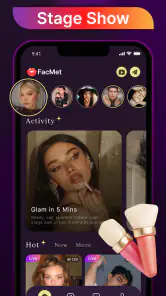
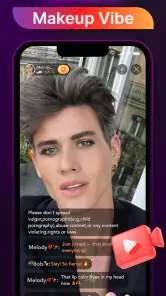
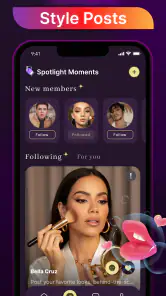

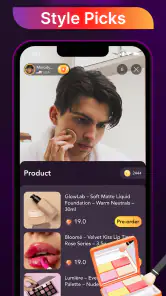
Analysis by Reviewed
I approached FacMet as a lifestyle app built around makeup-focused conversation and calling, rather than as a traditional beauty reference library. That distinction matters. It is not the same kind of experience as a catalog of written tutorials, a simple face-editing tool, or a general-purpose messaging service. Its appeal is the possibility of making beauty-related interaction feel more personal and immediate.
My overall impression is that FacMet is most interesting for people who enjoy discussing makeup with another person instead of only scrolling through finished looks. The app has a social, conversational identity, and that can make it feel more useful when you want encouragement, ideas, or a second opinion. At the same time, anyone expecting a complete professional makeup workstation should approach it with more modest expectations.
How FacMet feels in everyday use
The app comes from ALLEN PRODUCTION and sits in the Lifestyle category. It is free to install, with optional purchases ranging from $0.99 to $99.99 per item. That makes the first step relatively easy for a curious user, but it also means I would pay attention to what is available without spending before becoming deeply invested.
One realistic use case is getting ready for an evening out. You might have already chosen an outfit but feel unsure about whether your eye makeup, lip color, or overall balance works. Instead of opening a static tutorial and trying to match a stranger’s face, FacMet is better suited to a moment when you want a conversational response. The value is less about receiving a universal rule and more about turning preparation into a shared activity.
Another scenario is a beginner who feels overwhelmed by beauty content. Large social platforms often mix makeup advice with unrelated trends, advertisements, and highly polished images. A focused app can feel calmer because the purpose is easier to understand from the start: makeup, conversation, and calls. I can see that being attractive to someone who wants a more direct route into the subject.
Still, I would not treat every suggestion exchanged through an app as professional advice. Skin sensitivity, allergies, lighting, and personal preference can change how a product or look works. FacMet may help you think through an appearance, but it should complement your own judgment rather than replace it.
Speed expectations when starting a conversation
Perceived speed is especially important in an app centered on interaction. When I open something for a quick beauty question, I do not want to spend a long time navigating before reaching the useful part. FacMet’s focused concept gives it a practical advantage over a broad social network: there are fewer unrelated reasons to be there, so the path to a makeup conversation should feel more purposeful.
More From Our News Desk

Clash of Clans Is Won Between the Battles

Android Auto Makes the Case for Quieter Car Software

MobiOffice: Transforming Mobile Productivity with Seamless Integration

EA SPORTS FC™ Mobile Soccer: Redefining Mobile Sports Gaming

How Microsoft OneDrive Became a Mobile Productivity Giant

How Google Translate Breaks Language Barriers Effortlessly
The experience is likely to feel quickest when I already know what I want to discuss. A clear question such as whether a look feels suitable for a particular occasion is more efficient than entering without an idea and browsing aimlessly. This is one of my main practical tips: decide whether you want inspiration, feedback, or a social call before opening the app. That small distinction can prevent the session from becoming unfocused.
Calls also create a different speed expectation from ordinary text-based browsing. A visual conversation depends on the other person being available and responsive, so the app’s usefulness is not only about how fast screens load. Timing, attention, and communication quality matter just as much. If you need an immediate answer with no waiting, a saved tutorial or a conventional search may be more predictable.
I would also avoid judging the entire experience by one slow moment. Social and calling functions can feel smooth in one situation and less responsive in another because they depend on several moving parts. A brief pause may come from the connection, the device, or the other participant rather than from the app alone. For that reason, I see FacMet as something to use when I have a little patience, not as an emergency beauty utility.
What happens during heavier use
The more demanding moments are likely to occur when a session involves extended interaction rather than a short visit. A quick check-in is one thing; a longer makeup discussion or call asks more from the phone, the connection, and the user’s attention. I would plan longer sessions when the device has enough battery and when I am not relying on an unstable connection.
This is also where expectations should remain realistic. A calling-oriented lifestyle app is not automatically a replacement for a full camera studio, editing suite, or professional consultation platform. If I want precise color correction, detailed product comparison, or a carefully documented routine, I would still choose a specialist beauty app or a well-organized reference source. FacMet’s strength is the human exchange, not necessarily exhaustive technical analysis.
A useful workflow is to prepare two or three specific points before starting. For example, I might decide that I want feedback on whether the eyes and lips compete, whether the look suits daylight, and whether it feels appropriate for the event. This makes a longer session more productive and reduces the chance of ending with vague advice. It is a simple but non-obvious advantage of treating the app as a conversation tool instead of an endless feed.
Heavy use can also expose a social trade-off. The more personal the interaction becomes, the more important it is to keep boundaries clear. I would avoid sharing sensitive personal details simply because a beauty conversation feels friendly. The app may be lifestyle-focused, but ordinary digital caution still applies. A good makeup discussion should not require information that is unrelated to the look itself.
Stability, interruptions, and recovering from a broken session
Reliability matters more for calls than for static content because an interruption can break the flow of a conversation. My practical approach would be to treat important discussions as flexible rather than time-critical. If I were preparing for a special occasion, I would not wait until the final few minutes to seek feedback. Using FacMet earlier leaves room to continue independently if the interaction ends unexpectedly.
Recovery is easier when I keep the goal of the session simple. If a call stops, I can return with the same prepared questions instead of trying to reconstruct an entire complicated discussion. I would also keep a quick note of products or techniques mentioned during a useful exchange, because relying on memory alone is inconvenient if the session does not continue.
That recovery habit is particularly valuable for beginners. A new user may assume that one interrupted conversation has ruined the whole experience, but a makeup decision can usually be broken into smaller questions. Ask about the base, then the eyes, then the finishing details. This makes FacMet more manageable and gives the interaction a clear fallback structure.
I would describe the app’s reliability in terms of use case rather than make a sweeping claim. It seems better suited to casual, repeatable conversations than to situations where a single uninterrupted session is essential. If dependable access to a fixed collection of tutorials is your priority, a conventional offline-friendly reference app may suit you better. If you value interaction and can tolerate occasional friction, FacMet has a more distinctive reason to stay installed.
Device limits and the Android starting point
FacMet supports Android devices running version 7.0 or later, which gives it a broad compatibility window for people using older phones. That is helpful for users who do not upgrade frequently. However, compatibility does not guarantee an identical experience across every device. Older hardware may feel less comfortable during longer interactive sessions than a newer phone, especially when several tasks are happening at once.
I would approach installation with a practical check: make sure the phone has enough free space for comfortable everyday use, close unrelated apps before a longer call, and keep the system current within what the device supports. These are not special requirements of FacMet so much as sensible habits for any app where responsiveness and communication matter.
Screen size can influence the experience too. A larger display may make it easier to examine a look during a conversation, while a compact phone is more convenient to hold. There is no single ideal setup. Someone who mainly wants quick exchanges may prefer portability; someone who wants to inspect makeup details may appreciate a larger screen.
The Teen content rating is another useful signal when deciding who should use it. I would still encourage younger users to follow the same privacy habits they would use on any social or calling service, including being careful about personal details and ending conversations that feel uncomfortable. Adults introducing the app to a teenager should discuss those boundaries rather than assuming the age label handles every situation.
How it compares with ordinary makeup apps and social platforms
Compared with a standard makeup tutorial app, FacMet appears more conversational in spirit. Tutorial apps are usually better when I want a repeatable sequence: prepare the skin, apply a product, blend, and finish. They are also more convenient when I need to pause, rewind, or follow instructions privately. FacMet becomes more appealing when the question is subjective and I want another person’s reaction.
Compared with a general social platform, its makeup-centered identity can reduce distraction. Broad networks offer far more content, but that abundance can make it difficult to find a focused exchange. FacMet is not competing on sheer variety in the same way. Its potential advantage is that the subject is clearer from the beginning.
Compared with a professional consultation, it should be viewed as more casual and accessible. A professional may be the better choice for complex skin concerns, event makeup that must be exact, or advice involving medical sensitivities. FacMet is more appropriate for everyday experimentation, confidence-building, and discussing whether a look feels balanced.
The trade-off is that a narrower purpose can also mean a narrower reason to return. If I rarely discuss makeup, the app may not become part of my routine. If I enjoy trying new looks or helping friends choose between options, the conversational format gives it a stronger chance of earning regular use.
Who will get the most from it
I think FacMet is a good match for users who see makeup as a social hobby. It can suit someone who likes exchanging ideas, wants reassurance before trying a new style, or prefers a personal discussion to a silent gallery of images. It may also appeal to people who find large social networks too noisy and want a more clearly themed environment.
It is less suitable for someone searching for a complete ingredient database, a rigorous skin-care planner, or a professional-grade editing workflow. I would also skip it if my only goal were to follow a fixed tutorial without speaking to anyone. In that situation, a focused instructional app would probably be faster and less dependent on another participant.
Users who are uncomfortable with calls should think about whether the social format adds value or pressure. The app’s central appeal may be reduced if I only want private, text-free browsing. On the other hand, someone who is shy about asking beauty questions in person might find a digital conversation easier, provided the interaction remains within comfortable boundaries.
The free entry point makes experimentation reasonable, but the optional purchases deserve attention. I would use the no-cost experience long enough to understand the app’s everyday value before considering any item. A purchase is easier to justify when it supports a feature I will use repeatedly, not merely because I am curious during the first session.
My practical routine for using FacMet well
I would begin with a small, concrete objective. “Help me choose between two lip directions for this outfit” is more useful than “give me makeup ideas.” A focused prompt creates a clearer conversation and makes it easier to decide whether the app is genuinely helping.
Next, I would use neutral lighting where possible. Makeup feedback can be misleading under colored room lights, and no conversational app can fully correct a poor viewing environment. This is one of the most important ways to improve the quality of an interaction without spending anything or changing the app itself.
I would then separate taste from technique. If someone dislikes a particular color, that does not automatically mean the application is wrong. Ask whether the issue is blending, intensity, placement, or simply personal preference. This approach turns a vague reaction into something actionable and helps prevent unnecessary product changes.
Finally, I would finish by recording one or two changes to test later. Trying every suggestion at once makes it difficult to know what improved the result. FacMet works better as a source of ideas and feedback when I treat each session as an experiment rather than as a final verdict.
Version, availability, and the overall performance impression
The current version is 1.3.0, and the app was released on January 26, 2026. It has passed ten thousand installs, which suggests that it has already reached an initial audience while remaining relatively focused compared with the biggest lifestyle platforms. I would interpret that scale as a reason to try it for its specific concept, not as proof that it will replace every other beauty tool.
From a performance perspective, my expectations would be moderate and practical. Short visits should be easier to manage than long calls, and a newer device with a stable connection should generally be the more comfortable environment. Older Android phones can still be relevant because of the minimum operating-system support, but I would be more cautious about demanding sessions on hardware that already struggles with communication apps.
The main strength is the app’s clear purpose: it brings makeup into a more personal, interactive setting. The main limitation is equally clear: conversation introduces variables that a static tutorial does not have. Availability, timing, communication style, and connection quality all influence the result. That is not necessarily a flaw, but it means FacMet asks for a different kind of patience.
My final view is that FacMet is worth trying if you want makeup to feel collaborative rather than solitary. I would recommend it to a friend who enjoys discussing looks, needs a second opinion, or wants a focused alternative to a noisy social feed. I would not recommend relying on it as the only source for technical beauty guidance or as a guaranteed solution when timing and uninterrupted access matter.
My performance verdict is favorable but specific: FacMet makes the most sense as a lightweight, social companion for makeup decisions, not as a universal beauty toolkit. Start with the free experience, use clear questions, protect your privacy, and judge it by whether its conversations improve your routine. If that human element is what you have been missing, the app has a convincing reason to remain on your phone.
FacMet Frequently Asked Questions
Is FacMet intended for adults, and what does its age rating mean?
FacMet has a Teen content rating, so it is not presented as an adults-only app. That rating is a useful starting point for families, but it does not replace checking the app’s features and deciding what is appropriate for a particular teen. If a young person will use it, discuss privacy, respectful communication, and how to handle unwanted contact before they create a profile.
Who develops FacMet, and how can I identify the right app?
FacMet is developed by ALLEN PRODUCTION, and its store summary describes it as “FacMet:Makeup Chat & Call.” When searching for the app, check the developer name and title so you select the intended listing rather than a similarly named product. The short description is simply “FacMet,” so reviewing the full listing before installing can help you understand what you are choosing.
What is FacMet and what can I use it for?
FacMet is designed as a social and communication platform where users can create a profile, discover other people, and interact through the app’s available features. Depending on the version and region, it may support profile browsing, messaging, matching, or community-based interactions. Before downloading, review the current store description because features, availability, and supported countries can change over time.
Is FacMet free to download and use?
FacMet is free to download, though some functions may require in-app purchases. Optional items range from $0.99 to $99.99 each, so review purchase details before confirming anything and use your device’s purchase controls if needed. Basic access and paid features can differ by operating system, location, and version. Check the Google Play Store or Apple App Store for current pricing and any applicable renewal or cancellation terms.
Does FacMet require an account or personal information?
Most social and communication apps require users to create an account so profiles, conversations, preferences, and security settings can be saved. FacMet may request information such as an email address, phone number, name, age, photos, or location. Read its privacy policy carefully and provide only the details you are comfortable sharing, especially if profile information can be viewed by other users.
Pros
- Simple interface makes profile browsing quick and easy.
- Useful for discovering people with shared interests nearby.
- Profile photos and details are presented in a clear layout.
- Low learning curve for first-time users.
- Convenient for casual social networking and new connections.
Cons
- The quality of interactions depends heavily on the local user base.
- Some features may require registration or account permissions.
- Limited activity in smaller towns can reduce its usefulness.
- Privacy settings should be reviewed carefully before sharing details.
- Notifications may become distracting if interaction levels are high.
- Category
- Lifestyle
- Version
- 1.3.0