Dog Translator - Human to Pet
- 0.00
- 0.0
- Installs
- 10.00K
- Price
- Free

Screenshots

Analysis by Reviewed
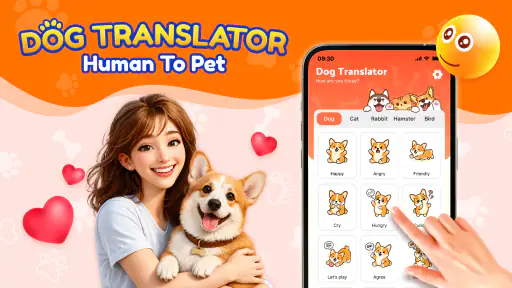
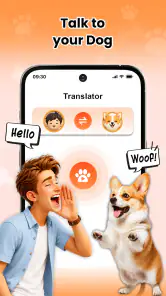
I tried Dog Translator - Human to Pet as a lighthearted lifestyle app, and its appeal is easy to understand: you speak, it turns your voice into a playful dog-like sound, and the result is meant to make people laugh. It is not trying to replace a trainer, interpret real canine behavior, or offer serious communication. I see it as a small entertainment tool for quick jokes, pet videos, and silly moments with friends.
The app comes from DEHA STUDIO and is free to use. It is listed for Everyone, which fits the simple concept and family-friendly tone. It has passed the early curiosity stage with over ten thousand installs, while version 1.0.19 is the current release and Android 7.0 or later is required. Those details make it accessible to many older phones, although the quality of the experience still depends heavily on the phone’s microphone, speaker, and connection at the moment you use it.
How Dog Translator feels in everyday use
The basic interaction is deliberately uncomplicated. I open the app, prepare a short phrase, and use the voice input to create a funny dog sound. That simplicity is important because this is the kind of app people usually open spontaneously rather than study. If I need a long explanation before the joke works, the moment has already passed.
Its best use is not a serious conversation with a pet. Dogs do not suddenly understand human sentences because an app produces an animal-like noise, and I would not use the result to make decisions about a dog’s health, mood, or training. The fun comes from the performance: saying something ordinary, hearing it transformed, and watching a friend or pet react with curiosity.
That distinction also helps set expectations. The title may suggest translation, but I experienced the concept more as a playful voice effect than a dependable language system. If you approach it as a comedy accessory, the design makes sense. If you expect an accurate human-to-dog dictionary, you will probably be disappointed.
When a connection becomes part of the joke
Connectivity affects this app most when I am trying to use it at exactly the right moment. A spontaneous joke often happens in a kitchen, at a friend’s home, in a car park, or outside while walking a dog. In those situations, the app’s usefulness depends on how quickly it responds after I speak and whether the phone can complete the action without interruption.
I found that the safest approach is to prepare the phone before attempting the joke. Keep the app open, avoid starting with a long sentence, and make sure the microphone is not covered by a case or a hand. A short phrase gives the experience a better chance of feeling immediate. It also makes the result easier for other people to hear and understand as a joke.
More From Our News Desk

Clash of Clans Is Won Between the Battles

Android Auto Makes the Case for Quieter Car Software

MobiOffice: Transforming Mobile Productivity with Seamless Integration

EA SPORTS FC™ Mobile Soccer: Redefining Mobile Sports Gaming

How Microsoft OneDrive Became a Mobile Productivity Giant

How Google Translate Breaks Language Barriers Effortlessly
This is one of the less obvious trade-offs: the app is most entertaining when nobody is waiting for it. If the connection hesitates, the person beside me may lose interest before the sound arrives. That does not make the app bad, but it means the strongest use case is a planned little demonstration rather than an important, unrepeatable moment.
For that reason, I would not rely on it as the centerpiece of a party game or a pet-training routine. It works better as a quick extra between conversations. When the result arrives promptly, it can create a funny reaction. When it stalls, the same simplicity that makes it accessible leaves little else to do inside the app.
Using it on walks, visits, and shared phones
The mobile context changes how practical the experience feels. At home, I can control the volume and repeat a phrase without worrying about disturbing anyone. Outside, I need to think about background noise, nearby people, and whether the dog is already distracted by traffic, other animals, or new smells. A phone microphone can capture much more than the speaker intended, so a quiet pause before speaking is useful.
One practical workflow is to record the intended phrase mentally first, then say it once in a clear, relaxed voice. Repeating the same line again and again can make the moment feel forced, especially if the dog has already moved on. I also prefer using the app when the animal is calm. A dog that is excited, nervous, or pulling on a lead is not a good candidate for a novelty sound demonstration.
It is also worth considering the phone’s speaker. A sound that seems amusing at close range may be too quiet outdoors, while turning the volume up can startle a sensitive dog. I would begin softly and watch the animal’s body language rather than assuming every reaction is positive. If the dog backs away, becomes tense, or seems distressed, I would stop immediately.
Shared use is another strength. A friend can hold the phone while someone else speaks, or one person can choose the phrase and another can deliver it. That makes the app suitable for casual group interaction without requiring accounts, complicated setup, or a learning period. Still, the fun is social rather than deep: after a few demonstrations, the novelty may fade unless people invent their own situations.
What happens when the result does not arrive smoothly
Any voice-based novelty app has a fragile moment between speaking and hearing the result. If the app does not respond as expected, my first step would be to check the obvious physical causes: microphone access, muted audio, low volume, and competing sounds from another app. I would then close and reopen the app before trying a shorter phrase.
That recovery process is simple, but it reveals a limitation. There is no meaningful substitute for the main interaction. If the voice conversion fails, the app cannot offer a separate library of activities that keeps the session moving. This is why I would avoid presenting it to children as though it were a guaranteed interactive toy. It is better introduced as a free experiment that may produce a funny sound.
Shorter speech is not only easier for the phone to capture; it is also better comedy. A compact phrase has a clear beginning and end, and the transformed sound can be played back without making the listener wait. I would avoid whispering, speaking from across a room, or talking while music is playing nearby. Those conditions make recovery more likely and reduce the chance of blaming the app for a difficult recording environment.
There is a second kind of failure: an animal may simply ignore the sound. That is not an error. Dogs have individual temperaments, and a lack of reaction can be the most realistic outcome. I would treat that as part of the joke rather than repeatedly increasing the volume. The app should never be used to provoke barking, fear, or agitation.
Being sensible with mobile data and attention
Because the experience centers on voice input and a generated result, I would use it thoughtfully when connected through mobile data. I would not run repeated demonstrations just to fill silence, especially if the phone plan is limited. A few short attempts are more appropriate than holding the microphone open for extended commentary.
A useful habit is to decide what you want to say before tapping the voice control. That saves time, reduces accidental recordings, and makes the session feel more deliberate. It also helps in public places, where recording random background conversation would be inconsiderate. I would keep other people out of the spoken phrase unless they knowingly agree to participate.
The app’s free price lowers the barrier to trying it, but free does not automatically mean it is suitable for every situation. I would still pay attention to the phone’s normal privacy controls and microphone indicator, and I would avoid treating the app as a private diary or a tool for sensitive speech. The safest content is harmless, short, and intended only for the joke.
Data-conscious use also means managing expectations around connectivity. I would test the app at home before taking it to a park, not because that guarantees the same result elsewhere, but because it lets me learn the interaction without pressure. If I know how long a typical response takes and how loud it sounds, I can decide whether it is worth using in a noisier place.
Where it stands beside ordinary alternatives
The usual alternatives are not necessarily other translator apps. A phone’s camera, a voice recorder, a soundboard, or simply making a silly noise yourself can achieve a similar social purpose. Those options may be faster for a one-second joke, particularly when there is no reliable connection. A camera is better when the real goal is capturing the dog’s reaction, while a trainer or veterinary professional is clearly better for behavior, communication, and welfare questions.
Dog Translator has an advantage over doing the joke manually: it gives the moment a repeatable structure. I can speak naturally and let the app provide the comic transformation instead of trying to imitate a dog convincingly. That makes it approachable for people who want a playful result without performing. Its advantage over a serious pet-information app is also its narrow focus; it does not bury a quick laugh under lessons, schedules, or technical explanations.
On the other hand, a dedicated soundboard may offer more predictable timing, and a recording app gives me greater control over editing or sharing. If I need polished content for a video, I would choose a tool designed for recording rather than expect this small lifestyle app to handle production work. If I need reliable behavior guidance, I would skip novelty software altogether.
The trade-off is therefore clear: this app offers immediacy and amusement, but not depth or dependable interpretation. It earns space on my phone when I want a family-friendly conversation starter. It does not earn that space if I am looking for training support, animal translation in a scientific sense, or an offline-first utility.
Who will enjoy it, and who should pass
I would recommend it to people who enjoy playful pet content, parents looking for a simple joke to share with children, and friends who like testing small novelty apps together. It is especially suitable for short sessions where nobody expects a serious result. The Everyone rating supports that broad audience, although adults should still supervise how children use sound around nervous animals.
I would be more cautious recommending it to someone with an older or unreliable phone, a limited mobile connection, or a strong preference for tools that work consistently without preparation. The minimum Android requirement is modest, but compatibility alone does not solve microphone quality, speaker volume, or network conditions. Those practical details can matter more than the operating system.
People who interpret the word “translator” literally should also think twice. The app can create a humorous dog-sound experience, but I would never use it to claim that a dog has communicated a precise message. For training, anxiety, aggression, illness, or unusual behavior, observation and qualified advice are far more valuable than an entertaining sound effect.
My connectivity verdict
After using it, I see Dog Translator - Human to Pet as a small, focused source of amusement rather than a full pet companion. Its strongest moments happen when I keep the phrase short, the phone ready, the volume considerate, and the expectations realistic. Connectivity can shape the timing, so I would test it before relying on it for a group joke or an outdoor demonstration.
The free download makes experimenting easy, and the low-friction design suits quick mobile use. DEHA STUDIO has chosen a concept that people understand immediately, but that also means the app’s replay value depends on the company around you and the situations you invent. Once the first laugh is over, there may be no reason to keep using it unless you enjoy making new clips or repeating the joke with different pets.
My honest recommendation is simple: try it if you want a harmless voice-based gag and can accept that the result is entertainment, not translation. Use it gently around animals, keep mobile-data habits sensible, and have a backup plan when the connection or microphone does not cooperate. For that narrow purpose, it is an amusing little addition to a phone. For anything more serious, a regular recorder, a camera, or genuine pet expertise is the better choice.
Dog Translator - Human to Pet Frequently Asked Questions
Who developed Dog Translator - Human to Pet, and what kind of app is it?
Dog Translator - Human to Pet is a lifestyle app developed by DEHA STUDIO. It is intended for playful entertainment, using the idea of turning human speech into funny dog sounds. If you are looking for a lighthearted activity to share with friends or family, its premise is easy to understand; it is not a training, veterinary, or animal-care tool.
What is Dog Translator - Human to Pet, and how does it work?
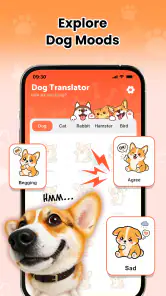
Dog Translator - Human to Pet is an entertainment app designed to simulate communication between people and dogs. You can record or select phrases, choose playful sounds, and present them as if they were translated into dog language. The app is best understood as a fun soundboard and role-playing tool, not a scientifically proven translator capable of interpreting a dog’s thoughts or producing meaningful canine speech.
Can Dog Translator - Human to Pet really translate what my dog is saying?
No. The app cannot genuinely translate barking, whining, body language, or other dog sounds into human language. Its results are generated for amusement and may use entertaining audio effects or preset responses. Dogs communicate through context, posture, facial expressions, vocalizations, and behavior, so owners should not rely on the app to diagnose emotions, health problems, fear, or aggression. Consult a veterinarian or qualified behaviorist when necessary.
Is Dog Translator - Human to Pet free to download and use?
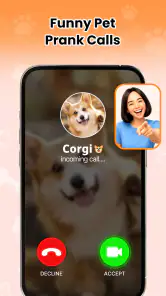
Dog Translator - Human to Pet is free to download. The app’s playful premise is to translate your voice into funny dog sounds, with the option to enjoy humorous prank calls. Check the app’s current purchase details before confirming any optional transaction, and take care if children are using your device. The free download makes it easy to try the entertainment concept without an upfront app price.
What Android version do I need to install Dog Translator - Human to Pet?
On Android, Dog Translator - Human to Pet requires version 7.0 or later. It is a modest compatibility requirement for an app centered on voice and sound effects, but you should still make sure your device’s operating system is up to date and that the app appears as compatible in its download store. The app is also available for iOS, so check the relevant store on your device before installing.
Pros
- Simple interface makes it easy to start recording sounds quickly.
- Includes playful sound effects for entertaining interaction with your dog.
- Offers a variety of dog-related phrases and audio prompts to try.
- Lightweight design should run smoothly on many Android and iOS devices.
- Can encourage owners to spend more time observing their pet’s reactions.
Cons
- It cannot genuinely translate human speech into understandable dog language.
- Results are mainly for entertainment and may not reflect your dog’s needs.
- Frequent sounds could confuse
- annoy
- or overstimulate some pets.
- Some features may require payment or contain advertising interruptions.
- It should not replace professional advice for behavioral or health concerns.
- Category
- Lifestyle
- Version
- 1.0.19