Cyanmoon
- 168.00
- 4.5
- Installs
- 50.00K
- Price
- Free

Screenshots


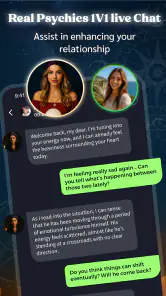
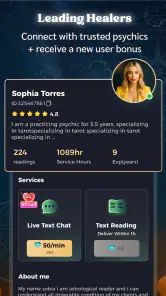
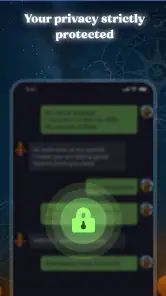
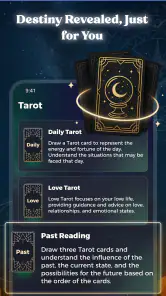
Analysis by Reviewed
I approached Cyanmoon as a lifestyle app for people who enjoy tarot-style reflection and horoscope content, rather than as a tool that should make definite decisions for them. Its store summary points toward love tarot psychic readings and horoscopes, so the most useful way to use it is as a quiet prompt for thinking about feelings, relationships, and personal choices. I found that distinction important from the beginning: the experience can be entertaining and emotionally useful, but it should not replace honest conversations, practical planning, or professional advice.
The app is made by Cyanmoon Team and is free to install, which makes it easy to try without committing money upfront. It is aimed at Teen users and supports Android devices running version 6.0 or later. Its current version is 1.0.20260727, and the app has built a visible audience, with over 50 thousand installs and a 4.5 average from around 852 ratings. Those figures suggest that it has found a steady audience, although popularity alone does not tell me whether its style will suit every reader.
Where the experience can become confusing
Tarot and horoscope readings need the right expectations
The first point where I think users can get stuck is not technical at all. It is the question of what a reading is supposed to do. A tarot or horoscope result can feel personal because it uses familiar themes such as attraction, uncertainty, timing, communication, or emotional distance. That can be helpful when I want to name what I am already feeling. It becomes less helpful when I treat a general reading as proof that another person will act in a specific way.
For that reason, I recommend reading the result twice. On the first pass, I take in the mood and the main message. On the second, I ask which part connects with something I already know and which part is simply broad enough to fit many situations. This small habit makes the app more reflective and less likely to push me toward impulsive choices.
The love-focused angle is likely to appeal most to someone thinking about a relationship, a crush, a breakup, or a difficult conversation. It is less suitable for a person looking for evidence, exact predictions, or a substitute for direct communication. If I need to know whether someone is upset with me, sending a respectful message is more reliable than repeatedly checking readings.
Why a result may feel less personal than expected
Another source of friction is the gap between a user's situation and the broad language common to spiritual entertainment apps. A result may sound meaningful in one moment and vague in another, especially if I approach it with a very specific question. Instead of asking for a guaranteed outcome, I get more value from questions such as, “What am I avoiding in this situation?” or “What should I pay attention to before I respond?”
This approach also prevents a common mistake: opening the app repeatedly until I receive something I like. That turns reflection into reassurance-seeking. I would rather save the first result mentally, step away, and return later with a calmer view. If the same concern remains after the reading has faded, that concern probably deserves practical attention outside the app.
More From Our News Desk

Clash of Clans Is Won Between the Battles

Android Auto Makes the Case for Quieter Car Software

MobiOffice: Transforming Mobile Productivity with Seamless Integration

EA SPORTS FC™ Mobile Soccer: Redefining Mobile Sports Gaming

How Microsoft OneDrive Became a Mobile Productivity Giant

How Google Translate Breaks Language Barriers Effortlessly
The horoscope side can have a similar limitation. A general horoscope is best treated as a short daily prompt, not a complete account of my personality or circumstances. I would not make a major financial, health, education, or relationship decision solely because a reading sounds encouraging or cautionary.
Understanding the free starting point
The app is free, but it includes in-app purchases ranging from $1.99 to $199.99 per item. That is the detail I would pay closest attention to before exploring deeper or additional content. A free download does not automatically mean every part of the experience is free, so I would check the purchase screen carefully and avoid tapping through quickly when I am focused on an emotional question.
My practical rule is simple: use the free experience first, decide whether the tone and usefulness suit you, and only then consider spending. I would also avoid buying anything while upset, lonely, or desperate for a particular answer. A reading app should remain optional entertainment, not become a recurring expense created by uncertainty.
Setup checks that prevent avoidable problems
Start with the device and app version
Before judging the reading experience, I would make sure the Android device meets the minimum requirement of version 6.0. On an older phone, an app may install but still feel slow or unstable if the operating system, available storage, or other background conditions are limiting it. I would close unused apps, restart the device, and make sure there is enough free space before assuming Cyanmoon itself is malfunctioning.
The current version number, 1.0.20260727, is also useful when checking whether I am running the latest available build. If the app behaves differently after an update, I would first close it completely and open it again rather than repeatedly tapping the same screen. A clean restart often separates a temporary loading issue from a persistent problem.
Give the first session a clear purpose
I get a better experience when I decide what I want from the session before opening the app. For example, I might want a short prompt about how I am approaching a conversation, rather than a prediction about whether the conversation will end well. This keeps the reading focused and makes it easier to judge whether the result gave me something useful to consider.
I would also avoid entering highly sensitive personal details into any entertainment service unless they are genuinely required for the experience and I am comfortable with the choice. A reading does not become more trustworthy merely because I provide more private information. Keeping my question simple is usually better for both privacy and clarity.
Check purchase screens with a calm eye
Because the app uses optional purchases, I would slow down whenever a reading leads to an offer. I would look at the displayed amount, confirm whether the item is one-time or recurring if that wording appears, and cancel the screen if I am unsure. I would not assume that a promising message means I need to unlock another answer.
This is especially important for younger users because the content rating is Teen. Families should treat the app like other entertainment involving emotional themes and optional spending: discuss sensible boundaries, keep device purchasing controls in mind, and make sure the person using it understands that a spiritual-style result is not a factual guarantee.
Make the reading useful without overloading it
One of my most useful habits is to write down one practical action after a reading. If the message highlights communication, the action might be drafting a clear text and waiting before sending it. If it points toward uncertainty, the action might be listing what I know, what I assume, and what I still need to ask. This turns a passive result into a small exercise in self-awareness.
I would not run several readings back to back on the same question. Repetition can create contradictory messages and make the app feel unreliable, when the real issue is that I am searching for certainty it cannot provide. One reading followed by a real-world step is a healthier workflow than an endless cycle of refreshes.
Recovering when a session does not go smoothly
When a reading appears incomplete or fails to load
If a result does not appear properly, I would first check whether the problem affects only one session. I would close and reopen the app, confirm that the device has a stable connection if the screen requires online content, and try again later rather than repeatedly pressing buttons. I would also note whether the issue happens at the same point each time, because a repeatable failure is more useful to report than a general complaint that “it does not work.”
Clearing temporary app data can sometimes help with a damaged local session, but I would use that carefully and only after considering whether it could remove saved preferences or local history. I would not uninstall immediately if I care about anything stored inside the app. A restart is the safer first step; reinstalling is a later option when ordinary recovery does not help.
When the result does not match the question
A mismatch does not necessarily mean the app has failed. Tarot and horoscope content is interpretive, so the result may address an emotional pattern rather than the literal wording in my head. I would reread it as a prompt and ask whether it reveals a concern I had not stated clearly. If it still feels irrelevant, I would leave it there rather than paying for another reading simply to force a better answer.
This is also where the app differs from practical alternatives. A notes app gives me complete control over the question and lets me track my own thoughts. A conversation with a trusted friend gives me context and feedback. A calendar or task app turns intentions into reminders. Cyanmoon can spark reflection, but it cannot perform those other roles as well.
When purchases or access create uncertainty
If an optional purchase does not behave as expected, I would avoid buying the same item again immediately. I would check the account and purchase history through the relevant app-store tools, then keep any confirmation details. Repeated tapping can create confusion and potentially lead to duplicate attempts. The safest workflow is to pause, verify, and seek help through the official store support route if necessary.
I would apply the same caution if the app suddenly seems to show less content than before. First I would restart it and check whether the issue is temporary. Then I would review the wording on the relevant screen instead of assuming that an earlier purchase covers every future feature. Clear records and patient checking are more useful than guessing.
When Cyanmoon is not the real cause
Emotional urgency can make any result feel wrong
Sometimes the frustration comes from the situation I bring into the app. If I am waiting for a reply, worried about a breakup, or hoping for a particular outcome, even a thoughtful reading may feel unsatisfying because I want certainty rather than reflection. In that case, changing the question or buying more content will not solve the underlying problem.
I would step away and do something concrete: talk to the person involved, write down the facts, sleep on a message, or ask someone I trust for a grounded opinion. If the issue involves safety, coercion, serious distress, or a major life decision, I would choose appropriate real-world support instead of relying on a psychic-style app.
Device conditions can look like app problems
Slow performance may come from an aging phone, limited storage, a crowded background workload, or an unstable connection. Before blaming Cyanmoon, I would compare its behavior after a restart and in a less busy environment. If other apps are also freezing, the device is the more likely source of the trouble.
On the other hand, if only this app repeatedly fails while other apps work normally, reinstalling or contacting the developer, Cyanmoon Team, becomes more reasonable. I would describe the exact screen, the action that caused the problem, and whether it happens every time. Specific information gives support a better chance of identifying the issue.
Privacy and spending choices remain personal responsibilities
No lifestyle app can decide what level of personal information or spending is comfortable for me. I would keep questions general, avoid treating the app as a confidential counselor, and review purchase prompts before confirming anything. The free entry point is useful, but the wide range of optional purchase amounts means I should set my own boundaries in advance.
I would also be careful about using readings to interpret another person's private thoughts. A result may encourage me to reflect on my own behavior, but it cannot establish what someone else feels. Respectful communication and consent matter more than any prediction, especially when the topic is romance.
My practical verdict after using it as a reflection tool
Cyanmoon works best for someone who enjoys tarot and horoscope themes, wants a quick prompt for thinking about love or emotions, and can keep the experience in perspective. I like the idea of using it as a pause between a feeling and a decision. Its free availability makes experimentation easy, while its Teen rating and optional purchases mean that younger users and families should approach it with sensible boundaries.
The strongest workflow is to ask one focused, open-ended question, read the result once, write down one practical takeaway, and then return to real-world evidence. That method avoids the biggest weakness of this category: using repeated readings to chase certainty. It also makes the app more valuable than simply scrolling through predictions without acting on anything.
I would skip it if I need precise answers, verified relationship information, structured journaling, reminders, or professional guidance. A notes app is better for tracking patterns over time, a trusted conversation is better for understanding another person's perspective, and qualified support is better for serious emotional or personal concerns. Cyanmoon is not a replacement for those options.
My final view is cautiously positive. The app can be a pleasant, low-pressure companion for personal reflection, provided I treat its messages as prompts rather than promises. The main friction comes from managing expectations, checking the device when sessions misbehave, and resisting the temptation to pay for certainty. Used with those limits in mind, Cyanmoon is most worthwhile when it helps me ask better questions about my own choices, not when I expect it to predict someone else's future.
Cyanmoon Frequently Asked Questions
What does Cyanmoon offer, and is it the right kind of app for me?
Cyanmoon is a lifestyle app with the store summary “Love Tarot Psychic Reading&horscope.” Its short description is simply “Cyanmoon,” so check the app’s screenshots and description in the store to see how its tarot, psychic-reading, or horoscope features are presented and whether they suit what you are looking for. Treat readings as entertainment rather than guaranteed predictions or professional advice.
What is Cyanmoon and what can I use it for?
Cyanmoon is an app whose purpose and available tools may vary depending on the version, platform, and developer release. Before downloading, review its official store description carefully to understand whether it matches your needs. Check the screenshots, supported devices, required permissions, update history, and user reviews, since these details provide the clearest picture of its current features and overall experience.
Is Cyanmoon free to download and use?
Cyanmoon is free to download, but it offers in-app purchases ranging from $1.99 to $199.99 per item. The free download does not mean every feature or service is free to use, so review purchase prompts carefully before confirming payment. If you share your device with family members, consider using the store’s purchase controls to help prevent unintended charges.
What permissions does Cyanmoon require?
The permissions requested by Cyanmoon depend on the features included in the version you install. Before accepting them, review whether access to storage, notifications, the camera, microphone, location, contacts, or other device functions is genuinely necessary. Android and iOS both allow you to change permissions later through system settings, so avoid granting access that does not seem relevant to the app’s main purpose.
Does Cyanmoon work on both Android and iPhone?
Compatibility should be confirmed on the official store page before downloading Cyanmoon. Android and iOS versions can differ in design, features, performance, and update schedules, while older phones may not meet the required operating-system version. Check the listed device requirements and available storage, and make sure you download the legitimate version published by the correct developer rather than an unofficial copy.
Pros
- Simple interface makes the app easy to navigate.
- Lightweight design should work well on many Android devices.
- Useful for users seeking a focused
- distraction-free experience.
- Quick access to the main features reduces setup time.
- Regular use can feel convenient for routine tasks.
Cons
- Some features may be limited without an internet connection.
- The app may offer fewer customization options than larger alternatives.
- Older devices could experience occasional slowdowns.
- Privacy details should be reviewed before sharing personal information.
- Support and update frequency may vary by platform.
- Category
- Lifestyle
- Version
- 1.0.20260727