Curio - Antique Identifier
- 258.00
- 4.7
- Installs
- 100.00K
- Price
- Free

Screenshots
Analysis by Reviewed
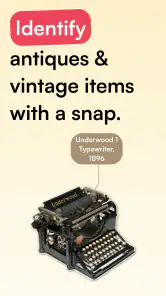
I like apps that turn a small moment of curiosity into something useful, and Curio - Antique Identifier is built around exactly that idea. You photograph an object, use the app to help identify it, and get a starting point for understanding whether the piece might be an antique, vintage item, piece of jewelry, artwork, or coin. In my experience, that makes it most valuable as a quick research companion rather than a final authority.
That distinction matters in a household. A family member may find an old brooch in a drawer, a child may discover a coin in a box of keepsakes, or someone preparing for a move may need to sort through inherited objects. Instead of immediately searching broad image results or guessing from memory, I can use Curio to organize the first step. Its real strength is helping me decide what deserves closer attention.
How Curio fits into everyday household use
A practical first look at objects around the home
The most natural shared-device scenario is sorting. Imagine clearing a relative’s cabinet before a house move. There may be several pieces that look interesting but have no labels: a decorative vase, a pendant, a framed print, or a group of coins. Curio gives each object a focused moment of attention. I would photograph one item at a time, compare the result with what I can see, and then separate ordinary decorative pieces from objects that deserve more research.
This workflow is better than photographing an entire drawer or table at once. A crowded image makes it harder to connect an identification with the correct object, while a close, well-lit picture gives the app a clearer subject. I also find it useful to capture more than the front when the object has markings, a maker’s stamp, a signature, a coin date, or a distinctive back. The first image can suggest a category; the details often determine whether that suggestion is meaningful.
Curio is especially approachable for people who do not already know the vocabulary of collecting. Someone may not know whether a decorative object is a vase, urn, vessel, or reproduction, and that uncertainty can make ordinary web searching frustrating. A picture-based starting point removes some of that pressure. I can begin with what I have in front of me instead of trying to describe it perfectly.
What I would photograph first
For jewelry, I would include the entire item and then a closer view of any hallmark or engraving. For coins, I would photograph both sides and avoid glare. For art, I would show the full frame or canvas before taking a closer image of a signature. For furniture or ceramics, I would include visible construction details, labels, and damage rather than relying on an attractive front view alone.
These extra images are not just a quality tip. They change how responsibly I use the result. An object can resemble a known style while differing greatly in material, age, maker, or condition. Curio can help me notice what to investigate next, but a single attractive photograph should not become the basis for a selling price or a family argument about ownership.
More From Our News Desk

Clash of Clans Is Won Between the Battles

Android Auto Makes the Case for Quieter Car Software

MobiOffice: Transforming Mobile Productivity with Seamless Integration

EA SPORTS FC™ Mobile Soccer: Redefining Mobile Sports Gaming

How Microsoft OneDrive Became a Mobile Productivity Giant

How Google Translate Breaks Language Barriers Effortlessly
Sharing a device without confusing the process
On a shared phone or tablet, I would keep the workflow deliberately simple: one person photographs an item, records the result somewhere separate if needed, and then hands the device to the next person. That prevents a pile of similar images from becoming impossible to sort. If several relatives are helping, a basic naming habit such as “blue brooch,” “desk coin,” or “attic frame” can make later discussion much easier.
Curio is a good fit for collaborative looking, but I would not treat it as a complete household inventory system. Its purpose is identification, not replacing a written record of who owns an item, where it was found, or what condition it was in. For valuable family possessions, I would keep those details in a shared note or spreadsheet and use the app as one part of the research process.
Setting expectations before anyone relies on a result
The app is free to install, which makes it easy to try during a sorting session without committing money at the outset. It is listed for Everyone, so the basic concept is accessible across a household with different ages. At the same time, the presence of optional in-app purchases means I would explain to younger users that free access and paid options are not necessarily the same thing.
That conversation is worth having before passing over a shared device. A child might reasonably assume that tapping a button simply continues the activity, while an adult may want to review any purchase prompt first. I would keep the person responsible for the device involved whenever the app presents an upgrade or payment choice. This is not a criticism of Curio specifically; it is sensible practice for any free app that offers paid items.
I also prefer to establish a boundary around what the app is being used for. “We are identifying objects for research” is a safer expectation than “the app will tell us exactly what this is worth.” That wording helps children and adults understand that visual recognition is only the beginning, especially when an item may be sentimental, rare, damaged, restored, or reproduced.
Coordinating research between family members
One useful household routine is to divide the work by task rather than having everyone repeat the same search. One person can photograph objects, another can read markings, and another can compare the suggested category with reference material from museums, auction archives, or specialist communities. Curio works well at the front of that chain because it can help turn an unknown object into a more specific research question.
For example, instead of asking, “What is this old metal thing?” I might end up asking, “Is this a Victorian-style brooch, and does the mark on the back indicate a particular maker?” That is a much better question for further research or a professional appraiser. The app’s value increases when I use its result to narrow the investigation rather than ending the investigation there.
When coordinating remotely, I would send the original photograph along with the object’s measurements, material clues, provenance, and visible damage. A picture alone cannot communicate weight, texture, construction quality, or whether a finish is original. Those details often matter more than visual similarity when the family is deciding whether to insure, sell, donate, or preserve something.
Age, trust, and responsible interpretation
The Everyone rating makes Curio suitable as a general-interest discovery tool for a broad household. I can imagine it being enjoyable for a younger person learning about coins or family keepsakes, particularly when an adult turns the result into a small research exercise. The educational value comes from asking why the suggestion seems plausible and what evidence would confirm or challenge it.
I would still supervise important decisions. A young user should not be left to decide that an object is valuable, discard something based on an uncertain identification, or contact a buyer without an adult checking the situation. The app can encourage curiosity, but trust should come from evidence and responsible people, not from a confident-looking result on a screen.
The same caution applies to older relatives who may be less comfortable with image-based tools. I would show them exactly what I am doing and explain that the result is an estimate or lead, not a formal certificate. That keeps the process respectful. It also avoids a common household problem where one person feels that technology has overruled their personal knowledge of an heirloom.
Where it beats ordinary searching
The usual alternative is a web search based on a description. That works well when I know the right terms, but it is slow when I do not know the object’s category. Curio is more convenient at that first stage because I can begin with an image. It is also less intimidating for casual users who would otherwise abandon the search after trying several vague phrases.
General image search has a different advantage: it exposes me to many visual comparisons and can be excellent for spotting similar designs. Specialist forums and professional appraisers are stronger when authenticity, provenance, condition, or market value matters. I see Curio sitting between those options. It is faster than starting from a blank search box, but less authoritative than a qualified human assessment.
That trade-off is important for coins and jewelry. A visually similar item may have a different metal, mint mark, gemstone, edition, or alteration. For art, a signature that looks familiar does not prove authorship. For antiques, age and originality can be difficult to judge from a photograph. I would use Curio to decide which questions to ask next, then move to specialist sources when the consequences are financial or sentimental.
What the current app details suggest
Curio comes from Dionysus Labs, LLC, and its current version is 1.8.4. It is a lifestyle app rather than a dedicated professional valuation platform, which matches how I think it should be used: casually, practically, and with room for independent verification.
The app has earned a 4.7 average from around 2.8 thousand ratings, with over 100 thousand installs and 258 written reviews. Those figures suggest that the concept has found an audience, but they should not replace my own judgment about whether the identification is reliable for a particular object. Reviews can tell me that people enjoy the experience; they cannot authenticate an heirloom sitting on my table.
The minimum operating-system requirement is Android 7.0, so compatibility is relatively broad for Android users with older devices. I would still test it on the actual shared device before planning a long sorting session. Camera quality, lighting, and screen size can affect the experience more than the app’s age requirement, especially when the object has tiny markings.
Small habits that make the results more useful
My first habit would be to clean the camera lens and use indirect daylight. Bright reflections can hide hallmarks and coin details, while a dark room can flatten texture. I would place the object against a plain background and keep the camera steady. These are simple changes, but they make the image more informative without requiring special equipment.
My second habit would be to photograph evidence before polishing anything. Cleaning silver, removing dust from a frame, or trying to improve an old finish can alter the surface and remove clues. It can also reduce the object’s historical character. I would document its original state, then decide separately whether cleaning is appropriate.
My third habit would be to keep uncertainty visible in the household notes. Instead of writing “authentic antique vase,” I would write “possibly an older vase; check base mark and material.” That wording prevents a tentative result from becoming a fact as the item passes between relatives. It is a small discipline that protects both family relationships and later research.
When I would choose something else
I would skip Curio as my main tool if I already had a clear maker’s mark and needed specialist documentation. In that situation, a focused reference book, museum collection, established collector community, or professional appraiser would likely provide more meaningful evidence. I would also avoid relying on it alone when preparing an insurance schedule, settling an estate, or negotiating a high-value sale.
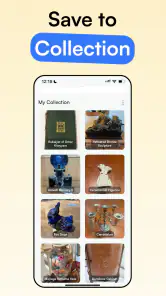
It may also be the wrong choice for someone who wants a complete catalog with ownership records, purchase history, condition reports, and long-term collection management. Curio’s appeal is the quick visual question, not the administrative side of collecting. A dedicated inventory tool would be better for a serious collection, while a general camera and notes app may be enough for someone who only wants to remember where an object came from.
The optional purchases are another reason to set expectations. The app is free, but some items can cost from $4.99 to $59.99 each. I would not begin a family project assuming every useful step is included without charge. I would first see whether the free experience answers the household’s basic need, then let the account holder decide whether any paid option is worthwhile.
My household verdict
I recommend Curio for families, roommates, and curious individuals who want a friendly first pass at unidentified objects. It is especially helpful during decluttering, inheritance sorting, flea-market browsing, or a casual learning activity with a child. The picture-first approach lowers the barrier to research, and the app can turn an unknown object into a sensible list of follow-up questions.
I would not present it as an app that settles authenticity or value. The best results come from combining a careful photograph with markings, provenance, measurements, and independent checking. Used that way, it saves time without encouraging overconfidence. It gives a shared household a common starting point, while leaving important decisions to evidence and qualified people.
For me, the deciding question is simple: do you want a quick visual guide for the first stage of identifying antiques, vintage pieces, jewelry, art, and coins? If yes, Curio - Antique Identifier is an easy app to try. If you need formal valuation, collection management, or legal certainty, I would choose a specialist alternative and use Curio only as an initial aid.
Overall, I see Curio as most successful when it stays in that honest middle ground. It makes household discovery more organized and less intimidating, works well as a conversation starter across ages, and encourages better research when used carefully. Its limitations are not a reason to dismiss it; they are the reason I would keep a clear boundary between an interesting identification and a confirmed conclusion.
Curio - Antique Identifier Frequently Asked Questions
Is Curio - Antique Identifier free to download, and what purchases are available?
Curio is free to download, so you can try the app without paying upfront. It also offers in-app purchases, with listed items ranging from $4.99 to $59.99. Check the purchase details in your app store before confirming anything, and review any recurring payment terms carefully. This is especially useful if you only need to identify an occasional object rather than use the app regularly.
What devices can I use Curio - Antique Identifier on?
Curio is a lifestyle app available for Android and iOS users. On Android, the listed minimum operating-system requirement is version 7.0, so check your device’s software version before downloading. The app is rated for Everyone, making its stated age category broad, though parents may still wish to review any app-store guidance and supervise children’s use of device features such as the camera.
What is Curio - Antique Identifier used for?
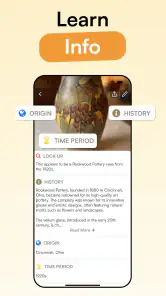
Curio - Antique Identifier is designed to help users learn more about antiques, vintage objects, collectibles, artwork, furniture, and other potentially historical items. You can typically provide a photograph or visual details of an object, and the app offers an estimated identification, background information, and related context. It is best treated as a convenient research starting point rather than a definitive professional appraisal service.
How accurate is Curio when identifying antiques and collectibles?
The app can be useful for recognizing common styles, materials, makers, and object categories, but its results may vary depending on the quality of the image and how distinctive the item is. Similar antiques can have very different values, and hidden marks or restoration may not be visible in a photo. Always verify important findings with catalogs, auction records, museums, or a qualified appraiser.
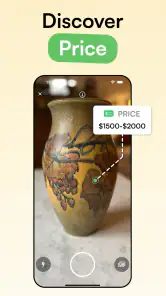
Can Curio tell me how much my antique is worth?
Curio may provide general information that helps you understand an object’s possible market category, age, or collectible appeal, but users should not assume that any displayed estimate represents a guaranteed selling price. Antique value depends on authenticity, condition, provenance, rarity, demand, and location. For insurance, inheritance, or high-value sales, obtain an independent valuation from a certified specialist.
Pros
- Identifies many antiques from a quick photo
- Useful reference for unfamiliar decorative objects
- Helps estimate an item’s historical context
- Clean interface makes scanning straightforward
- Convenient for building a personal collection record
Cons
- Results may be inaccurate for rare or poorly photographed items
- Valuations should not replace advice from a qualified appraiser
- Some features may require a paid subscription
- Requires clear images and good lighting for best results
- Database coverage can vary by object type and region
- Category
- Lifestyle
- Version
- 1.8.4