CryptoRush: Crypto Simulator
- 612.00
- 4.6
- Installs
- 5.00M
- Price
- Free

Screenshots

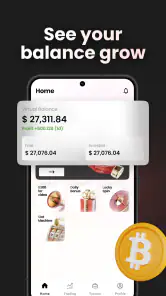
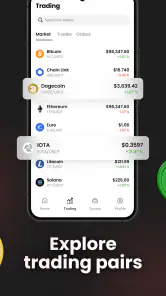
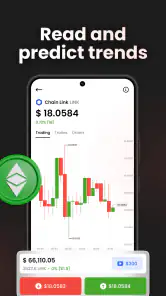


Analysis by Reviewed
Learning how trading decisions feel in motion is difficult when every mistake has a financial consequence. CryptoRush: Crypto Simulator takes a safer route by putting the learner in a simulated market environment rather than asking for real money. I found it most useful as a practice space: a place to test how I react to price movement, entries, exits, and changing confidence before treating trading as anything more serious.
This is a free business app from CryptoRush - Trading Academy, aimed at adults and rated Mature 17+. Its audience is fairly clear: curious beginners, people building a repeatable trading routine, and experienced users who want to rehearse decisions without putting capital at risk. It is not a wallet, a brokerage account, or a replacement for research. That distinction matters, because the app can help with process, but it cannot make simulated results equal to live-market results.
The app has attracted a substantial audience, with an average rating of 4.6 from around 150 thousand ratings and more than 5 million installs. It launched on September 2, 2025, and the current version is 1.9.4 for devices running Android 8.0 or later. Those figures suggest that the concept is resonating, but I would still judge it by how well it fits my learning habits rather than by popularity alone.
Building a dependable practice routine
A simple baseline workflow works best
My first recommendation is to avoid treating CryptoRush as a prediction game. I get more from it when I begin each session with one narrow question: am I practicing an entry, testing an exit, or examining how I handle a losing position? That small change keeps the session from becoming random tapping. A simulated market is valuable only when I can later explain why I made a decision.
A practical routine starts with observing the available market movement before acting. I look for the general direction, note whether the price is moving smoothly or erratically, and decide what would invalidate my idea. Then I make the simulated trade and record the reason in plain language. Even a short note such as “entered after a sustained move, exited when momentum weakened” is more useful than celebrating a win without understanding it.
The important habit is separating the quality of a decision from its immediate result. A profitable simulated trade can still be poorly planned, while a losing one can follow sensible rules. CryptoRush gives me a low-pressure setting for practicing that separation. If I only repeat actions that happened to work, I am training luck-seeking behavior instead of trading discipline.
I also recommend ending a session after a defined number of decisions or a clear learning objective. Without that boundary, simulated trading can encourage overactivity because there is no real financial pain to slow me down. The absence of monetary risk is the app’s biggest educational advantage, but it is also a weakness if I use it to chase constant action.
Who gets the most from the simulator
Newcomers are the obvious audience. Someone who has heard terms such as trend, entry, exit, and risk but has never applied them can use the simulator to make those ideas concrete. It is less intimidating than opening a live trading account, and the free price removes an initial barrier to experimentation. I would particularly recommend it to a learner who wants to discover whether the decision-making process is interesting before spending money on courses or tools.
It can also suit an experienced trader who wants to rehearse a checklist. For example, I can practice waiting for a planned condition instead of entering because a move looks exciting. That kind of repetition is useful when I am trying to reduce impulsive behavior. The app is not only for absolute beginners; its value depends on whether I bring a clear exercise to it.
On the other hand, people looking for real execution, live account connectivity, investment research, or a way to earn money should skip it. A simulator cannot reproduce every part of actual trading, including emotional pressure, changing liquidity, order execution concerns, and the consequences of losing personal funds. Anyone who expects a direct path from a successful practice session to reliable income will be disappointed.
Settings deserve attention before speed
Before trying to trade quickly, I would inspect the app’s available settings and simulation controls carefully. The useful principle is simple: choose conditions that make the exercise understandable, then keep them consistent while comparing results. If I change several options between sessions, I cannot tell whether my improvement came from better decisions or from a more favorable setup.
Settings are especially important for beginners because a comfortable simulation can create false confidence. I prefer starting with a straightforward environment, learning how the controls respond, and only then adding complexity where the app allows it. The goal is not to make the screen look busy. The goal is to make each action easy to interpret after the session.
I also check whether visual elements, notifications, or other available preferences help me concentrate rather than interrupt me. A short practice session is easier to review when the interface does not pull my attention toward unnecessary activity. This is one of the less obvious advantages of treating the app like a training tool: I am configuring a repeatable workspace, not merely opening it whenever I feel curious.
Another useful approach is to keep a personal record outside the app. I write down the scenario, the reason for entering, the intended exit, and whether I followed the plan. This does not require a complicated spreadsheet. The record exposes patterns that a single result can hide, such as entering too early, changing a decision midway, or taking profits without a consistent reason.
Faster patterns without careless clicking
Once the baseline routine feels familiar, I can make the process faster by reducing decisions that do not matter. I prepare the rule before interacting with the market: what am I waiting for, what action will I take, and what will make me stop? This is more effective than trying to react to every movement. Speed should come from preparation, not from pressing controls rapidly.
A repeatable session can follow three passes. First, observe without acting. Second, execute only the setup I planned. Third, review the result and the behavior behind it. The separation prevents the common mistake of turning one uncertain observation into a chain of impulsive trades. It also makes the simulator useful for comparing habits across several sessions.
Shortcuts, where the app provides them, are worth learning only after I understand the standard controls. A shortcut can save time, but it can also hide a misunderstanding if I use it before knowing exactly what action it triggers. I would learn one faster interaction at a time, test it in a low-stakes simulation, and then include it in the routine only if it reduces friction without reducing attention.
One of my favorite exercises is the “no chase” session. I decide in advance that I will not enter after a move has already become emotionally compelling. If the planned condition does not appear, I do nothing. That sounds unproductive, but it teaches patience more effectively than filling every session with trades. CryptoRush is particularly suitable for this exercise because the cost of waiting is mainly lost practice time rather than lost capital.
Another exercise is to replay the same basic idea under different market behavior. I compare a smooth move with a sudden reversal and ask whether my rule still makes sense. This highlights a trade-off that generic simulator descriptions often miss: a strategy can feel clear in one type of movement and become ambiguous in another. The app is useful when I use it to discover that boundary instead of assuming every result proves the strategy.
Where simulation stops being realistic
The central limitation is that simulated success does not carry the same emotional weight as a real loss. I may follow my rules perfectly when nothing important is at stake, then behave differently when money is involved. CryptoRush can help me build a process, but it cannot fully test my tolerance for financial uncertainty.
There is also a danger in focusing too heavily on visible outcomes. A simulator may make quick decisions feel rewarding, while real trading involves costs, execution conditions, and practical constraints that are not represented by a simple practice environment. I therefore treat every result as evidence about my behavior, not as proof that a future live trade will work.
Advanced users should be especially cautious about overfitting. If I repeat a scenario until I find a sequence that looks perfect, I am studying a favorable story rather than testing a robust method. A better approach is to define the rule first, apply it across varied situations, and accept that some sessions will be inconclusive. The app supports rehearsal; it does not remove uncertainty.
The age rating is another useful reminder about audience. This is not an entertainment app for children, and I would not present it as a harmless game simply because it uses simulation. Trading concepts can lead to real financial decisions later. A responsible user should keep the practice stage separate from any decision to open a live account, and should never treat the absence of simulated losses as evidence that real risk is manageable.
How it compares with familiar alternatives
Compared with reading articles or watching trading videos, CryptoRush gives me a chance to act and observe the consequences of a decision. That makes it better for learning the mechanics of a personal routine. Written material remains stronger for explaining concepts in depth, while video lessons can demonstrate a process more clearly than a blank practice session. I see the simulator as the place where those ideas are tested, not where all education begins and ends.
Compared with a live exchange or brokerage app, the simulator is safer and less demanding, but also less complete. A live platform is necessary for real orders, real account management, and the emotional reality of financial exposure. It is a poor first step for someone who does not yet know how they make decisions. CryptoRush is the better starting point for rehearsing rules, provided I understand that practice cannot reproduce every live condition.
Compared with a paper journal alone, the app adds interaction and immediate practice. A journal is better for long-term reflection, especially when I want to identify recurring mistakes across weeks or months. The strongest combination is using CryptoRush for the simulated decisions and a simple journal for the reasoning behind them. That pairing turns isolated activity into a learning loop.
Its free access is another practical advantage over paid education products, although free does not automatically mean complete. I would choose it when I want hands-on practice without committing money. I would choose a more specialized alternative when my main need is detailed market analysis, portfolio tracking, or live execution rather than simulated skill-building.
Small habits that improve the learning value
I would begin with one market idea at a time instead of trying to master every visible option. For instance, I might spend several sessions practicing exits and refusing to alter them emotionally. After that, I could focus on entries. Narrow practice makes mistakes easier to classify, and it prevents the interface from becoming a distraction.
I also avoid judging myself by a single session. A better measure is whether I followed the plan, recognized uncertainty, and reviewed the decision honestly. This is a non-obvious strength of a simulator: it lets me reward good process even when the result is unfavorable. That mindset is difficult to build if every exercise is treated as a contest.
For an everyday scenario, imagine someone commuting home after work and wanting to learn without risking savings. A short session can involve checking the simulated movement, waiting for one predefined condition, making one decision, and writing a brief review before putting the phone away. That is more sustainable than opening the app repeatedly throughout the evening and reacting to every change.
I would also set a personal stop rule for frustration. If I notice that I am increasing activity simply to recover from a disappointing result, the educational value has already dropped. Closing the app at that point is not failure; it is practice in controlling behavior. The simulator is most useful when I use its safety to examine habits, not to avoid limits.
My verdict for learners and returning traders
After using CryptoRush: Crypto Simulator, I see it as a focused practice companion rather than a complete trading education platform. Its simulated market environment makes it approachable, its free access lowers the barrier to trying it, and its business-oriented purpose is clear. I like that it gives beginners a place to turn abstract trading language into decisions they can review.
The app earns its place on my phone when I use it with a written plan, consistent settings, and a clear stopping point. The most valuable workflow is not the fastest one. It is the one I can repeat, explain, and improve. Checking settings first, learning controls before shortcuts, and separating observation from action all make the practice more meaningful.
I would recommend it to adults who want to explore trading skills without immediately exposing money to the market. I would not recommend relying on it alone for investment decisions, nor would I suggest it to someone seeking live trading tools or guaranteed results. Its limits are real, but they are manageable when I keep the app in its proper role.
My bottom line is that CryptoRush is best used as a disciplined rehearsal space, not as a promise of trading success. If you are willing to review your reasoning, repeat the same exercises, and accept that simulated results have boundaries, it can be a useful first step. If you want execution, research, or real financial outcomes, a different category of app will serve you better.
Pros
- Simple interface makes crypto concepts easy for beginners to explore.
- Lets players experiment with market strategies without risking real money.
- Short sessions make it convenient for quick gameplay.
- Simulated portfolio tracking adds a sense of progression.
- Useful for understanding basic volatility and investment timing.
Cons
- Market behavior may feel simplified compared with real cryptocurrency trading.
- In-game success can encourage unrealistic expectations about crypto profits.
- Limited depth may disappoint experienced traders seeking advanced analysis.
- Frequent price swings can make progress feel overly dependent on luck.
- Some features or upgrades may be restricted behind ads or purchases.

- Category
- Business
- Version
- 1.9.4