Dragon City: Mobile Adventure
- 627.65K
- 4.7
- Installs
- 100.00M
- Price
- Free

Screenshots



Analysis by Reviewed
I like Dragon City: Mobile Adventure most when I treat it as a patient collection-and-planning game, not a race to own every dragon. Its appeal comes from watching a small floating settlement grow into a busy home for a changing roster, then taking that roster into battles. That loop is easy to understand, but the long-term fun depends on whether you enjoy checking in, making choices with limited resources, and letting collection goals unfold over time.
A good fit for a flexible, ongoing game
One useful question before starting is whether I want a game that remembers where I left off or one that gives me a clean beginning and ending each time I play. This is clearly the first kind. I can make a little progress in a short visit, then return later to another part of the island or roster. That flexibility suits spare moments, but it also means the game’s sense of achievement comes from a series of small decisions rather than one dramatic finish.
For example, if I have a few minutes while waiting for an appointment, I can decide whether my next useful step is improving the island, setting a breeding goal, or preparing dragons for a fight. I don’t need to turn that pause into a full session. The practical tip is to pick that next step before tapping around: a clear purpose makes the visit feel satisfying, while switching between every available activity can make a short break feel oddly busy.
Building Your Dragon Empire
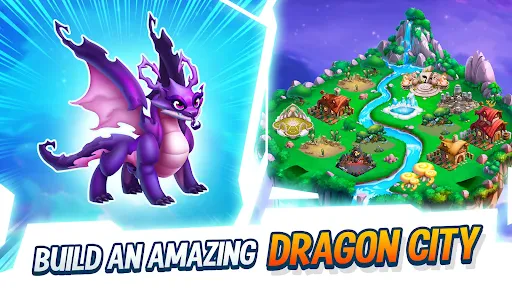
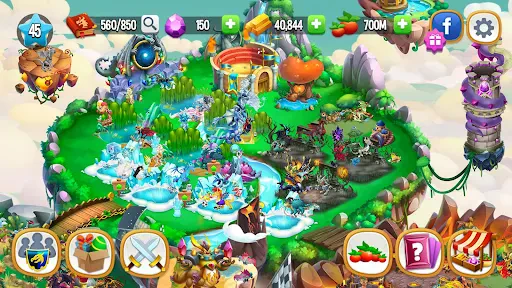
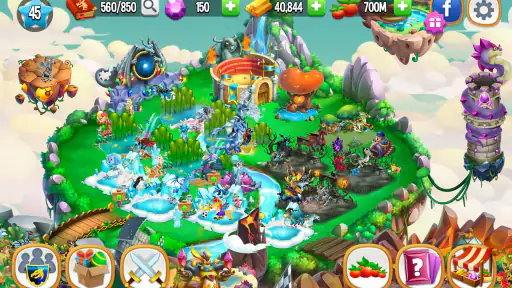
From the moment I started playing, I was hooked on building my own dragon empire. You begin on a floating island where you can construct habitats, farms, and other essential buildings. The game walks you through the basics, making it easy for newbies to get the hang of things. It’s super intuitive, and before you know it, you’re expanding your territory and hatching new dragons.
That city-building layer gives each decision a practical consequence: space and resources are part of the puzzle, rather than decoration around the dragons. I found it useful to pause before placing or upgrading buildings and think about what I actually need next. If I’m short on room, adding another habitat may matter more than chasing a new breeding result; if progress feels slow, tending to the city’s basic economy can be a more reliable step than starting several goals at once. The game is at its best when I balance those small priorities instead of tapping through everything on autopilot.
Dragon Breeding
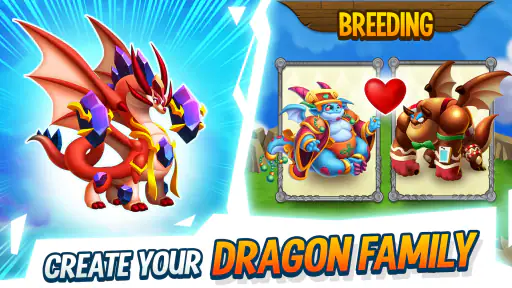
The real fun begins with breeding. There are over a thousand dragons to collect, each with unique elements and rarities. Combining different types of dragons to create new ones is like a thrilling science experiment. I spent hours trying different combos to unlock rare dragons. The excitement of finally getting that elusive dragon is unmatched!
For me, breeding works best as a goal-setting tool, not a guarantee of a particular result. I pick a dragon I’d like to pursue, then use the waiting time to manage the island or work on a different objective. That makes an uncertain outcome feel less like wasted time. It also helps to resist treating every rare discovery as essential: collecting is satisfying, but trying to complete everything can turn a relaxing routine into a checklist. Players who like gradual progress will probably enjoy this loop more than anyone expecting constant, immediate rewards.
More From Our News Desk

Weather by Xiaomi Review: Clear at a Glance, Less Clear Up Close

X Under Pressure: Can It Recover When Posting Goes Wrong?

Clash of Clans Is Won Between the Battles

Android Auto Makes the Case for Quieter Car Software

MobiOffice: Transforming Mobile Productivity with Seamless Integration

EA SPORTS FC™ Mobile Soccer: Redefining Mobile Sports Gaming
Making Progress Without Turning It Into a Chore
A practical way to keep the game manageable is to choose one priority for each visit. I might focus on improving the island’s capacity, tending to its economy, or advancing one breeding goal, rather than trying to push every system forward at once. That small bit of planning is especially useful when I only have a few minutes. It also makes it easier to notice which part of the game I actually enjoy, instead of measuring a session by how many tasks I cleared.
The collection can create its own pressure: there is always another dragon to pursue, and rarity can make a goal feel more important than it needs to be. I’d treat discoveries as bonuses rather than obligations. If a breeding result isn’t what I hoped for, I can still use the visit to make a building decision or prepare for battles. That approach keeps the uncertain parts from taking over the whole experience.
Battles and Strategy
What’s a dragon game without some fiery battles? Dragon City: Mobile Adventure doesn’t disappoint with its combat system. You can pit your dragons against others in the PvP arenas to climb the leaderboards. Strategy is key here – knowing which dragons to use and when can make all the difference. Plus, the rewards are pretty sweet, giving you more resources to grow your dragon city.
The battles give the collection a reason to matter beyond appearance. I’d avoid sending the same small group into every fight without considering the opponents: a broad roster gives you more choices, while focusing development on a few favorites can make those dragons feel dependable. That trade-off is useful to keep in mind if you prefer planning over collecting, or vice versa. The competitive side may appeal to players who enjoy testing their decisions against others, but it is less compelling if you only want a quiet, self-directed building game.
Another cool feature is the alliances. Joining an alliance lets you chat with other players and participate in exclusive events. It adds a social element to the game, which I found really engaging. It’s always more fun when you can share tips and strategies with fellow dragon enthusiasts.
That social layer is optional in spirit, even if it can make the experience feel fuller. I’d join an alliance for conversation and shared activity, not because I expect every player to want a busy chat or a competitive commitment. If you prefer playing alone, the island-building and collecting still give you a personal project; if you enjoy comparing progress and trading advice, other players can make the long-term routine feel less solitary.
Graphics and Sound
The graphics in Dragon City are vibrant and detailed, making each dragon look distinct and alive. The animations are smooth, and the sound effects complement the gameplay perfectly. Whether it’s the roar of a dragon or the ambiance of your growing city, the audio-visual experience is top-notch.
Presentation also helps when the island becomes crowded with activities. The colorful designs make it easier to enjoy browsing your collection, and the dragons’ different looks give each new addition a little personality. Still, the visual charm is not the main reason I’d recommend the game: if you’re not interested in managing habitats, pursuing breeding goals, or building a battle team, polished creatures alone may not keep you invested.
How It Fits Into an Everyday Routine
In practical terms, I see this as a better fit for short check-ins than for a single long session every day. A realistic routine might be to open it during a break, collect what the city has produced, make one or two building or breeding decisions, and return later when there is a new reason to act. The main trade-off is that a game built around ongoing growth can feel slow if you want every action to produce an immediate payoff. Patience is part of the design, so I would skip it if waiting between goals frustrates you or if you want a story-led adventure with a clear ending.
This rhythm is also why I wouldn’t recommend trying to keep up with every available activity. A quick visit can be satisfying when I have a clear next step, but less so if I open the game without knowing what I want to do and end up hopping between prompts. I get more from it by treating it as a small ongoing project than as a game that must occupy a whole evening. If I want a focused session with a definite finish, a short puzzle or action game is a better match.
Who Will Enjoy the Long Game
Compared with many mobile simulation games that focus mainly on decorating or running one business, this one ties island management to breeding and team battles. That combination is its distinctive strength, but it also means there are several systems competing for attention. I’d recommend it to players who enjoy collecting, gradual optimization, and a light social element. Someone seeking a more direct puzzle or action game would likely be happier with a title centered on quick, self-contained rounds instead.
It also suits people who like having several kinds of progress to choose from. On a day when I don’t feel like thinking about battles, I can focus on my island; when I want a more competitive objective, I can turn to the arena. The flexibility is valuable, but players who prefer one clearly defined goal may find the mix scattered. If your favorite part of a simulation is arranging a space purely for looks, a decoration-first game may be more satisfying; here, building choices also serve the broader collection and battle loop.
For someone choosing between this and a simpler creature-collection game, the key difference is how much the island matters. Collecting is only one strand: habitats and resources support the roster, while battles give it a use. That connected structure creates more decisions than a game centered mostly on discovering and viewing creatures. It is a strength if I like managing several linked goals, but a drawback if I want collection without the extra planning.
I’d also think about how I feel about social play before joining an alliance. It can be a nice way to exchange advice and add shared activity, but I wouldn’t join simply to make progress feel mandatory. If I’m looking for a quiet solo routine, I can leave that layer aside; if I enjoy a community around a long-running game, it gives the island a more social dimension. Either way, I’d keep my own pace rather than treating other players’ progress as a deadline.
It is free to play, with optional in-app purchases ranging from $0.99 to $149.99 per item. I’d approach those purchases as convenience or collection spending rather than a requirement to enjoy the basic loop, and set a personal limit before browsing them. The game is rated Everyone, which makes its colorful fantasy setting broadly approachable, though younger players may still need help understanding optional purchases. It comes from Social Point, has a 4.7 average from around 11 million ratings, and has passed 100 million installs. Those numbers show how widely it has found an audience, but my recommendation still comes down to whether its slow-build rhythm suits you.
Because purchases are optional, I’d decide in advance whether I’m happy to progress at the game’s natural pace. That makes it easier to avoid spending impulsively when a particular dragon or upgrade catches my eye. For families, the Everyone rating is reassuring about the general tone, but it doesn’t replace a conversation about paid items. For adults, the same rule helps keep a free game from becoming an unplanned expense.
Released in 2013, the game is still receiving updates; version 25.7.1 is the current release, and it runs on Android 6.0 or later. That continuing version history is reassuring for someone starting now, though newcomers should expect an established game with plenty to explore rather than a small, quick tutorial experience. I’d give it a try if raising a varied dragon roster and steadily improving a floating city sounds relaxing. If you want a tightly paced campaign, minimal resource management, or no purchase prompts at all, another kind of mobile game may suit you better.
As a simulation game, it stands apart from titles that ask you to manage a single shop or concentrate on decorating one compact space. Its dragons make collection a central purpose, while the island and battles give that collection practical uses. That breadth gives me more ways to stay interested, but it also asks for more patience and attention than a simple idle experience. I’d choose it when I want a continuing world to dip into, not when I’m looking for a complete story or a self-contained challenge.
My clearest recommendation is for players who like seeing small choices accumulate: a better use of space, a breeding attempt that supports a longer goal, or a team that feels more considered than a lineup picked at random. It is less suited to anyone who dislikes waiting, wants every session to resolve neatly, or would rather avoid managing resources and optional purchases altogether. The appeal is not that every moment is fast; it is that several strands of progress give me something worthwhile to return to.
In conclusion, Dragon City: Mobile Adventure is a fantastic blend of strategy, collection, and social interaction. It’s easy to lose track of time while playing, thanks to its addictive gameplay and the endless possibilities it offers. Whether you’re a casual gamer or a hardcore strategist, there’s something here for everyone. So why not dive into the world of dragons and see what kind of master you can become?
Dragon City: Mobile Adventure Frequently Asked Questions
Is Dragon City: Mobile Adventure suitable for casual play sessions?
Dragon City combines collecting and developing dragons with managing a dragon utopia and taking part in battles. That mix makes it a game you can return to for different activities rather than one built around a single task. If you enjoy gradually building a collection and checking in on its development, it may suit your routine; players seeking only brief, self-contained challenges may prefer a different style.
Can I play Dragon City on iOS as well as Android?
Dragon City: Mobile Adventure is available as a mobile game for Android and iOS players. Before downloading, check that your device meets the requirements shown for its platform and has enough free space for installation and future updates. If you are switching devices, make sure you use the appropriate store for your phone or tablet and review the game’s current compatibility details there.
Does Dragon City have social features or multiplayer elements?
Dragon City includes social interaction alongside its dragon-collection and simulation activities. Battles can involve other players as well as AI-controlled opponents, so the game is not limited to managing your island alone. If interacting with other players is important to you, this provides an additional dimension to the experience; the game’s broader focus still includes caring for dragons and developing your collection.
Can I make progress without spending money in Dragon City?
Dragon City is free to download and play, and you can begin without paying. Optional in-app purchases are offered, but they are not described as necessary to progress. As with any free-to-play game, spending can be tempting if you want to speed up or supplement your experience, so consider setting purchase controls that match your budget, especially on a shared device.
Is Dragon City mainly a strategy game or a simulation game?
Dragon City is a simulation game that also includes strategy elements. You manage a dragon utopia, care for and develop dragons, build a collection, and take part in battles. That combination gives you several ways to engage with the game rather than focusing only on combat or construction. It may appeal most if you enjoy both gradual management and making choices about how to develop your dragons.
Pros
- Engaging gameplay with diverse dragons.
- Frequent updates with new events.
- Social features enhance community play.
- Visually appealing graphics and design.
- Strategic elements keep players hooked.
Cons
- In-app purchases can be pricey.
- Requires stable internet connection.
- Energy system limits playtime.
- Some features take time to unlock.
- Ads can be intrusive at times.
- Category
- Simulation
- Version
- 25.7.1