Charmed : Swipe Local Singles
- 529.00
- 4.5
- Installs
- 100.00K
- Price
- Free

Screenshots






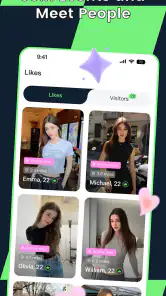

Analysis by Reviewed
I usually think of dating apps as intensely personal tools, so I was curious to see how Charmed fits into a household where phones, tablets, or conversations are shared. This is a social app for discovering nearby singles and starting connections through swiping, but its real appeal depends on keeping the experience clearly separated from other people using the same device. In my experience, that boundary matters just as much as the matching concept itself.
Charmed is free to download, carries a Mature 17+ age rating, and comes from PixelDynamics Technolog Limited. It feels aimed at adults who want a direct, location-oriented way to browse potential connections rather than a broad social network filled with unrelated posts. The central idea is easy to understand: look through profiles, decide whether someone interests you, and use a mutual interest as a starting point for conversation.
That simplicity is useful when you want to get moving without learning a complicated interface. It also means the quality of your experience depends heavily on how thoughtfully you use the app. A swipe is only a first filter, not evidence that two people are compatible, trustworthy, or ready to meet. I found the best results came from treating the app as an introduction tool rather than as a complete dating solution.
How Charmed Works in a Shared-Use Household
A private app needs a private routine
The most realistic household scenario is not that several people actively use one dating account together. It is that one person has a shared phone, lends a tablet to a partner or roommate, or leaves a device in a common area. In that situation, Charmed should be treated like any other personal social app: open it only when you have the device to yourself, and avoid leaving the profile or conversations visible when you hand the device over.
This is especially important because dating profiles can reveal more than a name. Photos, location-oriented discovery, personal preferences, and conversations can all expose information that another household member did not intend to see. I would not use the app casually on a family tablet simply because it happens to be available. A private account deserves a private screen, even when everyone in the home trusts one another.
For a shared-device household, the practical workflow is straightforward. I would finish a browsing session, leave the app, and return the device before starting another activity. I would also avoid discussing a new match in front of children or younger relatives, since the app is explicitly intended for mature users. These are not glamorous tips, but they prevent awkward misunderstandings and protect the dignity of everyone involved.
Charmed can still fit into a busy home. Someone might use it during a quiet commute, after work, or while taking a personal break, then put the phone away before household coordination begins. The app does not need to become a household activity to be useful. In fact, keeping it separate is one of the healthiest ways to use it.
More From Our News Desk

Clash of Clans Is Won Between the Battles

Android Auto Makes the Case for Quieter Car Software

MobiOffice: Transforming Mobile Productivity with Seamless Integration

EA SPORTS FC™ Mobile Soccer: Redefining Mobile Sports Gaming

How Microsoft OneDrive Became a Mobile Productivity Giant

How Google Translate Breaks Language Barriers Effortlessly
Do not confuse shared logistics with shared access
Couples and roommates often coordinate phones, errands, calendars, and deliveries. That kind of practical cooperation should not be confused with sharing a dating profile. If one person is looking for new connections, the other person should not browse, swipe, or answer messages on their behalf. Even with permission, that can create confusion about who expressed interest and who is actually speaking.
A useful rule is simple: the account belongs to one person, and every swipe or message should represent that person’s own decision. If a household member wants to give advice, it is better to discuss a profile outside the app than to operate the account together. That keeps consent and communication clear, while still allowing trusted friends or housemates to offer perspective when asked.
This boundary also matters when a device is passed around quickly. A roommate may need to make a call, a partner may want to check a recipe, or a child may borrow a phone for entertainment. Before handing it over, I would close Charmed and make sure the current screen does not expose a profile or conversation. The small pause is worthwhile because social apps can reveal sensitive context at a glance.
What setup feels sensible
The app is free to start, which lowers the barrier for someone who wants to test whether local discovery suits them. Its current version is 1.0.7 and it supports Android devices running version 6.0 or later. That makes the minimum software requirement relatively approachable for people using an older compatible phone, although the actual comfort of browsing will still depend on the device’s screen, speed, and available space.
I would set it up on the person’s own phone whenever possible. That creates a clean separation from household accounts, shared photo libraries, and other people’s app habits. If the only available device is shared, I would first agree on a private usage routine rather than installing it impulsively. The goal is not to make the app difficult to access; it is to avoid turning personal dating activity into accidental household information.
Before swiping, I would also decide what kind of connection I am genuinely open to. Someone looking for casual conversation may present themselves differently from someone hoping to arrange a serious relationship. Being clear with myself makes profile decisions less reactive and reduces the temptation to swipe simply because a picture catches my attention.
Boundaries matter more than speed
One of the less obvious trade-offs in a swipe-based app is that speed can feel productive even when it is not. A quick session may produce many decisions, but it does not necessarily produce better matches. I found it more useful to pause on the details that actually affect compatibility: whether the person communicates clearly, whether their expectations seem realistic, and whether their profile gives enough context to start a respectful conversation.
That approach is particularly valuable in a shared household because it prevents the app from becoming a source of distraction during family or roommate time. I would rather spend a short, focused period browsing privately than keep the app open while half-participating in dinner, chores, or a conversation. Personal attention is part of good digital boundaries.
Coordinating without exposing private conversations
Household coordination can become relevant once someone starts using Charmed regularly. A person may need to explain that they are going out, adjust an evening plan, or arrange a safe meeting location. I recommend sharing only the practical information necessary for the plan. There is no need to display an entire profile or conversation to justify being unavailable for a while.
A simple message such as “I have plans after work” can be enough for ordinary scheduling. If a first meeting is being arranged, a trusted person should know the time and general location, but that does not require handing over the phone or revealing every private exchange. This distinction lets Charmed fit into normal household life without making the account a shared record.
For people living with a partner, honesty is more important than performative transparency. If both partners have agreed to an exclusive relationship, using a dating app can create a serious trust issue regardless of technical access. If the relationship allows meeting new people, the boundaries should be discussed directly rather than assumed. Charmed cannot resolve that conversation for you, and no swipe interface should be used to avoid it.
Age context and trust
The Mature 17+ rating is not a decorative label. It is a reminder that this is not an app for children, casual family browsing, or unsupervised access on a shared device. A household with teenagers should keep the app and its conversations separate from younger users. Adults should also remember that an age rating does not guarantee that every person encountered is honest about who they are.
I would approach new connections with the same caution I use on any dating service. Keep early conversations inside the app until trust develops, avoid sending sensitive personal information, and be wary of pressure to move quickly. A match may be friendly, but a match is still a stranger. The local focus can make a connection feel close to home, yet physical proximity is not the same as personal safety.
For a first meeting, I would choose a public place, tell someone I trust where I am going, and arrange my own way home. I would not ask a household member to monitor a private conversation, but I would make sure someone knows the basic plan. That balance respects privacy without treating safety as an afterthought.
Parents and guardians should also consider the difference between device access and account permission. If a young person can unlock a shared phone, that does not mean they should be able to open an adult dating app. Household trust works better when adults control access through ordinary device privacy practices and clear rules, rather than assuming that everyone understands the context automatically.
Where Charmed compares with familiar alternatives
Compared with a general social network, Charmed has a narrower purpose. You are not joining primarily to follow creators, read a broad feed, or keep up with distant acquaintances. That focus can be refreshing if your aim is to discover local singles without wading through unrelated content. It can also feel limiting if you prefer a dating service built around extensive prompts, detailed compatibility tools, or a more elaborate identity and interest profile.
Compared with meeting people through friends, work, or local activities, the app gives you a larger pool of possible introductions without requiring an existing social connection. The trade-off is that you have less built-in context. A friend’s introduction may come with some reassurance about personality; a swipe usually does not. I would use Charmed when I want to widen my options, not when I expect the app to perform all the judgment for me.
Compared with a messaging-first community platform, the swipe format makes initial decisions faster but may encourage snap judgments. That is convenient for short sessions, yet it can hide people who would be more interesting after a longer conversation. My advice is to use the visual browsing stage as a doorway, then pay attention to the quality of the exchange rather than collecting matches as if they were achievements.
There is also a financial consideration. The app is free, while optional in-app purchases range from $3.99 to $79.99 per item. That wide span makes it important to understand what you are choosing before confirming a purchase. I would begin with the free experience, decide whether the local pool and interaction style are actually useful, and only then consider spending money. A paid option cannot create genuine interest or make an unsafe conversation worthwhile.
Who will get the most from it
Charmed is a good fit for an adult who wants a direct way to browse nearby singles and is comfortable making an initial judgment from limited information. It may suit someone who has moved to a new area, has a small social circle, or prefers a private digital introduction before meeting people in person. The free entry point also makes it practical for testing the concept without committing immediately.
It works best for users who can set aside focused time, communicate honestly, and accept that matching is only the beginning. Someone who enjoys discovering people gradually may appreciate the simple starting point, especially if they do not want a crowded social feed competing for attention.
I would skip it if you dislike swipe-based decisions, need extensive compatibility questionnaires, or want a service centered on professional networking and public communities. It is also a poor choice for anyone under the age rating, anyone who cannot keep a personal account private on a shared device, or anyone hoping an app will remove the need for basic judgment and safety planning.
My household verdict
After using Charmed as a local dating tool, I see its strongest quality in its directness. It gives adults a focused place to look for nearby connections instead of mixing dating with every other kind of social activity. The experience is easy to approach, and the free starting point makes experimentation reasonable.
The limitations are just as important. A swipe can oversimplify a person, local discovery does not automatically create trust, and optional purchases require restraint. The app also needs clear household boundaries because its content is personal and its Mature 17+ rating makes shared family access inappropriate. Those are not reasons to dismiss it; they are conditions for using it responsibly.
My final recommendation is positive for adults who want a straightforward local discovery experience and can keep their account on a private device or private routine. I would use it in short, deliberate sessions, judge conversations more carefully than profile photos, and tell a trusted person about real-world meeting plans without surrendering account privacy. If you treat Charmed as a starting point rather than a promise, it can be a useful addition to your search for a genuine connection.
PixelDynamics Technolog Limited has positioned this release as a focused social app rather than an all-purpose community. With an average rating of 4.5 from around 5.7 thousand ratings and over 100 thousand installs, it has already attracted a meaningful early audience. Those figures do not replace personal judgment, but they suggest that the concept is finding users. For me, the deciding factor is whether you can combine its convenience with mature boundaries, honest communication, and sensible care when moving from a screen to real life.
Charmed : Swipe Local Singles Frequently Asked Questions
Who is Charmed: Swipe Local Singles intended for?
Charmed is a social dating app for adults interested in discovering local singles and making connections. Its mature 17+ age rating makes it unsuitable for younger users. If you are considering downloading it, think about whether you are comfortable meeting people through profiles and swipe-based browsing, and review the app’s permissions and privacy choices before setting up an account.
What is Charmed: Swipe Local Singles, and how does it work?
Charmed: Swipe Local Singles is a dating app designed to help you discover and connect with people nearby. After creating a profile, you can browse local singles, review their photos and information, and swipe through potential matches. Depending on the available interaction options, you can express interest and start conversations when the interest is mutual. The experience is centered on location-based discovery and quick profile browsing.
Is Charmed: Swipe Local Singles free to download and use?
The app can generally be downloaded without an upfront charge, but some features may require in-app purchases or a paid membership. Free access may be limited to basic browsing, matching, or messaging functions, while premium options can include enhanced visibility, additional likes, or other conveniences. Before subscribing, check the current pricing, trial terms, renewal conditions, and cancellation rules shown in the app store.
What devices can run Charmed: Swipe Local Singles?
Charmed is available for Android devices running Android 6.0 or later. Before downloading, check that your device meets this minimum requirement and has enough available storage for the installation. Keeping your operating system updated can also help with compatibility and security. The app’s current version is 1.0.7, so check for updates through your device’s app store after installing.
Does Charmed require my location, and is it safe to use?
Because Charmed focuses on local singles, location access may be important for showing relevant profiles in your area. You should review the permission request and choose the least intrusive option supported by your device, such as approximate location when available. Avoid sharing your home address, workplace, financial details, or other sensitive information, and use the app’s reporting and blocking tools if a profile behaves suspiciously.
Pros
- Simple swipe-based interface makes browsing profiles quick and intuitive.
- Location-focused matching can help you discover singles nearby.
- Profile filters make it easier to narrow down potential matches.
- Useful for casual conversations and meeting people with similar interests.
- Clean design keeps navigation straightforward for new dating-app users.
Cons
- The quality of matches may depend heavily on how many users live nearby.
- Some features may require a paid subscription or in-app purchases.
- Limited profile information can make compatibility hard to judge.
- You may encounter inactive
- incomplete
- or outdated profiles.
- As with any dating app
- fake profiles and unwanted messages are possible.
- Category
- Social
- Version
- 1.0.7