CHANI: Your Astrology Guide
- 695.00
- 4.9
- Installs
- 100.00K
- Price
- Free

Screenshots
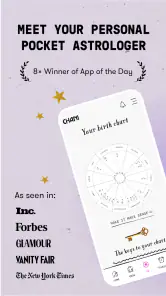
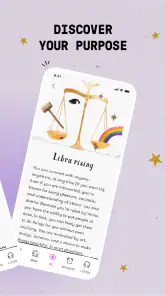

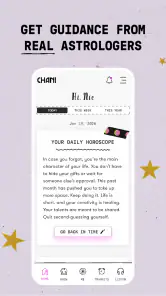
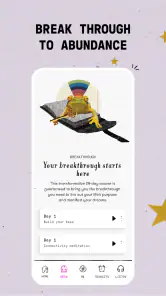

Analysis by Reviewed
I came to CHANI expecting another horoscope app that delivers a quick sentence and disappears from my day. What makes this Lifestyle app different is its focus on astrology interpreted by human astrologers rather than presented as an automated novelty. That distinction matters in use: the app encourages me to slow down, read a longer explanation, and connect a symbolic forecast with what I am actually experiencing.
It is a free app from Chani Nicholas Inc, available for Everyone, with optional in-app purchases ranging from around twelve dollars to around one hundred eight dollars per item. The basic entry point is easy to try, but the experience is designed for people who want astrology to become a regular reflective practice rather than a one-time curiosity.
After spending time with it, my honest view is that CHANI is strongest when I treat astrology as a journaling prompt. It is less convincing if I want precise predictions, instant entertainment, or a completely free experience with no reason to consider paid material. That balance is important before installing it.
Why the human interpretation changes the experience
The central capability is not simply showing a zodiac sign. It is the way the app frames astrological information through written guidance made by real astrologers, not AI. In practical terms, that gives the content a more deliberate voice than the interchangeable daily messages I have seen in many horoscope alternatives.
I notice the difference most when a forecast touches an uncomfortable subject. A generic horoscope tends to make broad claims that could fit almost anyone. Here, the writing feels more useful when I read it as an invitation to examine a pattern, a mood, or a decision. It does not turn astrology into a scientific diagnosis, and I would not use it as a substitute for professional advice, but it can give a personal reflection a clear starting point.
The app belongs to the modern astrology category, yet it feels closer to a guided self-reflection tool than to a fortune cookie. That is the capability worth understanding before anything else. The value is not that every line will feel perfectly accurate. The value is that the app gives me language for thinking about timing, relationships, ambition, rest, and change.
That approach also explains its appeal to people who already know their birth chart. Someone familiar with astrological vocabulary can engage with the material at a deeper level, while a newcomer can still use the writing as a gentle daily check-in. I would not describe it as a replacement for learning astrology from books or a personal consultation, but it makes the subject approachable without reducing everything to a single personality label.
More From Our News Desk

Clash of Clans Is Won Between the Battles

Android Auto Makes the Case for Quieter Car Software

MobiOffice: Transforming Mobile Productivity with Seamless Integration

EA SPORTS FC™ Mobile Soccer: Redefining Mobile Sports Gaming

How Microsoft OneDrive Became a Mobile Productivity Giant

How Google Translate Breaks Language Barriers Effortlessly
Reading it as guidance instead of a verdict
My best results came when I avoided asking, “Will this happen to me?” and instead asked, “What does this make me notice?” That small change prevents the app from becoming a source of needless anxiety. If a reading suggests a period of tension, I can use it to review how I am communicating or where I am overcommitting. If it points toward creativity, I can decide whether I have left room for a project I keep postponing.
This is also where the human-authored tone earns its place. The writing can hold more nuance than a short automated prediction. It may suggest a theme without forcing a single outcome, which leaves room for personal judgment. For me, that makes the material easier to revisit later, especially when the first reading feels vague but becomes more relevant after a real event.
A useful habit is to read the guidance once in the morning, write down one phrase that stands out, and return to it at night. I found that this worked better than repeatedly refreshing the app in search of a more exciting message. The app becomes a quiet structure around reflection instead of another feed competing for attention.
How the experience works in everyday use
Getting started is not intimidating. The app is free to download, and its Everyone rating makes it suitable for a broad audience. I can explore the basic experience without treating the first session like a major commitment. That matters because astrology apps vary widely in tone: some are playful, some are mystical, and some are heavily focused on personal development. CHANI gives me enough of its approach to decide whether its style suits me.
The current version is 2.9.0, and the minimum operating system is version 9. That makes it accessible to people using older compatible devices, although the actual comfort of reading depends more on screen size and how much time I want to spend with longer passages. This is not an app I would rush through on a tiny screen while standing in a crowded queue.
My practical workflow is simple. I open it when I have a quiet moment, read the relevant guidance, and then connect one idea to something concrete in my life. For example, if I am preparing for a difficult conversation at work, I might use the reading to consider whether I am reacting defensively or avoiding a necessary boundary. The app does not make that decision for me; it gives me a lens through which to examine it.
That distinction answers an important question for first-time users: do I need to understand astrology before using it? I do not think so. Basic familiarity helps, but the written explanations make the experience approachable. New users should still expect to encounter concepts that take time to understand. Rather than trying to memorize everything immediately, I recommend choosing one recurring idea and noticing how it relates to your own routines.
A realistic morning and evening routine
Imagine someone with a demanding week, several unfinished tasks, and a habit of checking their phone before getting out of bed. CHANI can fit into that routine if it is used as a short pause rather than another stream of notifications. In the morning, I would read the guidance with coffee and choose one question to carry into the day: where should I be more patient, what needs honest attention, or what am I avoiding?
At night, I would look back at that question and compare it with what actually happened. Perhaps the forecast did not match events literally, but it still helped reveal that I had been rushing through conversations or saying yes too quickly. That is a more realistic benefit than expecting the app to announce exactly what will happen at lunch.
For a person who journals, the app can become a prompt generator. I can copy a short idea into a notebook, write freely for five minutes, and then close the app. This workflow is more valuable than passively consuming readings because it turns the content into an active decision-making exercise. It also reduces the temptation to let the app dictate how I interpret every emotion.
Another useful approach is to compare the reading with my calendar. If the guidance emphasizes relationships, I can notice which meetings or personal conversations may need extra care. If it emphasizes rest, I can look at whether my schedule leaves any genuine recovery time. The trade-off is that this requires effort from me. The app can provide a thoughtful prompt, but it cannot create a meaningful routine on my behalf.
Where it differs from ordinary horoscope apps
The usual alternative is a lightweight horoscope app built around fast, highly general daily messages. Those apps are convenient when I want a quick lift or a bit of entertainment. They are often easier to consume in seconds, and some users will prefer that simplicity. CHANI asks for more attention, which can feel rewarding when I want depth but excessive when I only want a brief mood check.
Another alternative is a birth-chart website or a detailed astrology reference. Those resources may be better for someone who wants to study technical concepts, compare interpretations, or build a complete understanding of astrology. CHANI sits between study and casual use: it offers accessible guidance without requiring me to become an expert, but it may not satisfy a reader seeking a fully academic treatment.
Personal astrology sessions are different again. A human consultant can ask questions, respond to context, and adapt an interpretation to a specific concern. An app cannot provide that same conversation. CHANI is more convenient and private for a quick reflection, but it should not be judged by the standard of a one-to-one consultation.
The app’s strongest comparison point is therefore consistency of voice. It feels more considered than a random daily quote, while remaining easier to access than a formal reading. That middle ground is exactly why I can recommend it to curious users, provided they understand that reflective value and predictive certainty are not the same thing.
The best scenario for using CHANI
The app makes the most sense during a transition: starting a new job, reconsidering a relationship, moving home, recovering from burnout, or trying to understand why an old habit no longer fits. During those periods, I often need a prompt that helps me step outside my immediate reaction. The app’s human-written guidance can offer that pause without pretending to solve the situation.
I especially like the idea of using it before a weekly planning session. I can read the guidance, identify a theme, and then turn that theme into one practical action. If the reflection points toward boundaries, I might protect an evening from extra commitments. If it highlights communication, I might prepare more carefully for a conversation instead of sending a rushed message.
This is a non-obvious strength because it changes the role of astrology from passive prediction to active planning. The app is not most useful when I ask it to make choices for me. It is most useful when I use it to notice choices I am already making unconsciously.
It can also work well for couples or friends who enjoy discussing astrology, although I would keep the conversation open rather than treating the app’s interpretation as proof that someone is behaving a certain way. Sharing a prompt can start a thoughtful discussion; using it to label another person can quickly become unhelpful.
For creative people, the same method can unlock ideas. A reading may suggest a subject, mood, or question that becomes the opening line of a journal entry, sketch, or personal project. The app does not need to provide a specialized creative tool for this to work. Its role is to create a moment of attention that I might otherwise skip.
Three habits that make the app more useful
- Keep a dated note of the themes that stand out. Looking back helps me separate genuinely useful patterns from lines that only felt relevant in the moment.
- Translate every reading into one observable action. “Be more open” is vague; making time for an honest conversation is something I can actually evaluate.
- Use it before making a decision, not instead of making one. I can consider the prompt, check the practical facts, and then choose based on evidence and personal responsibility.
These habits also protect against overuse. If I check the app every time I feel uncertain, I can hand too much authority to an external interpretation. A healthier pattern is to use it at a planned time, take what helps, and return to my own judgment.
Where the trade-offs become clear
The biggest limitation is the same quality that makes the app appealing: the content asks for interpretation. If I want direct answers, I may find the guidance too open-ended. Human writing can be nuanced, but nuance can feel unsatisfying when I am anxious and looking for certainty. The app is not the right choice for someone who wants a simple yes-or-no response.
There is also a financial trade-off. The app is free to begin with, but optional purchases are part of the experience, with individual items priced from around twelve dollars up to around one hundred eight dollars. I would explore the free material first and decide whether the deeper experience genuinely adds value to my routine. A paid option should support a practice I already enjoy, not be treated as a promise that the app will predict life more accurately.
Another friction point is attention. CHANI is not designed around a single glance in the same way as a tiny daily horoscope. Reading carefully takes time, and some users will not want another reflective task in their day. If I am seeking a fast, playful distraction, a simpler horoscope app may be a better fit.
The app also requires intellectual boundaries. Astrology can be meaningful as a symbolic or spiritual practice, but I would not use it to make medical, legal, financial, or safety-critical decisions. I would also avoid using a reading to justify controlling behavior in a relationship. The more emotionally charged the issue, the more important it is to treat the app as a prompt rather than an authority.
Some readers may wonder whether the human-authored approach makes every interpretation objective. It does not. A human astrologer brings judgment, style, and a particular way of framing experience. That can feel warmer and more thoughtful than automated text, but it remains interpretation. I appreciate the voice more when I remember that I am engaging with a perspective, not receiving a measured fact about my future.
Who should skip it
I would skip CHANI if I strongly dislike astrology, need evidence-based guidance for personal decisions, or want a purely technical chart tool. I would also choose another option if I only want quick entertainment and do not enjoy reading reflective passages. The app’s strengths have little impact when the underlying subject does not interest me.
It may also be a poor match for someone who tends to become dependent on predictions. If checking a forecast increases worry, delays decisions, or makes ordinary setbacks feel preordained, stepping away is the sensible choice. No app is worth losing confidence in your own ability to respond to life.
People looking for a private one-to-one interpretation should consider a qualified human practitioner instead. CHANI can be a convenient companion between readings, but it cannot ask follow-up questions or understand the full context of a personal story in the way a conversation can.
Who gains the most from this astrology guide
The best audience is someone who is curious about astrology and enjoys reflective writing. You do not need to know every technical term, but you should be willing to sit with an idea instead of demanding an immediate prediction. The app is particularly suitable for journalers, people building a mindfulness routine, and anyone who likes using symbolic prompts to examine everyday choices.
It is also a good fit for experienced astrology readers who want a regular source of human-written guidance in a mobile format. The app’s accessible presentation makes it easier to maintain a habit than opening a large reference book every morning, while its interpretive style gives more substance than a generic zodiac message.
The audience size suggests that this approach has found a substantial following: it has passed one hundred thousand installs, holds a 4.9 average from around four thousand eight hundred ratings, and has around six hundred ninety-five written reviews. Those figures do not replace personal judgment, but they do show that the app has attracted strong interest among people who enjoy this style of astrology.
For me, the deciding question is not whether every reading feels exact. It is whether the app helps me pay closer attention to my own life. When I use it that way, the human-authored guidance has a real effect: it slows down my first reaction and gives me a question worth carrying into the day.
My recommendation is straightforward. Try the free experience if you want astrology presented with more care than a disposable daily slogan. Give it a few deliberate sessions, use a notebook, and judge the value by the quality of reflection it creates rather than by dramatic predictions. If that process feels meaningful, optional purchases may be worth considering; if it feels like extra noise, the free starting point makes it easy to move on.
Overall, CHANI is a thoughtful Lifestyle app for people who want astrology to support reflection, planning, and self-awareness. Its human astrologer approach is its defining strength, while its open-ended readings, paid options, and need for personal interpretation are the main trade-offs. I would recommend it to a curious friend who wants a daily pause, but not to someone searching for certainty or a substitute for practical expertise.
CHANI: Your Astrology Guide Frequently Asked Questions
Who makes CHANI: Your Astrology Guide, and what is the app’s approach to astrology?
CHANI: Your Astrology Guide is made by Chani Nicholas Inc and presents itself as an astrology app created by real astrologers, not AI. Its focus is personal reflection and learning: readings connect birth-chart details and planetary movements with themes in everyday life. If you are choosing an astrology app, this approach may suit you if you want interpretive guidance and educational material rather than an automated, purely entertainment-focused experience.
What is CHANI: Your Astrology Guide?
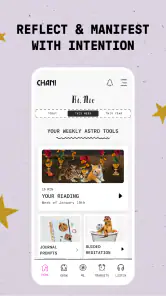
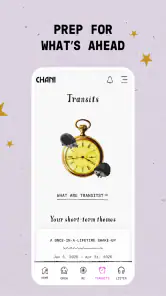
CHANI: Your Astrology Guide is an astrology and self-reflection app that provides personalized birth-chart information, horoscope readings, current planetary transits, guided meditations, journaling prompts, and educational content. After entering your birth details, the app presents interpretations designed to help you understand astrological themes in your relationships, emotions, goals, and everyday life. It is intended for personal insight and spiritual exploration rather than scientific or medical advice.
How accurate are CHANI’s readings and horoscope predictions?
CHANI’s readings are based on the birth information and astrological system used by the app, so the quality of a personalized chart depends heavily on entering your correct birth date, time, and location. Its interpretations are best viewed as reflective guidance rather than guaranteed predictions. Astrology is not scientifically proven, and the app should not be used as the sole basis for medical, financial, legal, or other important life decisions.
Is CHANI: Your Astrology Guide free to download and use?
The app is free to download, but some of its content may be available through a subscription or in-app purchase. Free access may include selected horoscope material, chart information, or introductory features, while premium access can unlock additional readings, courses, meditations, and other tools. Before subscribing, review the current price, trial terms, renewal conditions, and cancellation process shown in your app store. In-app purchases range from $11.99 to $107.99 per item, so check the offer details before committing.
What information does CHANI require to create a birth chart?
To generate a more personalized birth chart, CHANI typically asks for your birth date, exact or approximate birth time, and birthplace. The birth time is especially important because it can affect your rising sign, houses, and the timing of certain interpretations. If you do not know the exact time, you may still use the app, but some chart details and readings may be less precise.
Pros
- Personalized birth-chart readings make astrology content feel more relevant.
- Daily guidance is presented in a calm
- easy-to-follow format.
- Includes meditation and wellness content beyond traditional horoscopes.
- Clean design makes the app comfortable to browse and use regularly.
- Offers educational explanations for users new to astrology.
Cons
- Many in-depth readings and features require a paid subscription.
- Astrology interpretations may feel too general for experienced users.
- Some content can become repetitive with frequent daily use.
- Requires accurate birth details for the most useful chart information.
- Notifications may feel excessive if you prefer occasional guidance.
- Category
- Lifestyle
- Version
- 2.9.0