Candle: Couples & Relationship
- 151.00
- 4.6
- Installs
- 500.00K
- Price
- Free

Screenshots

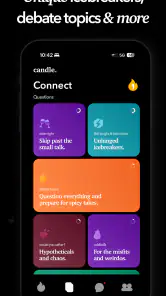
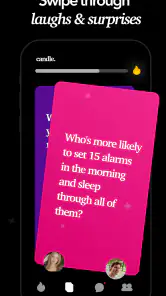

Analysis by Reviewed
I tried Candle: Couples & Relationship as a lightweight way to bring more intention into ordinary time with a partner. It sits in the lifestyle space rather than behaving like a therapy service, a serious relationship course, or a conventional social network. My first impression was that its value depends less on how long you use it and more on whether both people are willing to respond honestly and keep the routine going.
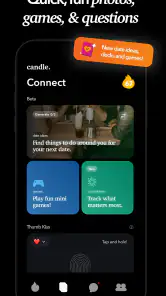
The app is built around prompts, small games, photo challenges, and habit streaks. That combination gives it a different feel from simply sending a question to your partner in a messaging app. Instead of waiting for a conversation to happen naturally, Candle gives you a starting point and a small reason to return. I found that useful on busy days when my partner and I were together physically but not really paying attention to each other.
The important thing to understand is that Candle creates opportunities for connection; it cannot create openness by itself. If you want a private space for difficult conversations, structured professional guidance, or a large community of couples, this probably is not the right tool. If you want gentle nudges that make everyday affection and curiosity easier, it has a more convincing purpose.
How Candle fits into a real couple’s routine
Starting with a low-pressure reason to open the app
My most useful test was to treat Candle as part of a normal evening rather than as a special relationship exercise. After work, one of us could open the app, look at the available daily activity, and suggest doing it before dinner or while relaxing. That small handoff matters. The app may provide the prompt, but one person still has to turn it into a shared moment.
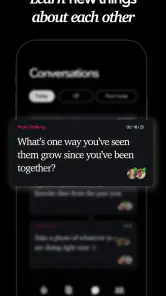
The daily prompts are best when neither person feels they are being examined. A good prompt can reveal a preference, bring up a memory, or lead naturally into a longer conversation. The weaker moments are those when one person is tired and sees the activity as another task to complete. I learned to avoid presenting it as an obligation. Asking, “Do you want to try today’s one?” worked better than announcing that we had to maintain our routine.
Candle is free to start, which lowers the barrier for couples who are curious but do not want to commit immediately. The app is marked for mature users, so I would not treat it as a general family activity or something to hand to younger teenagers. That age positioning also makes sense for a relationship-focused product whose conversations may be more personal than a standard casual game.
Moving from a prompt to an actual conversation
The first step is simple: read the prompt and decide whether both people are in the mood. The second step is more important: answer in a way that gives the other person something to respond to. A one-word answer technically completes the activity, but it does not get much value from it. I found that adding one short explanation often changed the experience from a checklist into a real exchange.
More From Our News Desk

Clash of Clans Is Won Between the Battles

Android Auto Makes the Case for Quieter Car Software

MobiOffice: Transforming Mobile Productivity with Seamless Integration

EA SPORTS FC™ Mobile Soccer: Redefining Mobile Sports Gaming

How Microsoft OneDrive Became a Mobile Productivity Giant

How Google Translate Breaks Language Barriers Effortlessly
For example, if a prompt touches on a favorite memory, I would not stop at naming the event. I would add what made it memorable and ask my partner which part they remember differently. That approach turns the app’s small starting point into a conversation that belongs to us, not to the interface. Candle works best as a doorway, not as the entire room.
A practical tip is to use the activities at predictable transition points: after a meal, during a commute when one person is not driving, or before putting phones away for the night. Randomly opening the app whenever there is a spare second can make it feel like another notification source. Giving it a place in an existing routine makes the habit feel more natural and reduces the temptation to rush through it.
Choosing between prompts, games, and photo challenges
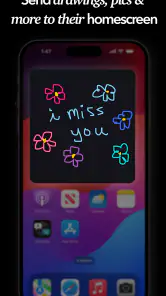
The different activity types serve different moods. Prompts suit couples who want a conversation starter. Games are more useful when the goal is playfulness rather than self-disclosure. Photo challenges can work well for partners who are apart during the day because they create a visual handoff: one person contributes an image, and the other has something concrete to react to.
I would not use every activity in the same way. A prompt can be handled quietly and thoughtfully, while a game usually needs more energy from both people. A photo challenge may seem easy, but it can become awkward if one partner enjoys sharing images and the other feels uncomfortable taking or sending them. The app’s variety is helpful, yet it also means couples need to choose the format that matches their current energy rather than assuming every activity will fit.
One non-obvious strength is that the formats can compensate for different communication styles. A partner who dislikes direct emotional questions may respond more comfortably to a playful challenge. Someone who prefers reflection may get more from a prompt. I would use the activity type as a bridge between personalities, not as a test of who is more romantic.
Using streaks without letting them take over
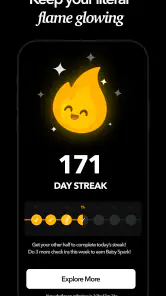
Habit streaks are designed to encourage consistency, and I can see why that helps. Relationship habits often fail because both people wait for a perfect date night, then discover that weeks have passed. A small recurring activity is easier to fit into real life. The streak gives the routine a visible sense of continuity.
There is a trade-off, though. A streak can quietly change the goal from connecting with a partner to protecting a number. If we were tired, completing an activity only to avoid breaking the chain felt less meaningful than skipping it and returning with better attention. My advice is to treat the streak as a reminder, not a score. If it creates guilt, it is no longer serving the relationship.
This is also where Candle differs from a normal shared calendar or reminder app. Those tools can tell you to plan time together, but they do not provide the content of the interaction. Candle reduces the effort needed to decide what to do. On the other hand, a calendar is better when the real problem is scheduling, while Candle is better when the time exists but the couple needs a spark.
Handling the handoff between two people
The app’s workflow depends on a clear handoff. One person discovers or opens the activity, invites the other into it, and then gives them enough space to respond. That sounds obvious, but it is where many shared apps become frustrating. If the first person completes everything alone, the second person becomes an audience member instead of a participant.
I found it useful to alternate who starts. On one day, I could choose the moment and explain why the activity seemed interesting. On another day, my partner could take the lead. This prevents Candle from becoming one person’s relationship project and gives both people ownership of the routine.
For couples living apart, the handoff has a different shape. A photo challenge can become a small window into the other person’s day, while a prompt can be answered asynchronously if schedules do not line up. The experience is less immediate than sitting together, but that delay can be useful for people who prefer to think before replying. Couples who need a live video conversation or a full messaging system may still find their usual communication tools more practical.
What the activity produces at the end
The immediate result is usually modest: a conversation, a laugh, a shared image, or a reminder of something you had forgotten. I appreciate that Candle does not need to turn every interaction into a major emotional breakthrough. Small moments are often more realistic for couples managing work, travel, chores, and different schedules.
The longer-term result depends on what you do after the activity. If a prompt reveals that one person wants more time together, the useful next step might be planning that time. If a game exposes a shared interest, you could turn it into a weekend plan. If a photo challenge highlights how differently you experience the same day, that can become a more thoughtful conversation later.
That is one of my strongest practical tips: treat interesting answers as leads. Do not assume the app has finished its job when the screen says the activity is complete. Save the best ideas mentally or turn them into a concrete action while the subject is still fresh. Candle is more valuable when it changes what happens after the session.
Where Candle compares well with familiar alternatives
Compared with ordinary messaging, Candle removes the pressure to invent a topic. Messaging is more flexible and better for long conversations, but it can also become repetitive or purely logistical. Candle adds structure without requiring a formal appointment, which makes it useful for couples who keep saying they should talk more but rarely know how to begin.
Compared with relationship books or guided exercises, Candle feels lighter and easier to revisit. A book can offer deeper explanations and more context, especially for couples working through a specific issue. Candle is not a substitute for that kind of structured learning. Its advantage is immediacy: open it, choose an activity, and begin with very little preparation.
Compared with couples therapy, the distinction is even clearer. Candle may support everyday closeness, but it should not be used as a replacement for professional help when there is serious conflict, fear, coercion, or ongoing emotional harm. A prompt cannot safely handle every relationship problem. In those situations, a qualified professional and appropriate support are better choices.
Compared with generic habit trackers, Candle has a more personal target. A normal tracker can be excellent for exercise, medication, study, or household routines, but it does not supply relationship-oriented content. Candle’s limitation is the reverse: if you want detailed habit customization across many areas of life, a dedicated tracker will likely be more capable.
Friction points that affected my experience
The biggest weakness is the possibility of turning intimacy into maintenance. Any app that presents streaks and recurring activities risks making couples feel they are failing when they miss a day. That pressure will affect people differently. Some users enjoy visible progress, while others become anxious when a routine breaks. I would decide early whether the streak feels encouraging or intrusive.
The second issue is uneven enthusiasm. If one partner is excited and the other is merely complying, the activities can feel artificial. Candle cannot solve that imbalance. The best workaround I found was to keep sessions short, allow either person to decline occasionally, and return later without making the missed activity a source of blame.
There is also a financial consideration. The app is free, but optional in-app purchases range from $0.99 to $149.99 per item. That is a wide range, so I would look carefully at what an optional purchase unlocks before confirming it, especially if you are only testing the basic experience. Couples who want a completely predictable, one-time-cost tool may prefer a book, a shared notes file, or a free messaging routine.
The current version is 1.8.3, and it runs on Android 7.0 or later. That makes it accessible on many older Android devices, although the experience will still depend on the phone’s general performance and the way each person uses the app. Candle is developed by Candle Team, and its store presence shows a 4.6 average from around 9.8 thousand ratings, with more than 500 thousand installs. Those figures suggest that the concept has found a sizable audience, but they do not remove the need to see whether its style suits your relationship.
Who should use it, and who should skip it
I would recommend Candle to couples who care about staying intentional but struggle with repetition. It is especially suitable for partners who enjoy small prompts, playful exchanges, and visual challenges rather than long formal exercises. It can also help couples who live apart and want a shared activity that is more distinctive than exchanging the same daily updates.
It may be useful during a busy period when neither person has the energy to plan an elaborate date. Opening a prompt after dinner can be enough to interrupt an evening spent silently scrolling. It can also work for newer couples who want conversation ideas without making every discussion feel like an interview.
I would skip it if you dislike gamified routines, feel pressured by streaks, or want a private journal for individual reflection. I would also choose another option if your main need is conflict resolution, therapy, scheduling, or a robust chat service. Candle is narrow by design: it focuses on creating small shared moments, and that focus is both its appeal and its boundary.
My final take after following the full workflow
Candle: Couples & Relationship succeeds when the starting condition is simple: two people want to connect but need a nudge. The flow from opening an activity to answering it is easy to understand, and the handoff between partners can feel natural when both people participate. The result is not usually dramatic, but it can be a meaningful interruption to routine.
I like the combination of prompts, games, photo challenges, and habit streaks because it gives couples more than one way to engage. I also appreciate that the app can fit into a few minutes rather than demanding a carefully planned evening. My reservations are equally clear: streaks can create pressure, enthusiasm may not be equal, and optional purchases deserve attention before spending.
My recommendation is to try it as a flexible conversation and playfulness tool, not as a measure of relationship health. Start with the activities that feel easiest, alternate who initiates, and let the best answers lead to something outside the app. If that approach makes your ordinary days warmer, Candle is doing its job. If it starts feeling like homework, your relationship may benefit more from an unstructured conversation, a planned date, or professional support.
Candle: Couples & Relationship Frequently Asked Questions
Who develops Candle: Couples & Relationship, and is it available for both Android and iOS?
Candle: Couples & Relationship is developed by Candle Team and is a lifestyle app for partners who want to stay connected through shared activities. Its listed minimum operating system version is 7.0. Before downloading, check the app store on your device to make sure it is available for your platform and that your operating system meets the requirement.
What is Candle: Couples & Relationship, and who is it designed for?
Candle: Couples & Relationship is an app focused on helping partners communicate, reflect, and strengthen their connection through guided questions, relationship exercises, shared activities, and conversation prompts. It is designed for couples at different stages, whether they are dating, living together, married, or simply looking for a more intentional way to understand one another and maintain a healthier relationship.
How does Candle help couples improve communication?
The app encourages communication by offering structured prompts and activities that can help partners discuss feelings, expectations, memories, goals, and everyday concerns. Instead of relying only on spontaneous conversations, couples can use Candle to create regular moments for meaningful dialogue. It is not a replacement for professional therapy, but it can be a useful tool for opening conversations that may otherwise be difficult to start.
Can both partners use Candle together on separate devices?
Candle is intended to support shared participation, allowing couples to engage with relationship content together rather than treating the app as an individual journal. Depending on the current version and account setup, features such as invitations, synchronization, or shared responses may require both partners to create accounts or connect their profiles. Users should review the app’s latest instructions and permissions before relying on a specific pairing feature.
Is Candle: Couples & Relationship free to download and use?
The app is free to download, but some features, activities, or relationship content can require in-app purchases. In-app purchase prices range from $0.99 to $149.99 per item. Before making a purchase, check the pricing details shown in the app so you understand the cost and what the item includes. Availability of premium features can also vary by country, platform, and app version.
Pros
- Offers guided prompts to encourage meaningful couple conversations.
- Simple interface makes it easy to use during short daily check-ins.
- Can help partners discuss feelings
- goals
- and relationship habits.
- Useful for couples who need structure to start deeper conversations.
- Private relationship-focused format avoids the distractions of social media.
Cons
- Some prompts may feel repetitive after regular use.
- The app cannot replace professional counseling for serious relationship issues.
- Both partners need to participate for the experience to be effective.
- Certain features or content may require a paid subscription.
- Users may find some questions too personal or emotionally challenging.
- Category
- Lifestyle
- Version
- 1.8.3