BrandBee: Earn Gift Cards
- 20.61K
- 4.4
- Installs
- 1.00M
- Price
- Free

Screenshots
Analysis by Reviewed
I first looked at BrandBee: Earn Gift Cards as a household app rather than as a quick-cash shortcut. That distinction matters. Its idea is simple: you can earn rewards through surveys, games, receipt scanning, and other activities, but the usefulness depends heavily on who is using it, how consistently they participate, and whether everyone understands the account boundaries. In my experience, it works best as an occasional way to turn spare minutes into small rewards, not as a replacement for income.
Developed by Embee Mobile, this free Lifestyle app has built a sizeable audience, with more than a million installs and a 4.4 average from roughly seventy-three thousand ratings. Those figures suggest that the basic concept is easy for many people to understand, although popularity alone does not remove the need to check each task carefully. The app is currently at version 3.51.2 and supports Android 7.0 or later, so it remains accessible on many older phones.
How BrandBee Fits Into a Shared Household
A realistic shared-device routine
Imagine a household with one Android phone that moves between adults during the day. One person might answer a survey during a commute, another could scan a receipt after grocery shopping, and someone else might try a game when waiting for an appointment. That sounds convenient, but it can become confusing quickly if several people treat the same account as their own.
I would use BrandBee with one clearly identified account holder and a simple household rule: the person whose account is open is the person completing the activity. That keeps survey answers consistent and avoids mixing one person’s opinions, shopping habits, and receipts with another person’s information. A shared device can be practical, but a shared identity is where the trouble begins.
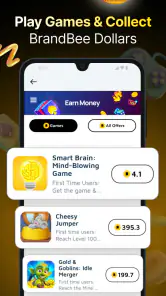
The app’s range of activities gives it more flexibility than a survey-only service. If there are no suitable questions available, receipt scanning or a game may offer another way to stay engaged. The trade-off is that these activities do not all feel equally worthwhile. A short survey can be easy to fit into a break, while a game may demand more time than its reward feels worth.
My most useful household tip is to treat every activity as a time trade, not as free money. Before starting, I would check what the task involves, how long it appears likely to take, and whether it requires information or attention that I would rather not provide. This small pause prevents the common mistake of opening every available offer simply because it is visible.
Keeping account boundaries clear
BrandBee is a poor fit for casual account sharing where people switch profiles without thinking. Even if the phone belongs to the whole household, the responses should belong to one real participant. Surveys are especially sensitive to inconsistent answers. If one person begins a questionnaire and another finishes it, the result no longer represents a single person’s experience.
More From Our News Desk

Clash of Clans Is Won Between the Battles

Android Auto Makes the Case for Quieter Car Software

MobiOffice: Transforming Mobile Productivity with Seamless Integration

EA SPORTS FC™ Mobile Soccer: Redefining Mobile Sports Gaming

How Microsoft OneDrive Became a Mobile Productivity Giant

How Google Translate Breaks Language Barriers Effortlessly
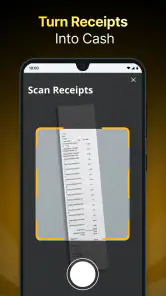
Receipt scanning also needs a clear routine. I would decide in advance whether receipts belong to the account holder and keep completed receipts separate from those already submitted. This is less exciting than earning a reward, but it makes the process easier to audit and prevents repeated attempts or arguments about who scanned what.
For a family using one device, a written note with the account holder’s name, the usual sign-in method, and the household’s receipt routine can be more useful than relying on memory. I would not store passwords in a visible place, and I would avoid leaving the account open when handing the phone to someone else. These are ordinary precautions, but reward apps make them particularly important because activity and redemption progress are tied to the account.
What setup feels sensible
When setting up the app, I would begin with the smallest amount of personal information needed to understand how it works. I would read each prompt instead of rushing through it, especially when a survey asks about shopping, media, or household habits. The goal is not to avoid every question; it is to make an informed choice about what I am comfortable answering.
I would also test the app’s basic flow before building a routine around it. Open an available activity, see how its instructions are presented, and note how progress is recorded. If the first few tasks feel unclear or take too long for the expected reward, that is useful information. There is no reason to force BrandBee into a daily routine when it is better suited to occasional use.
The free price makes experimenting easy, but “free” does not mean costless. Your time, attention, mobile data, battery, and personal information all have value. A game that keeps you engaged for a long session may be entertainment, but it should not automatically be counted as efficient earning. I would compare the experience with what I could have done during the same period before deciding whether it deserves regular use.
Coordinating activities without turning them into chores
In a shared household, coordination works best when it is light. I would not create an elaborate schedule for surveys and receipts. A simple agreement is enough: one account holder, one place for unscanned receipts, and no starting an activity that another person is already using. This avoids the friction that often makes shared-device apps unpleasant.
BrandBee’s variety can help different household members use it in different ways, but that does not mean everyone should participate. One adult may prefer surveys because they can stop after a few minutes. Another may enjoy trying games. Someone who dislikes sharing shopping information may reasonably skip receipt-related tasks. The app does not need to become a family project to be useful.
For a person who shops for the household, receipt scanning may fit naturally into the routine: scan the receipt soon after the purchase, then place it in a folder or recycle it once the submission is complete. Waiting several weeks makes receipts harder to find and increases the chance that one has already been used. This workflow is simple, but it is more reliable than scanning a pile of old paper all at once.
Another practical approach is to use a “low-effort first” rule. Start with the activity that can be completed without a long commitment, then stop if the next option looks demanding. This protects the app from taking over a spare evening. I found that reward services are most satisfying when they fit around existing routines rather than creating a new obligation.
Understanding the age context
BrandBee carries a Mature 17+ content rating. That should shape how it is used in a household. I would not hand it to a younger child simply because the activities may look like games or simple questionnaires. The age label is a clear reason for an adult to make the decision about access and to supervise shared-device use where appropriate.
There is also a difference between allowing a teenager to use an app and allowing them to participate in every activity. A young person may not fully understand why a survey asks about purchases, habits, or opinions, or why a receipt should not be scanned twice. An adult should explain that rewards do not justify sharing information carelessly.
Trust matters just as much between adults. If several people use the same phone, everyone should know which account is active and what kinds of tasks are being completed. I would avoid letting a guest use my account, even for a quick game, because the resulting activity would be attached to my profile. The safest household arrangement is one where the account holder remains responsible for every submission.
How it compares with ordinary alternatives
Compared with a traditional survey app, BrandBee is more flexible because it combines surveys with games and receipt scanning. That variety is its strongest practical advantage. When one type of activity is unavailable or unappealing, another may be worth trying. The downside is that variety can make the app feel less predictable: the value of a session depends on what is offered at that moment.
Compared with receipt-only reward services, it may appeal to people who do not shop frequently or who want more than one way to participate. However, a receipt-focused app can be easier to understand if your only goal is to organize shopping rewards. BrandBee is better for someone willing to switch between activities, while a more specialized alternative may be better for someone who wants one narrow, repeatable workflow.
Compared with casual mobile games, BrandBee adds a reward-oriented reason to play, but it may not provide the depth or polish that a dedicated game offers. I would choose a normal game when entertainment is the priority. I would choose BrandBee when I already have a few spare minutes and want to see whether a small reward activity fits that time.
Where the experience can become frustrating
The biggest limitation is not necessarily the number of activities; it is the uncertainty of their usefulness. A survey can take longer than expected, a receipt may not be convenient to scan immediately, and a game can absorb attention without feeling efficient. Anyone expecting steady earnings will probably be disappointed.
There is also a psychological trap in reward apps: once progress has started, it is easy to continue simply because stopping feels like giving up. I recommend setting a personal time limit before beginning. If the activity no longer feels worthwhile, stop and return later. This is especially important on a shared device, where one person’s extended session can prevent another from using the phone.
Privacy-minded users should think carefully before participating. Surveys and receipts can reveal details about preferences or purchases, even when the app presents the process as a simple task. I would read the wording of each activity and skip anything that feels too intrusive. The ability to earn a reward does not make every request a good exchange.
People who need immediate, predictable income should skip BrandBee. It is not the right tool for paying a bill on a fixed schedule. Likewise, anyone who dislikes games, surveys, and receipt handling may find the app more tiring than useful. The best candidates are patient users who enjoy small, occasional rewards and can judge their time realistically.
My practical approach to getting value
I would use BrandBee in short sessions rather than leaving it open all day. First, I would look over the available activities and choose only one that matches the time I have. If I am waiting for a bus, a brief survey may make sense. If I am already at home with a receipt in hand, scanning it may be more natural. If I want entertainment, I would decide whether the game itself is enjoyable before considering the reward.
I would keep the account holder’s answers consistent and avoid guessing on surveys. Honest, thoughtful responses are better than rushing through questions just to reach the end. I would also keep receipts organized and scan them close to the purchase, while remembering that a receipt contains shopping information that I may not want to submit.
Before recommending the app to a friend, I would explain that the reward is the result of several small choices: selecting suitable tasks, protecting account access, and stopping when the time trade no longer makes sense. That explanation is more useful than promising easy earnings. BrandBee works when expectations stay modest.
My household verdict
After considering the shared-device angle, I see BrandBee as a reasonable free Lifestyle app for an adult who wants several reward activities in one place. Its combination of surveys, games, and receipt scanning gives it more flexibility than a narrowly focused alternative, and its broad Android compatibility makes it easy to try on an older phone. The current version, 3.51.2, shows that the app remains actively usable for people on Android 7.0 or later.
I would recommend it to a single account holder or to a household with clear boundaries. I would not recommend informal account sharing, unsupervised access for younger users, or treating the app as dependable employment. The Mature 17+ rating deserves attention, and every participant should understand that time and personal information are part of the exchange.
My final view is cautiously positive: BrandBee is most worthwhile when used selectively, honestly, and with a clear household routine. It will not transform spare time into a reliable paycheck, but it can give an adult something constructive to do during otherwise empty moments. If you can keep the account personal, choose activities carefully, and accept variable value from one session to the next, it is worth trying at no financial cost.
BrandBee: Earn Gift Cards Frequently Asked Questions
Is BrandBee: Earn Gift Cards available on Android and iOS?
BrandBee: Earn Gift Cards is a mobile app. Before downloading, check its availability in your device’s app store and make sure your operating system is compatible. The stated minimum operating-system requirement is version 7.0. The app is free to download, so you can try it without an upfront purchase, though access to particular activities may depend on your location and account eligibility.
What does the Mature 17+ rating mean for BrandBee?
BrandBee: Earn Gift Cards is rated Mature 17+, so it may not be suitable for younger users. Parents and guardians should consider that age rating before allowing a teenager to install it, and should review the app’s activities and privacy practices together. The app is developed by Embee Mobile and sits in the lifestyle category. Its average rating is 4.4 from around 73,000 ratings, with roughly 21,000 written reviews. Individual experiences can differ.
What devices can run BrandBee: Earn Gift Cards?
BrandBee: Earn Gift Cards is an app for mobile devices, and its minimum operating-system requirement is version 7.0. Before downloading, check that your device meets that requirement and has enough available storage. The app is free to download, so you can try it without an upfront purchase, though your ability to use particular activities may depend on your location and account eligibility.
Who makes BrandBee: Earn Gift Cards, and what should I know about its audience?
BrandBee: Earn Gift Cards is developed by Embee Mobile and sits in the lifestyle category. It is rated Mature 17+, so it may not be suitable for younger users. The app has an average rating of 4.4 from around 73,000 ratings, with roughly 21,000 written reviews. Those figures offer a broad snapshot of user feedback, but individual experiences can differ.
What is BrandBee: Earn Gift Cards and how does it work?
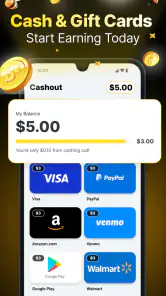
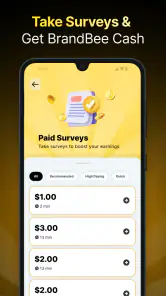
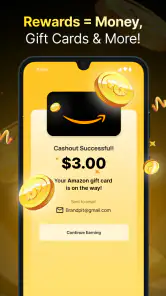
BrandBee: Earn Gift Cards is a rewards app that lets users earn points by completing activities such as surveys, sharing opinions, watching selected content, or participating in market research opportunities. The app also promotes playing games and scanning receipts as ways to earn. After collecting enough points, you can generally exchange them for available gift cards or other rewards. The tasks, point values, and redemption options may vary depending on your location and current campaigns.
Pros
- Simple tasks make earning rewards easy for casual users.
- Gift card options provide flexible ways to redeem earnings.
- Clean interface makes available offers easy to browse.
- Suitable for short sessions during spare time.
- No special skills are required to participate in most activities.
Cons
- Reward availability may vary depending on your country.
- Some tasks can offer very small payouts for the time required.
- You may need to provide personal details for certain surveys.
- Earnings can take time to build before reaching redemption limits.
- Task quality and frequency may change from day to day.

- Category
- Lifestyle
- Version
- 3.51.2