Blingz
- 1.09K
- 4.6
- Installs
- 100.00K
- Price
- Free
Screenshots
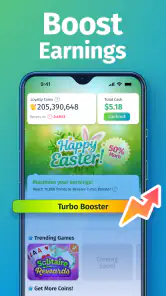
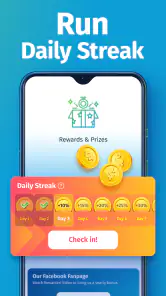
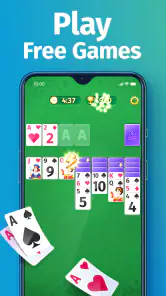
Analysis by Reviewed
I tried Blingz as a lightweight entertainment app built around the idea of playing while earning. That promise is easy to understand, but it also needs to be approached with the right expectations: this is not a replacement for a job, a guaranteed income source, or a serious rewards strategy. Its appeal is the possibility of getting something back from time spent with casual entertainment, while its real value depends on how enjoyable the experience feels before any reward enters the picture.
Developed by Apperfun, Blingz is free to install and is rated for Everyone, which makes it approachable for a broad audience. It belongs in the entertainment category rather than the finance or productivity space. That distinction matters. I would judge it mainly by whether it gives me a pleasant reason to return, whether the earning concept feels clear, and whether the time required remains sensible.
How Blingz feels in everyday use
The first thing I noticed is that Blingz is designed to be easy to understand. The central idea is presented in a direct way: play and earn. That simplicity is useful for people who do not want to learn a complicated system before enjoying an app. I can imagine opening it during a short break, checking what is available, spending a little time with the entertainment content, and then leaving without needing a long setup routine.
That casual structure is also the app’s main challenge. An earning-focused entertainment app has to balance two different motivations. One is immediate amusement; the other is the hope of receiving a reward. If the entertainment is not satisfying on its own, the experience can quickly feel like repetitive work disguised as play. I found it more helpful to treat any reward as an extra rather than the reason to keep using the app.
The free price is an important part of the decision. There is no purchase cost to get started, so a curious user can test Blingz without committing money. In practical terms, that makes a short trial reasonable. I would install it, explore the available experience, and decide whether the time feels worthwhile before forming a habit around it.
At the same time, free access should not be confused with guaranteed financial value. The app’s price tells me that I do not have to pay to enter, but it does not by itself establish how much a user may receive or how quickly a reward becomes meaningful. I would therefore avoid treating the app like an investment. The safest approach is to spend only leisure time that I would otherwise use for casual entertainment.
What the rating and audience suggest
Blingz has an average rating of 4.6 from around 7,600 ratings, with roughly 1,100 written reviews. That level of response suggests that many people find the basic concept appealing, although a rating alone cannot tell me whether every user has the same experience. Reward-oriented apps can be especially personal: one person may enjoy the routine, while another may find the return too small for the attention required.
More From Our News Desk

Clash of Clans Is Won Between the Battles

Android Auto Makes the Case for Quieter Car Software

MobiOffice: Transforming Mobile Productivity with Seamless Integration

EA SPORTS FC™ Mobile Soccer: Redefining Mobile Sports Gaming

How Microsoft OneDrive Became a Mobile Productivity Giant

How Google Translate Breaks Language Barriers Effortlessly
The Everyone age classification makes the app suitable for a general audience from a content-rating perspective. I would still encourage younger users to involve a parent or guardian when an app includes rewards, account activity, or any process involving redemption. A broad age label describes content suitability; it does not replace sensible supervision around digital earning claims.
The app has passed the 100,000-install mark, which gives it a meaningful user base without making it feel like an unavoidable mainstream platform. Its current version is 1.63.1, and it runs on Android 8.0 or later. That minimum requirement is relatively accommodating for people using older Android phones, although performance can still vary depending on the device and operating system condition.
Where the value really comes from
The strongest value proposition is not the possibility of earning in isolation. It is the combination of free entry and a low-pressure way to fill small gaps in the day. If I am already willing to spend ten minutes browsing or playing something casual, Blingz may make that time feel more purposeful. The key word is “may,” because the experience only works if the entertainment itself remains acceptable.
A realistic scenario would be a commuter using a few spare minutes before an appointment. Instead of opening several unrelated apps, the user could check Blingz, try the available activity, and stop when the break ends. This is a better use case than sitting down with the expectation of generating dependable income. The app fits spare-time entertainment; it does not fit a budget plan.
Another useful approach is to set a personal time boundary before opening it. I would decide that a short session is enough and avoid extending it simply because a reward appears close. This protects the value calculation. If the app takes more attention than the entertainment is worth, the reward concept stops being a benefit and becomes a reason to continue past the point of enjoyment.
One non-obvious trade-off is that the free model shifts the main cost from money to attention. That can be easy to overlook because the installation does not require payment. I would ask myself whether I am giving up reading, resting, or another enjoyable activity to remain in the app. A free app can still be expensive in time, especially when its central promise encourages repeated checking.
Another practical insight is to keep expectations separate from verification. I would look carefully at how the app explains progress, eligibility, and any redemption process inside the current experience rather than relying on assumptions from the phrase “play and earn.” Clear instructions are essential. If I cannot understand what counts toward a reward or what action is required to claim it, I would not invest much time until the process becomes clear.
A third useful habit is to evaluate the app over several ordinary sessions instead of judging it after one unusually good or frustrating visit. Entertainment apps can feel different depending on the available activities and the user’s mood. A short trial across different days gives a better sense of whether Blingz is genuinely enjoyable or merely interesting because the earning idea is new.
What may cause friction
The biggest limitation is the uncertainty that naturally surrounds any entertainment app promising rewards. The free installation is clear, but free access alone does not tell me whether the time-to-reward ratio will suit my expectations. Users who want a predictable return should be cautious. A conventional paid game gives a clearer exchange: money for access to content. A rewards app offers a less direct exchange, where attention and patience become part of the cost.
That makes Blingz a weaker choice for anyone who dislikes repetitive tasks or checks progress obsessively. If I feel compelled to keep going because I have already invested time, the app is no longer serving my leisure. I would rather stop than chase a reward that does not justify the additional effort.
It is also not the right alternative to a conventional entertainment subscription when the main goal is rich, uninterrupted content. A streaming service, premium game, or ad-free app usually offers a more predictable experience because the value is defined by access to entertainment. Blingz is better suited to someone who is comfortable with a casual, reward-oriented format and accepts that the experience may not feel as polished or substantial as a dedicated paid product.
Compared with ordinary free games, Blingz has a different reason to open the app. A standard free game is usually judged by controls, progression, variety, and replay value. Blingz adds the possibility of earning, so users may tolerate simpler entertainment if the reward process feels worthwhile. That can be attractive, but it can also make shortcomings more noticeable. When the entertainment is basic, the earning side has to be especially transparent to maintain trust.
Compared with survey or cashback services, the app’s entertainment angle may feel less formal and more relaxed. However, users looking for a clearly structured financial reward system may prefer an option designed specifically for surveys, shopping rebates, or task completion. Those alternatives can be easier to evaluate when their purpose is explicit. Blingz makes more sense for someone who wants entertainment first and treats rewards as a possible supplement.
Who is most likely to enjoy it
I would recommend giving Blingz a fair trial to casual Android users who enjoy experimenting with new entertainment apps, want free access, and are comfortable spending only a limited amount of spare time. It may also suit people who like the psychological lift of making leisure feel slightly more productive, provided they do not turn that feeling into an income expectation.
The app is particularly easy to justify for someone with an older compatible Android phone who wants to try something without paying upfront. Since Android 8.0 is the minimum operating system, the entry barrier is not limited to owners of the newest devices. Even so, I would keep the app only if it runs comfortably and the process remains understandable on the specific phone being used.
I would be more hesitant to recommend it to anyone who needs dependable earnings, dislikes reward conditions, or has a strict limit on screen time. It is also a poor fit for users who prefer premium entertainment with no interruptions or who want a clearly measurable purchase. Free entry is helpful, but it does not remove the need to judge whether the experience deserves repeated attention.
Parents should also think beyond the Everyone label. The content rating makes the app broadly accessible, but a reward-based environment can still encourage frequent engagement. I would explain that the app is for casual use, avoid presenting it as a way to make money, and make sure the young user understands that no reward is worth ignoring schoolwork, sleep, or other responsibilities.
My verdict after weighing the free price
Blingz is worth trying because the barrier to entry is low: it is a free entertainment app from Apperfun, and its play-and-earn concept is immediately understandable. Its 4.6 average and established install base make it more appealing as an experiment than an unknown app with no visible audience. I like the idea of giving users a reason to explore casual entertainment, but I would keep the recommendation carefully measured.
The best way to use Blingz is to value the entertainment first and regard any earning outcome as a bonus. That mindset prevents the most common mistake: spending more time than the experience deserves because the word “earn” creates unrealistic expectations. I would try it during short breaks, review the in-app process carefully, and stop if the routine becomes repetitive or unclear.
My final recommendation is therefore conditional but positive. Choose Blingz if you want a free, casual Android experience and are happy to judge it by enjoyment plus possible extra value. Skip it if your priority is reliable income, premium content, or a guaranteed return for every minute spent. For the right user, it can make idle time feel a little more rewarding; for everyone else, a conventional game or clearly priced entertainment app may offer a more honest and predictable exchange.
Blingz Frequently Asked Questions
Who developed Blingz, and which devices can run it?
Blingz is an entertainment app developed by Apperfun. It is available for Android and iOS, giving users a way to access it from a compatible phone or tablet. Before downloading, check that your device’s operating system meets the app’s requirements. On Android, the minimum supported version is 8.0; checking compatibility in the relevant app store can help you avoid installation problems.
What does Blingz offer, and what does “Play & Earn” mean?
Blingz promotes a “Play & Earn” experience, with a simple store summary describing it as play and earn. That gives prospective users a quick idea of the app’s entertainment focus, but it does not explain the details of how activities or rewards work. After installing, review the app’s own explanations and terms so you understand any conditions attached to participation or rewards.
What is Blingz, and what can I use it for?
Blingz is a mobile app designed around social interaction and entertainment, offering users a way to discover content, connect with other people, and enjoy interactive features from their Android or iOS device. The exact experience may depend on your region and app version, so it is worth checking the current store description before downloading. New users should also review the available sections and privacy settings to understand how the platform works.
Is Blingz free to download and use?
Blingz is free to download, but some features may require in-app purchases, subscriptions, virtual items, or other optional payments. Before confirming any transaction, check the pricing information shown inside the app and review whether purchases renew automatically. Parents should also enable suitable device restrictions if children may access the application, since entertainment and social apps can include paid features.
Is an account required to use Blingz?
Depending on the version and the feature you want to access, Blingz may allow limited browsing before asking you to register or sign in. Creating an account is commonly necessary for personalized functions, saving activity, interacting with other users, or synchronizing information between devices. When registering, use a strong password and provide only the personal details you are comfortable sharing. Review the sign-in options and account recovery process carefully.
Pros
- Simple interface that is easy to understand from the first use.
- Lightweight app that runs smoothly on many Android and iOS devices.
- Quick access to its main features without complicated menus.
- Useful notifications help you stay updated on important activity.
- Suitable for casual users who want a straightforward experience.
Cons
- Some features may require an account or personal information.
- The free experience can include advertising or promotional content.
- Performance may vary on older devices or slower internet connections.
- Settings and customization options appear somewhat limited.
- Support resources may not be extensive if you encounter a problem.
- Category
- Entertainment
- Version
- 1.63.1