BFF: Make Friends & Meet Up
- 837.00
- 4.5
- Installs
- 500.00K
- Price
- Free

Screenshots

Analysis by Reviewed
Making new friends as an adult is surprisingly difficult. Most social apps either focus on dating, broad public feeds, or fast conversations that disappear before they become real plans. I found BFF: Make Friends & Meet Up more useful when I treated it as a starting point for local social life rather than as a replacement for friendship itself. It is a free lifestyle app from Geneva Technologies, Inc, built around meeting people nearby through groups and events in real life.
That distinction matters. The app is not most valuable when I am endlessly browsing profiles. Its real test is whether it helps me move from “we should do something sometime” to a specific, comfortable activity with people who are looking for the same kind of connection. If you want a friendship-focused space and are willing to participate beyond private messages, it is worth considering. If you prefer anonymous online communities or highly structured clubs, another type of service may suit you better.
What I looked for before deciding
I judged the app using four practical questions: can I understand what a local group is actually for, can I find an event that fits my schedule and comfort level, can I communicate without feeling pressured, and does the experience make meeting offline feel more natural? Those questions are more useful than simply asking how many people are registered, because a large audience does not automatically create meaningful friendships.
The app is aimed at everyone from a content-rating perspective, and it runs on Android devices using version 8.0 or later. That makes it accessible on a wide range of phones, including older devices, although the quality of the experience will still depend on how active the local community is. A social app can feel lively in one city and quiet in another, so location is an important part of the decision.
I also paid attention to the difference between discovering people and actually building trust. A profile can suggest shared interests, but it cannot tell me whether a person is reliable, respectful, or easy to talk to in a group. For that reason, I see the app’s group and event structure as more important than the matching surface. A shared activity gives a conversation somewhere to go.
The app has a 4.5 average from around 3,100 ratings, with roughly 800 written reviews and over 500,000 installs. Those figures suggest that it has found a substantial audience, but they should not be read as a promise that every neighborhood has the same level of activity. I would still check the local listings before investing much time in setting up a profile.
How the experience feels in everyday use
I found the best approach was to start with a clear intention rather than browse without a plan. For example, someone who has moved to a new city might be looking for weekend walks, casual coffee conversations, language practice, or people who enjoy a particular hobby. That specific goal makes it easier to recognize a useful group and avoid conversations that never develop.
More From Our News Desk

Clash of Clans Is Won Between the Battles

Android Auto Makes the Case for Quieter Car Software

MobiOffice: Transforming Mobile Productivity with Seamless Integration

EA SPORTS FC™ Mobile Soccer: Redefining Mobile Sports Gaming

How Microsoft OneDrive Became a Mobile Productivity Giant

How Google Translate Breaks Language Barriers Effortlessly
A realistic use case would be a person who works remotely and has recently relocated. Instead of trying to make one perfect friend immediately, that person could look for a small local activity, read the context around it, and use the conversation beforehand to learn what the gathering will feel like. After attending, they can decide whether to continue with the wider group or connect with one or two people individually.
That workflow is less intimidating than sending cold messages to strangers with no shared setting. It also creates a useful safety check: people who are genuinely interested in meeting through an activity usually have more to say about the plan than someone who only wants rapid, vague conversation. I would not treat that as proof of character, but it is a helpful signal.
One of my strongest tips is to judge an event by how clearly it explains the social situation, not just by its title. A broad label can sound attractive while leaving important questions unanswered. Before committing, I would look for practical context in the available description and conversation: what participants are expected to do, whether the activity is casual or organized, and whether it is easy to leave if the atmosphere is not right.
Where the app is stronger than familiar alternatives
The biggest advantage is its friendship-first identity. Dating apps can make every interaction feel like an evaluation, while general social networks often bury local connection under entertainment, news, and existing contacts. This app gives friendship a more direct place in the experience, which changes the tone of the decision. I do not have to explain why I am not looking for romance before discussing a shared interest.
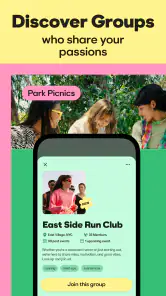
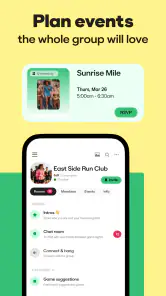
It also sits in a useful middle ground between one-to-one matching and large online communities. A huge forum may offer plenty of conversation but no realistic path to meeting nearby people. A private chat can feel personal but awkward when there is no natural reason to continue. Groups and events provide a bridge: they let me begin with a common activity and allow a friendship to develop at its own pace.
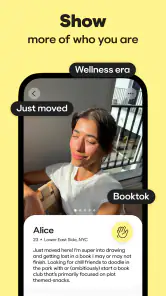
Another non-obvious strength is that the app can reduce the pressure to perform. When the purpose is a real-world gathering, I do not need to create an impressive stream of posts or maintain a carefully polished online identity. I can be more direct about what I enjoy and what kind of social setting suits me. That is particularly helpful for people who dislike the performative side of mainstream social platforms.
I would also use group participation as a filter before moving into private conversation. This is a practical advantage over alternatives that push users toward immediate individual messaging. Seeing how someone communicates around a shared plan can reveal whether they listen, answer questions, and respect boundaries. It is not a substitute for caution, but it creates more context than a short profile can provide.
Small habits that make the app more useful
First, I would avoid joining every interesting group at once. A crowded list of possibilities can create the illusion of progress while making it harder to attend anything. Choosing one or two realistic options is better. The goal is not to collect communities; it is to create a repeatable social routine.
Second, I would use the first event as research rather than as a test of whether I have found lifelong friends. Notice whether the timing works, whether the group size feels comfortable, and whether the activity leaves room for conversation. This helps refine future choices. Someone who dislikes loud, unstructured gatherings may discover that a smaller interest-based meeting is a much better fit.
Third, I would follow up soon after a positive interaction with a concrete suggestion. “That was fun” is pleasant but easy to lose in a busy chat. A simple idea connected to the original activity gives the relationship a next step. This is one of the app’s trade-offs: it can create opportunities, but I still have to do the ordinary human work of showing up and staying in touch.
Finally, I would keep my first meetings public and maintain control over my personal details. The app’s purpose is to help people meet, not to remove the need for normal judgment. I would share only what feels appropriate, tell someone I trust where I am going, and avoid interpreting a friendly profile as a guarantee of safety. That advice applies to any service that connects people offline, but it is especially relevant here because meeting in person is part of the appeal.
When another kind of service may be better
This app is not the right choice for everyone. If I wanted a purely online friendship with no intention of attending local activities, a discussion community or messaging platform would probably be more efficient. Those services are often better for niche interests spread across different countries or time zones. The local focus that makes this app useful can also make it feel limited when the nearby community is small.
It may also disappoint someone who expects a fully managed social experience. The app can help me discover groups and events, but it does not remove the uncertainty of human interaction. I may still need to introduce myself, ask questions, decide whether an event feels suitable, and tolerate a few awkward conversations. For a person who wants a professional organizer to plan every detail, classes, clubs, or scheduled community programs could be a better alternative.
People primarily seeking dating should choose a dating service instead. Although friendships can sometimes lead to wider relationships naturally, that is not the purpose I would use this app for. Its value comes from taking romantic expectations out of the center of the interaction. Using it with a different goal could create confusion for both the user and the people they meet.
There is another trade-off with the group model: a group can be welcoming but still not produce an individual friendship. I would not judge the app as a failure after one event. Sometimes the activity itself is worthwhile even when nobody becomes a close friend. On the other hand, if I repeatedly find that local groups are inactive or poorly matched to my interests, switching to an offline club or a broader online community may save time.
Compared with the usual alternatives, the choice is therefore about the kind of effort I want to make. A dating-style app may offer faster one-to-one discovery, a general social network may provide more constant content, and a hobby club may offer stronger structure. This app is most distinctive when I want local friendship opportunities with enough flexibility to choose my own pace.
What switching to it really costs
The financial barrier is low because the app is free. The more important cost is attention. I need to complete enough of my profile to make my interests understandable, read group information carefully, and participate rather than wait passively for the perfect invitation. If I already use several social services, adding another inbox and another stream of notifications may feel like work.
There is also an emotional cost to trying to meet people. A quiet response, a canceled plan, or an event that feels uncomfortable can be discouraging. I would approach the app with a small experiment: choose a manageable activity, attend with modest expectations, and evaluate the experience afterward. That makes the process less like a high-stakes search for a best friend and more like testing whether the local community fits.
The current version is 3.1.28.5244, and the app was released on January 20, 2022. For me, those details indicate an established product rather than a brand-new experiment, but the important practical question remains local activity. Before making the app part of my routine, I would spend a short amount of time checking whether nearby groups have recent conversation and whether their activities match my availability.
Switching away can be simple if the service does not fit, but I would first consider whether the problem is the app or the approach. If I only browse and never join anything, no friendship platform will feel effective. If I participate thoughtfully and still find no suitable local options, then the evidence is stronger that a different category is better for me.
Who I would recommend it to
I would recommend it to someone who has moved, works from home, wants platonic connections, or feels that existing social networks are too broad and noisy. It is also a good option for a person who prefers meeting through an activity instead of opening with an intense one-to-one conversation. The strongest candidates are willing to take small social risks and understand that the app is a tool for creating opportunities, not an instant friendship machine.
I would be more cautious about recommending it to someone in a location with very little local activity, someone who wants anonymous online discussion, or someone who dislikes arranging plans with strangers. It may also be a poor fit for users who expect every interaction to lead quickly to a close relationship. The app works better when I measure success by useful conversations, comfortable outings, and gradually repeated contact.
My final recommendation is positive, with a clear condition: use it actively and locally. Start with one realistic interest, inspect the event context, keep early meetings public, and follow up with people who make the interaction feel easy and respectful. Do not mistake a high rating or a large overall audience for a guarantee about your neighborhood; test the community yourself.
As a free lifestyle app from Geneva Technologies, Inc, BFF: Make Friends & Meet Up earns its place by focusing on the difficult step between online discovery and real-world friendship. I would choose it over a general social feed when my goal is to meet nearby people, and over a dating app when I want the purpose to stay clearly platonic. Its limitation is equally clear: it can open the door, but I still have to walk through it.
BFF: Make Friends & Meet Up Frequently Asked Questions
Who is BFF: Make Friends & Meet Up designed for?
BFF is for people who want to meet others and make friends rather than use an app focused primarily on dating. It may suit someone who has moved to a new area, wants to find people with shared interests, or is simply looking for new social connections. The app is listed for Everyone, but users should still use care when interacting with people they do not know.
What is BFF: Make Friends & Meet Up?
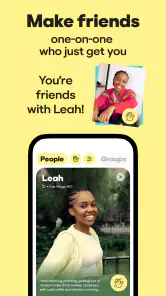
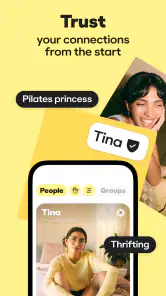
BFF: Make Friends & Meet Up is a social discovery app designed to help people find new friends and build meaningful connections. Instead of focusing primarily on dating, it encourages users to meet others with similar interests, lifestyles, or goals. You can create a profile, browse suggested connections, chat with people, and potentially arrange activities or meetups when you feel comfortable doing so. It is a friendship app by Bumble for meeting people nearby through groups and events in real life.
How does BFF: Make Friends & Meet Up work?
After creating an account, you generally complete a profile with information such as your interests, location, photos, and the type of friendship you want to find. The app then presents potential connections based on available preferences and matching features. If another user interests you, you may be able to connect or start a conversation. Features and matching options can vary by region, device, and app version. Groups and events can also offer ways to connect with people around shared activities.
Is BFF: Make Friends & Meet Up safe to use?
The app may include tools such as profile controls, reporting, blocking, and privacy settings, but no social platform can guarantee that every user has good intentions. Avoid sharing sensitive information, verify profiles carefully, and take time to communicate inside the app before meeting anyone. For an in-person meetup, choose a busy public location, tell someone you trust, and arrange your own transportation.
Is BFF: Make Friends & Meet Up free?
BFF: Make Friends & Meet Up is free to download, although some features may be limited for free accounts. Optional subscriptions or in-app purchases may provide additional visibility, advanced discovery tools, or other benefits. Before subscribing, review the current pricing, renewal terms, and cancellation instructions shown in the App Store or Google Play listing.
Pros
- Interest-based matching helps you find people with similar hobbies.
- Profile prompts make it easier to start meaningful conversations.
- You can adjust discovery settings to narrow down potential matches.
- The app encourages social interaction beyond traditional dating apps.
- Useful for finding local friends after moving to a new area.
Cons
- Some features may require a paid subscription or in-app purchases.
- Matching quality depends heavily on how many active users are nearby.
- Public profiles can expose more personal information than expected.
- Conversations may become inactive when users stop checking the app.
- Meeting people from online requires careful planning and safety precautions.
- Category
- Lifestyle
- Version
- 3.1.28.5244