BarBack - Cocktail Assistant
- 90.00
- 3.8
- Installs
- 50.00K
- Price
- Free

Screenshots
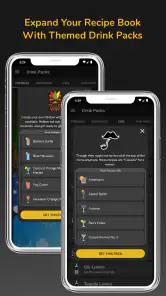
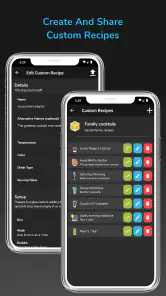
Analysis by Reviewed
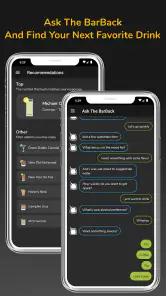
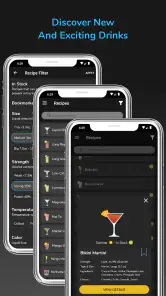
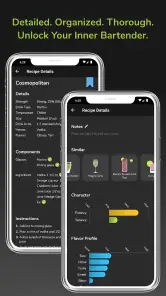
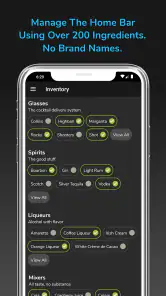
I approached BarBack as the sort of tool you keep nearby when you want to make a drink without turning the process into a research project. Its idea is straightforward: bring cocktail help to your phone, make drink selection less intimidating, and give a home bar a little more structure. After using it as a Food & Drink app, my view is that it works best as a practical companion for casual mixing rather than as a complete replacement for a serious cocktail book or a professional bar system.
That distinction matters. BarBack is free to download, carries an Everyone age rating, and comes from Linkrulz Software. It has reached over 50 thousand installs, with a 3.8 average from more than 300 ratings and around 90 written reviews. Those figures suggest a useful but not universally loved experience, which matches my impression: the app can be handy when its approach fits your habits, but it is not the kind of polished, all-purpose drinks platform that will satisfy every enthusiast.
What using BarBack feels like in a real kitchen
The most convincing use case is an ordinary evening when I have a few bottles, a mixer or two, and no clear idea what to make. Instead of opening several browser tabs and comparing recipes, I can use the app as a starting point for deciding what is realistic. That small change is more valuable than it sounds. Cocktail making often fails before the first pour because the person choosing the drink has not checked whether the ingredients, glassware, or preparation time suit the moment.
I found the “assistant” concept most useful when I treated it as a decision aid rather than an authority. If I am hosting friends, I do not want to browse endlessly while people wait. I want a manageable direction, a recipe I can understand quickly, and enough confidence to make a second round without starting over. BarBack is suited to that kind of low-pressure planning, especially for someone who is still learning the difference between a spirit-forward drink, a sour, and a long mixed drink.
The app also has value before shopping. Rather than buying a random collection of bottles, I can use a few drinks I actually want to make as a rough guide for what belongs in the cupboard. This is one of the less obvious benefits of a cocktail assistant: it can reduce impulse purchases. A beginner who starts with a small, flexible selection will usually get more use from it than someone who buys specialist ingredients simply because a recipe looks impressive.
My practical advice is to open BarBack before going to the store, not after. Think about the kind of occasion first: a quick drink after work, a small gathering, or a weekend experiment. Then use the app to narrow the possibilities. That workflow keeps the phone from becoming a distraction and turns it into a planning tool.
Where the app earns its place
The strongest part of BarBack is its accessibility. It does not require me to already speak the language of cocktail culture. A dedicated recipe book can be excellent, but it may assume that I know why one technique matters, which substitutes are sensible, or how much effort a drink deserves. A general search engine gives me too many results, often with long introductions and inconsistent instructions. BarBack sits between those options: more focused than web searching and less demanding than a specialist reference.
More From Our News Desk

Clash of Clans Is Won Between the Battles

Android Auto Makes the Case for Quieter Car Software

MobiOffice: Transforming Mobile Productivity with Seamless Integration

EA SPORTS FC™ Mobile Soccer: Redefining Mobile Sports Gaming

How Microsoft OneDrive Became a Mobile Productivity Giant

How Google Translate Breaks Language Barriers Effortlessly
That middle position is particularly helpful for occasional drink makers. I do not need a large educational course every time I want a mixed drink. I need something I can consult with one hand while preparing ingredients with the other. The app’s appeal comes from lowering the mental barrier between “I have some bottles” and “I can make something reasonable.”
It is also a better fit for experimentation than relying on memory. I often remember the main spirit but forget the balance of the other components. Guessing can produce an overly sweet or harsh result, especially when I am using unfamiliar brands or changing the serving size. Having a recipe reference close by gives me a baseline. From there, I can adjust carefully instead of improvising every element at once.
One useful habit is to change only one variable after making the first version. If a drink feels too sharp, adjust sweetness; if it feels heavy, change dilution or the amount of the richer ingredient. BarBack is most helpful when it provides that initial structure. It cannot taste the result for me, but it can stop the first attempt from becoming completely random.
Another strength is its suitability for shared preparation. When friends are choosing drinks, I can show them the available options rather than describing every bottle and ingredient from memory. This avoids the familiar problem where one person wants something refreshing, another wants something strong, and nobody can agree on what is possible. The app becomes a conversation starter, not merely a recipe screen.
The difference between a useful guide and a complete bar reference
I would not place BarBack in the same role as a comprehensive cocktail encyclopedia. A specialist book is usually better for history, technique, ingredient substitutions, and detailed explanations of why a recipe works. A web search is better when I need a very specific variation, a replacement for an unusual ingredient, or advice tied to a particular brand. BarBack’s advantage is speed and focus, not depth in every direction.
That trade-off is important for experienced users. If I already know how to balance a drink and keep a well-stocked home bar, I may reach for my own notes faster. The app is more valuable when I need inspiration, a dependable starting point, or a simple way to organize the decision-making process. It can support knowledge, but it does not remove the need for judgment.
I also recommend checking the practical reality of a recipe before committing to it. A phone can present a drink neatly while the kitchen still lacks the right citrus, ice, garnish, or measuring tool. I make a quick inventory first, then choose something that fits what is actually available. This prevents a common beginner mistake: treating a recipe as a shopping command instead of adapting it sensibly.
For a gathering, I would test the first drink before serving it to everyone. Small differences in glass size, ice, and ingredient strength can change the result. BarBack helps me start consistently, but a short trial pour is still worthwhile. That is a concrete advantage over blindly scaling a recipe for several people.
The meaningful limitations I noticed
The main limitation is that convenience can make the experience feel narrower than a full cocktail-learning resource. A beginner may find a drink and follow it, but still wonder what to do when an ingredient is missing, whether a substitute will work, or how to correct an unbalanced result. Those questions are part of real home mixing, and an assistant cannot anticipate every kitchen, preference, and bottle.
This means the app is not ideal for someone who wants detailed coaching. If your goal is to understand technique from the ground up, compare regional styles, or build a professional-level reference library, you will probably want another resource beside it. I see BarBack as the quick layer on top of that knowledge, not the whole education.
There is also a potential friction in relying on a digital tool during preparation. Phones are easy to reach, but they are not always comfortable around spills, sticky fingers, or crowded counters. I prefer to read the recipe before starting, gather the ingredients, and then keep interaction to a minimum. That simple routine makes the app feel more practical and avoids repeatedly stopping to unlock or check the screen.
The current release is version 4.0.3, and the app was released on December 14, 2019. That history gives it the feel of an established utility rather than a brand-new experiment, but it also makes expectations worth managing. I would not assume that every modern cocktail trend, niche ingredient, or advanced bar workflow will be represented. The app is easier to appreciate when I judge it by its core promise: helping with everyday drink choices.
Cost is another part of the decision. The app itself is free, while in-app purchases are listed at $0.99 per item. That makes trying it low-risk, but I would still pay attention to which parts of the experience require an additional purchase before building my entire routine around them. For occasional users, the free starting point may be enough. For frequent users, the value depends on whether the paid items add something genuinely useful to the way they mix.
Who should download it, and who should skip it
I would recommend BarBack to a beginner who owns a few spirits and wants more confidence. It is also a good match for someone who enjoys hosting but does not want to memorize recipes, and for an occasional drink maker who prefers a guided choice over scrolling through social media videos. The Everyone rating makes it broadly accessible as an app, although adults should of course make responsible decisions about alcohol outside the software itself.
It can be especially useful for people who buy ingredients with good intentions and then leave them unused. A regular check-in with the app can turn a neglected bottle into a reason to try something new. I would choose one realistic recipe each week, shop only for what is needed, and note which ingredients are versatile. That approach gives the assistant a practical role in reducing waste rather than encouraging a larger bar.
I would be more cautious about recommending it to advanced home bartenders. If you already have a carefully maintained recipe collection, understand dilution, and regularly create your own variations, a simpler note-taking system may be faster. Similarly, anyone looking for alcohol-free drink planning, nutritional information, or a detailed inventory manager should first make sure the app’s focus matches those needs rather than assuming “assistant” means an all-in-one bar-management tool.
People who dislike using a phone while cooking may also prefer a printed book. A book is easier to annotate, does not depend on battery life, and encourages slower reading. BarBack wins when I want quick access and flexible inspiration; paper wins when I want a lasting reference that I can mark up over time.
My verdict after weighing the everyday trade-offs
BarBack succeeds because it addresses a real small problem: deciding what to make is often harder than mixing the drink itself. Its best quality is not flashy presentation or specialist authority, but the way it can turn an uncertain moment into a manageable plan. I can use it before shopping, while choosing a drink for guests, or when I need a dependable starting point for ingredients already on hand.
At the same time, I would not treat it as a substitute for taste, technique, or a deeper cocktail reference. Its limitations become clearer when I need extensive explanations, unusual substitutions, advanced education, or a complete inventory workflow. The app is strongest when I keep the task modest and realistic.
For me, the final recommendation is positive with a clear condition: download it if you want a pocket-sized helper for casual cocktail decisions, and approach it as a launchpad rather than a master bartender. The free entry point makes it easy to test, while the optional $0.99 items deserve a quick value check before purchase. If your ideal drink-making experience is quick, guided, and practical, BarBack is worth trying; if you want exhaustive expertise, choose a fuller reference instead.
After using it in that role, I understand why the app has built a modest audience without feeling universal. It offers enough direction to make home mixing less intimidating, yet leaves room for the user to supply the judgment and curiosity. That balance is its real identity, and it is the reason I would keep it available for spontaneous evenings rather than rely on it for every part of a serious bar setup.
BarBack - Cocktail Assistant Frequently Asked Questions
What devices can I use BarBack – Cocktail Assistant on?
BarBack is an app for mobile devices, and its minimum operating system requirement is version 11. Before downloading, check that your phone or tablet meets this requirement and has enough available storage. Keeping your operating system and the app updated can also help with compatibility and performance. The app is developed by Linkrulz Software.
Is BarBack suitable for people who do not drink alcohol?
BarBack focuses on cocktail recipes, so it is primarily aimed at people interested in making mixed drinks. Someone who avoids alcohol may still find inspiration in recipes that can be adapted, but should check the ingredients and preparation details carefully rather than assume that non-alcoholic options are included. If you are preparing drinks for guests, ask about their preferences and make any alcohol-free alternatives clear.
What is BarBack – Cocktail Assistant, and who is it designed for?
BarBack – Cocktail Assistant is a mobile companion for people who enjoy preparing cocktails at home. It can help users explore drink recipes, review ingredients, follow preparation instructions, and organize ideas for a personal home bar. It is useful for beginners who need guidance as well as more experienced mixologists looking for inspiration, although the exact tools and recipe selection may vary by app version.
Does BarBack include cocktail recipes for beginners?
Yes, the app is intended to make cocktail preparation easier by presenting recipes in a more accessible format. Beginners can use the ingredient lists and step-by-step directions to understand what is needed before starting. However, some drinks may require specialized spirits, bitters, syrups, bar tools, or garnishes, so users should check each recipe carefully and avoid assuming that every cocktail can be prepared with common kitchen ingredients.
Can BarBack help me use the ingredients I already have at home?
BarBack may be useful when you want to discover drinks based on your available spirits, mixers, and other ingredients. This can reduce the time spent browsing unrelated recipes and help reveal combinations you might not have considered. The usefulness of this feature depends on how accurately you enter or select your supplies, and the app may not always account for substitutions, ingredient quality, or the exact quantities remaining in your bottles.
Pros
- Quickly suggests cocktails based on the ingredients you already have.
- Useful flavor profiles help users discover drinks beyond classic recipes.
- Step-by-step instructions are easy to follow while mixing.
- Ingredient substitutions make recipes more practical for home bars.
- Clean interface keeps browsing and selecting recipes straightforward.
Cons
- The cocktail collection may feel limited for experienced mixologists.
- Some recipes assume access to less common spirits or ingredients.
- Results can be less useful without an accurately updated bar inventory.
- No guarantee that every recipe includes precise nutritional information.
- The app may not replace expert guidance for advanced techniques or ratios.
- Category
- Food & Drink
- Version
- 4.0.3