Aura: Daily I AM Affirmations
- 233.00
- 4.8
- Installs
- 100.00K
- Price
- Free

Screenshots
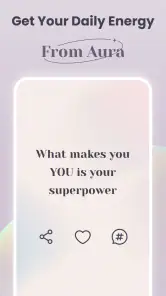
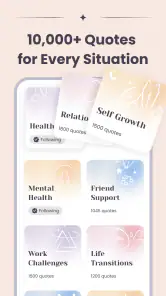


Analysis by Reviewed
I approached Aura: Daily I AM Affirmations as a small daily habit rather than a traditional wellness program. Its focus is simple: place encouraging “I AM” statements where I can see them and use short moments during the day to reset my attention. That makes it very different from a meditation course, mood journal, or therapy tool. I found its appeal strongest when I wanted a gentle prompt in the background, not a long session that demanded complete focus.
The app comes from UPLOSS LIMITED and sits in the lifestyle category. It is free to install, suitable for Everyone, and currently listed as version 1.4.3. The store summary points to daily self-love and positivity through affirmation widgets, while the short description is simply “Aura.” That compact positioning is useful: this is an app built around repeated exposure to positive language, with the widget idea doing much of the practical work.
How Aura fits into an everyday routine
My first useful test for an affirmation app is whether it survives ordinary life. A beautiful screen that I never open has little value, so I looked at the habit from a different angle: where would the message naturally appear? A morning glance at the phone, a pause before starting work, or a moment of uncertainty before a difficult conversation are all more realistic than promising myself a long wellness session every day.
The strongest workflow is to treat the affirmation as a cue, not a command. I would read the statement, pause for a breath, and connect it to one small action. If the message is about confidence, that action might be sending the email I have delayed. If it is about self-kindness, it might mean ending an unproductive comparison instead of opening another social feed. This keeps the app grounded and avoids expecting words alone to solve a complicated emotional problem.
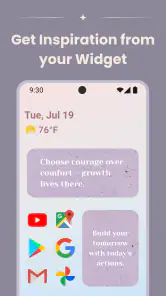
The widget is the important practical idea. It reduces the friction between wanting encouragement and remembering to seek it. With a conventional quote app, I have to decide to open the app, wait for the screen, and browse. A widget can turn the reminder into part of the phone’s normal visual rhythm. That also creates a trade-off: if I place it somewhere crowded, I may stop noticing it, while a prominent position makes the message more useful but also more repetitive.
I would not use the app as a replacement for professional mental-health support, structured cognitive-behavioral exercises, or a personal journal. Affirmations can support a healthier routine, but they are not a diagnosis, treatment plan, or crisis resource. For someone dealing with severe anxiety, depression, or persistent distress, the right next step is human support rather than relying on a positive statement.
What the first few days feel like
The opening experience is likely to make the most sense for people who already enjoy short reminders and visual prompts. There is no need to turn it into a major project. I would start with one widget location and read the message at a fixed point in the day, such as while waiting for coffee or before opening work apps. That approach makes it easier to tell whether the wording actually helps or merely becomes wallpaper.
More From Our News Desk

Clash of Clans Is Won Between the Battles

Android Auto Makes the Case for Quieter Car Software

MobiOffice: Transforming Mobile Productivity with Seamless Integration

EA SPORTS FC™ Mobile Soccer: Redefining Mobile Sports Gaming

How Microsoft OneDrive Became a Mobile Productivity Giant

How Google Translate Breaks Language Barriers Effortlessly
A useful personal filter is emotional credibility. A statement that feels wildly disconnected from my current mood can create resistance. If I am having a difficult day, a gentler thought may work better than an exaggerated declaration. I would mentally translate a strong affirmation into language I can honestly accept today. “I am becoming more confident” may be easier to use than insisting I already feel completely confident.
This is one of the app’s less obvious limitations: the value depends heavily on whether the messages fit the reader. A person who likes direct, upbeat language may enjoy seeing a bold statement repeatedly. Someone who prefers reflective prompts, specific exercises, or neutral mindfulness language may find the approach too broad. The app’s simplicity is its strength, but it also means the user has to supply much of the interpretation.
Speed, responsiveness, and the moments that matter
For this kind of app, perceived speed is less about complex processing and more about whether the daily interaction feels immediate. I would expect a lightweight affirmation experience to be easier on attention than a video-based wellness service or an app that loads long audio sessions. The core task is brief, so delays would be especially noticeable: when I want a quick reset, I do not want to navigate through several layers first.
Heavy use is not the same here as playing a demanding game. The more realistic stress points are repeated widget refreshes, switching between the home screen and the app, and checking messages several times during a busy day. I would judge the experience by whether those small interactions remain comfortable rather than by how much visual content it can process. A widget-based habit should feel almost invisible when it works well.
There is also a behavioral performance issue. If I keep opening the app without applying anything to my day, the routine becomes passive consumption. I found the better pattern to be one message followed by one deliberate action. That makes the app feel faster in a meaningful sense because it reaches its purpose quickly instead of encouraging endless browsing.
Compared with a social-media feed, this is a calmer alternative because it is not built around an unpredictable stream of other people’s updates. Compared with a meditation app, it asks for less time and concentration. Compared with a notes app, it offers a ready-made positive prompt rather than requiring me to write one. The trade-off is depth: those alternatives may provide richer reflection, personalization, or guided structure.
Stability and recovery during normal use
A daily widget needs to be dependable enough that I stop thinking about its mechanics. If the message is available when I glance at the phone, the habit feels natural. If I have to troubleshoot it regularly, the emotional benefit is quickly replaced by irritation. I would therefore set it up once, observe how it behaves through ordinary home-screen use, and avoid placing too many expectations on it before the routine proves itself.
Recovery matters when a habit is interrupted. Missing a morning should not turn into a reason to abandon the app. My preferred recovery method is simple: read the next affirmation at the next available pause and continue, without trying to compensate for the missed day. This is especially important for positivity tools, because guilt about maintaining the tool defeats the point of using it.
The listed release date is July 24, 2025, and the current version is 1.4.3. That gives a reader a clear version reference when checking compatibility or deciding whether an update is available. I would still keep expectations realistic: an affirmation app is not the right place to demand the update cadence or technical breadth of a large productivity platform. Its reliability should be judged by consistent access to its central experience.
One practical recovery tip is to keep the routine independent of a single perfect moment. If I only allow myself to use the app during a formal morning ritual, a late start can break the chain. A better plan is to define two backup moments, such as lunchtime and the last phone check before bed. This is not a special feature; it is a way of making the app’s simple design work better in real life.
Device limits, storage expectations, and battery habits
The minimum operating-system requirement is Android 10, so anyone using an older Android device should check that point before planning around the app. For supported phones, the experience is likely to be most comfortable when the home screen has room for a widget and the device is not overloaded with competing panels. The widget’s usefulness depends as much on placement and visibility as on the app itself.
I would also avoid adding several large widgets simply because the app encourages frequent reminders. One well-placed prompt is easier to notice and should be less visually demanding than filling the home screen with repeated messages. If battery life is a priority, I would observe the phone over a normal day after setup rather than assuming every widget behaves identically across devices and system settings.
Resource demands are best considered relative to the alternatives. A text-centered affirmation reminder should generally ask less of a phone than streaming guided audio or video, but the exact feel can vary with the device, launcher, and background restrictions. If the widget stops updating or disappears after aggressive battery management, the first thing I would examine is the phone’s own background-control settings rather than immediately blaming the app.
This is also where the app may not suit everyone. People with very old phones, tightly restricted work devices, or a home screen already packed with essential tools may prefer a simple notes reminder. Someone who wants affirmations available offline in a carefully organized personal library may likewise prefer writing their own set. Aura is more attractive when visibility and convenience matter more than complete control over the wording.
Costs, audience, and the decision to keep it
The app is free, with in-app purchases ranging from $2.99 to $49.99 per item. That makes the initial decision easy: I can try the central experience without paying upfront. The more important question is whether any optional purchase adds enough value to justify its price for my own routine. I would use the free experience long enough to see whether I actually notice and act on the reminders before spending money.
Because the content rating is Everyone, the app is positioned as a broadly accessible lifestyle tool rather than something aimed at a narrow age group. That does not mean every affirmation will suit every person. A teenager, a busy parent, and someone recovering from burnout may all want positivity, but they may respond to different tones and levels of directness. I would keep only the messages that feel supportive rather than forcing myself to accept language that feels artificial.
The app has reached over 100 thousand installs, with an average rating of 4.8 from around 4 thousand ratings and 233 reviews. Those figures suggest that the concept resonates with many users, but they do not remove the personal-fit question. A high rating cannot tell me whether I prefer affirmations to guided meditation, journaling, or a reminder I write myself. The best evidence is whether I still use the widget after the novelty fades.
For a realistic scenario, imagine opening a laptop before a presentation and noticing an affirmation on the phone’s home screen. I would not expect the message to erase nerves. I would use it to choose one concrete behavior: slow down the first sentence, check the notes once, and begin. That is where the app earns its place. It can interrupt an automatic negative thought, but I still have to do the practical work.
My performance verdict
My overall impression is that Aura works best as a low-effort visual cue for people who want a small daily positivity habit. Its likely performance advantage is its narrow purpose: it does not need to become a full wellness dashboard to be useful. When the widget is visible and the wording feels believable, the experience can fit naturally into moments that would otherwise disappear into scrolling.
Its limitations are equally clear. It is not a deep self-reflection system, it cannot personalize every emotional situation, and repeated positive language may feel superficial to users who want structured guidance. It is also easy to confuse seeing an affirmation with making progress. I would skip it if I wanted detailed mood tracking, long guided sessions, professional support, or complete control over every prompt.
For everyone else, I would recommend a modest trial: install the free version, place one widget where it will genuinely be seen, and connect each message to one small action. Give the habit enough time to become ordinary, then decide whether optional purchases add anything meaningful. My final view is that Aura is most valuable when it stays small, believable, and practical—a quick nudge toward a kinder response, not a promise to fix the whole day.
Aura: Daily I AM Affirmations Frequently Asked Questions
Is Aura: Daily I AM Affirmations suitable for beginners?
Yes. Aura is a lifestyle app centered on brief, positive “I am” affirmations, making it approachable if you are new to this kind of daily practice. You can start by reading an affirmation and taking a moment to reflect on it, rather than needing to learn a complicated system. Its content is rated Everyone, so the app is presented for a general audience.
What is Aura: Daily I AM Affirmations, and how does it work?
Aura: Daily I AM Affirmations is a self-improvement app designed to help you build a consistent positive-affirmation routine. It presents encouraging “I am” statements focused on areas such as confidence, motivation, self-worth, calmness, and personal growth. During testing, the app felt easy to use: you can open a daily affirmation, reflect on its message, and return regularly to develop a more mindful habit.
Is Aura: Daily I AM Affirmations free to download and use?
The app is free to download, but it also offers in-app purchases ranging from a few dollars to around fifty dollars per item. Some content or features may require a purchase, depending on the option you choose. Before committing, check the price and any billing terms displayed in the app store or in the app, so you know what is included with your download and what costs extra.
Can I customize affirmations and receive daily reminders?
Aura is intended for regular use, so personalization and reminders are important parts of the experience. Depending on the version installed, you may be able to select themes that match your goals, save favorite affirmations, and schedule notifications for a preferred time. Notification permissions must be enabled on your device, and the exact customization options can vary between Android and iOS releases.
Does Aura: Daily I AM Affirmations work without an internet connection?
Some basic app functions may continue to work offline after content has already been loaded, but full offline availability should not be assumed. New affirmation content, account synchronization, premium features, or certain media may require an internet connection. If you plan to use the app while traveling or away from mobile data, open it beforehand and verify which sections remain accessible without connectivity.
Pros
- Short daily affirmations make the app easy to use consistently.
- Personalized reminders can help turn positive thinking into a routine.
- A broad range of themes suits different emotional and lifestyle goals.
- Simple presentation keeps the experience approachable for beginners.
- Affirmations can be saved or revisited when extra encouragement is needed.
Cons
- Some users may find repeated affirmations become predictable over time.
- The app is not a substitute for professional mental health support.
- Reminder notifications may feel intrusive if scheduled too frequently.
- Benefits depend largely on regular use and personal engagement.
- Certain affirmations may feel overly general for specific situations.
- Category
- Lifestyle
- Version
- 1.4.3