Astro: Astrology & Horoscope
- 121.00
- 4.5
- Installs
- 1.00M
- Price
- Free

Screenshots
Analysis by Reviewed
I opened Astro: Astrology & Horoscope expecting a quick horoscope app and found something broader: a lifestyle tool that brings daily astrology, birth-chart reading, tarot, zodiac compatibility, and a moon calendar into one place. That combination makes it easy to check casually, but it also changes how I would recommend using it. It works best as a personal reflection space, not as a shared household dashboard where everyone should see the same information.
My overall impression is positive. The app feels suited to short visits: checking the day’s horoscope with coffee, looking at a compatibility reading before a conversation, or browsing the moon calendar when planning a personal routine. It is free to install, aimed at Everyone, and developed by Talentin. The app has reached over one million installs and holds a 4.5 average from around sixteen thousand ratings, which fits my sense that it has a clear audience and a relatively approachable format.
How Astro fits into everyday household use
A useful personal app on a shared phone
The most realistic household scenario is not several people using one profile together. It is one person keeping the app on a phone that other family members occasionally borrow. Imagine checking a daily horoscope during breakfast, then handing the phone to a partner or teenager to look at a calendar or another app. In that situation, Astro is easy to open and browse, but I would still treat its personal readings as private content.
That distinction matters because astrology apps often invite users to enter personal details for a more individualized experience. Even when the app is used casually, a birth chart can feel more intimate than a general horoscope. I would not leave the app open on a chart or compatibility screen if the device regularly moves between household members. Closing the app after use and keeping the phone’s normal device lock active are simple habits that make shared use more comfortable.
For a couple or family interested in astrology, the app can become a conversation starter. One person might read a daily forecast aloud, compare zodiac signs, or use the moon calendar as a prompt for planning a quiet evening. I like that this creates a low-pressure way to share an interest. At the same time, I would avoid presenting a reading as a verdict about another person’s personality. The strongest household use is playful and reflective, rather than treating the app as an authority in arguments.
What the feature mix is actually good for
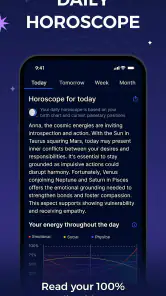
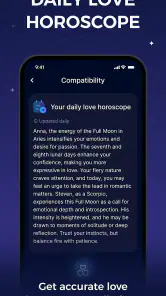
The daily horoscope is the easiest entry point. It gives the app a reason to return without demanding a long session. I found this kind of feature most useful when I treated it as a question for the day: what mood or possibility does this suggest, and does it match what I am actually experiencing? That approach keeps the reading engaging without allowing a vague prediction to control a decision.
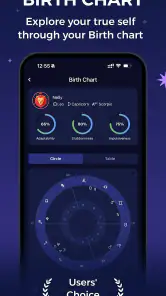
The birth-chart area is better for a slower session. Instead of opening it while distracted, I would set aside time to read through the interpretation and note which parts feel relevant. A practical tip is to separate observations from claims: write down a few descriptions that genuinely resonate, then revisit them later rather than accepting every sentence immediately. This makes the feature more useful for self-reflection and less likely to become a source of overconfidence.
More From Our News Desk

Clash of Clans Is Won Between the Battles

Android Auto Makes the Case for Quieter Car Software

MobiOffice: Transforming Mobile Productivity with Seamless Integration

EA SPORTS FC™ Mobile Soccer: Redefining Mobile Sports Gaming

How Microsoft OneDrive Became a Mobile Productivity Giant

How Google Translate Breaks Language Barriers Effortlessly
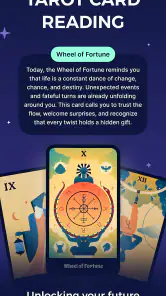
Tarot adds a different style of interaction. I see it as a prompt generator rather than a way to obtain certainty. If I were using it before a difficult conversation, I would ask an open question and use the result to consider an angle I had overlooked. I would not use a card reading to replace medical, financial, legal, or relationship advice. That boundary is especially important when the app is being explored by younger household members who may interpret confident wording literally.
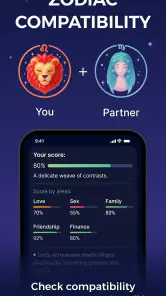
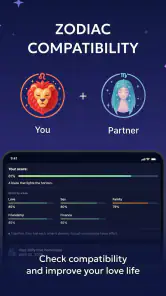
Zodiac compatibility is naturally suited to shared use because it encourages comparison. It can be fun between friends, partners, or relatives, but it has a built-in trade-off: the format can simplify a complicated relationship into sign-based labels. I would use it to start a conversation about communication styles, not to decide whether someone is trustworthy or suitable. The moon calendar has a calmer role and may appeal to users who enjoy observing cycles without wanting a full personality reading.
Setting boundaries before several people use it
Astro is free to download, but that should not be confused with every part of the experience necessarily being free. In-app purchases are listed from $1.99 to $49.99 per item, so I would check the purchase flow before allowing a child or another person to explore it on a shared device. The sensible household rule is simple: only the device owner approves purchases, and nobody taps a payment button without asking first.
This is one of the less obvious points about using a lifestyle app together. A family may think of astrology content as harmless entertainment, yet a curious user can move from a free daily reading toward optional paid material without realizing that the experience has changed. I would explain the difference between browsing and buying in plain language, especially if the phone is shared with a younger person. The app’s Everyone age classification makes it broadly accessible, but it does not remove the need for household guidance.
I would also establish whose information is being entered. If a partner wants a birth chart, I would let that person provide their own details rather than adding them casually. This is both a privacy habit and a matter of respect. A birth chart is personal context, and shared-device convenience should not become an excuse to create profiles for people who have not agreed to it.
Another useful boundary is separating entertainment from important decisions. In my household, a horoscope could influence the tone of a morning or inspire journaling, but it would not determine whether we cancel an appointment, spend money, change medication, or confront someone. Making that rule explicit prevents the app from carrying more authority than it deserves.
Coordinating without turning readings into rules
The app can support coordination when people use it as a common topic. A couple might compare compatibility readings before discussing how they handle disagreements. Friends could look at their signs and laugh about familiar stereotypes. Someone interested in lunar cycles might use the calendar as a personal planning prompt. These activities work because they leave room for conversation and disagreement.
A concrete workflow I would recommend is to choose one feature for the week instead of jumping between everything. Start with the daily horoscope, then write one sentence about whether it matched the day. Later, look at the birth chart or tarot for a more focused reflection. This prevents the app from becoming a stream of disconnected predictions and helps users notice which sections they actually enjoy.
For shared use, I would keep each person’s interpretation separate. One person can read their own chart, explain what they found interesting, and invite others to respond. That is healthier than passing the phone around and making unsolicited judgments about everyone’s personality. Compatibility readings are particularly easy to overuse, so I would treat them as conversation prompts rather than evidence in a disagreement.
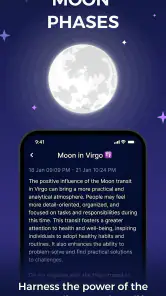
The moon calendar can also provide a neutral meeting point. Unlike a reading about someone’s character, a calendar view gives household members something external to discuss. A person might check it while planning a photography outing, a gardening routine, or simply a night of observation. I would not claim that the calendar guarantees an outcome; its value is in giving an interested user a way to organize attention around lunar phases.
Account separation and the limits of a shared profile
If several people use the same phone, I would avoid treating one open session as a communal account. The app’s appeal depends partly on personal context, so mixing one person’s chart, another person’s compatibility interests, and a child’s browsing can make the experience confusing. Even without a formal household setup, the practical solution is to let each person use the app at a separate time and close it afterward.
I would also avoid assuming that a shared device creates shared ownership of the content. A partner may be comfortable discussing a general horoscope but not want every personal reading displayed. A teenager may enjoy tarot but feel embarrassed if a parent reads the same screen without asking. These are ordinary boundaries, not signs that the app is unsuitable.
For a family that wants synchronized schedules, reminders, or a central planning system, Astro is probably not the right primary tool. Its strength is interpretation and exploration, not household administration. A calendar app, notes app, or family organizer will be better for assigning chores, tracking appointments, and coordinating responsibilities. Astro can sit beside those tools as a personal interest, but it should not be expected to replace them.
Age, trust, and responsible interpretation
The Everyone rating makes Astro approachable for a broad audience, but age suitability is more than a label. Younger users may understand a horoscope or tarot reading as a prediction rather than a prompt. I would introduce the app by explaining that these features are interpretive and recreational. That small conversation can prevent unnecessary worry when a reading uses dramatic or negative language.
Trust also matters between adults. If one person uses the app for self-reflection, another household member should not use a reading as a way to monitor, tease, or pressure them. Compatibility content can be especially sensitive when it is shared without context. I would ask before opening someone else’s result and avoid saving or discussing personal interpretations publicly.
Parents should also remember that a free app with optional purchases can still create spending questions. I would review the device’s purchase protections and make the household rule clear before handing over the phone. Since Astro is available on devices running Android 7.0 or later, it can work on some older phones, which may increase the chance that it ends up on a hand-me-down device used by a child. That makes the purchase conversation and privacy habits even more practical.
One advantage of using the app with guidance is that it can encourage useful reflection. A child or teenager might read a general horoscope and then talk about how they are feeling. An adult can redirect the conversation from “this will happen” to “does this remind you of anything?” That turns the app into a starting point for emotional vocabulary instead of a source of fixed labels.
Where it stands against usual alternatives
Compared with a single-purpose daily horoscope app, Astro offers more variety in one place. I do not need a separate destination for a birth chart, tarot-style exploration, compatibility, and lunar information. That breadth is its clearest advantage, especially for someone who enjoys trying different forms of astrology without building a collection of separate apps.
The trade-off is focus. A dedicated birth-chart service may feel deeper to a serious astrology enthusiast, while a simple horoscope app may be faster for someone who only wants a short daily message. Astro sits between those extremes. It is more flexible than a one-screen horoscope tool, but users looking for a highly specialized system may prefer an app built around only one method.
It also differs from general wellness or journaling apps. Those alternatives encourage reflection without astrology, while Astro supplies a symbolic framework that can make reflection easier for people who enjoy zodiac language and tarot imagery. If you dislike predictive or esoteric content, a mood journal will probably be a better fit. If you enjoy that style but want several related tools together, Astro is more convenient.
For households, the comparison is even clearer. A family calendar is better for shared logistics, and a private notes app is better for confidential writing. Astro is best treated as a personal lifestyle companion that can occasionally be discussed with others. Expecting it to manage family life would create frustration because its purpose is interpretation, not coordination.
Small habits that improve the experience
I would begin with the daily feature and resist the urge to treat every section as equally important. After a few days, keep only the parts that genuinely help you think or relax. This is a useful way to avoid notification fatigue or the feeling that you must consult the app before making ordinary choices.
For birth-chart reading, take screenshots or notes only when the information is yours to keep and share. Then return to the interpretation after some time has passed. The distance helps reveal whether an insight was genuinely useful or merely sounded persuasive in the moment. With tarot, ask one clear question and stop after the reading rather than repeatedly drawing results until you get a preferred answer.
For compatibility, compare the reading with real behavior. If the app describes a supposedly difficult pairing but the people communicate well, lived experience should carry more weight. If a supposedly ideal pairing is causing problems, a zodiac label should not dismiss those problems. This is the most important trade-off in the app: its symbolic language can open a conversation, but it cannot replace observation and trust.
I would also keep the app updated when the device supports it. The current version is 6.12.1, and using the current release is generally the sensible way to access the app as maintained by Talentin. On older devices, I would first check that the phone remains comfortable to use, since a compatible operating system does not guarantee a smooth experience on every model.
Who should install it, and who should skip it
I would recommend Astro to someone who wants several astrology-related activities in one free app and enjoys short, reflective sessions. It is especially appealing if you like moving between a daily horoscope, a more personal birth-chart reading, tarot prompts, compatibility discussions, and a moon calendar without switching between separate tools.
I would be more cautious recommending it to someone who wants strictly evidence-based guidance or who finds predictive language stressful. The app’s subject matter is the point, not a minor decoration, so users who dislike astrology will probably gain more from a journaling or mindfulness alternative. I would also steer away from using it as a household decision-maker, a relationship test, or a replacement for professional advice.
For parents, the app can be acceptable as a supervised or openly discussed interest, particularly because it is rated Everyone. The important conditions are that purchases remain controlled, personal details are respected, and readings are explained as interpretive. For couples and friends, it can be enjoyable when everyone chooses what to share. For a person seeking a private daily ritual, it may be most satisfying when kept as an individual space.
My household verdict
After using Astro as a lifestyle app rather than a prediction machine, I see a well-rounded option for curious users. Its strongest quality is the way it gathers several familiar astrology formats into one accessible place. The free entry point makes it easy to try, while the optional purchases mean I would set clear spending boundaries before sharing a device with anyone else.
The app is not a family organizer, and I would not use it to assign meaning to another person’s behavior. Its role is smaller and more useful: a private source of prompts, a light conversation starter, and an occasional way to pause and reflect. On a shared phone, good habits matter more than complicated coordination—close personal screens, ask before viewing someone else’s information, and keep each person’s readings distinct.
My recommendation is to try Astro if you want astrology, tarot, compatibility, and lunar content together, while keeping your expectations grounded. I would install it for personal exploration and invite household conversations only when everyone is comfortable. Used that way, it earns its place as a friendly, flexible companion; used as a source of certainty or control, it is much less convincing.
Astro: Astrology & Horoscope Frequently Asked Questions
Can I use Astro: Astrology & Horoscope without creating an account?
Whether you can browse without an account depends on the app’s current setup and the feature you want to use. Some astrology content may be available before you build a profile, while personalized readings can call for personal details. If you prefer not to register, check the opening screens and privacy options first, and share only information you are comfortable using for astrology features.
Does Astro: Astrology & Horoscope offer daily content and tools beyond horoscopes?
Yes. Astro: Astrology & Horoscope brings together daily horoscope content with several related astrology tools, including birth charts, tarot, zodiac compatibility, and a moon calendar. That variety may appeal if you want more than a quick zodiac forecast in one lifestyle app. The experience is centered on astrology, so it is most useful for people who enjoy exploring these topics for entertainment or personal reflection.
Can I change my zodiac sign or profile details in Astro: Astrology & Horoscope?
Profile details are important to personalized astrology features, so review what you enter during setup and look through the app’s profile settings if you need to make a change later. Your zodiac sign is generally associated with your birth date, while birth-chart readings can use additional information. Keep in mind that changing those details may affect the readings and recommendations shown to you.
Is Astro: Astrology & Horoscope available in different languages?
Language availability can affect whether an astrology app feels comfortable to use, especially when readings contain detailed interpretations. Check the app’s settings and the relevant store page on your device to see which languages are currently supported. If you use a language other than English, it is worth checking before downloading, since language options may differ across app versions and platforms.
How much storage space does Astro: Astrology & Horoscope need?
The space required for an app can vary with the device and its current version, so check the download details on your phone before installing. It is also sensible to leave some free storage for updates and any content the app may save as you use it. If your device is nearly full, clearing unused downloads or apps first can help avoid installation problems.
Pros
- Personalized birth-chart readings offer more detail than basic daily horoscopes.
- Clean interface makes navigating charts
- forecasts
- and compatibility tools simple.
- Daily notifications help users keep up with new horoscope content.
- Compatibility features provide an entertaining way to compare two birth charts.
- Available astrology content suits both casual readers and dedicated enthusiasts.
Cons
- Many advanced readings and insights require a paid subscription.
- Astrology interpretations may feel too general for users seeking precise guidance.
- Frequent notifications can become distracting unless carefully customized.
- Birth-chart accuracy depends on entering the correct time and location of birth.
- Some features may feel repetitive after extended daily use.

- Category
- Lifestyle
- Version
- 6.12.1