Accountable2You
- 120.00
- 4.0
- Installs
- 50.00K
- Price
- Free

Screenshots
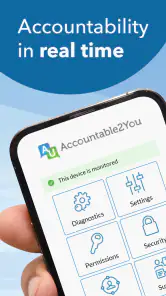

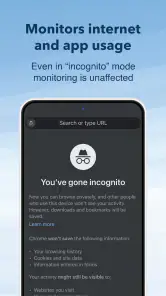
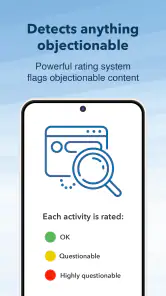
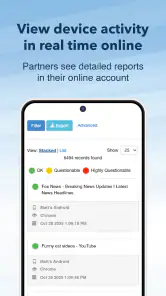
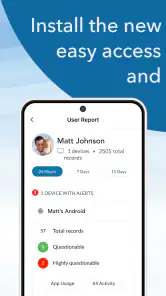
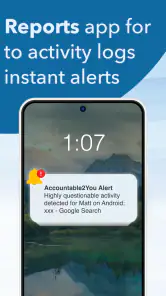
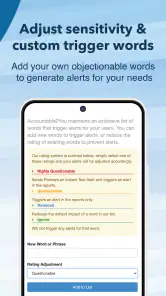
Analysis by Reviewed
I approached Accountable2You as a practical lifestyle app rather than something to open for entertainment. Its central idea is simple: help you live with greater transparency by making your digital habits easier to review and discuss. That can be useful when you have made a personal commitment, are working with an accountability partner, or simply want a clearer picture of how you use your phone.
The first thing I would tell a friend is that this is not a magic solution for changing behavior. It is a structure for accountability. The value comes from combining the app with an honest conversation, a personal goal, or a routine check-in. If you install it expecting instant self-control, it may feel limited. If you want a tool that supports openness and makes follow-through more deliberate, it has a much clearer purpose.
Getting started without overcomplicating the goal
Accountable2You is a free lifestyle app from Accountable2You, LLC, available for Android users on version 7.0 or later. The app is marked suitable for Everyone, and its current version is 1.232-googleplay. It has passed the early-adopter stage, with over 50 thousand installs and a 4.0 average from around 278 ratings, alongside around 120 written reviews.
Those figures suggest a modest but established user base rather than a mass-market social platform. That matches my impression of the product: it is aimed at people who have a specific reason to build accountability into their digital life. The app makes more sense when you already know what you want to improve, monitor, or discuss.
Before opening it, I recommend deciding what “success” means for you. A vague goal such as “use my phone better” is difficult to act on. A more useful starting point might be “I want to review my online habits with a trusted person every evening” or “I want a consistent record that supports the commitment I have made.” The clearer the purpose, the easier it is to judge whether the app is helping.
The free entry point makes experimenting straightforward, but there is an important detail to keep in mind: in-app purchases are listed at $14.99 per item. I would begin with the free experience and only consider spending money after understanding how the app fits your routine. That avoids paying for a promise before you know whether you will actually use the accountability process.
What the app is really for
The phrase “live with nothing to hide” captures the tone, but I found the practical interpretation more useful than the slogan itself. The app is about making responsible behavior visible enough to support trust. That does not mean handing over control of your life to an application. It means creating a repeatable system in which your actions can be reviewed instead of forgotten.
More From Our News Desk

Clash of Clans Is Won Between the Battles

Android Auto Makes the Case for Quieter Car Software

MobiOffice: Transforming Mobile Productivity with Seamless Integration

EA SPORTS FC™ Mobile Soccer: Redefining Mobile Sports Gaming

How Microsoft OneDrive Became a Mobile Productivity Giant

How Google Translate Breaks Language Barriers Effortlessly
That distinction matters. Someone looking for a general screen-time dashboard, a private journal, or a conventional habit tracker may find other tools more direct. Accountable2You is better suited to accountability that involves another person or a clearly defined commitment. It is less about collecting attractive charts and more about making your intentions harder to ignore.
I also would not install it casually on behalf of another person without discussing the arrangement first. Accountability works best when everyone understands what is being shared, why it is being shared, and how the information will be used. The app can support trust, but it cannot create trust where the relationship itself lacks consent or clarity.
The first setup should begin with a conversation
For a first-time user, the most reassuring approach is to install the app with your purpose already written down. Decide who, if anyone, will be part of the process. Then agree on what a useful review looks like. Is it a quick daily check-in? A weekly conversation? A way to notice patterns before they become problems? Defining this early prevents the app from becoming another notification you ignore.
I would also choose one manageable routine instead of trying to change everything at once. For example, you might open the app at the end of your workday, review what needs attention, and discuss it with your accountability partner before dinner. That small loop is easier to maintain than an ambitious plan with no fixed time or outcome.
A useful setup habit is to write down the difference between observation and judgment. Seeing a pattern is not the same as failing. If you treat every uncomfortable result as proof that the system is against you, you may stop using it. If you treat the information as a prompt for an honest conversation, the app has a better chance of becoming helpful rather than punitive.
This is one of the less obvious trade-offs of accountability software: more transparency can improve discipline, but it can also create tension if expectations are unclear. I would discuss boundaries before relying on it. Agree on who reviews information, how often, and what happens when the results are not what you hoped. Those decisions belong to the people using the system, not to the app alone.
Turning the first session into a meaningful result
The first successful action should be small and concrete. After setup, I would not spend a long time exploring every possible option. Instead, I would complete one full accountability cycle: establish the commitment, use the app as intended during the day, and return for a review at the agreed time.
Imagine someone trying to stop using their phone during a nightly family routine. They could decide that phones stay away during dinner, use the app as part of their accountability arrangement, and then discuss what happened at the end of the evening. The meaningful success is not a perfect day. It is completing the cycle and learning whether the arrangement is realistic.
That approach also helps answer the question many first-time users have: “How do I know whether this is working?” I would look for three signs. First, you remember your commitment more often. Second, you can talk about setbacks with specific examples instead of vague guilt. Third, your routine becomes easier to repeat. If none of these happens after a fair trial, the problem may be the goal or the accountability agreement rather than the installation itself.
Another practical tip is to pair the review with an existing habit. Open the app after brushing your teeth, before starting a weekly planning session, or when you finish work. A fixed trigger is more reliable than waiting until you “feel motivated.” This is especially important because accountability tools can become invisible when they are not attached to a regular moment.
I would also keep the first review short. A long inspection can make the process feel like an audit, while a focused conversation encourages consistency. Ask what went well, what was difficult, and what one adjustment would make the next cycle easier. The app supplies structure, but the quality of the review depends on how thoughtfully you use it.
Where new users may become confused
The biggest possible misunderstanding is assuming that the app replaces personal judgment. It does not. A record or report can show something worth discussing, but it cannot explain every reason behind a behavior. A late-night session might reflect work, study, travel, or an emergency. I would treat what the app presents as a starting point for context, not as a final verdict.
Another source of friction is the difference between accountability and surveillance. If you are the only person who wants the arrangement, the experience may feel imposed. If you are using it with someone else, both sides should understand the purpose. Transparency should be voluntary and purposeful, otherwise the tool can damage the trust it was meant to support.
There is also a psychological trap: checking too frequently. Constantly looking for evidence that you are doing well can turn accountability into anxiety. I prefer a scheduled rhythm. It gives the information enough time to reveal a pattern and keeps the app from taking over the day.
Users may also wonder whether the free version is enough. My advice is to test the basic workflow first: install the app, establish the arrangement, complete several review cycles, and decide whether the experience is genuinely useful. Since individual in-app items are listed at $14.99, the sensible question is not whether an extra purchase sounds appealing, but whether it solves a problem you have already identified.
That approach is more helpful than comparing features on paper. If you never complete the first accountability cycle, additional options will not fix the underlying issue. If the routine is working and you can name a specific limitation, then you have a reasonable basis for considering a paid item.
How it compares with familiar alternatives
A standard habit tracker is usually better when your goal is private repetition: drink water, exercise, read, or complete a personal task. A screen-time tool may be better when you only want usage totals, limits, or quick self-monitoring. A notes app may be enough when your accountability process is simply a written promise and a weekly reflection.
Accountable2You occupies a different space. Its strongest reason to exist is the relationship around the information. If another person is part of your commitment, a dedicated accountability app can feel more intentional than sending occasional messages or keeping a private spreadsheet. The structure makes the process easier to remember and gives conversations a shared reference point.
That same focus is its limitation. Someone who wants beautiful long-term charts, broad wellness tracking, or a completely private experience may prefer a more specialized alternative. I would also skip it if you are unwilling to define what accountability means in your situation. Without that foundation, the app risks becoming a source of data without an actionable next step.
In my view, the best comparison is not “which app has the most features?” but “which tool matches the kind of commitment I am making?” For a solitary habit, choose the simplest tool you will open. For a sensitive commitment involving trust and review, Accountable2You is more relevant. For professional monitoring or formal compliance, I would carefully evaluate whether a lifestyle app is appropriate before relying on it.
Making the routine sustainable after the first week
Once the initial enthusiasm fades, consistency becomes the real test. I would schedule a recurring review and keep the questions stable. What did I intend to do? What actually happened? What should change before the next review? Repeating the same structure makes progress easier to notice and prevents every conversation from turning into an emotional debate.
A second useful practice is to separate urgent concerns from gradual improvement. If something requires immediate action, deal with it directly instead of waiting for the next scheduled review. For ordinary setbacks, record the lesson and adjust the routine. This keeps the app in its proper role: supporting a process rather than pretending to manage every decision.
It is also worth revisiting the agreement after a few cycles. A routine that felt reasonable at the beginning may be too demanding, too vague, or poorly timed. Change the schedule or goal when the evidence shows that the arrangement is not sustainable. Accountability is not the same as rigidity; a system that cannot adapt is unlikely to last.
For families, couples, or friends, I would be especially careful about tone. Focus on shared goals rather than catching someone out. For personal use, write down the next action immediately after reviewing the app. That turns reflection into behavior. For example, if evenings are difficult, decide what will be different tonight instead of merely noting that yesterday was disappointing.
The app is free to download, carries an Everyone age rating, and has a clear lifestyle focus, so it is approachable for many first-time users. Still, approachability should not be confused with suitability for every situation. The more sensitive the commitment, the more important it is to establish consent, expectations, and a respectful review habit before depending on the tool.
My recommendation for the right kind of user
I would recommend Accountable2You to someone who wants a deliberate accountability routine and is prepared to participate honestly. It is particularly worthwhile when a trusted person is part of the process, because the app gives that relationship a regular structure instead of leaving everything to memory and good intentions.
I would be more cautious about recommending it to someone who only wants basic personal productivity. A simple checklist may be faster. I would also point a privacy-focused user toward a careful consideration of the social arrangement before installing anything. The question is not only whether the app can help, but whether sharing and reviewing information will feel respectful and voluntary.
My most practical recommendation is to start with one goal, one review time, and one accountability partner if another person is involved. Use the free experience long enough to complete a genuine routine, not just a quick test. Then judge it by whether it helps you have clearer conversations and make more consistent choices.
Overall, Accountable2You is a focused lifestyle app with a purpose that becomes clearer through use. It will not motivate everyone, and it is not a substitute for trust, context, or personal responsibility. But when the goal is defined and the review process is agreed in advance, it can turn a vague promise into a repeatable practice. For me, that is its strongest quality: it makes accountability easier to organize without pretending that an app can do the hard human part for you.
Accountable2You Frequently Asked Questions
What should I consider before installing Accountable2You?
Accountable2You is a lifestyle app from Accountable2You, LLC, with the message “Live with nothing to hide!” It is intended for people who want more accountability around online behavior, so it is worth thinking through your goals and who, if anyone, you would involve as an accountability partner before installing it. The app is free to download, and its content rating is Everyone.
What does Accountable2You cost, and are there in-app purchases?
Accountable2You is free to download, with in-app purchases listed at $14.99 per item. The app has a 4.0 average from 278 ratings, and its release date is March 11, 2023. Before subscribing or making a purchase, review the available options and terms in the app so you can choose what fits your needs.
What is Accountable2You and how does it work?
Accountable2You is an accountability and monitoring app designed to help users make more intentional choices online. After installation, it can monitor activity across supported devices and services, identify potentially concerning content, and generate reports that may be shared with a trusted accountability partner. The app is commonly used for digital self-control, recovery support, family guidance, or reducing access to distracting and inappropriate websites.
Which devices and platforms are compatible with Accountable2You?
Accountable2You is available for several major platforms, including Android, iPhone, computers, and other supported devices, although features can vary depending on the operating system. Before downloading, users should check the current compatibility list and system requirements on the official website or app store. Some monitoring functions may require separate installations, permissions, browser extensions, or configuration on each device. The Android version requires Android 7.0 or later.
Does Accountable2You block websites and apps automatically?
Accountable2You primarily focuses on monitoring, reporting, and accountability rather than functioning as a traditional parental-control blocker. Depending on the platform and subscription setup, it may flag activity, provide alerts, or support filtering and restriction features, but users should not assume that every website or application will be blocked automatically. Its strongest feature is transparency with a trusted partner who can review reports.
Pros
- Detailed activity reports help identify risky browsing habits.
- Supports accountability partners with customizable report sharing.
- Works across major desktop and mobile platforms.
- Tamper-resistant monitoring makes disabling oversight more difficult.
- Useful filtering and alerts can encourage healthier digital routines.
Cons
- Some advanced features require a paid subscription.
- Monitoring may raise privacy concerns for some users.
- Reports can feel intrusive or uncomfortable to review.
- Setup takes time when installing on several devices.
- Occasional false positives may flag harmless websites or apps.
- Category
- Lifestyle
- Version
- 1.232-googleplay