A Better Routeplanner (ABRP)
- 520.00
- 4.7
- Installs
- 1.00M
- Price
- Free

Screenshots
Analysis by Reviewed
I would not begin an EV trip by trusting a route line alone; I’d first check that the planner understands my car and starting battery. That small habit is what makes A Better Routeplanner useful to a first-time user: it turns range worries into a plan you can inspect and adjust, rather than asking you to guess whether a long drive is possible.
What to expect from an EV-focused planner
ABRP is a free Maps & Navigation app from Iternio Planning AB. Its focus is different from a typical map app: instead of mainly finding a road between two places, it plans around an electric vehicle’s energy needs and charging stops. It has a 4.7 average from around 20,000 ratings, and more than a million installs. The app is for Everyone, and its current version is 6.1.9.
That focus is the main reason to try it, but it also sets expectations. A general navigation app may be the simpler choice for a familiar local drive, where I already know my car has plenty of charge. ABRP is more useful when the distance, weather, or charging options make the trip worth thinking through in advance. It is not a substitute for paying attention on the road: I’d treat its route as a plan to review, not a promise that every stop will suit the moment.
Make the first plan fit your car
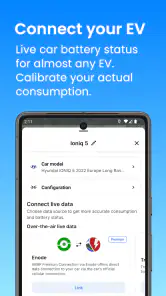
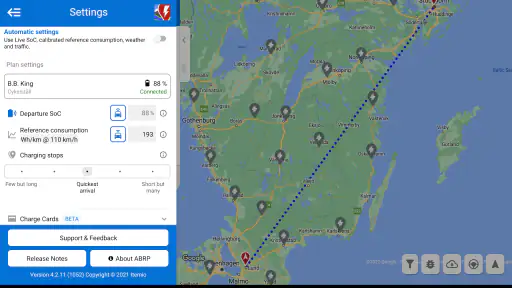
When setting up a trip, choose the vehicle that matches what you drive, enter your starting point and destination, then check the starting battery level. Those details matter: a route based on a different vehicle or an optimistic charge estimate can make the suggested stops less useful. ABRP also considers external factors such as weather conditions, so it can offer a more tailored estimate than a route planner that ignores EV energy use.
Before setting off, I’d also choose an arrival battery target that feels comfortable for the trip. This is a practical buffer, not just a number to fill in: if I’m heading somewhere unfamiliar or want room for a detour, I can plan to arrive with more charge. If I’m confident about the route and want fewer charging breaks, I can adjust that expectation. The trade-off is straightforward: a cautious plan may mean stopping sooner or more often, while an aggressive one leaves less flexibility.
Turn the route into a useful first trip
For a first test, I’d plan a journey I already understand rather than relying on the app for an important, unfamiliar drive. Look over the proposed charging stops before leaving and ask whether the overall schedule feels workable. This helps me learn how the planner responds to my vehicle and settings without adding the stress of navigating somewhere new at the same time.
Imagine driving to visit family in another town on a cold or wet day. I can enter the destination, check the route and planned charging, and set an arrival battery level that leaves a little breathing room. During the trip, ABRP’s updates can help me follow progress and reconsider the plan if circumstances change. I would still check a stop’s status before relying on it, because a route suggestion cannot remove the need for judgment when conditions on the day differ from expectations.
You May Like

Clash of Clans Is Won Between the Battles

Android Auto Makes the Case for Quieter Car Software

MobiOffice: Transforming Mobile Productivity with Seamless Integration

EA SPORTS FC™ Mobile Soccer: Redefining Mobile Sports Gaming

How Microsoft OneDrive Became a Mobile Productivity Giant

How Google Translate Breaks Language Barriers Effortlessly
Planning Your Journey
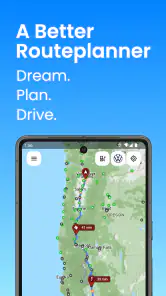
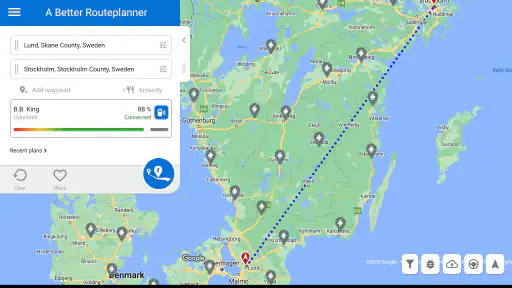
First off, the interface of A Better Routeplanner is pretty slick. You pop in your starting point and destination, and voilà, it crafts a route that’s optimized for electric vehicles. No more guessing games about whether you’ll make it on a single charge. The app takes into account your car’s model, current battery level, and even external factors like weather conditions. Talk about smart planning!
Personalized Settings
What I love about ABRP is the ability to tweak settings to match my driving style. Want to drive a bit faster or take it slow to conserve energy? The app has options for that. You can set your desired arrival battery percentage, so you’re not left stranded in the middle of nowhere. It’s like having a personal travel assistant in your pocket, minus the exorbitant salary!
A useful next step is to try two versions of the same trip: one with a higher arrival reserve and another with a lower target. Comparing them makes the cost of extra caution visible in the route plan, rather than leaving me to wonder why the suggested charging pattern changed. I’d also avoid changing several settings at once; adjusting one at a time makes it easier to understand which choice affected the result.
Real-Time Updates
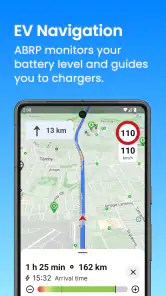
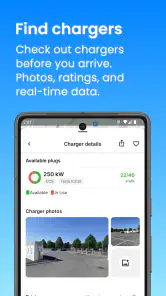
Another cool feature is the real-time updates. As you drive, ABRP keeps you informed about the status of charging stations along your route. It’s like having a co-pilot who’s constantly checking in on your progress. This is especially handy if you’re in an unfamiliar area and need to make adjustments on the fly.
The main limitation is that a live status update is helpful context, not a guarantee that a charger will be available or work as hoped when I arrive. I’d keep a backup option in mind on a long leg, especially when I have little battery margin. For day-to-day errands, that extra planning may feel unnecessary; for a multi-stop journey, it can prevent a single unexpected change from throwing off the whole day.
Community Support
One of the standout features of ABRP is its strong community support. Users can contribute data about charging stations, ensuring that the information is always up-to-date. There’s also a forum where you can share tips and tricks with fellow electric vehicle enthusiasts. It’s like being part of a big, eco-friendly family!
ABRP is best suited to drivers who want to think through charging before a longer drive, or who are still learning how their EV behaves on different routes. If I only need familiar turn-by-turn directions, my usual map app may be quicker and less involved. The app is free to start, with in-app purchases listed from $4.99 to $49.99 per item, so I’d begin with the free experience and decide whether I need anything more only after trying a real journey.
So, if you're driving an electric vehicle and haven’t tried ABRP yet, I’d say give it a shot. It’s designed to make your journey as smooth and efficient as possible. Trust me, with this app, you'll be cruising with confidence, knowing exactly where and when to charge up. Happy travels!
Read the route as a plan, not a command
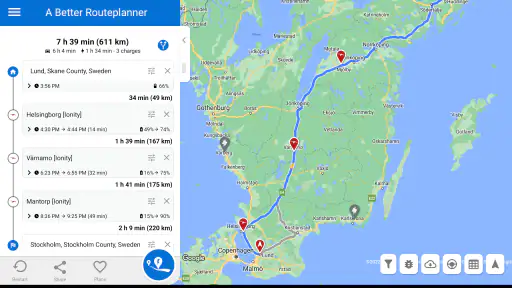
The most useful way I’ve found to judge a proposed journey is to inspect each leg, not just the total arrival estimate. A route can look reassuring overall while still asking me to reach a particular stop with little spare charge. I’d pay special attention to that leg, then decide whether I’m comfortable with the margin or would rather choose a more conservative arrival target. This is a practical check that takes only a moment and helps turn an abstract estimate into a decision I can own.
There is also a difference between a route that is technically possible and one that fits the day I actually want. A faster plan may have fewer or shorter charging breaks, but it can leave less room for a missed turn, a change in weather, or an unplanned stop. If I’m travelling with children, meeting someone at a set time, or simply dislike watching the battery closely, I’d favor breathing room over a tightly optimized schedule. The app helps expose that trade-off; it cannot decide which kind of trip feels comfortable to me.
A sensible routine before leaving
For a longer drive, I’d make the plan while parked and treat the final check as a small departure routine: confirm the vehicle and starting charge, review the destination and arrival reserve, then look over the charging sequence. I’d also make a note of a plausible alternative stop where the plan gives me little margin. This is not because every route is likely to go wrong; it is simply easier to think clearly about options before I’m on the road than while trying to react to a change.
That routine is especially useful when someone else is sharing the driving. I can explain where the planned breaks fall and why the arrival reserve matters, rather than handing over a route with no context. If the driver changes, the route can still be understood as a sequence of energy decisions, not just a line on a map. For a passenger who is helping navigate, that makes it easier to spot when the day’s conditions no longer match the assumptions behind the plan.
When another map app is the better tool
ABRP’s EV focus is a real advantage on journeys where charging shapes the route, but it can be more planning than I need for a short, familiar drive. For ordinary navigation, a general map app is often the faster choice because I can enter a destination and go without thinking about an arrival battery target or comparing charging strategies. I would not replace a simple everyday directions app just to use ABRP for every trip; I’d keep it for the drives where vehicle range and charging stops affect the decision.
Nor would I use a projected energy plan as my only source of truth about a charging stop. The route can guide where to look, while a separate check of the stop’s current situation and my own judgment help me decide whether to rely on it. That distinction matters most on a remote or time-sensitive journey. The planner’s value is in helping me anticipate the shape of the trip, not in making uncertainty disappear.
Who will get the most from it
I’d recommend trying ABRP if you own an EV and are planning a longer drive, if you are still learning how your vehicle’s range changes with conditions, or if you want to compare a cautious itinerary with a more direct one before leaving. It can also be useful when a destination is unfamiliar and you want to arrive with a deliberate reserve instead of relying on a vague sense of how much charge should be enough.
I’d skip it for a driver who wants nothing beyond quick local directions, or for someone who is not willing to review a charging plan and adapt it when circumstances change. The app is most valuable when I engage with its assumptions; if I expect any navigation tool to make every decision for me, its EV-specific detail may feel like extra work. That is not a flaw so much as a question of fit.
Getting comfortable with the first result
If the first route surprises you, I would not immediately assume the app has made a mistake. Check the selected vehicle, the starting battery level, and the arrival target first. A small change in one of those inputs can alter the suggested charging pattern. Then compare the result with what you know about the journey and decide whether the assumptions feel reasonable. Changing one setting at a time is the clearest way to learn what is influencing the recommendation.
For a first meaningful success, choose a trip where you already know the roads and have enough time to review the proposal. Let ABRP show the charging plan, then use your own knowledge to check whether the stops and reserve suit your preferences. That gives you a low-pressure way to learn the workflow before depending on it for a trip where you have no familiarity with the route.
My final take
ABRP earns its place as a planning companion rather than a universal replacement for a map app. It is aimed squarely at electric driving, and that makes its vehicle-aware route and charging considerations more useful than ordinary directions when a longer journey needs preparation. I like that I can shape the plan around a reserve that suits me, while still being reminded that estimates and live information need a real-world check.
There is a learning curve if you have never planned a trip around charging, and the extra detail may be unnecessary for short everyday journeys. But once I approach it as a tool for comparing options and preparing for the road, rather than as an unquestionable instruction, it becomes much easier to use. I’d start with a familiar drive, check the assumptions, and keep a backup in mind for any leg that feels tight. That is the kind of practical confidence an EV route planner should offer.
A Better Routeplanner (ABRP) Frequently Asked Questions
Do I need to create an account before planning a trip with ABRP?
ABRP is designed around planning electric-vehicle journeys, so the key first step is entering trip details such as your vehicle and destination. Before downloading, consider whether you want an app focused on EV route planning rather than a general-purpose map. You can explore how its planning approach suits your needs and decide what information you want to use when arranging a trip.
Can I plan a route with several destinations or charging stops?
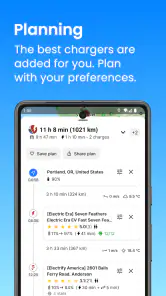
ABRP focuses on planning trips with an electric vehicle and takes charging stops into account when building a route. That makes it relevant for journeys where reaching the destination involves more than simply following a road route. You can review the proposed trip and its charging plan before setting off, then decide whether the route fits your intended journey.
Is A Better Routeplanner (ABRP) suitable for someone new to electric-vehicle trip planning?
Yes. ABRP is a Maps & Navigation app focused on helping electric-vehicle drivers learn about and plan trips. Its route planning considers your vehicle and charging stops, making it useful if you are still getting familiar with how to account for charging during a journey. You can explore a planned route before setting off and decide whether the app fits the way you travel.
What is A Better Routeplanner (ABRP)?
A Better Routeplanner (ABRP) is a popular app designed to help electric vehicle (EV) owners plan their trips efficiently. It calculates the best routes based on charging station locations, vehicle type, and real-time traffic conditions. ABRP ensures you have the optimal route for your EV, minimizing the time spent at charging stations and helping you reach your destination smoothly.
How does ABRP calculate the best route for my electric vehicle?
ABRP uses advanced algorithms to calculate the best route for your electric vehicle by taking into account various factors such as your car model, battery capacity, and current charge level. It also considers the availability and location of charging stations along your route and real-time traffic conditions, ensuring an efficient and hassle-free journey.
Pros
- Accurate route planning
- Supports multiple vehicle types
- Real-time traffic updates
- Easy-to-use interface
- Comprehensive charging station data
Cons
- Requires internet connection
- Can drain battery quickly
- Subscription needed for full access
- Occasional map glitches
- Limited offline functionality

- Category
- Maps & Navigation
- Version
- 6.1.9