9PM - Match, Chat & Date
- 1.90K
- 4.6
- Installs
- 100.00K
- Price
- Free

Screenshots




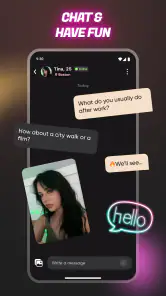



Analysis by Reviewed
I approached 9PM as someone looking for a more direct way to meet people online, not as a replacement for every social network I already use. It sits in the social and dating space, with a focus on starting conversations, building a little chemistry, and deciding whether a connection is worth taking further. That sounds simple, but the quality of the experience depends heavily on how carefully I move from browsing to chatting and then from chatting to meeting.
My first impression is that this is best understood as a conversation-led app. It is not merely a profile directory, and it does not make a connection meaningful just because two people show interest in each other. The useful part begins after the initial discovery: how quickly I can find someone compatible, whether the chat feels natural, and whether both people can move toward a clear outcome without wasting time.
From opening the app to finding a promising conversation
The app is developed by 9PM and is free to download, which makes it easy to try without committing money at the beginning. It is rated for mature users aged seventeen and over, so I would not treat it as a casual all-ages social app. The tone and purpose are clearly aimed at adults who want to flirt, date, make friends, or have more personal conversations.
I found the starting condition important: you need to know what you want before you begin. Someone looking for a serious date, someone hoping to make new friends, and someone interested mainly in light flirting may all use the same app, but they will judge conversations differently. If I enter without deciding which of those goals matters most to me, I am more likely to spend time on chats that feel active but never go anywhere.
The app’s central promise is broad enough to attract different kinds of users. That flexibility is useful when I am open to meeting people outside a narrow dating plan, but it also creates a responsibility to communicate clearly. A friendly conversation can be interpreted as romantic interest, while a flirtatious exchange may be understood as a promise of a date. I would state my intentions early rather than relying on the other person to guess.
One practical habit makes the opening stage much better: I would prepare a profile that gives someone an easy reason to start a conversation. A vague profile forces the other person to ask basic questions, while a few specific interests create natural openings. This is especially important in an app built around chat, because the first message is not a small detail; it is the handoff between discovery and an actual interaction.
I also recommend resisting the urge to treat every visible profile as a potential match. The app can be useful for widening the circle, but quantity is not the same as progress. I would look for signs of compatible communication style, a realistic reason to connect, and enough information to form a respectful opening message. That approach reduces the common dating-app problem of collecting matches without developing any real exchange.
More From Our News Desk

Clash of Clans Is Won Between the Battles

Android Auto Makes the Case for Quieter Car Software

MobiOffice: Transforming Mobile Productivity with Seamless Integration

EA SPORTS FC™ Mobile Soccer: Redefining Mobile Sports Gaming

How Microsoft OneDrive Became a Mobile Productivity Giant

How Google Translate Breaks Language Barriers Effortlessly
Turning a match into a real exchange
Once a conversation begins, I would keep the first few messages light but specific. Asking a question that relates to something the person has shared is more effective than sending a generic greeting. It also gives me an early test of effort: if the other person answers thoughtfully and asks something back, the conversation has a better chance of becoming mutual.
This is where 9PM feels more useful than a conventional social feed. A feed encourages passive scrolling, while a dating-and-friendship app puts the emphasis on one-to-one contact. That does not automatically create better relationships, but it makes the next step clearer. I am not simply consuming posts; I am deciding whether to invest attention in a particular person.
My advice is to use a short sequence rather than trying to force instant intimacy. Start with shared interests, move toward everyday preferences, and then see whether the person communicates consistently. This workflow helps reveal compatibility without turning the chat into an interview. It is also a safer way to notice warning signs before sharing personal details or making plans.
A useful, less obvious trade-off is that a fast move to flirting can create excitement but reduce clarity. If both people want the same thing, it may work well. If one person is looking for friendship and the other is pursuing a date, the conversation can become uncomfortable quickly. I would treat flirting as something to introduce after the tone feels mutual, not as the default opening strategy.
The app can also suit people who are tired of dating platforms that make every interaction feel like a formal application. Its wider social purpose leaves room for a less rigid beginning. However, that freedom means I would need to ask direct questions sooner than I might on a more narrowly defined dating service. The broader the purpose, the more important the conversation becomes in establishing expectations.
The handoff from chat to a possible meeting
The most important handoff is the move from online conversation to a real-world plan. I would not interpret a long chat as proof that a meeting will work. Text can hide differences in pace, humor, availability, and boundaries. Before suggesting a meeting, I would look for a basic pattern of reliability: replies that make sense, willingness to answer ordinary questions, and respect for a clearly stated limit.
A first meeting should be simple and easy to leave. A public place, a short time window, and independent travel give both people room to change their minds without creating unnecessary pressure. I would also tell a trusted person where I was going and avoid treating the app’s friendly atmosphere as a substitute for normal safety judgment.
This is one area where the app’s social flexibility can be both a strength and a weakness. It may feel less intimidating to suggest a casual coffee or daytime walk than to announce a formal date. On the other hand, a person who wants a committed relationship may find the broad “chat, meet, and connect” approach less efficient than a service designed around detailed relationship preferences.
Another practical insight is to agree on the purpose of the meeting before arranging it. “Let’s meet sometime” is easy to say and difficult to act on. A clearer plan includes the type of activity, a general duration, and a way to confirm. If the other person avoids every concrete detail while continuing to flirt, I would consider that a sign to slow down rather than keep investing.
The handoff can also go in a different direction: from a promising chat back to a slower online connection. Not every good conversation needs to become a meeting immediately. If distance, schedules, or personal comfort make an in-person plan premature, continuing to chat can be reasonable. The key is that both people should understand the pace rather than allowing an indefinite exchange to create assumptions.
What the result looks like in everyday use
A realistic use case would be someone who has recently moved to a new area and wants both social contact and the possibility of dating. They could use 9PM to begin with conversations instead of attending an event alone, identify people with similar interests, and suggest a low-pressure meeting only after the exchange feels reciprocal. The result may be a date, a friendship, or simply a useful conversation, and all three can be worthwhile if the expectations were clear.
I can also see it working for a person who prefers writing before meeting. Some people need a little time to understand whether another person is respectful and interesting. The chat stage provides that buffer. It is not a guarantee of safety or compatibility, but it gives me more information than a quick glance at a profile.
For someone who dislikes prolonged messaging, the same workflow can be shortened. I would exchange enough messages to establish basic comfort, then suggest a brief public meeting instead of letting the conversation become an endless routine. This is a good example of how the app can support different styles, provided I remain honest about what I am seeking.
The app has attracted a substantial audience, with an average rating of 4.6 from around 21 thousand ratings and more than 100 thousand installs. Those figures suggest that it has found an active place among people interested in this kind of connection, although popularity should not be confused with a guarantee that I will find a compatible person in my area.
Its current version is 1.1.2 and it works on Android 7.0 or later. That broad compatibility is helpful if I use an older device, but I would still keep the app updated when possible because communication apps are more useful when the version on my phone is current. The straightforward entry point also makes it suitable for someone who does not want to learn a complicated system before sending a message.
Where the workflow breaks down
The first weak point is ambiguity. Because the app supports dating, friendship, flirting, and general connection, two people can begin with completely different outcomes in mind. A person who wants a committed relationship may become frustrated by chats that remain casual, while someone seeking friendship may feel pressured by romantic expectations. I would not blame the app for every mismatch, but its broad purpose makes direct communication essential.
The second weak point is that chat quality depends on the people available, not only on the interface. Even a well-designed conversation flow cannot make an unresponsive match engaging. I would expect some chats to end without explanation, and I would avoid treating that as a personal verdict. The practical response is to invest gradually and move on when the effort is clearly one-sided.
There is also a real cost consideration. The app itself is free, but in-app purchases range from $1.99 to $99.99 per item. That makes it important to understand what I am paying for before confirming any purchase. I would begin with the free experience, decide whether the conversations are genuinely useful, and set a personal spending limit rather than buying features simply because a chat has gone quiet.
That payment model may suit someone who wants optional extras while keeping the initial barrier low, but it is less appealing to a user who prefers a fully predictable subscription or a service where every core interaction is clearly included. If paying for add-ons makes the experience feel like a constant optimization exercise, a simpler alternative may be a better fit.
Privacy and personal boundaries are another point where the workflow can fail if I move too quickly. I would keep identifying information limited during the early stage, avoid sending money, and be cautious about anyone who tries to move the conversation into pressure, secrecy, or urgent requests. These are sensible rules for any dating service, but the app’s emphasis on meeting and making real connections makes them especially relevant before a handoff into real life.
I would also skip this app if I am looking only for a tightly filtered matchmaking system. Someone who wants detailed compatibility tools, a narrow relationship objective, or a highly structured process may prefer a traditional dating platform with that specific design. Likewise, if I want a public community organized around hobbies rather than one-to-one personal contact, a group-based social network may offer a better route.
Who will get the most from 9PM
9PM is a good choice for adults who want conversation to come before commitment. It suits people who are open to dating or friendship, enjoy getting to know someone through messages, and are willing to make their intentions clear. It is particularly useful when I want a softer transition into meeting rather than an immediate, formal date.
I would recommend it to a newcomer who has patience and a sensible process: create a specific profile, start with thoughtful messages, check for mutual effort, and arrange a low-pressure meeting only when the interaction supports it. That workflow produces better results than chasing every possible match or assuming that frequent messages equal genuine trust.
I would be more cautious about recommending it to someone who becomes emotionally invested very quickly, dislikes ambiguity, or expects every match to lead to a date. The app can open doors, but it cannot decide which connections deserve continued attention. That judgment remains the user’s responsibility.
It is also not the right choice for anyone under the stated mature age rating, or for someone uncomfortable with the possibility of romantic and flirtatious conversations. Even when the goal is friendship, the surrounding context can be personal. I would choose a different kind of social app if I wanted a clearly non-dating environment.
My final take after following the full journey
I like the basic path offered by 9PM: discover someone, begin a conversation, test the connection, and decide together whether to meet. The app’s strongest idea is not simply matching people; it is giving a conversation room to become the deciding factor. That makes it more flexible than a narrowly romantic service, while still being more purposeful than an ordinary social feed.
My reservations are equally clear. The broad audience can make intentions unclear, chat quality will vary, and optional purchases require self-control. The route from a first message to a real meeting also demands careful judgment, because no app can remove the risks of dealing with strangers.
After weighing those points, I would recommend trying it if I wanted a free starting point for meeting adults through chat and remained comfortable setting boundaries. I would use it deliberately rather than endlessly, keep the first meeting simple and public, and judge success by the quality of the connection rather than by the number of conversations. Used that way, 9PM offers a practical bridge between online interaction and a genuine social outcome.
9PM - Match, Chat & Date Frequently Asked Questions
What kind of app is 9PM - Match, Chat & Date?
9PM - Match, Chat & Date is a social app focused on dating and making friends. Its purpose is to help people chat, meet, flirt, and build connections. If you are looking for a space centered on meeting and communicating with other people, that is the app’s main appeal; it is not presented as a general-purpose messaging or entertainment app.
Who develops 9PM - Match, Chat & Date, and is it an established app?
The app is developed by 9PM. It has been available since April 22, 2025, and has passed 100,000 installs. Its average rating is 4.6 from around 21,000 ratings, with around 1,900 written reviews. Those figures offer a sense of its reach and reception, though individual experiences with a dating app can vary.
Is 9PM - Match, Chat & Date intended for adults?
Yes. 9PM - Match, Chat & Date is rated Mature 17+, so it is intended for older teens and adults rather than young children. It is a social dating app for people interested in chatting, flirting, making friends, and forming connections. Consider whether that audience and purpose suit you before installing it, and use the platform respectfully when interacting with other members.
What does 9PM - Match, Chat & Date cost, and are there paid features?
9PM - Match, Chat & Date is free to download, with in-app purchases available. Optional purchases range from $1.99 to $99.99 per item, so costs can vary depending on what you choose. Review any purchase details in the app before confirming, especially if you plan to use paid features regularly, and check the payment settings on your device to avoid unexpected purchases.
What is 9PM - Match, Chat & Date, and how does it work?
9PM - Match, Chat & Date is a social dating app designed to help people discover potential matches, start conversations, and arrange dates. After creating a profile, you can usually browse suggested users, review their photos and information, and express interest. If the interest is mutual, the app enables chatting. The exact experience may vary depending on your location, profile settings, and available features.
Pros
- Simple matching system that is easy for new users to understand.
- Chat features make it convenient to continue conversations in one place.
- Useful for meeting people with similar dating intentions.
- Clean interface keeps profiles and interactions easy to navigate.
- Can help users connect beyond their usual social circle.
Cons
- The quality of matches may vary depending on your location.
- Some features may require a paid subscription or in-app purchases.
- Inactive or incomplete profiles can reduce the overall experience.
- Users should be cautious when sharing personal information in chats.
- Notifications may become distracting if you receive frequent matches.
- Category
- Social
- Version
- 1.1.2