Tiki Solitaire TriPeaks
- 130.79K
- 4.5
- Installs
- 10.00M
- Price
- Free
Screenshots


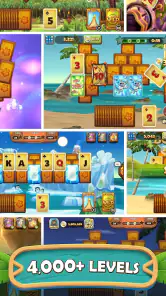



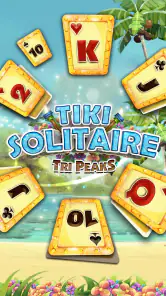
Analysis by Reviewed
I like card games that make a short break feel like a complete activity, and Tiki Solitaire TriPeaks has a clear way of doing that. Its rounds turn a familiar solitaire idea into a sequence of small choices: find a card that fits, see what becomes available, and decide whether to keep going. The tropical presentation gives the game its own character, but the real question is whether that quick, repeatable loop suits the way you like to play.
A tropical setting for quick card decisions
Right off the bat, Tiki Solitaire TriPeaks sets itself apart from a plain card table with colorful island scenery and a steady sense of progression. The setting makes repeated boards feel less bare, while the card puzzle remains easy to follow. As you move through the game, new scenery gives you something to look forward to beyond the next arrangement. I enjoy that light sense of travel, though the theme is best understood as a backdrop to the cards rather than a substitute for deeper strategy.
The first move and the rhythm of a round
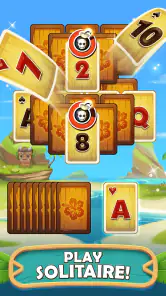
The basic choice is pleasantly clear: look at the exposed cards and tap one that is one rank above or below the card you can play from. That makes each move easy to understand, but not automatic. I find myself scanning the board before committing, because clearing a card can uncover another option and change what is possible next. When several valid cards are available, choosing which one to remove first is the small strategic pause that keeps the game from feeling like a rote tap-fest.
A useful habit is to check the whole visible layout before using the next card from the deck. It helps me spot a playable card that might reveal a more useful sequence, rather than spending moves without considering what could open up. The rule is simple enough for a short break, while the changing arrangements give familiar runs a little uncertainty. If you want deep card strategy with long-term planning, though, this is a lighter kind of puzzle; its appeal is making a series of quick decisions, not mastering a complex deck-building system.
That scan is especially useful when two exposed cards are both playable. I try to favor the one that is covering other cards, when clearing it could reveal more choices. It is not a guarantee of a better run, because the next available card still matters, but it gives each tap a purpose beyond simply taking the first legal move. New players can start by following the obvious matches, then gradually pay more attention to which cards are blocking the layout.
Gameplay that keeps each choice moving
The gameplay in Tiki Solitaire TriPeaks is both simple and addictive. If you’re familiar with solitaire, you’ll feel right at home. The main goal is to clear the board by tapping cards that are either one higher or one lower than the card in your deck. Sounds easy, right? Well, the game gradually ups the ante with more complex levels and special cards that introduce new dynamics to the game. I found myself saying “just one more level” more times than I’d like to admit!
That quick action-and-feedback rhythm is the main reason another round is tempting: I make a choice, see whether it opens the board, and get an immediate sense of how much remains to clear. A win gives the session a neat finish; a less successful run makes me reconsider the order of my choices and try again. I wouldn’t treat every result as a test of skill, since the draw can shape what options become available, but looking ahead makes the decisions feel more considered.
More From Our News Desk

Clash of Clans Is Won Between the Battles

Android Auto Makes the Case for Quieter Car Software

MobiOffice: Transforming Mobile Productivity with Seamless Integration

EA SPORTS FC™ Mobile Soccer: Redefining Mobile Sports Gaming

How Microsoft OneDrive Became a Mobile Productivity Giant

How Google Translate Breaks Language Barriers Effortlessly
For an everyday use, it fits a pause between errands or a quiet few minutes while waiting for a kettle to boil. I can focus on one board rather than needing to remember a long campaign plot when I return. If I’m tired or likely to be interrupted, I keep the session casual and avoid treating progress as something I must complete immediately. The compact, repeatable format is a strength for spare moments, but it may be a poor fit if you want a game that demands sustained attention or offers a completely different challenge each time.
The rhythm also makes it easy to decide when to stop. A round has a visible objective, so I can finish the current board and put the phone down without feeling that I have left a long story halfway through. If a distraction arrives mid-session, the best approach is simply to return when convenient and pick up the card puzzle at my own pace. I would not choose it for a commute or situation where I need to watch my surroundings closely; even a simple board deserves enough attention to make sensible choices.
One of the features I really appreciated is the daily quests and challenges. They offer great rewards that help you advance through the game without grinding too hard. Plus, the game’s social element, where you can join clubs and play with friends or meet new people, adds a layer of community feel that’s often missing in solitaire games.
Rewards, routines, and the social trade-off
Quests give a reason to return beyond simply clearing another board, and I’d approach them as optional direction rather than a checklist that must dictate every session. If I have a few minutes, I can pick up a round; if I want a longer stretch, the challenge structure gives that play a target. The practical trade-off is that recurring goals can make a relaxing card game feel more like a routine. I enjoy them most when I choose a task that suits my available time instead of trying to keep up with everything.
A small but useful way to keep the rewards enjoyable is to treat them as a bonus for playing, not as a reason to extend a session that has stopped being fun. If a challenge pushes me toward another board when I only meant to play one, I can leave it for another time. That choice keeps the game’s routine on my terms. Players who enjoy checking off goals may find the added direction motivating; players who want every session to be entirely free of prompts may prefer a simpler solitaire app.
The club and friend options make sense for someone who likes a shared hobby and wants a social layer around solitaire. If you prefer cards as quiet solo time, you can focus on the board-clearing loop and ignore that aspect. Compared with a plain solitaire app, Tiki adds themed progression, quests, and community; compared with a traditional multiplayer card game, its central activity remains a solo-style puzzle rather than a direct contest of hands against another player. That distinction matters if your main reason for playing is interaction or head-to-head competition.
For someone deciding whether to involve friends, I’d think about what kind of social play they want. The club and friend elements can make a solitary pastime feel more shared, but they do not change the central appeal: examining a board and choosing a card. If the fun for you is reading another person’s moves or competing directly, a multiplayer card game will be a better match. If you simply like having a community around a familiar solo activity, the social layer is a welcome extra rather than a requirement.
Visuals, sound, and the kind of atmosphere they create
The developers really nailed it with the visuals and sound design. The graphics are colorful and playful, perfectly capturing the island vibe. Each island you unlock introduces new scenery, and it’s always exciting to see what the next island will look like. The sound effects and background music are equally immersive and enhance the overall gaming experience. It’s like having a little slice of paradise right on your phone.
The island presentation gives the repeated card layout a sense of forward motion, which helps when I’m playing several boards in a row. I also see the bright theme as a matter of taste: it suits someone who wants a cheerful, decorated version of solitaire, while a player who prefers a plain table and minimal visual distractions may be happier with a stripped-back classic. The scenery is part of the pleasure here, but the core reason to stay is still whether the one-card-up-or-down decisions feel satisfying to you.
That difference is worth considering before settling in. A traditional solitaire app is usually the better pick if you want the cards and nothing else, with as little surrounding activity as possible. Tiki’s island look, goals, and social options make it feel more like a continuing game world. I enjoy that extra texture, but I would not describe it as a pure, uncluttered card-table experience. The best choice depends on whether those additions make familiar play more appealing or feel like distractions.
Who it suits, and what to know before playing
I’d recommend it to casual card players who like short rounds, visible goals, and a playful setting, especially if the usual bare-bones solitaire screen feels too austere. It is also approachable for newcomers because the central rule is easy to grasp. I’d steer away from it if you want poker-style competition, a serious strategic simulation, or a quiet app with no ongoing goals or social layer. Those preferences point toward a different kind of card game, not a flaw that a tropical theme can fix.
It can work well as a low-pressure evening habit: play a board while taking a break, then decide whether you feel like another. The most satisfying sessions, in my experience, come when I have enough attention to inspect the layout but do not feel obliged to chase every objective. Someone looking for a long, uninterrupted challenge should choose a more demanding puzzle or strategy game instead. Someone who wants a relaxed card activity with a little progression is much closer to this game’s sweet spot.
It is a free card game from Scopely, with optional in-app purchases listed from $0.49 to $199.99 per item. I’d go in expecting to play without paying, while remembering that optional purchases can become tempting if I’m focused on advancing or chasing rewards. The game is rated for Everyone, has a 4.5 average from around 770,000 ratings, and has passed 10 million installs. It first appeared on July 30, 2013; the current version is 14.7.0.114737, and it requires Android 5.1 or later. Those details make it easy to judge basic compatibility and popularity, but they don’t change the key question: do you enjoy this particular rhythm of choosing, clearing, and trying another board?
For spending, I’d set my own boundary before playing rather than deciding in the moment after a frustrating board or an appealing reward. The game is free to start, but purchases are available, and a player who prefers not to spend should keep that distinction in mind. If you are comparing card games primarily by how little pressure you want around progress, a straightforward solitaire app may be a more comfortable fit. Here, the extra goals are part of the attraction, but they can also make it easier to feel pulled into one more round.
On a practical level, the age rating makes it a broadly approachable choice for family members who enjoy casual card puzzles, while the uncomplicated rule gives newcomers an easy entry point. That does not mean every player will like the surrounding progression or social options. I’d show a new player how the one-rank matching works, then let them decide whether the quests and island journey make the familiar format more fun. The first board is a better test of fit than the theme alone.
My verdict on the repeat-play loop
All in all, Tiki Solitaire TriPeaks offers a lively take on solitaire built around quick decisions and a reason to begin another board. Its strongest point is the immediate loop: choose a matching card, see what that choice reveals, work toward clearing the layout, and then decide whether the next round sounds appealing. The island setting and optional goals give that loop a little more personality than a bare card table, while the short-round structure makes it easy to fit into spare time.
I’d recommend giving it a try if you want casual solitaire with a colorful setting and enough progression to make repeat play feel purposeful. I’d skip it if you need deep strategic control, direct competition, or a completely plain card experience. For me, the best reason to return is not simply the promise of another reward; it is the small satisfaction of spotting a useful sequence and watching the board open up. That is a modest pleasure, but it is exactly the kind of pleasure this game is built to deliver.
Tiki Solitaire TriPeaks Frequently Asked Questions
Can I play Tiki Solitaire TriPeaks in short sessions, or does it demand a lot of time?
The game’s solitaire format makes it easy to approach at your own pace, which suits players looking for a casual card game. You can focus on clearing the cards in a layout and decide when to stop, rather than needing to learn a complicated set of rules before starting. Its levels and challenges also offer reasons to return when you have time.
Does Tiki Solitaire TriPeaks offer familiar solitaire games such as Spider, Pyramid, or Hearts?
Tiki Solitaire TriPeaks is centered on its own TriPeaks-style solitaire gameplay. Its store summary compares it with card games such as Spider, Pyramid, and Hearts, but the distinctive TriPeaks format is the main experience. If you are choosing it specifically to play one of those other games, keep in mind that the game’s defining appeal is clearing its card layouts and progressing through levels.
Is Tiki Solitaire TriPeaks suitable for casual players, or does it require experience with card games?
Tiki Solitaire TriPeaks is a card game that can appeal to both newcomers and people who already enjoy solitaire. Its TriPeaks format uses a distinctive arrangement of cards, so it may feel different at first from familiar solitaire games, but the central goal is straightforward: clear the cards and progress through the game. You can pick it up at your own pace.
What is Tiki Solitaire TriPeaks and how does it differ from other solitaire games?
Tiki Solitaire TriPeaks is a unique twist on the classic solitaire card game, combining traditional solitaire gameplay with a tropical island theme. Unlike standard solitaire, TriPeaks features a series of pyramid-like card arrangements that players must clear to advance through levels. The game adds a layer of strategy with special boosters and power-ups, making it more engaging and challenging compared to regular solitaire games.
Is Tiki Solitaire TriPeaks free to play, and are there any in-app purchases?
Yes, Tiki Solitaire TriPeaks is free to download and play on both Android and iOS devices. However, the game does offer optional in-app purchases, with items priced from $0.49 to $199.99 each. Players can buy coins, boosters, and other special items to enhance their gameplay experience. While these purchases can provide advantages, they are not necessary to enjoy the core game.
Pros
- Engaging gameplay with daily challenges.
- Visually pleasing graphics and design.
- Regular updates with new levels.
- Easy to learn
- hard to master.
- No internet required to play.
Cons
- In-app purchases can be expensive.
- Ads can be intrusive at times.
- Some levels feel repetitive.
- Limited lives can restrict playtime.
- Occasional bugs in the app.
- Category
- Card
- Version
- 14.7.0.114737