The Grand Mafia
- 16.40K
- 4.5
- Installs
- 10.00M
- Price
- Free

Screenshots

Analysis by Reviewed
I approach The Grand Mafia as a strategy game for players who like their planning wrapped in a crime-drama setting. Its appeal is less about finishing a neat match and more about shaping a position over repeated visits: managing priorities, building influence, and deciding how much to rely on other players. That can be absorbing if you enjoy a game that keeps moving between sessions, but it is a very different proposition from a quick puzzle or a self-contained tactical battle.
The game is free to start, and its Mature 17+ rating is important context for anyone choosing it for a household or younger player. Phantix Games has an established audience here: it holds a 4.5 average from around 300,000 ratings and has passed 10 million installs. Those figures suggest plenty of players have found it, but they cannot tell you whether its ongoing pace suits your habits. The useful question is whether you enjoy a strategy game that asks you to return and manage a continuing world.
Finding Your Rhythm in the Underworld
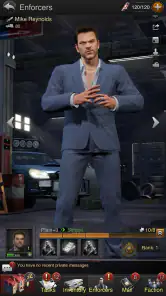
From the get-go, The Grand Mafia immerses you in a world filled with intrigue and power struggles. You start as a fledgling mob boss, eager to rise through the ranks and make a name for yourself. The tutorial is intuitive and does a great job of introducing the essential mechanics without overwhelming you. I found myself easily getting the hang of things, thanks to its user-friendly interface and clear guidance.
That gentle onboarding is useful, but it should not be mistaken for a promise that every later decision is equally simple. I would treat the opening as a chance to learn the game’s menus and rhythms, not as a reason to rush through every prompt. In a strategy game built around resources and alliances, pausing to understand what a task asks of you can be more valuable than tapping through quickly. If you are coming from puzzle strategy games with short rounds, expect a different kind of attention: progress is more about returning to a developing world than winning one isolated encounter.
Gameplay: Strategy Meets Storytelling
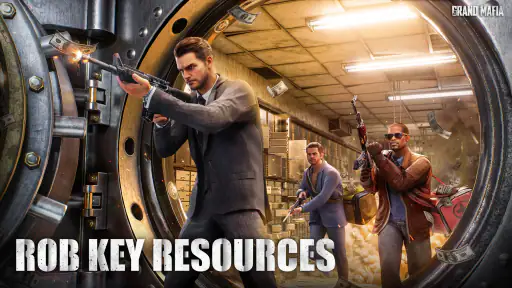
The gameplay is where the app truly shines. It combines elements of strategy and storytelling, requiring you to build alliances, manage resources, and, of course, occasionally engage in some good old-fashioned mob warfare. I was particularly impressed by the depth of the strategic elements. You can't just brawl your way to the top; you need to think, plan, and execute your moves wisely.
For a practical routine, I found it helps to decide what I want to accomplish before opening the game: check the next task, make a deliberate resource choice, then see what my alliance needs. That keeps a quick visit from turning into aimless tapping. It is also a useful way to judge whether the game fits your day. Someone who enjoys checking a shared strategy project between other tasks may find the loop satisfying; someone who wants a complete beginning-to-end session in a few minutes may find its longer-term focus less rewarding.
A useful way to keep that routine manageable is to separate personal goals from group requests. I would first identify one objective I care about, then check whether alliance activity naturally supports it. If the two align, the visit feels purposeful; if they do not, I would avoid treating every group message as a task I must complete. This small distinction helps answer a common practical concern: the game can fit into a busy day, but it is easier to enjoy when you choose your own stopping point rather than letting the social layer set it for you.
More From Our News Desk

Weather by Xiaomi Review: Clear at a Glance, Less Clear Up Close

X Under Pressure: Can It Recover When Posting Goes Wrong?

Clash of Clans Is Won Between the Battles

Android Auto Makes the Case for Quieter Car Software

MobiOffice: Transforming Mobile Productivity with Seamless Integration

EA SPORTS FC™ Mobile Soccer: Redefining Mobile Sports Gaming
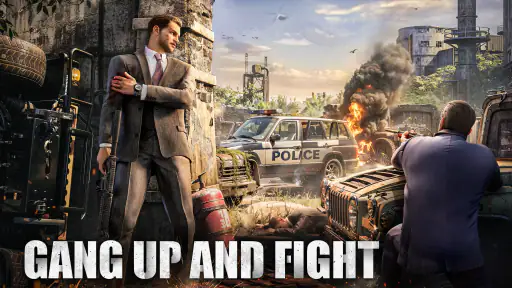
One of my favorite aspects is the alliance system. Teaming up with other players adds a layer of complexity and camaraderie that keeps things interesting. I often found myself strategizing in alliance chats, plotting our next big move in our quest for dominance.
That social layer is also the part I would consider before committing. Alliances can make decisions feel more meaningful because your plans involve other people, but they can also make the experience feel less convenient if you prefer to play entirely on your own or at your own pace. I would look for a group whose level of activity suits me instead of joining one just because it seems powerful. A quieter player should be comfortable treating the alliance as support rather than an obligation; if coordination feels like homework, a solo-focused strategy game may be a better fit.
There is a trade-off here that is easy to miss when comparing strategy games by their theme alone. In a turn-based tactics game, I can usually finish a fight and put the phone down with a clear sense of closure. Here, the alliance adds a shared dimension to decisions, but that can blur the line between a short check-in and an ongoing commitment. I would try a lower-pressure approach first: observe how the group communicates, contribute when it fits my goal, and only then decide whether a more active role sounds enjoyable.
Graphics and Sound: A Cinematic Experience
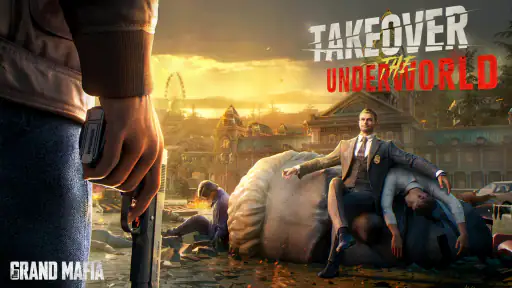
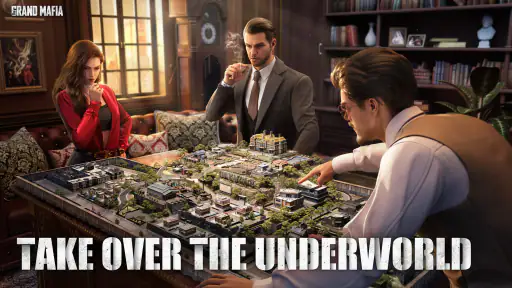
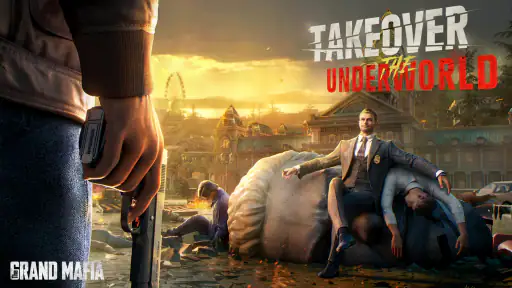
The graphics in The Grand Mafia are nothing short of impressive. The developers have done an exceptional job creating a visually stunning world that’s both gritty and vibrant. From the detailed cityscapes to the character designs, everything is crafted with a keen eye for detail. The sound design complements the visuals perfectly, with a soundtrack that enhances the game's immersive atmosphere. Every gunshot, every whispered conversation, feels like it’s pulled straight from a classic mob film.
The presentation gives the strategic routine a strong crime-drama identity, which matters when you are returning to the same city and its ongoing conflicts. Still, I would choose it for the combination of atmosphere and planning, not for cinematic scenes alone. If what you mainly want is a story that moves forward without resource management or player coordination, a conventional narrative game is likely a better match. Here, the setting frames the strategy rather than replacing it.
That distinction is also useful when choosing between it and other crime-themed games. If your priority is direct action, a game centered on moment-to-moment combat will probably feel more immediate. If you want a compact strategy challenge with a clean end after each session, a classic board-style or puzzle strategy game is a simpler fit. I would choose this one when I want the setting, management, and social planning to work together, not when I am looking for a short story or a quick burst of tactical play.
In-App Purchases: Worth the Investment?
Like many free-to-play games, The Grand Mafia does offer in-app purchases. While you can certainly enjoy the game without spending a dime, there are moments where investing a little can speed up progress or unlock unique items. I found the purchases to be reasonably priced and not overly invasive, which is always a plus in my book.
Purchases range from $0.99 to $99.99 per item, so I would decide on a firm spending limit before buying anything. The important trade-off is convenience: paying may speed up progress, but it does not replace learning which objectives matter to you or choosing how to use your time. If you are trying the game casually, I would first see whether its free pace feels enjoyable over several sessions. If waiting or keeping up with a group becomes frustrating, spending is not automatically the right fix; it may simply mean the game’s persistent strategy loop is not for you.
For someone who likes longer-term planning, the most useful habit is to make each visit purposeful rather than treating every notification as urgent. Check what your current goal requires, then decide whether you have time to participate in alliance activity. That small boundary can help keep a strategy game from taking over spare moments. It also gives you a fairer sense of whether its social and management demands are enjoyable, rather than confusing constant checking with meaningful progress.
When deciding whether to spend, I would also distinguish between a purchase that removes a particular inconvenience and one that merely encourages me to keep pace with others. The first may feel worthwhile to an individual player; the second can become a recurring pressure if the group’s expectations are more demanding than my free time allows. I would not buy anything just to test whether the game becomes fun afterward. The better test is whether I already enjoy its planning and atmosphere at the free pace.
What the Current Version Tells You
The game’s current version is 1.2.798, and it was released on August 6, 2020. Its version number shows that it has continued to receive version changes since launch, but I would not infer a particular feature or overhaul from that number alone. Existing players can use the current version as a reference point when checking compatibility and deciding whether to update; new players can simply know that this is an established game rather than a brand-new release. It supports Android 5.0 and later.
That distinction matters when deciding what to watch as you play: focus on the changes you can actually see in your own version, and judge them by whether they improve the parts you use—planning, alliance coordination, or the general feel of returning to the city. A version label by itself does not tell me how a change affects every player, so I would avoid assuming that a new number means the game has become easier, more generous, or less demanding. The best test is whether its current pace and social expectations work for you.
For an existing player, I would judge an update by its practical effect rather than by the version label: does the game still run comfortably on your device, and do the parts you rely on remain easy to reach? For someone new, the same number is mainly a reminder that this is a mature, ongoing title, not a one-off release. I would enter with modest expectations about how quickly I will understand every system, use the early tasks to learn the interface, and let actual play—not assumptions about the game’s age—decide whether the long-term loop is appealing.
One ordinary scenario makes the fit clearer. Imagine opening the game during a short break, with only enough time to check a goal and see what your alliance is doing. If you can make one useful decision and close the app without feeling behind, the format may work well for you. If you find yourself repeatedly checking because you worry that other players are waiting, that is a sign to reset your expectations or look for a less demanding group. The same game can feel relaxed or consuming depending on how much weight you give its social side.
I would also keep the age rating in mind when discussing the game with family. The crime setting and Mature 17+ classification make it a poor default choice for a younger child, even if the strategic elements sound appealing. For an adult who enjoys underworld stories, that theme is part of the draw; for someone who would rather avoid crime-centered presentation, there is little reason to push past that mismatch just for the management gameplay.
Overall, if you’re looking for a game that combines strategy, storytelling, and a touch of criminal flair, The Grand Mafia is definitely worth checking out. Whether you're a seasoned strategist or a newcomer to the genre, there's something here for everyone. Just make sure you're ready for the cutthroat world of mob politics, because once you start, there's no turning back!
I would especially recommend giving it a try if you enjoy crime-themed settings, gradual strategic decisions, and the added unpredictability of working with other players. I would skip it if you want fast rounds, a purely solo experience, or a story that can be finished without ongoing management. The free entry makes it possible to test that fit without paying, but the Mature 17+ rating is worth keeping in mind when choosing a game for a younger player. For me, the strongest reason to stay is the alliance planning; the clearest reason to leave is finding that the ongoing routine feels more like a commitment than a game.
My advice is to treat the first stretch as a compatibility test, not a race: learn the menus, notice whether you enjoy deciding what to work toward, and pay attention to how the alliance affects your time. If those pieces feel rewarding together, the crime-drama wrapper gives the long-term strategy a distinct personality. If one of them keeps irritating you, there are plenty of strategy formats with shorter sessions or less social coordination that may suit you better. I would stay for deliberate planning and a group that feels like company, not an obligation.
The Grand Mafia Frequently Asked Questions
How much space should I have available before downloading The Grand Mafia?
It is sensible to check your device’s available storage before installing The Grand Mafia, as game downloads and updates need room on a phone or tablet. Keeping some free space can also help avoid installation problems or interruptions when the game is updated. The amount of storage required can vary by device and version, so check the app’s download screen before proceeding.
Can I play The Grand Mafia without an internet connection?
The Grand Mafia is built around strategy, alliances, and interactions with other players, so an internet connection is needed for its multiplayer experience. This is worth considering if you often play while traveling or somewhere with unreliable connectivity. A stable connection helps you participate in the game’s ongoing activities and coordinate with other players rather than treating it as an offline, single-player title.
Is The Grand Mafia suitable for someone looking for a casual, pick-up-and-play game?
The Grand Mafia is a strategy game centered on building and managing a criminal empire, so it is best suited to players who enjoy making plans and returning to develop their progress over time. Its mix of strategic decisions, alliances, and rivalries may be more engaging than a simple game to play for a few minutes without following an ongoing campaign.
What is The Grand Mafia, and what can players expect from it?
The Grand Mafia is an immersive strategy game that places you in the shoes of a mafia boss. Players can expect to engage in various criminal activities, build and upgrade their own criminal empire, and form alliances with other players. The game offers a rich storyline and interactive gameplay that includes battles, negotiations, and strategic planning to ascend the ranks of the underworld.
Is The Grand Mafia free to play, or are there in-app purchases?
The Grand Mafia is free to download and play, but it includes optional in-app purchases. These purchases range from cosmetic items to resources that can enhance gameplay. While you can enjoy the game without spending money, purchasing items can accelerate your progress and provide a more customized gaming experience. Optional purchases range from $0.99 to $99.99 per item, so check purchase settings if you share your device or want to manage spending.
Pros
- Engaging storyline keeps players hooked.
- Diverse character customization options.
- Strategic gameplay elements enhance experience.
- Regular updates with new features and content.
- Active community for in-game support.
Cons
- In-app purchases can be costly.
- Requires constant internet connection.
- High device battery consumption.
- Complex interface for new players.
- Some features are locked behind paywalls.
- Category
- Strategy
- Version
- 1.2.798