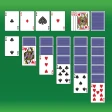
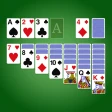
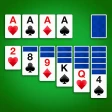
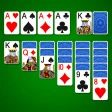
Spider Solitaire - Retro Card
- 114.00
- 5.0
- Installs
- 1.00M
- Price
- Free

Screenshots
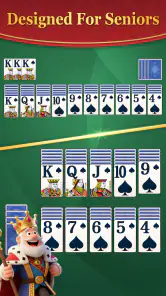
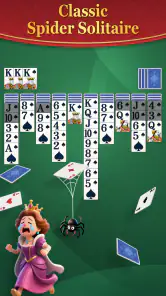
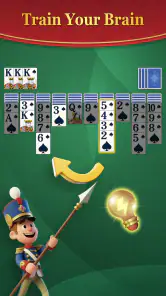

Analysis by Reviewed
I like Spider Solitaire best when I want a small, self-contained puzzle rather than a game that demands a long stretch of attention. Spider Solitaire - Retro Card is built around that familiar card-table routine: study the columns, make a move, uncover what is underneath, and see whether the board has become easier to manage—or harder. Its appeal is less about novelty than about the quiet tension of deciding which card to shift next.
That makes it an easy game to pick up during a coffee break or while waiting for something to finish. You can focus closely on a deal, but you can also pause to think without needing fast reactions. My main reservation is the same quality that makes Spider Solitaire relaxing: the basic activity stays consistent. If you want a campaign, a changing cast of challenges, or a strong sense of progression, this is unlikely to hold your interest for long.
One move at a time: getting into a deal
Start by reading the columns
A Spider Solitaire deal asks you to look for useful sequences among the cards, not simply grab the first legal move. The practical first step is to scan for cards that can be stacked in descending order and notice which choices might expose a face-down card. A move that opens a hidden card can be more valuable than one that makes a neat-looking sequence, because new information gives you more options on the next turn.
I find it useful to resist moving every available card immediately. Before shifting a card, I ask two questions: will this uncover something, and will it leave a column more flexible? That quick check helps avoid a common trap—building a sequence that looks tidy but blocks a card needed elsewhere. The game’s central challenge is not speed; it is keeping enough room to rearrange the board when the deal gets awkward.
There is a satisfying balance between planning and improvising. You can make a sensible plan based on the cards already visible, but a newly revealed card may change the best route. That uncertainty is what gives a routine layout some life. A move can feel like progress even when it does not complete a sequence, provided it exposes a card or clears a useful position.
Choose moves for what they reveal
For newer players, I recommend treating uncovered cards as a priority rather than measuring success only by how many cards appear neatly arranged. Revealing a hidden card expands the information you have; an attractive stack that leaves the same cards covered may offer less practical value. This is a small decision rule, but it makes the game feel less like trial and error and more like a puzzle you can reason through.
When two moves seem equally useful, I tend to prefer the one that leaves a column open or preserves more ways to rearrange cards. Empty space is valuable because it gives you somewhere to park a card while reorganizing a sequence. The trade-off is that using a space carelessly can make it harder to move cards back into a workable order. In other words, an open column is not automatically a win; it is flexibility you need to spend thoughtfully.
This is also why I would not recommend rushing through a deal just to keep the screen active. A short pause before a move often prevents a chain of choices that narrows the board. If you enjoy games where careful observation matters more than quick taps, the pace here is a good fit. If you prefer constant new mechanics or moment-to-moment action, the deliberate card sorting may feel too subdued.
How the feedback keeps the puzzle moving
Small changes make progress visible
The feedback in a solitaire game is naturally tied to the board: a card moves, a face-down card is revealed, a sequence becomes more organized, or a column opens up. Those changes are modest, but they give each decision a clear consequence. I enjoy that the reward is often not a flashy event; it is simply seeing a little more of the problem and realizing that a previously blocked route might now work.
There is a useful rhythm to that exchange. You make a move, inspect the new layout, and decide whether the board has improved enough to continue along the same plan. Sometimes the result is immediately helpful. Sometimes you uncover a card that does not fit anywhere yet, which is a reminder that Spider Solitaire rewards patience as much as cleverness. The game does not make every move feel like a triumph, and that restraint suits the puzzle.
A practical way to keep that rhythm enjoyable is to check the whole layout after revealing a card, rather than focusing only on the column where it appeared. A new card can change which sequences are movable elsewhere. That broader scan takes only a moment and reduces the chance of overlooking a better follow-up. It is one of the habits that turns a casual round into a more deliberate challenge without making it feel like homework.
Progress is satisfying, but not guaranteed
Spider Solitaire has an honest kind of tension: organizing the cards can create momentum, but not every deal will unfold smoothly. A good run of moves may expose several useful cards, while a poorly timed rearrangement can leave important cards buried or the columns crowded. I like that the board can push back. The downside is that a game can start to feel stuck, particularly if you have made several choices that leave few practical options.
When that happens, I try to identify the bottleneck rather than tapping around at random. Is one column holding a card that needs to move? Would clearing a different sequence create space? Is there a way to uncover information before committing to a larger rearrangement? Even if the answer is not obvious, framing the problem this way makes a difficult deal more engaging. It also keeps the experience from turning into a mindless sequence of taps.
That feedback loop is best for players who enjoy incremental progress. It is less suited to anyone who needs every session to end with a clear victory or a new unlock. The satisfaction comes from making a tangled layout more understandable and, when things go well, bringing the cards into order. For me, that is enough to make a quiet round worthwhile, but it will not replace a more varied strategy game.
What makes another session tempting
A natural stopping point, then a fresh puzzle
One of the strongest parts of this format is how easily a session can fit around ordinary life. I can start a deal while waiting for a friend, make a few considered moves, and return my attention to something else. A complete round can invite more concentration, but the game does not need to be treated as an uninterrupted event. That makes it a useful choice for brief downtime, especially if you want something more engaging than scrolling but less demanding than a competitive match.
The reset is part of the appeal. Once a deal is finished—or once I decide I would rather begin again—the next board offers a new arrangement to read. The rules remain familiar, but the immediate problem changes, giving me a reason to try a different approach. I may start the next session with a clearer idea of when to preserve an open column or when to prioritize uncovering a card. The game’s replay pull comes from that fresh puzzle, not from a promise of a dramatically different mode.
There is a trade-off here. If you want a game to remember a long chain of accomplishments or provide a sense of narrative continuity, repeated deals may feel interchangeable. Spider Solitaire is better understood as a repeatable thinking break. I would choose it over a more involved card game when I have a few spare minutes and want a puzzle I can enter quickly; I would choose a broader strategy game when I want new rules, varied objectives, or a longer-term goal.
How it fits among card-game alternatives
Compared with simpler solitaire variants, Spider Solitaire asks me to manage several columns and think about how sequences affect one another. That creates more room for planning, but it also means a deal can become more mentally demanding than a quick, mostly luck-driven card diversion. Compared with multiplayer card games, it removes the pressure of opponents, turn timers, and social competition. You can take your time, which is a real advantage if your aim is to unwind rather than prove anything.
The flip side is that there is no human opponent changing the situation or adding conversation. The challenge comes from the cards and your own choices. If you get your enjoyment from reading another player’s tactics, this is the wrong kind of card game. If you want a quiet solo puzzle with a familiar ruleset, it makes more sense than a competitive alternative.
There is also a difference between playing for relaxation and playing for mastery. A casual player can simply make sensible moves and enjoy watching the board shift. Someone who wants to improve can use each deal to practice exposing hidden cards, preserving flexibility, and avoiding sequences that block useful cards. I would not treat every loss as proof of poor play; the more helpful question is whether a move reduced your options unnecessarily. That keeps the challenge constructive.
A straightforward choice for quiet card breaks
Who will get the most from it
Worthwhile as a familiar solo pastime, Spider Solitaire - Retro Card is free to play and comes from Worthy Journey. It is a card game in the broad solitaire tradition, and it suits people who want to make careful decisions without learning a complicated set of rules. Its Everyone age rating also makes it broadly approachable, though the main reason to choose it is the calm, thoughtful pace rather than any elaborate presentation.
The game has a 5.0 average from around 6,200 ratings, and it has been installed over a million times. Those figures suggest that it has found an audience, but they do not change the basic question for a new player: do you enjoy slowly untangling a card layout? If you do, the familiar structure is an advantage. If you need fresh mechanics to stay interested, popularity will not make the repeated format feel more varied.
The current version is 2.1.8, and the game is listed for devices running Android 7.0 or later. It was released on December 11, 2025. Those details matter if you are checking whether it suits your device, but I would judge the experience mainly by whether you want a relaxed, repeatable card puzzle. The version number alone is not a reason to expect a particular feature; what matters in play is the simple loop of reading, moving, revealing, and reassessing.
Where I would draw the line
I would recommend trying it if you like solo card games, enjoy thinking a few moves ahead, or want a low-pressure activity for small gaps in the day. My most useful tip is to look for moves that reveal cards and preserve a place to reorganize, rather than chasing tidy stacks for their own sake. That habit gives the game more depth and makes each decision feel connected to the next.
I would skip it if you are looking for a deep collection of different card formats, a social experience, or a progression-heavy game. The core loop is deliberately narrow: arrange cards, learn more about the board, work toward a cleaner layout, then start over with a different deal. That repetition is either the point or the limitation, depending on what you want from a mobile game.
My verdict is that Spider Solitaire works best as a small, dependable thinking break. A move gives you feedback, revealing a card offers a modest reward, and the next deal resets the puzzle without demanding a major commitment. I would keep it in mind for waiting rooms, quiet evenings, or any moment when I want a card game I can play at my own pace. It is not the right pick for variety seekers, but for a patient player who enjoys turning a crowded set of columns into a plan, the loop has a gentle pull.
Spider Solitaire - Retro Card Frequently Asked Questions
What is Spider Solitaire - Retro Card?
Spider Solitaire - Retro Card is a digital version of the classic single-player card game. The goal is to arrange cards in descending order by suit, then clear completed sequences from the tableau. It is designed for players who enjoy familiar solitaire rules and a retro-style presentation. Before downloading, check the app listing for screenshots and details about its specific modes and features, as these may vary by version.
How do you play Spider Solitaire - Retro Card?
Cards are arranged into columns, and you move them to build descending sequences. When you complete a full sequence from King down to Ace in the same suit, it is removed from the board. You can deal more cards when needed, although doing so may make the layout harder to solve. The exact controls and available hints or undo options depend on the version, so review the in-game instructions when you first open it.
Is Spider Solitaire - Retro Card suitable for beginners?
The basic rules are straightforward, so newcomers can learn the game by moving cards and completing sequences. Spider Solitaire can still be challenging because planning ahead matters, especially when deciding when to deal additional cards or uncover hidden cards. If the app includes hints, undo, or adjustable difficulty, those options can make learning easier; check the current store description to confirm which are available.
Can I play Spider Solitaire - Retro Card offline?
Many solitaire games can be played without an internet connection, but offline access for this particular app should not be assumed. Some features, such as advertisements, daily challenges, online statistics, or other connected services, may require internet access, while the core game may work offline. Check the app’s store listing and test its behavior after installation if offline play is important to you.
Is Spider Solitaire - Retro Card free, and does it contain ads or in-app purchases?
The price, advertising, and purchase options can differ by platform, region, or app version. The game may be free to download while displaying ads or offering optional purchases, but those details should be confirmed on its Google Play or Apple App Store page before installing. Review the listed permissions and purchase information as well, particularly if you are downloading it for a child or want an uninterrupted playing experience.
Articles Related to Spider Solitaire - Retro Card
Clash of Clans Is Won Between the Battles
Its raids are quick; its community is a long-term project of coordination, teaching, rivalry, and shared responsibility—with all the friction that entails.
Android Auto Makes the Case for Quieter Car Software
The car interface is no longer judged by how much it can do, but by how quietly it helps. Android Auto shows what drivers now expect—and what still gets in the way.
MobiOffice: Transforming Mobile Productivity with Seamless Integration
MobiOffice: Word, Sheets, PDF is redefining mobile productivity with a surprising blend of functionality and innovation.
EA SPORTS FC™ Mobile Soccer: Redefining Mobile Sports Gaming
Dive into EA SPORTS FC™ Mobile Soccer, where immersive gameplay and strategic depth transform mobile sports gaming.
Pros
- Familiar rules make it easy to jump into a quick game.
- Multiple difficulty levels offer a choice of challenge.
- A retro card-table style gives the game a nostalgic feel.
- Undo and hint options can help when you get stuck.
- Works well for short
- offline-friendly play sessions.
Cons
- Spider Solitaire can feel repetitive after many rounds.
- Higher difficulty levels may frustrate casual players.
- Hints can reduce the satisfaction of solving a deal unaided.
- Small cards may be harder to see on compact screens.
- Ads or in-app prompts may interrupt the flow of play.

- Category
- Card
- Version
- 2.1.8