Sort Journey - Travel Puzzle
- 1.10K
- 4.7
- Installs
- 1.00M
- Price
- Free

Screenshots





Analysis by Reviewed
I found Sort Journey - Travel Puzzle most enjoyable when I wanted something quiet, clear, and easy to pick up without committing to a long session. It is a free puzzle game from Bluetile built around arranging travel-themed items, and its appeal comes from turning a familiar sorting task into a gentle trip through a large set of levels. My overall view is simple: this is a good choice for players who enjoy tidy visual puzzles and gradual progress, but it is less suitable for anyone looking for deep strategy, fast action, or a completely interruption-free experience.
The game has a 4.7 average from around 46 thousand ratings, which matches my impression that its central idea is immediately approachable. It does not ask me to learn a complicated control scheme before I can enjoy it. Instead, I can start with the basic visual challenge, understand what the board is asking, and decide for myself whether I want to play for a few minutes or continue through several stages. That low barrier is one of its biggest strengths, especially on a phone.
Why the sorting format works so well
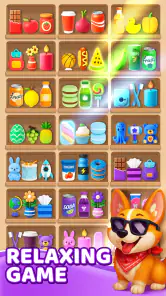
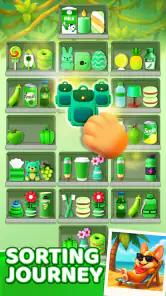
The most effective part of Sort Journey is the way it gives a simple organizing task a sense of movement. Travel objects provide a more inviting setting than abstract colored shapes, while the puzzle structure keeps the focus on observation and order. I am not playing for a story-heavy adventure; I am solving small visual problems that are dressed up as stops along a journey. That distinction matters, because the game works best when approached as a relaxing puzzle collection rather than a conventional travel game.
Sorting games can become repetitive if every board feels identical. Here, the travel theme gives the individual stages a little more personality. Even when the underlying action remains familiar, the context helps the levels feel connected. I found that useful during short sessions: I could finish a puzzle, feel that I had made progress, and stop without losing the thread of what I was doing.
The game is designed for a broad audience, with an Everyone content rating. I would comfortably recommend it to families looking for a calm puzzle experience, although younger players may still need occasional help with planning a move or recognizing the intended arrangement. The controls and visual purpose are easier to understand than those of many strategy games, so it is also a reasonable option for someone who does not usually play games on a phone.
There is a substantial amount of content, with more than a thousand puzzle levels. That makes the game feel less like a brief novelty and more like something I can return to over time. The benefit is obvious for players who enjoy routine: I can make it part of a morning break, a waiting-room habit, or a few minutes before bed. The trade-off is that the experience depends heavily on whether I enjoy the basic sorting loop. A large level count cannot rescue a format that I find boring after the first hour.
A useful game for short, interrupted sessions
One realistic use case is a commute with unpredictable stops. If I have a few minutes before a train arrives, I can open the game, work through a puzzle, and put the phone away without needing to remember a complicated chain of events. The same applies to waiting for an appointment or taking a short break from work. I would not choose it for a focused evening of competitive gaming, but I would choose it when I want a small mental reset.
More From Our News Desk

Weather by Xiaomi Review: Clear at a Glance, Less Clear Up Close

X Under Pressure: Can It Recover When Posting Goes Wrong?

Clash of Clans Is Won Between the Battles

Android Auto Makes the Case for Quieter Car Software

MobiOffice: Transforming Mobile Productivity with Seamless Integration

EA SPORTS FC™ Mobile Soccer: Redefining Mobile Sports Gaming
That short-session quality also makes the game suitable for players who dislike pressure. The sorting format encourages me to look carefully rather than react quickly. I can pause mentally, inspect the available objects, and think about which move will keep the board manageable. This is a different kind of satisfaction from matching games that reward speed or long combos. Sort Journey is more about restoring order than chasing a high-energy streak.
My most useful approach was to avoid moving items immediately just because a space looked available. I first scanned the whole board, identified groups that were already close to completion, and then considered which move would preserve the most options. That habit makes the puzzles feel more deliberate and reduces the frustration of creating an awkward arrangement too early. It is a small change, but it turns the game from random tapping into a more thoughtful visual exercise.
I also recommend treating each level as a planning problem rather than a test of speed. When several objects look similar, I slow down and compare their details before committing. This is particularly helpful in later stages, where a quick move can make the remaining arrangement harder to read. The game does not need complex rules to reward careful play; its challenge comes from noticing relationships and keeping the board organized.
Where the experience begins to lose momentum
The same simplicity that makes Sort Journey welcoming can limit its long-term appeal. Players who want layered mechanics, character development, or a strong competitive system may find the experience too gentle. The travel presentation adds atmosphere, but it does not transform the game into a full adventure. If I am in the mood for a demanding logic puzzle with several interacting rules, I am more likely to choose a traditional number puzzle, a block-based brain teaser, or a strategy title.
Repetition is the main weakness I noticed. Even with a large collection of stages, the core activity remains sorting travel-related items. For some players, that consistency will be comforting. For others, it may become predictable. I would not recommend installing it solely because the level total sounds generous; the right question is whether arranging visual groups is something I genuinely enjoy doing repeatedly.
There is also a practical consideration for anyone who prefers games with no spending prompts. Sort Journey is free to download and play, but it includes in-app purchases ranging from $1.99 to $99.99 per item. That does not automatically make the game poor value, yet it means I would pay attention to the purchase flow and keep expectations clear, particularly on a shared device. Players who want a completely fixed-price experience may feel more comfortable with a premium puzzle game instead.
The current version is 2.3.0, and the minimum requirement is Android 7.0. For someone using an older phone, checking compatibility before planning a longer download is sensible. On supported devices, the appeal is less about demanding graphics and more about whether the interface feels comfortable enough for repeated sorting. A small screen can make visual comparison tiring, so I would try a few levels before deciding whether the presentation works for my eyes.
How it compares with familiar puzzle alternatives
Compared with match-three games, Sort Journey feels slower and less dependent on creating chains. I am not looking for the next explosive combination; I am trying to understand the arrangement in front of me. That makes it a better fit for someone who finds match-three games too frantic, but a weaker fit for anyone who enjoys constant rewards and rapid visual feedback.
Compared with classic sorting games built around liquids, containers, or colored stacks, the travel setting gives this title a more decorative identity. The underlying pleasure is still close: group related elements, protect useful spaces, and gradually reach a clean solution. The difference is that the travel theme may make the routine feel more inviting for players who want a little context around the puzzle rather than a purely abstract board.
It also occupies a middle ground between casual entertainment and brain training. I do need to observe, plan, and sometimes reconsider a move, but I would not treat it as a serious test of advanced reasoning. For me, it is best understood as light mental exercise. It helps me focus for a few minutes without demanding the intensity of a dedicated logic app.
That comparison points to a clear trade-off. Sort Journey is easier to enter than many traditional puzzle games, but it may not offer the same depth. A player who wants a relaxing daily routine should appreciate that balance. A player who wants increasingly complex systems, strict mastery, or a measurable competitive challenge should look elsewhere.
Who will get the most from it
I think the strongest audience is made up of casual puzzle players who like visual order, gentle progression, and travel-inspired presentation. It is especially suitable for people who want something they can play in short bursts without learning a large set of rules. The Everyone rating also makes it a practical family-friendly option, provided that adults remain aware of the in-app purchase structure on devices used by children.
It may also suit players who use mobile games as a way to unwind rather than as their main hobby. I can imagine opening it after a busy day, completing a few levels, and stopping once my attention starts to fade. The game does not need to dominate my time to feel useful. Its best quality is that it gives me a contained task with a visible sense of completion.
I would be more cautious about recommending it to people who become frustrated by repeated visual patterns. If I know that I need constant novelty, story, or escalating difficulty, the large collection of levels may not be enough. Likewise, players who dislike optional purchases in free games should consider a paid alternative with a simpler ownership model.
For parents, the content rating is reassuring, but I would still discuss purchases before handing over the device. For older players new to mobile gaming, the straightforward sorting format can be less intimidating than action-heavy games. For experienced puzzle fans, I would suggest trying it with modest expectations: enjoy the calm presentation and accessible boards, but do not expect the complexity of a specialist logic title.
Small habits that improve the experience
My first practical tip is to play with a clean screen and enough brightness to distinguish similar objects. Because the challenge depends on visual grouping, glare or a cluttered display can make a simple board feel unnecessarily confusing. This is not a flaw unique to the game, but it matters more here than in a puzzle where numbers or text carry most of the information.
My second tip is to stop after a frustrating level instead of tapping through it impatiently. A short break often helps me notice an arrangement that I missed the first time. Since the game is well suited to interrupted sessions, there is little benefit in forcing a solution when my attention is already elsewhere.
Finally, I would use the early stages to decide whether the main loop has lasting appeal before thinking about any purchase. The free entry is enough to sample the style and rhythm. If I enjoy the process of scanning, grouping, and completing boards, the extended level collection becomes meaningful. If I do not, spending money will not change the fundamental type of game.
These habits also clarify what the game is asking from me. It rewards patience more than reflexes, visual discipline more than memorized tactics, and consistency more than occasional bursts of enthusiasm. That makes it a pleasant companion for routine moments, but not necessarily a game I would recommend as the only puzzle title on a phone.
My final view on Sort Journey
Sort Journey - Travel Puzzle succeeds because it understands the value of a small, orderly challenge. Bluetile has created a free puzzle game that is easy to approach, comfortable in short sessions, and broad enough to support regular play. The travel theme gives the sorting format a warmer identity, while the large level collection gives committed players plenty of reasons to return.
Its limitations are just as clear. The central mechanic can feel repetitive, the experience is not aimed at players seeking deep strategic systems, and the in-app purchase range means free access does not necessarily equal a completely purchase-free environment. Those points do not ruin the game, but they should shape expectations before installing it.
With over a million installs, it has clearly reached a substantial mobile audience, and I can see why. I would recommend it to a friend who wants a calm, family-friendly puzzle game for commutes, waiting rooms, or evening wind-downs. I would skip it for someone asking for a demanding logic challenge or a fast, competitive alternative. My recommendation is to try the free experience first and judge the repeating sorting loop on its own terms. If that rhythm feels satisfying, this is an easy game to keep nearby.
Sort Journey - Travel Puzzle Frequently Asked Questions
Does Sort Journey - Travel Puzzle offer enough variety to stay interesting?
The game’s store description highlights more than a thousand relaxing puzzle levels, giving players a substantial collection of sorting challenges to work through. The travel theme adds a sense of progression as you move through stages, while the central activity remains focused on arranging items into the correct groups. If you enjoy the core sorting mechanic, the level-based format offers plenty to explore.
Can I play Sort Journey - Travel Puzzle in short sessions?
Sort Journey - Travel Puzzle is suited to short play sessions, since its central activity is organizing items through individual puzzle stages. You can fit a level into a spare moment or continue for longer when you want to unwind. The simple sorting premise makes it easy to understand what you are working toward, while later puzzles can call for more thought and careful planning.
Who develops Sort Journey - Travel Puzzle, and what kind of game is it?
Sort Journey - Travel Puzzle is a puzzle game developed by Bluetile. Its travel theme gives the sorting challenges a sense of progression, so it may appeal to players who enjoy organizing objects as well as games that evoke exploring different destinations. The game is free to download, and its age rating is Everyone, making it accessible to a broad audience.
How much space does Sort Journey - Travel Puzzle require, and which devices can run it?
Before downloading, check that your device meets the game's operating-system requirement and has enough free storage for the installation and any later updates. Sort Journey - Travel Puzzle requires Android 7.0 or later. Available storage can differ by device and change as the game is updated, so checking your device's space before installing is a practical way to avoid interruptions.
What is Sort Journey - Travel Puzzle?
Sort Journey - Travel Puzzle is a casual mobile game that combines relaxing sorting mechanics with a travel-themed progression system. You organize objects, colors, or items into the correct groups while visiting different destinations and unlocking new stages. The game is designed for short sessions, making it suitable for players who enjoy simple puzzles, light strategy, and visually pleasant travel-inspired content. Its store description highlights more than a thousand relaxing puzzle levels, offering plenty of sorting challenges to explore.
Pros
- Relaxing gameplay suitable for short sessions
- Simple controls make it easy for new players
- Colorful travel-themed visuals add variety
- Progression encourages regular play
- Works well for casual
- offline entertainment
Cons
- Some levels may feel repetitive after extended play
- Difficulty can increase unevenly between stages
- Limited interaction beyond sorting and matching
- Hints or extra moves may depend on in-game resources
- Ads can interrupt the experience for free users
- Category
- Puzzle
- Version
- 2.3.0