Solitaire - Classic Card Game
- 2.47K
- 4.4
- Installs
- 10.00M
- Price
- Free
Screenshots

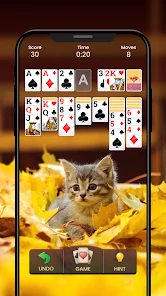


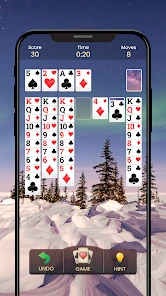
Analysis by Reviewed
Solitaire - Classic Card Game is best understood as a familiar card-table companion: a focused way to play solitaire when you have a few spare minutes, rather than a sprawling game built around a campaign or a stream of extras. I like that straightforward premise. If you already know the rules, you can get to the part you came for without first learning a new system. The trade-off is just as clear: players who want constant novelty, social competition, or a deep sense of progression may find the experience too plain.
A familiar card game with a deliberately simple appeal
Why the basic format works
This is a card game from Arcade Game Maker, centered on solitaire. That narrow focus makes it easy to recommend for short, low-pressure sessions. It suits the pause between errands, a quiet moment before bed, or a break when I want to concentrate on something small without committing to a long match. Solitaire naturally gives each deal its own little problem to solve, and the appeal comes from sorting, planning, and noticing when a move opens up another possibility.
What I value most in a classic solitaire game is that it lets me set my own pace. I can think through a sequence carefully or make quick moves and accept that a deal may not work out. This title’s simple identity is a strength for people who already enjoy that rhythm. It does not need a complicated premise to make a few minutes feel occupied, and it is easy to return to because the underlying rules are familiar to many players.
The game is free, has an Everyone age rating, and has been available since September 26, 2017. It is listed with a 4.4 average from around 30,000 ratings, alongside roughly 2,500 written reviews and over 10 million installs. Those figures suggest that this is a well-established choice in a crowded kind of game, but they should not be mistaken for proof that every player will enjoy its particular presentation. The real question is whether a simple solitaire session is what you want.
The practical value of a short session
A useful way to approach solitaire on a phone is to treat each deal as a brief focus exercise, not as a task that must always end in a win. When I have only a small break, I can play until I reach a natural stopping point, then put the phone away. That works better than trying to squeeze a long, involved game into a moment that may be interrupted. The card layout gives me something to inspect and plan around, while the rules keep the mental load modest.
Latest News
There is also a small but worthwhile strategic habit that makes these games more satisfying: before moving a visible card, consider whether it reveals a hidden card or blocks a useful space. A move that looks productive may leave fewer options on the table. Thinking one step ahead keeps the game from becoming purely mechanical, especially for players who have played the basic rules many times. This is not about chasing perfect play; it is about making each deal feel like a decision rather than a sequence of automatic taps.
For an everyday example, I would choose this kind of solitaire when waiting for a takeaway order or sitting through a short commute as a passenger. I would not start a session while walking, driving, or doing anything that needs my attention. It is most enjoyable when I can glance at the whole arrangement, pause to think, and stop without feeling I have abandoned a larger objective. That makes it a better fit for small, self-contained moments than for someone looking for a game to occupy an entire evening.
What the familiar design does—and does not—offer
Compared with a physical deck, a phone version removes the need to shuffle, deal, and gather cards again. That convenience is the obvious advantage: a game is always close at hand, and there is no tabletop to clear. Compared with a more elaborate digital card title, however, a classic solitaire game has less room for changing modes, collecting rewards, or interacting with other people. If those extras are the reason you play mobile games, this is unlikely to be the most engaging choice.
It is also different from competitive card games, where an opponent’s choices create pressure and surprise. Here, the challenge is primarily in reading the layout and deciding what to expose or move. That makes solitaire calmer, but also more solitary in the literal sense. Players who enjoy direct competition, live matches, or a changing human opponent should look elsewhere. The appeal is the quiet puzzle of a deal, not the unpredictability of a table full of players.
Where the experience can feel limited
The same simplicity that makes the game approachable can eventually make it feel repetitive. If you have spent years playing solitaire, the core loop may not offer much that feels new. A familiar layout is comforting, but it can also become routine: draw, inspect, move, and try again. I would not pick this as my main game if I needed a steady stream of fresh challenges or a strong reason to keep coming back beyond the pleasure of the card puzzle itself.
Another limitation is that solitaire depends heavily on patience with uncertain deals. Sometimes the choices available are constrained by what has been revealed, and careful play does not guarantee a satisfying finish. That is part of the genre, but it can frustrate anyone who expects every round to reward skill with a clear win. I find it helps to judge a session by the decisions I made, not only by whether I cleared the layout. If losing a deal tends to feel like wasted time, a puzzle game with more direct control may suit you better.
Before installing, it is worth being honest about what “classic” means for you. If you mainly want a reliable way to play the standard solitaire experience, the premise is a good match. If you are looking for elaborate animations, a story, or a range of distinct card modes, do not assume that a simple solitaire title will provide those things. I would choose a broader card collection for variety, or a multiplayer card game for interaction, rather than expecting this focused format to behave like either one.
Who should give it a try
I would recommend it first to newcomers who want an accessible introduction to solitaire and to experienced players who simply want the familiar game on a phone. Its Everyone rating makes it suitable for a broad audience, while the straightforward rules mean it can be played without the learning curve of a complex strategy game. It also fits people who prefer quiet, independent play and enjoy taking a moment to assess a board rather than reacting quickly to other players.
The current version is 1.59.305, and the minimum Android requirement is version 6.0. If you are deciding whether an older Android device can run it, that operating-system requirement is the practical detail to check before downloading. The game is free, so trying it does not require a purchase, but I would still approach it with the right expectation: its value lies in accessible solitaire, not in a promise of extensive content or a new spin on card gaming.
For a more deliberate session, I suggest slowing down on the first few moves and paying attention to which columns might reveal a face-down card. That simple habit often makes the game more engaging than tapping the first legal move. When time is tight, I would instead play casually and accept that a round may be interrupted. Matching the pace to the situation prevents a quick diversion from turning into a frustrating attempt to finish at all costs.
My verdict on this familiar pocket diversion
Solitaire - Classic Card Game makes sense for players who want a direct, low-pressure card puzzle and do not need a large collection of modes around it. Its strengths are its recognizable format, easy fit into brief breaks, and the small decisions that can make a deal satisfying. Its weakness is that a familiar, narrow loop can lose its appeal for players who crave variety, competition, or a stronger progression system.
I would recommend giving it a try if a straightforward solitaire game is exactly what you want, especially if you already enjoy working through a layout at your own pace. I would steer you toward a different kind of card or puzzle game if you need social play, frequent changes in format, or a more elaborate sense of advancement. For the right player, this is an uncomplicated way to return to a classic pastime; for everyone else, its simplicity is as much a reason to skip it as a reason to install it.
Solitaire - Classic Card Game Frequently Asked Questions
How do you play Solitaire – Classic Card Game?
The game follows the familiar Klondike Solitaire rules: arrange cards in descending order while alternating red and black suits, and move aces and other cards to the four foundation piles in ascending suit order. You can draw cards from the stock pile when you need more options. Available rules and controls can vary by version, so check the in-game instructions before starting.
Is Solitaire – Classic Card Game free to download and play?
Many Solitaire apps are free to download, but the exact pricing and business model depend on the version and store listing you choose. Some editions may include advertisements, optional in-app purchases, or paid features such as ad removal. Review the app’s current Google Play or App Store listing for pricing details, purchase information, and any subscription terms before installing.
Can I play Solitaire – Classic Card Game offline?
Classic Solitaire is generally well suited to offline play, since a card game does not usually require live multiplayer or a continuous connection. However, features such as advertisements, cloud saves, leaderboards, daily challenges, or statistics syncing may need internet access, depending on the specific app edition. If offline access is important, test the game without a connection and check its store description.
Does Solitaire – Classic Card Game include hints, undo, or different difficulty options?
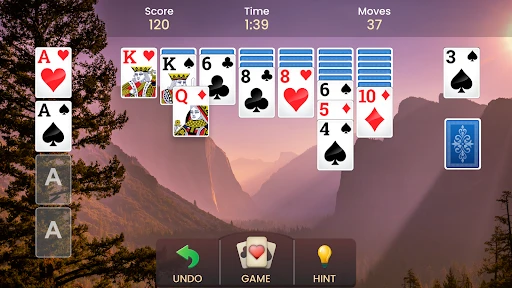
Solitaire apps commonly provide helpful tools such as undo, hints, card-draw settings, and options for choosing a preferred visual theme. These features can make the game more approachable for beginners while still letting experienced players focus on planning moves. The exact selection varies between versions, so look through the game’s settings and help screens to confirm which controls and difficulty choices are available.
Is Solitaire – Classic Card Game suitable for children, and what permissions should I check?
Solitaire uses standard playing cards and is generally suitable for a wide range of ages, but the app’s age rating and advertising content depend on its publisher and edition. Before downloading, review the store’s age guidance, privacy details, and requested permissions. Also check whether the app contains ads, in-app purchases, or external links, particularly if a child will be playing.
Pros
- Familiar rules make it easy to start playing without a lengthy tutorial.
- A good fit for quick
- relaxing sessions whenever you have a few spare minutes.
- Single-player gameplay means no opponents or online matchmaking are required.
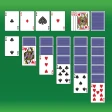
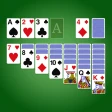
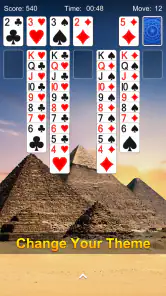
- Card and table designs can make the game easier to read and personalize.
- Undo and hint options can help beginners learn from tricky moves.
Cons
- Some deals may be unwinnable
- which can feel frustrating without a clear indicator.
- Hints can reduce the challenge if you prefer to solve every move unaided.
- Small cards may be difficult to tap accurately on compact phone screens.
- Ads or optional purchases may interrupt play
- depending on the version.
- The familiar gameplay may feel repetitive for players seeking more variety.
- Category
- Card
- Version
- 1.59.305