Shanghai Mahjongg
- 1.67K
- 4.7
- Installs
- 1.00M
- Price
- Free

Screenshots
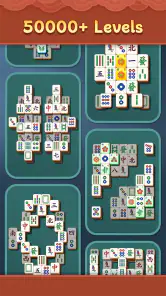
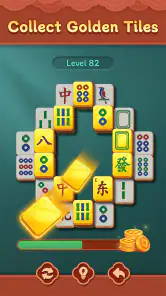

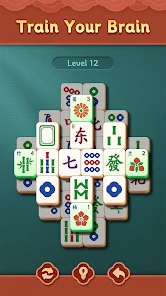
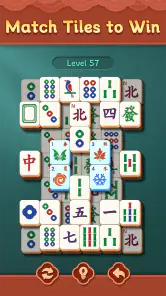
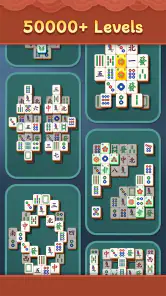
Analysis by Reviewed
I usually know within a few sessions whether a board game has enough texture to earn a place on my phone. Shanghai Mahjongg makes a friendly first impression: its tile-matching format is easy to grasp, but choosing which open pair to remove gives each board a small planning puzzle. I see it as a calm option for people who enjoy focused play without needing to learn a complicated ruleset.
What the first sessions feel like
The appeal is immediate if you already like solitaire-style puzzles. You can begin by spotting available pairs, then gradually pay more attention to what each removal uncovers or blocks. That shift—from matching what is obvious to thinking about the next few moves—is what gives the game more staying power than a simple memory test.
A practical tip is to pause before taking the first available pair. When several matches are open, consider which one might expose useful tiles or preserve other choices. The hint button can help when you lose track of the board, but I would treat it as a nudge rather than a default move: working through the position yourself is where the puzzle feels most satisfying.
A useful fit for small breaks
For an everyday example, this is the kind of game I would open while waiting for a kettle to boil or during a quiet pause between tasks. It does not ask me to coordinate with other players, and the ability to play at my own pace suits interruptions better than a timed or competitive match. If I have only a few minutes, I can still make progress without turning the break into another obligation.
That makes it especially suitable for casual players, tile-puzzle fans, and anyone who wants a low-pressure activity. It is less compelling if you want a story, frequent changes in mechanics, or a social game built around direct competition. The leaderboard adds a comparison point, but it does not change the core experience into a deep multiplayer contest.
How it compares with other board games
Compared with traditional tabletop Mahjong, this is a solo tile-clearing puzzle, not the four-player game with its broader rules and table dynamics. Compared with other solitaire games, its central challenge is spatial: a match can be visible yet unavailable because a tile is covered or blocked. That makes it a better choice when I want to scan a layered layout than when I want card-based suits, scoring systems, or a fast round.
The trade-off is that familiar matching can become repetitive once the novelty of the layouts wears off. I would vary my approach—sometimes prioritize opening covered tiles, other times preserve options—rather than rush through pairs. That small habit keeps the decisions engaging, though it cannot make a tile-matching game feel endlessly new.
More From Our News Desk

Clash of Clans Is Won Between the Battles

Android Auto Makes the Case for Quieter Car Software

MobiOffice: Transforming Mobile Productivity with Seamless Integration

EA SPORTS FC™ Mobile Soccer: Redefining Mobile Sports Gaming

How Microsoft OneDrive Became a Mobile Productivity Giant

How Google Translate Breaks Language Barriers Effortlessly
Playing with a little more intention
One useful way to make a board feel less automatic is to treat each match as a choice between immediate progress and future flexibility. If one pair clears tiles from a crowded area while another opens a new section, the second move may be more valuable even though both remove the same number of pieces. I try to scan the top layers and the edges before committing, then check whether a tempting match would leave another tile with no partner I can reach.
This is not about solving every layout perfectly. It is a simple check that helps me avoid tapping through the first obvious pairs and then discovering that my options have narrowed. When I am playing casually, I accept that I may need a hint or may reach a position where I have to reconsider. When I want a more deliberate puzzle, I use the same board to think one or two removals ahead.
When another kind of game is better
The comparison with card solitaire is useful for choosing what to install. Card games often make their appeal through suits, sequences, scores, or a quick sense of a round reaching its conclusion. Here, the main satisfaction comes from reading a layered arrangement and managing access to pairs. I would pick this game when I want visual searching and spatial choices; I would choose cards if I wanted familiar sequences or a different rhythm.
It also differs from a traditional Mahjong table game in a way that matters to expectations. Knowing the tile faces may make the board look familiar, but the task here is matching and clearing, not learning the wider rules or playing against people. If what you really want is a social game with negotiation, turn-taking, and a contest among players, this solo format is not a substitute.
What keeps a short session satisfying
In a small waiting period, I would not set myself the goal of finishing a board at any cost. I would make a few considered moves, pause when the real world interrupts, and return only if the position still feels inviting. That approach suits a game built around unhurried attention better than treating every spare minute as a challenge to complete something.
There is a trade-off in that flexibility: the game is easy to fit into a routine, but it may not provide the feeling of a substantial session for someone who wants a strong sense of progression. Its value is in the quality of the moment-to-moment puzzle, not in an ongoing story or a growing collection of systems. I find that distinction helpful when deciding whether it deserves a spot on a phone.
Have you ever found yourself craving a mental workout that feels like a leisurely stroll through a serene garden? Well, let me introduce you to the world of Shanghai Mahjongg, an app that brings the classic Chinese game of Mahjong to your fingertips. Whether you're a newbie or a seasoned tile-matching pro, this app promises a delightful experience, and trust me, it doesn't disappoint.
Diving into the Gameplay
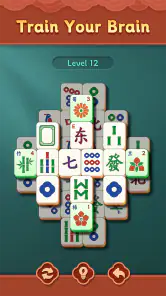
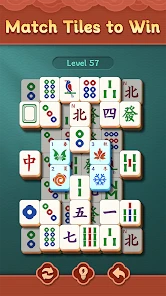
The first thing you'll notice about Shanghai Mahjongg is its visually stunning interface. The tiles are beautifully designed, and the background music is soothing, making it feel like you're sitting in an ancient Chinese tea house. The game offers various layouts, each more challenging than the last, keeping you on your toes as you strategize your next move.
For those unfamiliar with Mahjong, the objective is simple: match two identical tiles to remove them from the board, but there's a catch. You can only select tiles that are open on one side, which adds a layer of strategy. It’s like a puzzle, a memory game, and a strategy board game all rolled into one. And the best part? You can play it at your own pace, making it perfect for a quick break or a long, immersive session.
Features that Stand Out
One of the standout features of this app is the hint system. Stuck on a tricky layout? Just tap the hint button, and the game will gently nudge you in the right direction without giving away too much. It's the perfect balance between challenging and accommodating, ensuring you never feel frustrated.
Moreover, the app supports a multi-language option, which is a huge plus for non-English speakers. It’s like the developers thought of everything to make this game as inclusive as possible. And for those competitive spirits, there's a leaderboard where you can see how you rank against players worldwide. It’s a little touch that adds a lot of excitement to the game.
Choosing how much help to use
I would save hints for moments when I have genuinely lost the thread of a board rather than use one whenever I hesitate. A brief pause to compare open pairs can reveal that a match is useful because of what it exposes, not just because it is available. If I am playing to unwind, there is no need to turn every board into a test; if I want to practise planning, holding off on assistance makes each decision feel more earned.
The language option also makes the game easier to recommend to someone who is more comfortable navigating a game in another language. It does not change the puzzle itself, but it can remove a small barrier around menus and prompts. The leaderboard is best treated as an optional point of interest: I would not choose this game expecting a deep competitive scene, because its main pleasure remains the solo board in front of me.
Why You Should Download It
Now, why should you give Shanghai Mahjongg a try? If you’re looking for a game that is both relaxing and stimulating, this is your go-to app. It's perfect for unwinding after a long day or sharpening your mind during a lazy afternoon. Plus, it's free to download, so there’s really no reason not to give it a shot!
In conclusion, Shanghai Mahjongg is more than just a game; it's an experience. It combines beautiful graphics, soothing sounds, and engaging gameplay to create an app that is truly a joy to use. Whether you're looking to kill time or engage in some serious mental gymnastics, this app has got you covered. So, go ahead, download it, and lose yourself in the enchanting world of Mahjong.
What changes after the novelty
Over time, the question is less whether the first boards are pleasant and more whether I want to return to the same kind of decision-making. The changing layouts help, and the no-rush pace makes it easy to keep as a spare option for short rests. Still, its lasting value depends on enjoying the central loop itself: uncovering tiles, checking which pairs remain accessible, and deciding what to clear next.
For me, that makes it a useful habit rather than a must-play. I would keep it around for quiet moments when I want a screen activity that does not demand a long commitment. If I start opening it automatically without enjoying the choices, that is a sign to switch to a different puzzle rather than expect the game to transform into something it is not.
Practical details and staying power
Rankhamb Venkatesh is the developer, and the game is free, with an Everyone age rating. Its current version is 1.14.0 and it runs on Android 5.0 or later. A 4.7 average from around 9,100 ratings, alongside over one million installs, suggests that many players have found the simple format appealing; I would still judge it by whether the pace and visual style suit my own routine.
Maintenance is not a big part of the appeal here: this is a straightforward board game, not an app I would install for a stream of new systems or ongoing demands. The practical choice is to keep it only if you enjoy returning to its layouts. If you prefer rapid rounds, a changing campaign, or a stronger social component, another board game will likely hold your attention longer.
Making room for it in a routine
One question I would ask before keeping any casual game is whether it fills a real gap or merely occupies a home-screen slot. This one makes sense if you have recurring pockets of quiet time and enjoy using them for a focused visual task. It is less useful if your breaks are usually too short to settle into a board or if you prefer an activity that can be put down instantly without having to remember the arrangement.
A practical compromise is to keep it as a deliberate alternative to scrolling, not as a daily target. Open it when you actually want to look for patterns; close it when the puzzle stops holding your attention. That keeps its modest, low-pressure quality intact and avoids expecting a solo tile game to supply the variety of a larger hobby.
My lasting recommendation
What I like most is the way a quiet matching task can become a small exercise in planning without making a break feel serious. What I would watch for is repetition: the same basic logic remains at the center, so a high score or a pleasant first impression cannot guarantee lasting interest. The developer’s store summary describes it as a classic solitaire match game, and that is the right expectation to bring.
Shanghai Mahjongg is worth trying if you want a free, approachable tile puzzle that fits around the rest of your day. It is not the right pick for everyone, but for a player who enjoys calmly scanning a board and making deliberate matches, it can earn a modest, useful spot on the phone after the novelty fades.
Shanghai Mahjongg Frequently Asked Questions
What kind of game is Shanghai Mahjongg, and is it suitable for a quick break?
Shanghai Mahjongg is a board game presented as a classic solitaire matching game. Its single-player format makes it a natural fit for a short puzzle break: you focus on the tiles in front of you and try to clear the layout by finding matching pairs. It can also suit a longer session when you want to take more time over each move.
Will Shanghai Mahjongg work on my Android device?
Shanghai Mahjongg is available for Android devices running version 5.0 or later. If your device meets that requirement, you can consider downloading it and trying the tile-matching format for yourself. The game is free to download, so you can get started without an upfront purchase. It is developed by Rankhamb Venkatesh.
What is Shanghai Mahjongg and how is it different from traditional Mahjong?
Shanghai Mahjongg is a digital adaptation of the classic Mahjong puzzle game, designed for both Android and iOS platforms. Unlike the traditional four-player game, Shanghai Mahjongg is a single-player game focused on matching open pairs of identical tiles and clearing the board. It features various layouts and themes that enhance the gaming experience, making it more engaging for players of all ages.
How do I play Shanghai Mahjongg and what are the basic rules?
To play Shanghai Mahjongg, you need to match pairs of identical tiles to remove them from the board. The game is won when all tiles are cleared. Only tiles that are free on at least one side can be matched. The game offers different levels of difficulty and layouts, allowing players to challenge themselves as they progress. It also includes an undo feature and hints for those who need assistance.
What are the main features of Shanghai Mahjongg that enhance the gameplay experience?
Shanghai Mahjongg offers a range of features such as multiple tile sets and backgrounds, time challenges, and a hint system to assist players. The game is designed with intuitive touch controls and an easy-to-navigate interface. Additionally, it includes a global leaderboard where players can compare their scores with others, adding a competitive edge to the game. The app also provides regular updates to improve gameplay and introduce new challenges.
Pros
- Intuitive touch controls enhance gameplay.
- Vibrant graphics create an engaging experience.
- Multiple difficulty levels for all players.
- Offline mode available for on-the-go gaming.
- Regular updates with new puzzles.
Cons
- Occasional in-app ad interruptions.
- Limited free levels available initially.
- No multiplayer mode offered.
- Battery consumption can be high.
- Requires frequent updates for new content.

- Category
- Board
- Version
- 1.14.0