Arrow 3D Puzzle
- 59.00
- 4.9
- Installs
- 10.00K
- Price
- Free

Screenshots






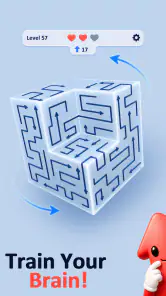
Analysis by Reviewed
I enjoy puzzle games most when I can understand the basic challenge at a glance but still need to think before acting. That is the appeal I see in Arrow 3D Puzzle: it turns a cluster of directional pieces into a spatial logic problem, asking me to work out how to clear the board without treating every move as an isolated guess. It is a focused idea rather than a sprawling game, which makes it easier to pick up in a spare moment—and also means it will not suit everyone looking for a varied, story-led experience.
My overall impression is that this is a free trivia and logic game built around visual reasoning. The central pleasure comes from studying how arrows and shapes relate, then finding an order that makes progress. I would recommend it to someone who likes compact brainteasers and wants an activity that asks for attention without demanding a long session. If you prefer word quizzes, broad trivia categories, or puzzles that constantly introduce new mechanics, you may find its narrow focus limiting.
How the puzzle earns its place on your phone
A simple premise that rewards looking ahead
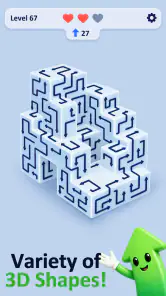
The game’s defining task is to rotate three-dimensional shapes and clear their arrows. What makes that more interesting than tapping whichever piece looks convenient is the need to think about direction and position together. A move that seems obvious from one angle may not be the right choice once you consider what remains around it. I find that this kind of spatial planning gives the puzzle its identity: the challenge is not simply spotting a match, but reading the arrangement and choosing a sensible sequence.
That distinction matters when deciding whether the game fits your idea of a trivia title. It is not the sort of experience I would reach for to test facts or answer general-knowledge questions. Its brain-training appeal is closer to a visual logic puzzle, where careful observation matters more than recall. If you enjoy mentally rotating objects, sorting out dependencies, or pausing to inspect a board before making a move, the concept should feel familiar in a good way.
A useful habit is to scan the whole shape before touching anything. I would first identify which arrows appear to have a clear path and which are hemmed in by other pieces, then consider whether rotating the view changes what is visible. This small routine helps turn trial-and-error into deliberate play. It is especially handy on a phone, where a quick tap can be tempting even when the board deserves a closer look.
What the free price means—and what it does not
Arrow 3D Puzzle is free to download, so trying the basic idea does not require an upfront purchase. That is a straightforward advantage for a game whose appeal depends heavily on whether spatial puzzles suit you. I can see the value in testing a few rounds during a break before deciding whether its particular style holds my attention. The free entry point makes that decision low commitment; it does not, by itself, tell me anything about optional purchases or other costs, so I would not assume more than that.
For me, the practical value comes from having a focused puzzle to open when I have a short stretch of downtime. A commute while waiting, a quiet coffee break, or a few minutes between other tasks can be a natural fit, provided I am somewhere I can look at the screen carefully. The game’s central action is easy to understand, but the spatial reasoning can still ask for concentration. That balance makes it more satisfying than a purely passive time-filler, while keeping it less demanding than a long session with a complex strategy game.
The audience response is encouraging: it holds a 4.9 average from around 850 ratings, alongside more than 10,000 installs. Those figures suggest that people who have tried it have responded positively, but I treat ratings as context rather than a promise that I will enjoy every puzzle. A player who loves word trivia could reasonably prefer a conventional quiz even if this game is well liked; the kind of thinking involved is simply different.
Where the design can feel demanding
The same three-dimensional focus that makes the game distinctive can also create friction. If a board is hard to read from the current angle, I may spend time understanding the arrangement before I can even plan a move. That is not necessarily a flaw in a spatial puzzle, but it does mean the experience is less suited to someone who wants instant, effortless taps. It rewards patience and a willingness to inspect the object rather than rushing through on instinct.
There is also a trade-off in the narrowness of the premise. Arrow-clearing logic gives the game a clear identity, but it does not offer the broad subject variety of a general trivia app. If I want questions about history one minute and science the next, I would choose a quiz game instead. If I want a puzzle that builds around words or numbers, I would pick one of those categories. This is a better match when the specific pleasure of rotating a shape and reasoning through its arrows is what I want.
Another practical point is the setting. Because orientation and small visual relationships matter, I would not choose it when I am walking, distracted, or trying to play one-handed without looking closely. It is more comfortable when I can give the screen a little attention. That makes it a useful waiting-room or desk-break game, but a less natural option for moments when audio, rapid rounds, or hands-free interaction would be preferable.
Small tactics that make a session smoother
I would approach a puzzle in passes rather than trying to solve everything at once. First, rotate the shape enough to understand its layout; next, look for arrows that seem least obstructed; then reassess the board after each useful change. This is a practical way to reduce unnecessary moves and avoid focusing so tightly on one visible arrow that I miss a more important relationship elsewhere. It also gives the game a calmer rhythm: observe, decide, act, and inspect again.
When I get stuck, I would change my viewpoint before repeating the same choice. A different angle can clarify whether an arrow is genuinely blocked or whether I have misread how the pieces line up. If the arrangement still does not make sense, stepping back and tracing the likely order from the most accessible pieces inward is more productive than tapping randomly. These are not complicated techniques, but they suit this game’s central challenge and make each attempt feel more intentional.
For a short everyday session, I would set a modest goal: solve a puzzle or make a little progress, then put the phone down rather than turning the game into a rushed test of speed. That approach is particularly useful if I am playing between tasks. It keeps the game’s visual reasoning enjoyable and makes it easier to notice when I am no longer concentrating enough to make good decisions.
Who is most likely to enjoy it
I think Arrow 3D Puzzle is strongest for players who like visual brainteasers, can tolerate a moment of uncertainty, and find satisfaction in working out a sequence. It may also appeal to someone who has tried ordinary matching games and wants a more spatial kind of problem without committing to a large game. Since it is rated for Everyone, it is presented for a broad audience, though a player’s patience for careful visual reasoning will matter more than age alone when deciding whether the gameplay is a fit.
It is less compelling for people who want a steady stream of trivia facts, a narrative to follow, or a game that can be played almost entirely by feel. It is also not my first recommendation for anyone who dislikes rotating objects mentally or who gets frustrated when a puzzle requires pausing to inspect the board. In those cases, a straightforward quiz, word game, or less spatial puzzle would probably deliver a better match.
The game is from UniRise Studio, and its current version is 1.4.0. It requires Android 7.0 or later, which is a useful compatibility detail for anyone checking an older device. Those practical points help determine whether it is available to try, but the deciding factor remains the puzzle style: the game’s appeal depends on whether working through three-dimensional arrow arrangements sounds enjoyable to you.
My verdict on whether to try it
I would give Arrow 3D Puzzle a try if I wanted a free, focused logic game and liked the idea of solving boards through spatial observation. Its clearest strength is that it asks me to think about direction, shape, and order rather than simply react. The best way to approach it is patiently: inspect the object, rotate your view, and make moves with the rest of the arrangement in mind. That makes it a more considered break than a game built around automatic tapping.
I would skip it if I were specifically looking for question-and-answer trivia, varied themes, or a frictionless game for distracted moments. Its focused design is a strength for the right player and a limitation for everyone else. Since the download is free, trying it is a reasonable way to see whether this kind of visual reasoning clicks for you, while keeping expectations tied to what the game actually offers: a distinct arrow-and-shape puzzle rather than an all-purpose quiz collection.
Overall, I see it as a worthwhile option for people who enjoy studying a puzzle before acting and want a compact challenge they can return to during spare moments. I would not recommend it simply because it is popular or highly rated; I would recommend it because the core idea has a clear audience and a satisfying way of making careful observation matter. If that sounds like your kind of play, it is worth a try. If not, a conventional trivia or word game will be a better use of your time.
Arrow 3D Puzzle Frequently Asked Questions
What is Arrow 3D Puzzle?
Arrow 3D Puzzle is a casual logic game built around clearing a cluster of arrows from a three-dimensional arrangement. Each arrow can move only in the direction it points, so the challenge is to find a safe order that lets pieces leave without being blocked by others. Levels are designed for short play sessions, while increasingly tangled layouts test planning and spatial awareness.
How do you play Arrow 3D Puzzle?
You inspect the 3D arrow formation and tap an arrow to send it moving in its indicated direction. An arrow can exit only when its path is clear; if another piece blocks it, the move cannot be completed. The main strategy is to rotate or examine the arrangement from different angles, identify pieces with open paths, and remove them in an order that gradually unlocks the rest.
Is Arrow 3D Puzzle free to download, and does it include ads or in-app purchases?
The game may be available as a free download, but its exact pricing, advertisements, and optional purchases can vary by platform, region, or version. Check the Google Play Store or Apple App Store listing before installing for current details, including any paid items or subscriptions. If ads or purchase prompts are important to you, review the listing and in-game settings before deciding whether it suits your preferences.
Can I play Arrow 3D Puzzle offline?
Some puzzle games allow their core levels to be played without an internet connection, but offline availability can depend on the current version and how the game handles ads, rewards, or account features. Check the store description and test the game in airplane mode if offline play matters to you. An internet connection may still be needed for advertisements, updates, cloud saves, or other online features.
Is Arrow 3D Puzzle suitable for children, and what should I check before downloading?
The arrow-clearing puzzles are generally approachable and do not rely on complex controls, but suitability depends on the child’s age, patience, and sensitivity to advertising or optional purchases. Before downloading, check the app’s age rating, privacy information, permissions, and store notes for ads or in-app purchases. The game can encourage careful observation and planning, though younger players may need help with harder layouts.
Articles Related to Arrow 3D Puzzle
Clash of Clans Is Won Between the Battles
Its raids are quick; its community is a long-term project of coordination, teaching, rivalry, and shared responsibility—with all the friction that entails.
Android Auto Makes the Case for Quieter Car Software
The car interface is no longer judged by how much it can do, but by how quietly it helps. Android Auto shows what drivers now expect—and what still gets in the way.
MobiOffice: Transforming Mobile Productivity with Seamless Integration
MobiOffice: Word, Sheets, PDF is redefining mobile productivity with a surprising blend of functionality and innovation.
EA SPORTS FC™ Mobile Soccer: Redefining Mobile Sports Gaming
Dive into EA SPORTS FC™ Mobile Soccer, where immersive gameplay and strategic depth transform mobile sports gaming.
Pros
- Easy-to-understand rules make it approachable for new players.
- Short levels are convenient for quick play sessions.
- Visual arrow paths make solutions easy to follow.
- Puzzle difficulty offers a gradual challenge.
- Works well as a relaxing
- low-pressure brain teaser.
Cons
- Some puzzles may feel repetitive after extended play.
- Later levels can require trial and error.
- Small arrows may be harder to distinguish on compact screens.
- Hints or other aids may be limited or tied to ads.
- The minimalist presentation may lack variety for some players.

- Category
- Trivia
- Version
- 1.4.0