Rhythm Dash
- 10.00
- 4.6
- Installs
- 1.00M
- Price
- Free

Screenshots

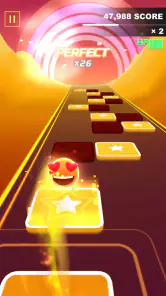
Analysis by Reviewed
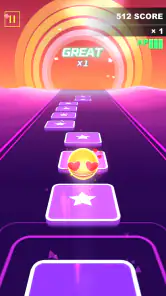
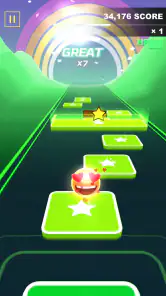
I like music games best when the beat does more than decorate the screen: it should help me decide when to move, while leaving enough room to make a mistake and recover. Rhythm Dash has an appealing premise for that kind of quick play, pairing bouncing-ball action with worlds that change color. My first impression is of a game built around immediate visual and rhythmic feedback rather than a sprawling music library or a complicated control scheme.
How to tell whether the rhythm clicks
For a first try, I would play somewhere quiet and give the game a few uninterrupted minutes. That makes it easier to separate an unfamiliar rhythm from distractions around you. If you are testing it during a commute, wait until you are safely seated and not needing to watch your surroundings; a game that asks you to track motion and color is a poor fit for divided attention.
One useful way to assess the design is to notice which cue you naturally follow. Do you anticipate the ball’s bounce, respond to the changing scene, or rely mostly on the beat? That answer can help you adjust your attention instead of reacting to everything at once. If visual shifts pull your eyes away from the action, deliberately keep the ball in focus and let the colors serve as context.
A rhythm game built around visual cues
As a free music game from MayaGameStudio, Rhythm Dash sits in a different lane from games that ask you to choose a song, learn a chart, and chase a score across a long track. Its identity is tied to a jumping ball and shifting color environments. That gives the experience a clear visual hook, but it also means the central appeal depends on how well you enjoy responding to changing scenes in time with the action.
The store’s short label calls it Rhythm Dash, and that is a useful expectation-setter: this is aimed at people who want a compact rhythm challenge rather than a detailed music-production tool or a conventional platform adventure. I would consider it for a spare moment when I want to concentrate on timing without committing to a long session. The Everyone age rating also makes the presentation broadly accessible, though that does not tell me whether every player will find the timing forgiving.
There is a satisfying design possibility in combining a bouncing object with color changes. A beat can be heard, but a strong visual shift can also help signal that the pace or scene has moved on. For someone who tends to follow visual cues more readily than a dense stream of notes, that may feel more approachable than a traditional rhythm chart. The trade-off is that anyone seeking detailed musical notation, familiar songs, or instrument-like interaction may find this format too pared back.
What the changing worlds add
Color changes can make a simple action feel more expressive, especially when the visual rhythm and the player’s timing line up. They can also become visual noise if the screen changes too rapidly or if a player relies on subtle color differences. I would treat the changing environments as part of the challenge, not merely decoration: keeping attention on both the ball and its surroundings is likely to be central to enjoying the game.
More From Our News Desk

Weather by Xiaomi Review: Clear at a Glance, Less Clear Up Close

X Under Pressure: Can It Recover When Posting Goes Wrong?

Clash of Clans Is Won Between the Battles

Android Auto Makes the Case for Quieter Car Software

MobiOffice: Transforming Mobile Productivity with Seamless Integration

EA SPORTS FC™ Mobile Soccer: Redefining Mobile Sports Gaming
A practical tip for a first session is to focus on one cue at a time. Rather than trying to read every change in the scene, watch the ball’s movement and use the color shifts as supporting context. If the visuals feel busy, a shorter play session may be more comfortable than repeatedly pushing through frustration. This is a small adjustment, but it helps distinguish a timing mistake from simply trying to track too much at once.
Progress without turning play into a chore
Rhythm games can create pressure in two ways: the timing itself can be demanding, and the desire to improve can turn a casual diversion into a repeated attempt at the same challenge. Rhythm Dash’s jumping-and-color premise suggests a game where attention and rhythm are the main demands. I would recommend approaching it as a short challenge, especially at first, rather than assuming every session needs to end with a personal best.
For an everyday use case, I can imagine opening it while waiting for a ride or taking a brief break between tasks. It is better suited to that kind of focused pause than to a situation where I need to keep half an eye on messages or conversation. Rhythm play rewards attention; interruptions can break the sense of timing, and a player who is already distracted may mistake that interruption for a lack of ability.
The current version is 1.0.29, and the game was released on November 25, 2025. Those details help place the current offering, but I would not treat a version number as proof of any particular content depth or progression structure. If you are deciding whether to make it a regular game, judge it by how enjoyable the core rhythm feels over several short sessions, not by assuming that a particular update number guarantees a certain amount of material.
Spending, fairness, and what can be judged
The game is free to download and includes in-app purchases priced from $2.99 to $19.99 per item. That gives players a clear reason to think about spending before they begin. The purchase range alone does not reveal what the items contain or whether they affect play, so I would not assume that paying is necessary to progress, that purchases are purely cosmetic, or that they provide a competitive advantage.
That uncertainty matters for fairness. In a rhythm game, the most important question is often whether success comes down to timing and practice or whether paid items change the challenge. The purchase information available here does not answer that question. My practical advice is to enjoy the free experience first and only consider a purchase after checking what it unlocks in the game and whether it changes the experience in a way you actually want.
There is also a useful distinction between a game being free to start and a game being free of spending pressure. The first is clear here; the second cannot be determined just from the listed price range. If you are setting up a device for a child, it is sensible to review purchase controls before handing it over. The Everyone rating speaks to the audience rating, not to a guarantee that accidental spending cannot happen.
Rhythm Dash has an average rating of 4.6 from around 2.3 thousand ratings, and it has passed one million installs. Those figures suggest that the game has attracted a substantial audience, but they do not establish whether it suits a particular player or whether paid content affects competitive balance. I would use them as context rather than as a substitute for testing the basic rhythm and visual style myself.
Who will enjoy it, and who may prefer another game
I would point this toward someone who likes quick, visually driven rhythm challenges and is curious about a bouncing-ball approach. It may also suit a player who finds conventional note lanes repetitive and wants a more colorful, motion-focused presentation. If you enjoy trying to stay composed as visual cues shift around you, that combination could be the game’s strongest draw.
I would steer away from it if your main priority is choosing from a large song catalog, practicing recognizable tracks, or following precise note charts. Those are common strengths of other music games, but they are not the premise that makes Rhythm Dash distinctive. Similarly, a player who prefers calm visuals or has difficulty tracking color changes may be better served by a rhythm game with clearer fixed lanes and less movement on screen.
Compared with a standard tap-to-the-beat title, Rhythm Dash appears more focused on the ball’s motion and the changing world around it than on reading a line of incoming notes. That can make the experience feel fresh, but it also shifts the skill being tested. Someone who is excellent at reading charts may not automatically feel at home here; they may need to adjust to watching the motion and responding to the visual scene.
Making a fair first trial
To decide whether the game fits, I would start with a brief session in a quiet moment and pay attention to three things: whether the beat is easy to follow, whether the color changes help or distract, and whether a missed action feels understandable. Those are more useful signals than simply asking whether the first attempt went well. A rhythm game can be challenging and still feel fair when the cues make sense.
If the first session feels difficult, I would pause before spending money or concluding that the game is not for me. Try reducing distractions, watch the ball’s movement rather than chasing every visual detail, and see whether timing improves with familiarity. If the challenge still feels unclear after that, a chart-based music game may be a better match. This approach keeps the decision grounded in the actual play style instead of the assumption that every rhythm game should work the same way.
A measured recommendation
My overall view is that Rhythm Dash is worth considering if you want a free, visually distinctive rhythm game for short bursts and are comfortable with a bouncing-ball concept. MayaGameStudio has chosen a clear hook in the changing-color worlds, and the game’s appeal will depend on whether that presentation makes timing more engaging for you or distracts from it.
I would not recommend buying anything before learning what each purchase changes, and I would not choose this over a song-focused rhythm game if music selection and chart practice are your main reasons for playing. The in-app purchase range is visible, but its effect on progress and fairness is not established by that fact alone. Start free, test the timing in a distraction-free moment, and keep expectations focused on the game’s visual rhythm challenge.
For me, that makes it a promising option for curious casual players rather than an automatic pick for every music-game fan. If the ball’s movement and shifting colors help you lock into the beat, it could become an enjoyable little break. If you want familiar songs, detailed note patterns, or a clearly documented relationship between spending and competition, another title is likely to be the safer fit.
Choosing the right moment to play
There is a difference between a game that fits a spare moment and one that works well in every spare moment. I would save this for a pause when I can give the screen my attention, rather than opening it while chatting or switching between several tasks. That choice is especially helpful for a visual rhythm format: it lets me judge the timing on its own terms instead of blaming the game for a missed cue caused by an interruption.
It may also help to stop after a few attempts if concentration starts to slip. Repeating a section while tired can make the experience feel harsher without teaching much. For players who enjoy gradually settling into a beat, a short return later can be more rewarding than turning a quick game into a long session. If you want something you can play almost automatically while doing something else, a less timing-dependent casual game would be a better fit.
What I would check before spending
The sensible purchase decision is not simply whether an item seems affordable; it is whether its effect matches what you want from the game. I would open the in-game purchase details first and look for a plain explanation of what is being bought. If the description does not make the benefit clear to you, waiting is better than guessing. The listed price range gives a spending boundary, but it does not tell you which item, if any, is useful for your play style.
That same caution applies if you are introducing the game to a younger player. The Everyone age rating describes its broad audience, while purchases are a separate consideration. I would set appropriate device-level purchase safeguards and agree on a simple rule before play begins. That is practical protection without assuming that any particular purchase is required or that the game uses a specific progression system.
How I would judge its staying power
For me, the lasting appeal would come down to whether the bouncing movement and color changes remain satisfying after the novelty of the presentation wears off. A strong first impression is not enough if I soon wish I had more control over song choice or a clearer way to measure progress. On the other hand, someone who enjoys repeating a compact timing challenge may not need a large catalog to get value from it.
That is why I would treat the game as a focused alternative rather than a replacement for every music title on a phone. It offers a different kind of attention test from fixed note lanes, and that difference is its main reason to try it. If that particular mix works for you, its concise premise can be an advantage; if you want variety through many tracks and chart styles, a broader rhythm game is likely to serve you better.
Rhythm Dash Frequently Asked Questions
What is Rhythm Dash?
Rhythm Dash is a music-based reflex game in which you tap, swipe, or otherwise respond to visual cues in time with the beat. Its central appeal is coordinating timing and movement as patterns become more demanding. The exact modes, controls, song selection, and progression can vary by version, so check the app-store listing and in-game description for the features available in the edition you plan to install.
Is Rhythm Dash free to download, and does it include in-app purchases or ads?
The price and monetization can depend on the platform, region, and current release. Before downloading, review the Google Play or App Store listing for the purchase price, in-app purchases, subscriptions, and advertising disclosures. If the game offers optional paid items or removes ads for a fee, you can decide whether those extras are worthwhile; do not assume that every song or feature is included at no cost.
Can I play Rhythm Dash offline?
Offline access depends on how the installed version handles its music, account features, and content downloads. Some rhythm games let you replay content already stored on the device, while other features may require an internet connection for downloads, updates, advertisements, or online rankings. Check the game’s listing and settings, and try loading a level while connected before relying on offline play during travel or in areas with limited service.
Is Rhythm Dash suitable for beginners, and how difficult is it?
Rhythm Dash may be approachable if you enjoy quick timing challenges, but difficulty generally depends on the speed and complexity of the patterns you choose. New players can benefit from starting with slower or simpler stages, learning how the controls register, and adjusting audio or visual settings if available. If you are sensitive to flashing effects or rapid movement, check the accessibility options and take breaks when needed.
Which devices are compatible with Rhythm Dash, and what should I check before installing it?
Compatibility depends on the specific Rhythm Dash release and your device’s operating-system version. Before downloading, confirm that the app-store page lists your phone or tablet as supported, check the required OS version, and make sure you have enough storage for the game and any additional content. Also review the developer name, permissions, recent update details, and user feedback so you install the intended app.
Pros
- Responsive controls make timing jumps and dodges feel precise.
- Short stages are convenient for quick play sessions.
- Rhythm-based obstacles give each run a lively sense of pace.
- Retrying after a mistake is quick and keeps the action flowing.
- Bright visuals make hazards easy to spot during fast sections.
Cons
- Some sections may feel unforgiving until their patterns are memorized.
- Repeated attempts can make stages feel repetitive over time.
- Fast sequences may be challenging for players with slower reflexes.
- Visual effects can make it harder to focus on hazards for some players.
- Enjoyment depends heavily on liking rhythm-driven platforming.
- Category
- Music
- Version
- 1.0.29