Meteorfall: Journeys
- 449.00
- 4.2
- Installs
- 100.00K
- Price
- $3.99

Screenshots
Analysis by Reviewed
When I first stumbled upon Meteorfall: Journeys, I wasn't quite sure what to expect. A blend of card game mechanics with a rogue-like spin? Count me in! So, I downloaded it on a whim, and let me tell you, it’s been quite the delightful surprise.
Engaging Gameplay Mechanics
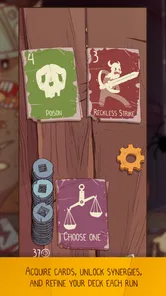
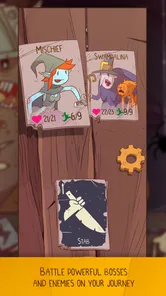
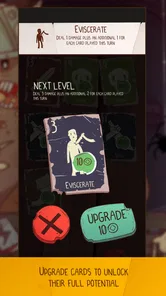
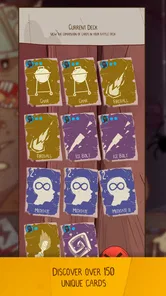
From the moment you start your journey, you're thrust into a world where strategy meets adventure. The game offers a unique twist, combining deck-building elements with rogue-like features. I found myself engrossed in crafting my deck, carefully choosing which cards to keep and which to discard. It's all about balance, and every decision feels impactful. The battles are quick yet challenging, and as someone who enjoys a good strategy, it was right up my alley.
How the pace fits everyday play
Those quick battles make this a natural choice when I have a short break and want something more involving than a casual matching game. I can focus on a tactical decision rather than needing to settle in for a long session. The trade-off is that a run still asks for attention: I wouldn’t start one if I expected to be interrupted every few moments, since weighing card choices is part of the fun. For a commute or a quiet wait, it works best when I have enough time to follow a run’s decisions rather than tapping through on autopilot.
Compared with a traditional card game built around collecting and competing against other players, this is a more self-contained, solo-feeling adventure. Its appeal is the changing challenge of a run and the way deck decisions shape it, not a social ladder or a large collection to manage. If you want direct competition, a multiplayer-focused card game is probably a better fit. If you prefer experimenting with a strategy at your own pace, this approach is easier to recommend.
Characters and Customization
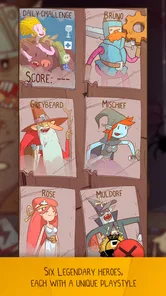
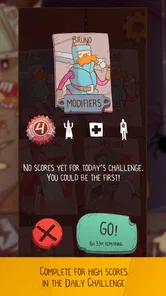
One of the standout features for me is the variety of characters to choose from. Each character comes with their own set of abilities and strengths, allowing for diverse gameplay experiences. I started with Bruno the Warrior, and his straightforward brute force approach was a blast. However, switching to Greybeard the Wizard added a layer of complexity with spellcasting that kept the gameplay fresh. The ability to customize your deck based on the character's strengths is a game-changer.
My practical tip is to treat a new character as a reason to rethink how I make decisions, not just as a different skin for the same deck. A direct approach may reward a different sense of priorities than a spell-focused one, so I try not to carry every habit from one character into another. That makes experimentation more useful: if a run goes badly, I can ask whether the character’s strengths and my card choices were working together, instead of assuming the whole game is luck.
Visuals and Soundtrack
Visually, the game is charming with its hand-drawn art style. The quirky animations and vibrant colors make every playthrough feel lively. And let's not forget the soundtrack. It’s one of those soundtracks that you don’t mind having stuck in your head for hours. It perfectly complements the game’s whimsical vibe, adding to the immersive experience.
More From Our News Desk

Weather by Xiaomi Review: Clear at a Glance, Less Clear Up Close

X Under Pressure: Can It Recover When Posting Goes Wrong?

Clash of Clans Is Won Between the Battles

Android Auto Makes the Case for Quieter Car Software

MobiOffice: Transforming Mobile Productivity with Seamless Integration

EA SPORTS FC™ Mobile Soccer: Redefining Mobile Sports Gaming
The user interface is intuitive, which makes navigating through the game a breeze. I never found myself lost or confused, which can sometimes happen in complex card games.
Reliability, device fit, and limits
I’d set expectations around the kind of game it is rather than assume that a quick battle means every session is effortless. The decisions are the focus, and when I’m tired or distracted, the tactical layer can feel like work instead of a relaxing pastime. In a realistic everyday scenario, I’d pick it up during a calm break, play attentively, and save a more demanding run for a moment when I can concentrate.
It is a paid game, priced at $3.99, so I’d think of the purchase as paying for a focused card adventure rather than sampling a free collection of modes. The Everyone age rating makes it broadly suitable, while the strategic choices still give it more depth than its friendly presentation might suggest. Slothwerks is the developer, and the game’s current version is 1.0. It originally arrived on Jan 24, 2018, and requires Android 5.1 or later. That minimum makes it worth checking the operating-system requirement before buying on an older device; I wouldn’t assume every phone will feel equally comfortable simply because the game is visually modest.
For a sense of its audience, it has an average rating of 4.3 from around 3.1K ratings, with 424 written reviews and over 100K installs. I’d read that as evidence of a well-established niche, not a guarantee that its particular blend of roguelike progression and card decisions will suit everyone. The useful question is whether you enjoy making small strategic choices repeatedly, rather than whether you usually play mobile games.
Replayability Factor
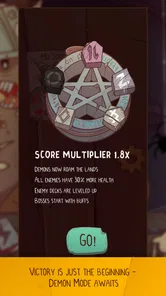
If there's one thing that keeps me coming back, it's the replayability. Each playthrough feels unique due to the randomly generated elements. Whether it's the different decks, the variety of enemies, or the random events, no two journeys are the same. This keeps the game fresh and exciting, even after multiple playthroughs.
That variability is also a reason to skip it if you strongly prefer a fixed campaign with a predictable sequence and a clearly paced story. I enjoy adapting as a run unfolds, but someone who wants to plan every encounter in advance may find the changing elements less satisfying. For me, a useful way to keep the experience fresh is to switch characters when I notice myself repeating the same decisions; the change gives me a reason to examine my choices again without expecting a completely different genre of game.
Moreover, the developers frequently update the game, adding new content and challenges, ensuring that players always have something to look forward to.
Keeping a run manageable
For a new player, I’d focus less on trying to make a perfect deck and more on noticing what each choice is doing for the character in that run. A card can look attractive on its own, but its value depends on the rest of the approach I’m building. When I’m unsure, I find it more useful to make a deliberate choice, then see how it changes the next decisions, than to chase a theoretical ideal. That turns an unsuccessful run into a small lesson instead of a reason to blame chance.
There is also a practical distinction between a short battle and a good stopping point. The encounter itself may be brisk, but I prefer not to put the game down in the middle of considering an important choice. If I only have a tiny gap between errands, I might choose a simpler mobile game that can be played without keeping a strategy in mind. If I have a quiet coffee break or a wait with no immediate interruption, the tactical decisions feel rewarding rather than inconvenient.
Who will get the most from it
I’d recommend this to someone who enjoys learning a game through repeated attempts, changing plans when a run presents a different challenge, and having character choice shape the way they think about cards. It suits a player who wants a thoughtful single-player diversion, not necessarily someone who wants a sprawling campaign. The appeal is in making a series of small judgments and seeing how they work together, so even a player new to deck-building can approach it one decision at a time.
On the other hand, I’d steer away from it if your ideal card game is mostly about collecting, trading, or testing a carefully tuned deck against other people. Those alternatives give more room to focus on social competition and long-term collection goals. This game is a better match when you want the challenge contained in a run and don’t mind adapting to circumstances you cannot fully plan in advance. Its roguelike structure gives variety, but that same unpredictability can feel less satisfying if you want every session to move a fixed story forward.
Price and expectations
At $3.99, I’d decide based on whether the core loop sounds enjoyable, rather than expecting a broad bundle of unrelated activities. The price is for a focused card adventure: character-led choices, quick encounters, and the motivation to try another approach. That is a fair proposition for the right player, but it may not be compelling if you only want an occasional distraction and are unsure whether strategic repetition appeals to you. I would make the purchase because I wanted this specific style of play, not simply because it is an inexpensive-looking mobile game.
The game’s friendly presentation and Everyone rating make it approachable, but that does not mean every choice is simple or that the experience is equally suited to every mood. I find it best when I’m alert enough to think through a decision. If I’m looking for something soothing that I can play while doing something else, a low-stakes puzzle or casual game is a better choice. That distinction is useful before buying: the artwork may look light, yet the pleasure comes from paying attention to how the deck and character fit together.
Final Thoughts
In conclusion, Meteorfall: Journeys is a gem for those who are fans of card games and rogue-like adventures. Its engaging gameplay, charming visuals, and high replayability make it a must-try. Whether you're a seasoned gamer or someone looking for a new pastime, this game offers something for everyone. So, if you haven't tried it yet, give it a shot. It might just become your next favorite mobile game!
My recommendation is strongest for someone who wants a compact, thoughtful solo card game and is happy to learn by testing different approaches. I’d pass if I were looking for multiplayer rivalry, a purely relaxing game that asks little attention, or a long, scripted narrative. Within its lane, the combination of character-led deck choices, brisk battles, and run-to-run variation gives me a clear reason to return, while the paid entry price makes it sensible to choose it because that specific loop sounds appealing—not just because I want another game on my phone.
Meteorfall: Journeys Frequently Asked Questions
What kind of game is Meteorfall: Journeys, and who developed it?
Meteorfall: Journeys is a card game developed by Slothwerks, built around a deck-building roguelike adventure. Its central goal is to defeat the Uberlich, and the experience combines card choices with battles and decisions along the way. If you enjoy shaping a deck while navigating a challenging adventure, its basic premise should be easy to understand before you begin.
What should I know about the price and compatibility before downloading?
Meteorfall: Journeys costs $3.99 and is listed for devices running Android 5.1 or later. It is rated Everyone, so its content is presented as suitable for a broad audience. The game’s current version is 1.0, and it was released on January 24, 2018. These details can help you check whether the purchase and basic device requirements fit your plans.
What is the main gameplay style of Meteorfall: Journeys?
Meteorfall: Journeys is a unique deck-building roguelike game where players embark on various adventures by using their deck of cards. Players choose a hero and navigate through a series of challenges, battles, and strategic decisions. The game emphasizes strategic card play and resource management, offering a fresh take on traditional card games.
Is Meteorfall: Journeys suitable for casual gamers?
Yes, Meteorfall: Journeys is designed to be accessible for both casual and hardcore gamers. Its simple mechanics and intuitive interface make it easy for newcomers, while its strategic depth and variety of hero classes provide challenges for experienced players. The game offers a balance that caters to various gaming preferences.
What are the different hero classes available in Meteorfall: Journeys?
In Meteorfall: Journeys, players can choose from a variety of hero classes, each with unique abilities and card decks. These include the warrior, mage, rogue, and healer classes, among others. Each class offers distinct strategies and playstyles, allowing players to tailor their adventures according to their preferred approach.
Pros
- Engaging deck-building gameplay.
- Unique art style and animations.
- Replayable with diverse strategies.
- Offline play available.
- Humorous character interactions.
Cons
- Limited character selection.
- In-game purchases can be pricey.
- May feel repetitive over time.
- No multiplayer mode.
- Occasional bugs and crashes.