Knife Hit
- 15.01K
- 4.2
- Installs
- 100.00M
- Price
- Free

Screenshots
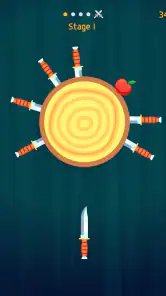
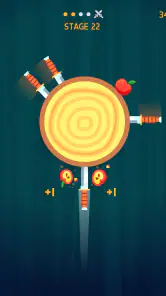
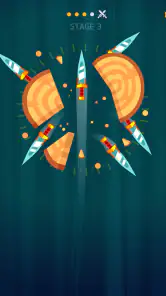
Analysis by Reviewed
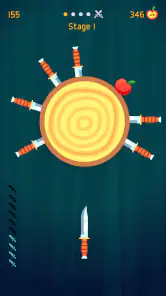
When I want a game that takes seconds to understand, I reach for Knife Hit. One tap sends a knife toward a turning target; the trick is landing it in a gap rather than clipping a knife already stuck there. That tiny decision is the whole appeal: act, watch the result, and decide whether I’m ready to try again. I find it satisfying in short bursts, though the same tight timing can turn a relaxing break into a test of patience.
A Useful Game for Small Pockets of Time
The quick-to-grasp control makes this an easy choice when I’m waiting for a drink, sitting through a short delay, or taking a mental break between tasks. I don’t need to remember a long sequence of controls before playing; I can focus on the moving target straight away. That convenience has a limit, though: if a brief pause is all I have, a frustrating miss can leave me wanting another attempt just as I’m supposed to move on.
I’d recommend it most to people who enjoy a compact skill challenge and can treat failure as part of the rhythm. It is less suitable for someone who wants a slow, low-pressure pastime or a game that keeps introducing new tasks over a long session. Before opening it during a genuinely time-sensitive wait, I’d decide how many attempts I’m willing to make. The restart is so immediate that it’s easy to lose track of that boundary.
It also works well as a shared, informal challenge: one person can take a turn, then pass the phone along without needing to explain a complicated setup. I wouldn’t expect that to replace a multiplayer game with shared rules or team goals, but the simple action makes it easy for another person to understand what went wrong and have a go.
The Rhythm Behind Each Attempt
The first throw is easy to grasp, but each round asks me to read the target instead of tapping on autopilot. I watch its movement, notice where the existing knives leave space, then choose a moment to throw. A safe-looking gap can disappear quickly as the rotation carries it away, so I get more from waiting for a clear opening than from tapping rapidly.
That makes the feedback immediate and useful: a clean hit lets the round continue, while a collision ends the attempt. There’s no long sequence to memorize before I can play, which makes it handy when I have only a minute. It also means a single impatient tap can undo a promising run. I enjoy that direct link between timing and outcome, but anyone looking for a generous, forgiving pace may find it abrupt.
Gameplay That Hooks You In
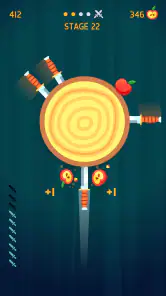
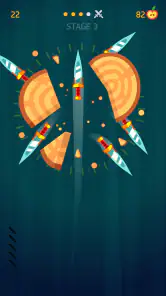
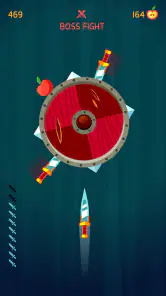
The gameplay is straightforward, but it’s the kind of simplicity that gets you hooked. You start with a set number of knives, and your goal is to hit the log without hitting your own previously stuck knives. The satisfaction when you stick that last knife in is unreal. Plus, there are boss levels where you throw knives at crazy things like tomatoes and cheese wheels, which adds a fun twist.
More From Our News Desk

Weather by Xiaomi Review: Clear at a Glance, Less Clear Up Close

X Under Pressure: Can It Recover When Posting Goes Wrong?

Clash of Clans Is Won Between the Battles

Android Auto Makes the Case for Quieter Car Software

MobiOffice: Transforming Mobile Productivity with Seamless Integration

EA SPORTS FC™ Mobile Soccer: Redefining Mobile Sports Gaming
Each successful level gives you apples which you can use to unlock new knives. And trust me, collecting those apples becomes an obsession. Who knew knife skins could be so exciting?
Choosing a Better Moment to Throw
The most useful adjustment I’ve found is to separate watching from acting. I let the target move long enough to read its direction and the spacing between knives, then make a deliberate tap instead of reacting to the first gap I notice. This is especially helpful after a throw changes the available space: the next opening may look familiar but will not stay in the same place as the target turns.
When I’m trying to improve, I pay attention to the decision immediately before a miss rather than blaming the game or tapping faster on the next run. Was I rushing because a gap looked wide, or did I wait until it was already moving away? That small review makes repeated attempts feel more like practice and less like random retries. It won’t make every round predictable, but it gives me something concrete to adjust.
There’s a trade-off in that method: concentrating on the rotation is more rewarding than playing on autopilot, but it also asks for a little attention. I wouldn’t choose it while trying to follow a conversation or watch something else closely. For a quick focused break it fits; for background play, a less timing-dependent game would be a better match.
Small Rewards, Different Reasons to Return
The reward loop works best when I treat the unlocks as a pleasant extra, not the main objective. Apples give successful play a visible payoff, and new knife designs offer a little personal variety. They don’t change the basic skill I’m practicing: finding a safe gap and choosing the right instant to throw. If collecting cosmetic variations is what keeps you engaged, that’s a genuine bonus; if you need upgrades that transform how a game plays, this reward may feel light.
Boss rounds help break up the familiar target-and-throw rhythm, while the regular rounds remain the reason I come back. I like that contrast, but I wouldn’t choose the game for a deep campaign or a story to follow. Its appeal is the repeated challenge, not a larger world unfolding around it.
What the Visuals and Sounds Contribute
The graphics are pretty minimalistic, but that’s part of the charm. It keeps you focused on the knives and the spinning logs. The sound effects, though, add a real layer of excitement. The sound of knives hitting wood or bouncing off with a metallic clang is oddly satisfying. It’s like ASMR for gamers.
Because the screen stays focused on the target, I can judge the open spaces without much visual clutter. My practical tip is to watch the rotation for a beat before committing, especially after the pattern changes, rather than letting the previous throw dictate the next one. That pause costs almost nothing and helps me avoid the common mistake of firing at where a gap was, not where it is now.
That focused presentation is useful when I want to glance at a small screen and understand the action quickly. It also means the visual style is not the main reason I’d keep playing: the appeal comes from reading the target, not exploring a detailed environment. If I’m in a place where sound would be distracting, I can still follow the action visually, but the impact of each hit is less satisfying without the audio feedback.
Where the Challenge Can Wear Thin
Now, let’s talk about the frustration factor. As the levels progress, the difficulty ramps up. The logs start spinning faster, and sometimes they have knives already stuck in them. Timing becomes everything. I’ve had moments where I’ve wanted to throw my phone across the room because I missed that one perfect shot. But then, that’s part of the challenge, right?
There’s also the occasional ad pop-up, which is a bit of a mood killer. However, they’re not too intrusive, and you can remove them with an in-app purchase if you’re really feeling the knife-throwing fever.
That makes it less suitable for someone who wants every attempt to feel calm or fully under their control. I also wouldn’t pick it as my main game for a long journey if I wanted a changing set of activities; the repeated timing challenge can start to feel samey. For that kind of session, a puzzle game with varied problems or an arcade game built around several different actions may hold my attention longer.
The choice between this and another arcade game comes down to what kind of input feels satisfying. Many familiar casual games reward continuous movement, repeated tapping, or quick reactions to several things at once. Here, the interesting choice is often whether to wait. I like that restraint-based tension, but if you want a steady stream of different obstacles and controls, a runner or a more varied action game is likely to hold your attention better.
How I Fit It Into a Day
I can see myself opening it while waiting for a coffee, between errands, or during a short break when I don’t want to learn a complicated control scheme. A useful way to play is to set a natural stopping point before starting: one attempt while a queue moves, for example, rather than chasing a perfect run indefinitely. The restart-friendly structure is convenient, but it can also make “one more try” stretch a brief pause longer than intended.
Compared with many casual arcade games that ask for repeated taps or quick swipes, this one puts more emphasis on restraint. The challenge is not simply reacting fast; it’s choosing when not to act. That distinction is why I find it more engaging than a basic button-mashing diversion, although players who prefer constant movement and changing mechanics may enjoy a runner or action game more.
It’s a good fit for players who like score-chasing through personal improvement, can accept a failed attempt without much fuss, and enjoy small cosmetic goals. I’d steer away if you dislike restarting after a mistake, want substantial strategic depth, or find interruptions especially annoying. Knife Hit is free to play, and its in-app purchases range from $0.99 to $19.99 per item, so I’d decide whether the core throwing loop suits me before spending on extras.
For a casual player wondering whether purchases are essential to enjoy the central challenge, I’d start with the free game and see whether the timing itself holds my interest. The cosmetic unlocks are a separate reason to return, not a replacement for getting comfortable with the throws. If the basic loop feels repetitive before those small rewards matter, buying an item is unlikely to solve that mismatch.
Why I’d Give It a Try
So, why should you download Knife Hit? If you’re into casual games that offer a mix of strategy and timing, this one’s for you. It’s perfect for killing time during a commute or while waiting in line. The game offers endless levels, so there’s always a new challenge waiting for you.
If you’re someone who enjoys collecting things, the variety of knives you can unlock adds another layer of fun. Plus, the boss levels bring in a nice change of pace and keep things fresh.
Ketchapp’s arcade game has an average rating of 4.2 from around 1.2 million ratings, and it has passed 100 million installs. It is rated for Everyone, with version 1.8.30 listed for Android 7.0 and later. Those figures point to a broad audience, but the useful question is still whether you enjoy its particular rhythm: observe, wait, throw, and live with the result.
For someone checking compatibility before installing, the Android requirement is version 7.0 or later. The game is free, though optional purchases are available, so I’d treat the first sessions as a chance to decide whether the repeated timing test is enjoyable before considering any extra spending. Its broad audience and large player base tell me it has found a durable casual-game appeal, but personal patience is a better guide than popularity.
The Loop, and the Reason I Return
What keeps me coming back is not a complicated progression system; it is the short chain of action, feedback, reward, and reset. I choose a gap, tap, see whether the knife lands safely, and get a small reward when I make it through. If I fail, I can quickly try again with a clearer idea of what I misread. That reset is the engine of the game, and also the point where its appeal can turn into impatience.
I’d open it when I want a small, self-contained challenge and close it when I notice I’m tapping out of frustration rather than making a considered choice. That’s the most honest way I can recommend it: the loop is neat, immediate, and easy to revisit, but it doesn’t disguise repetition as a deep adventure. If that compact test of timing sounds satisfying, Ketchapp’s arcade game is worth trying; if you want calm progression or a lot of mechanical variety, I’d choose something else.
Overall, Knife Hit is an addictive little game that’s easy to pick up but hard to master. It’ll test your reflexes, patience, and maybe even your sanity. But hey, isn’t that what makes mobile gaming so fun?
Knife Hit Frequently Asked Questions
Can I play Knife Hit offline?
Knife Hit is designed around quick, self-contained arcade attempts, so it is an easy game to pick up whenever you have a spare moment. If offline access matters to you, check how the game behaves on your device before relying on it without a connection, since online features and store access can depend on your setup.
Is Knife Hit easy to learn for new players?
Yes. The central idea is straightforward: time your throws so knives land on the target without colliding with knives already there. That makes Knife Hit approachable even if you do not usually play arcade games. The challenge comes from judging each opening carefully, so simple controls do not mean every attempt will be easy.
Does Knife Hit have different knives or targets to unlock?
Knife Hit focuses on its timing challenge, and cosmetic variety can be part of the appeal of returning to a casual arcade game. The available purchase options are one consideration if you are exploring extras, but you can also approach the game as a straightforward test of accuracy rather than treating optional additions as necessary for every player.
Is Knife Hit free to download, and does it include optional purchases?
Knife Hit is free to download, so you can try its arcade-style throwing challenge without paying upfront. It also offers in-app purchases, with prices ranging from $0.99 to $19.99 per item. Consider reviewing those options before handing a device to a child or making a purchase, especially if you prefer to keep spending within a set limit.
What kind of game is Knife Hit, and who makes it?
Knife Hit is an arcade game from Ketchapp built around a simple timing challenge: throw knives at a target and try to avoid the ones already in place. Its straightforward premise makes it easy to understand before you begin, while each attempt asks you to pay attention to the target’s movement. The store tagline sums up the aim: perfect your timing and hit every target.
Pros
- Simple and addictive gameplay.
- Variety of knives to unlock.
- Challenging boss levels.
- Smooth controls and graphics.
- Regular updates with new content.
Cons
- Can feel repetitive over time.
- Ads can be intrusive.
- Limited offline play options.
- In-app purchases can be pricey.
- No multiplayer mode available.
- Category
- Arcade
- Version
- 1.8.30